# Сопутствующие статьи по теме Youth

Новостной центр HTX предлагает последние статьи и углубленный анализ по "Youth", охватывающие рыночные тренды, новости проектов, развитие технологий и политику регулирования в криптоиндустрии.

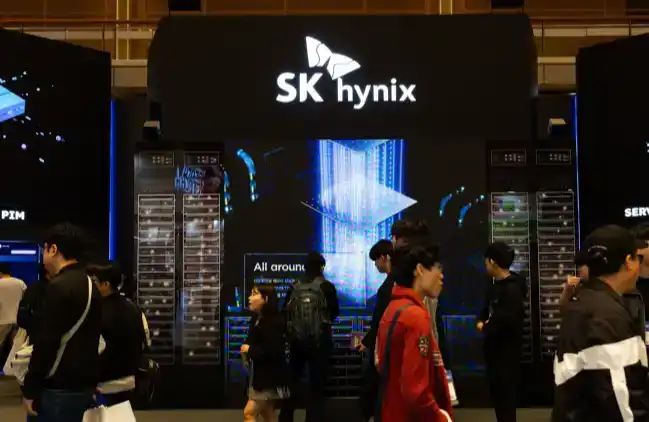
South Korean Youth Trading Stocks Overnight, Diving Headfirst into Samsung and SK Hynix

The article details a significant shift in South Korea's investment landscape, where young retail investors are moving from volatile cryptocurrencies to the booming semiconductor stocks, particularly Samsung Electronics and SK Hynix. This transition is driven by the explosive demand for AI-related chips, specifically High Bandwidth Memory (HBM), where these two Korean giants hold a near-oligopoly alongside Micron. Due to unprecedented demand from cloud providers, AI firms, and electronics manufacturers, HBM supply is critically low, with SK Hynix's inventory at a historic low of just four weeks. This scarcity has led to massive price increases for HBM and DRAM chips, fueling a dramatic surge in the companies' stock prices—SK Hynix's stock is up sixfold and Samsung's has quadrupled since early 2025. This rally has propelled the Korean KOSPI index past 6000 points, making it a top-performing global market. The piece explains that the AI era has inverted the traditional tech profit structure. HBM, now a critical and irreplaceable component for advanced GPUs, has given upstream memory suppliers unprecedented pricing power over downstream customers like NVIDIA. This has led to a fundamental "re-rating" of these semiconductor stocks. Consequently, online forums once dominated by crypto talk are now focused on "AI semiconductor concept stocks." Trading volume on crypto exchanges has plummeted, while stock market activity has soared. This shift is further encouraged by government policies aimed at strengthening the stock market and retaining domestic capital. The trend is so powerful that crypto exchanges have begun offering leveraged perpetual contracts on Korean stocks, symbolizing that in the AI age, semiconductors have become a more compelling investment than cryptocurrencies.

marsbit02/27 13:21

South Korean Youth Trading Stocks Overnight, Diving Headfirst into Samsung and SK Hynix

marsbit02/27 13:21

Myanmar Under Fire: The Dignity of the Dollar, Trapped Youth, and the Underground Financial Market

In 2026, a two-week field investigation in Myanmar revealed a nation fractured by war, economic collapse, and extreme social inequality. The country exists in multiple layers of reality: the official state versus the black market, internet stereotypes versus on-the-ground simplicity, and a brutal economic disparity where a server in Hong Kong earns 18,000 RMB monthly, compared to just 300 RMB in Bagan. The economy is defined by a shattered financial system. The official exchange rate is a fiction; the black market rate of 1:550 (USD to MMK) is the real one. This instability manifests in an absurd reverence for physical US dollars, which must be pristine to be accepted, while the local currency is treated with contempt. Hyperinflation has crippled daily life. Prices have surged 5x in a decade, while wages have only doubled. A day's wage for an adult in Bagan is less than 10 RMB, meaning five bottles of water cost a full day's pay. This pressure forces children into labor. It's common to see 9-year-olds working in restaurants or children begging in streets. For the youth, escape is nearly impossible. The government restricts passport issuance for those aged 18-60, making legal departure a privilege. The only options are dangerous illegal routes or being "bought" as a bride by foreigners. The report concludes with a guide's stark summary of his existence: "A lifetime. No happiness." Men live in fear of being forcibly conscripted, and the relentless struggle for survival leaves no room to ponder happiness.

marsbit02/26 09:39

Myanmar Under Fire: The Dignity of the Dollar, Trapped Youth, and the Underground Financial Market

marsbit02/26 09:39

Average Age 'Post-95s', Over a Billion USD in the Books: MiniMax Knocks on Hong Kong Stock Exchange's Door

MiniMax, a leading Chinese AI startup founded in December 2021 by former SenseTime executives, has filed for an IPO in Hong Kong, potentially becoming one of the fastest AI companies to go public. Specializing in full-spectrum AGI technologies—spanning text, voice, video, and music—MiniMax operates on a dual-strategy of "large model + AI-native applications." As of September 2025, it serves over 212 million individual users across more than 200 countries and regions, along with 100,000+ enterprise clients. Notably, over 70% of its revenue comes from overseas markets. Its AI-native products, including Haiduo AI, Xingye/Talkie, and MiniMax Voice, saw average monthly active users grow sharply to 27.6 million in the first nine months of 2025. Financially, MiniMax reported revenue of $53.4 million for the first three quarters of 2025, a 174.7% year-on-year increase. Despite an adjusted net loss of $186 million during the same period, the company demonstrated improved operational efficiency, with R&D expenses growing only 30% while sales and marketing costs fell 26%. Technologically, MiniMax has released several cutting-edge models: the voice model Speech 02, video generator Video 01 (and its upgrade Hailuo 02), and the open-source MiniMax-M2 text model—ranked among the top five globally. Its M2 model incorporates "Interleaved Thinking" for enhanced reasoning and agentic capabilities. The company is highly R&D-focused, with nearly 80% of its 385 employees in technical roles. The executive team is notably young, with an average age of 32. MiniMax plans to allocate 70% of IPO proceeds to R&D over the next five years to further advance its models and AI-native products.

深潮12/22 02:45

Average Age 'Post-95s', Over a Billion USD in the Books: MiniMax Knocks on Hong Kong Stock Exchange's Door

深潮12/22 02:45

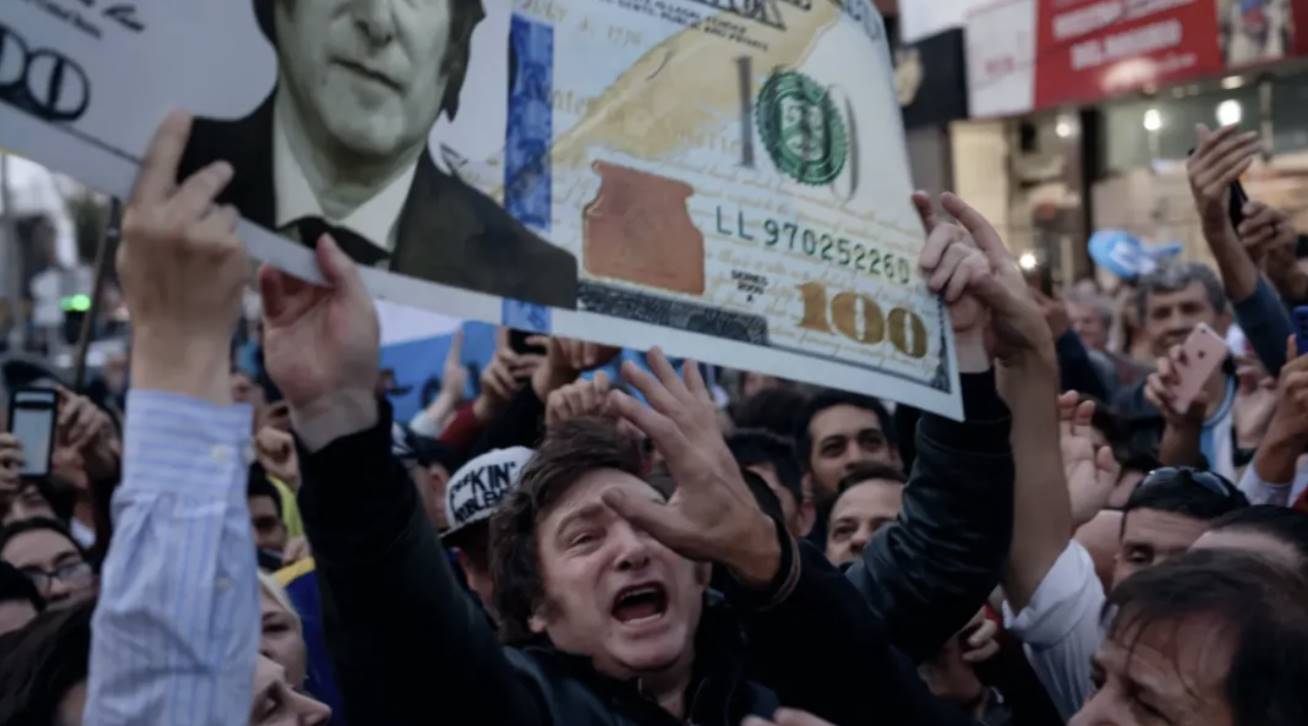
Underground Argentina: Jewish Money Houses, Chinese Supermarkets, Slacking Youth, and the Impoverished Middle Class

Argentina is experiencing a state of hyperinflation and economic collapse, where the official currency, the peso, has become nearly unusable. The black market exchange rate has reached 1 USD to 1,400 pesos, yet prices for basic goods remain shockingly high, even for those holding foreign currency. A significant portion of the population, especially the youth, has adopted a "live for the moment" mentality, spending their wages immediately as savings become worthless. Poverty rates are high, and real wages have plummeted. The country’s real financial system operates underground, dominated by two key players: a network of over 13,000 Chinese-owned supermarkets that act as cash collection points, and Jewish-owned informal exchange houses (cuevas) that manage black market dollar transactions. This shadow economy allows businesses and individuals to bypass strict currency controls, high taxes, and a collapsing official banking system. Cryptocurrency, particularly USDT, is used not as a technological innovation but as a practical tool for wealth preservation and tax avoidance, especially among freelancers and the upper middle class. However, those who remain in the formal economy—the “rule-followers”—suffer the most, as their peso-denominated incomes collapse in value while living costs soar. President Milei’s radical reforms have brought some fiscal stability and reduced inflation, but at a great social cost. Yet, much of the public still supports the changes, hoping to break Argentina’s cycle of economic crises. Through it all, the informal systems—cash transactions, black market exchanges, and a general distrust of the state—continue to sustain daily life.

深潮12/08 06:16

Underground Argentina: Jewish Money Houses, Chinese Supermarkets, Slacking Youth, and the Impoverished Middle Class

深潮12/08 06:16

活动图片