# Сопутствующие статьи по теме Tokenization

Новостной центр HTX предлагает последние статьи и углубленный анализ по "Tokenization", охватывающие рыночные тренды, новости проектов, развитие технологий и политику регулирования в криптоиндустрии.

First Batch of Keynote Speakers and Partners Announced! Web2+3 Summit: Defining the Next Generation of Digital Economy

Web2+3 Summit: Defining the Next Generation of Digital Economy The 6th BEYOND International Technology Innovation Expo (BEYOND Expo 2026), Asia's largest tech and ecosystem exhibition, is launching a dedicated Web2+3 stage for the first time. Co-hosted by BEYOND Expo and ChainNeXT Group, the Web3 Summit will take place from May 28–30, 2026. Against the backdrop of accelerating global tech integration, the boundaries between Web2 and Web3 are rapidly blurring. With clearer global regulations for blockchain-driven internet (Web3) and the special issuance of a Hong Kong dollar stable币 license by the Hong Kong SAR government on April 10, 2026, Web3's decentralized principles are quickly merging with traditional industries (Web2) such as e-commerce, finance, and artificial intelligence. Focused on blockchain-driven digital economy elements, the summit will center on three core principles—implementability, commercial viability, and compliance. It will bring together top Web3 experts to discuss key integration areas like stablecoin payment finance (PayFi), real-world asset tokenization (RWA), and decentralized AI (DeAI), unveiling new opportunities for industrial innovation. The first wave of confirmed speakers includes Jack Kong (Director of Hong Kong Cyberport, Chairman of Nano Labs), Yat Siu (Chairman of Animoca Brands), Michael Wu (Co-founder & CEO of Amber Group), Michael Heinrich (Co-founder & CEO of 0G), and Art Abal (Co-founder of Vana). More Web3 ecosystem pioneers, AI, and fintech experts will be announced soon. Core forum topics include: - Web2+DeAI: New AI Paradigms Driven by Decentralized Infrastructure - Web2+RWA: Real-World Asset Tokenization and Global Liquidity - Web2+PayFi: Cross-Border Payments and Financial Innovation Powered by Crypto Infrastructure - Web2+3 AI: Autonomous Agents and the Crypto Economy - Web2+3 Wealth: On-Chain and Off-Chain Integrated Investment Ecosystems - Web2+3 Commerce: A New Landscape for Global Trade Driven by Stablecoins Additional agenda details will be released in the near future.

marsbit04/20 15:55

First Batch of Keynote Speakers and Partners Announced! Web2+3 Summit: Defining the Next Generation of Digital Economy

marsbit04/20 15:55

A Transformative Era for DeFi Collateral: Exploring RWA as the New Composable Infrastructure for DeFi

DeFi Collateral Transformation: RWA Emerges as Composable Infrastructure The tokenized Real-World Asset (RWA) market has reached $27 billion, yet only about $2.7 billion is actively used as collateral in DeFi lending markets. This growth was accelerated by key 2025-2026 regulatory milestones in the U.S., including the GENIUS Act for stablecoins and the classification of major blockchain tokens as digital commodities. The composition of tokenized assets differs significantly from those actively used in DeFi. U.S. Treasuries dominate tokenized AUM (48.5%) but represent only 2% of DeFi deposits. Conversely, credit assets (17% of AUM) constitute 80% of deposits, driven by yield differentials that enable profitable leverage strategies. Reinsurance is emerging as a new composable asset class, with over 80% of its tokenized supply active in DeFi. The market is evolving in real-time. As yield spreads compress, collateral diversification is increasing, evidenced by Aave Horizon's shifting composition. Permissionless access is a critical driver for distribution, as demonstrated by Maple Finance's 'syrup' tokens, which have been composably deployed across multiple chains and protocols without requiring permissions. In conclusion, while the absolute value of RWA in DeFi is still small, its rapid growth rate, the divergence between tokenized and utilized assets, and the power of permissionless composability are the key trends shaping this new infrastructure layer.

marsbit04/20 10:22

A Transformative Era for DeFi Collateral: Exploring RWA as the New Composable Infrastructure for DeFi

marsbit04/20 10:22

Podcast Notes: Hyperliquid Has Become the Top Interest Point for Traditional Hedge Funds

Empire Podcast hosts Jason Yanowitz and Santiago Santos discuss the surging institutional interest in Hyperliquid, a decentralized perpetual exchange, marking the highest level of engagement from traditional hedge fund managers since Paul Tudor Jones endorsed Bitcoin in 2020. The primary driver is the demand for weekend trading of commodities like oil, especially during geopolitical tensions such as the Iran conflict, as Hyperliquid provides the only active price discovery venue when traditional markets are closed. Trade XYZ, a front-end on Hyperliquid, has seen significant growth, with weekend oil price predictions having a median error of only 50 basis points. Santos predicts commodity trading volume on Hyperliquid will surpass Bitcoin within the year and that its market cap could rise from $25 billion to $100 billion. Other key points include Kraken raising $200 million at a reduced valuation of $13.3 billion, and the SEC clarifying that self-custodied DeFi frontends like MetaMask are not subject to broker-dealer rules, resolving a major regulatory uncertainty. The hosts also note the strong correlation between crypto and macro markets, with the S&P 500 posting one of its best 10-day rallies since 1950. They highlight MicroStrategy's continued Bitcoin acquisitions and the potential of real-world asset (RWA) tokenization as a key trend. The discussion concludes with skepticism towards many L2 projects, predicting a wave of protocols truly going to zero as capital concentrates in proven assets like Bitcoin and Hyperliquid.

marsbit04/18 07:23

Podcast Notes: Hyperliquid Has Become the Top Interest Point for Traditional Hedge Funds

marsbit04/18 07:23

Understanding the Key Issues of Tokenization in One Article

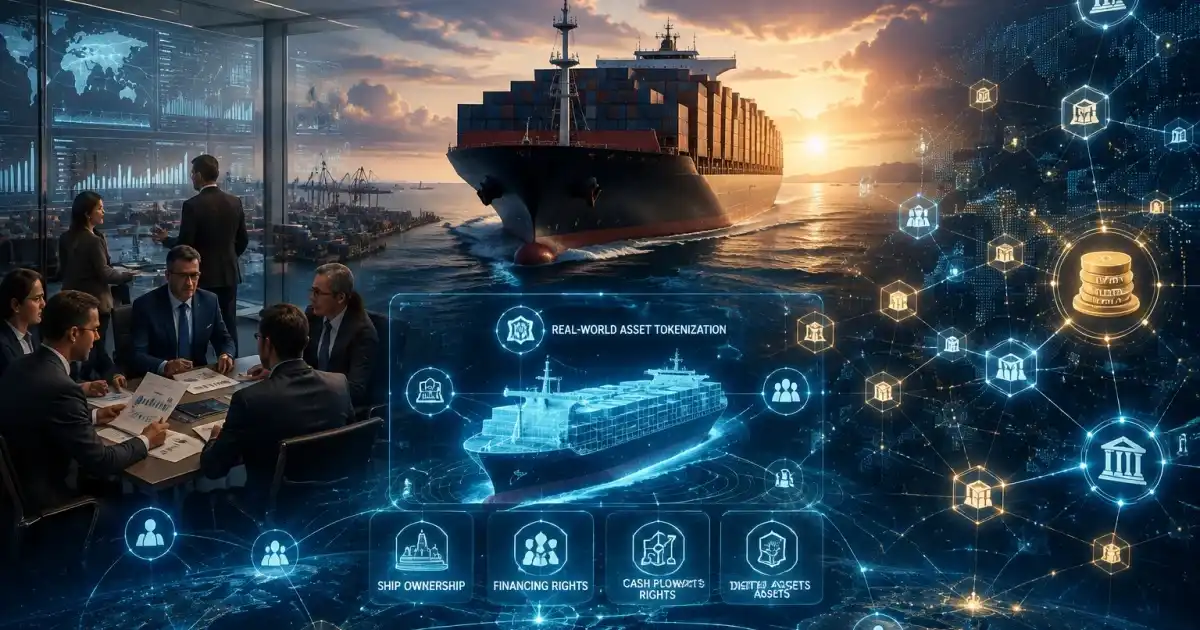
The core of tokenization lies in eliminating friction in financial infrastructure, not speculative digital assets. The true value is in near-instant settlement (T+0 vs. traditional T+2), 24/7 liquidity, fractional ownership, and the disintermediation of financial processes. Tokenization represents real-world assets (real estate, bonds, private equity) as digital tokens on a blockchain, functioning as programmable digital deeds that enable self-custody and automated ownership tracking. It addresses four key problems: 1) Settlement Speed: Atomic, near-instant settlement replaces multi-day processes. 2) Liquidity: Enables secondary markets for historically illiquid assets. 3) Fractional Ownership: Drastically lowers investment minimums by automating administrative overhead. 4) Disintermediation: Replaces trust-based functions of custodians and clearinghouses with self-executing smart contracts. This is not about cryptocurrency speculation. Major institutions like J.P. Morgan (Onyx), BlackRock (BUIDL), and Goldman Sachs are building the infrastructure, focusing on reliable asset management. Significant hurdles remain, including uncertain legal frameworks, lack of different blockchain platforms, and resistance from intermediaries protecting their revenue streams. Tokenization doesn't create a frictionless utopia but fundamentally reshapes the cost structure and efficiency of global financial infrastructure, representing its largest reorganization since the advent of electronic trading.

marsbit04/16 08:40

Understanding the Key Issues of Tokenization in One Article

marsbit04/16 08:40

Bloomberg Terminal Earns Billions Annually from Data Intermediation, Now 6 Institutions Are Putting Data Directly On-Chain

Six major financial institutions — Fidelity, Euronext, Tradeweb, OTC Markets Group, Singapore Exchange (Forex), and Exchange Data International — have begun publishing proprietary market data directly on-chain via Pyth Network. This move bypasses traditional data intermediaries like Bloomberg, which has long dominated the financial data market with annual revenues of approximately $10 billion from its terminal business alone. The shift enables developers on over 100 blockchains to access high-quality, real-time financial data — including ETF valuations, fixed income data, FX rates, and OTC securities — without long-term contracts, steep fees, or proprietary hardware. This development is critical for the scalability of real-world asset (RWA) tokenization in DeFi, as reliable, institutional-grade data must be available on-chain before assets can be traded or used as collateral in decentralized protocols. Pyth’s model differs from earlier oracle solutions like Chainlink by sourcing data directly from institutional traders and exchanges rather than aggregating from third-party sources. While this approach offers higher speed and accuracy, it also involves a more centralized network of known publishers. The move challenges the decades-old monopoly of data middlemen and could significantly reduce barriers to entry for developers building DeFi products tied to traditional financial markets.

marsbit04/16 05:49

Bloomberg Terminal Earns Billions Annually from Data Intermediation, Now 6 Institutions Are Putting Data Directly On-Chain

marsbit04/16 05:49

活动图片