# Сопутствующие статьи по теме Tokenization

Новостной центр HTX предлагает последние статьи и углубленный анализ по "Tokenization", охватывающие рыночные тренды, новости проектов, развитие технологий и политику регулирования в криптоиндустрии.

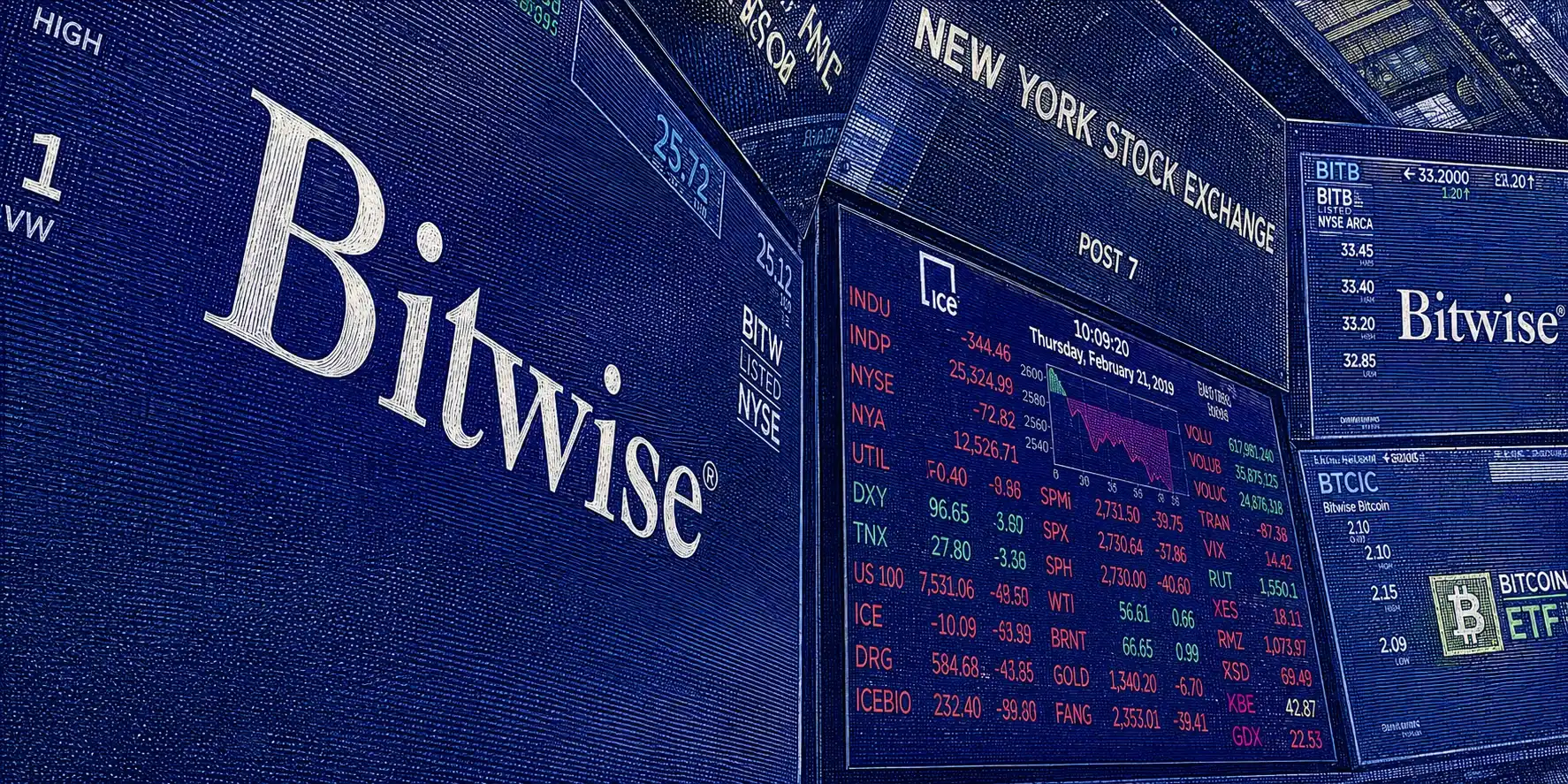
Bitwise: Bullish on Bitcoin's Performance in the Second Half of the Year, AI and Regulation Will Spark a New Altcoin Season

Bitwise CIO Matt Hougan and Research Lead Ryan Rasmussen express strong bullish sentiment on Bitcoin's long-term prospects, suggesting that its $1 million price target may be too conservative. They argue Bitcoin serves a dual role: as digital gold and a potential global settlement asset, especially amid declining trust in traditional monetary systems. Despite a weak Q1 2026 where nearly all crypto assets and prices saw double-digit declines, the analysts remain optimistic due to strong forward-looking catalysts, including institutional adoption via Bitcoin ETFs from major firms like Morgan Stanley and Goldman Sachs. Geopolitical instability, such as Iran’s mention of using Bitcoin for international payments, increases the value of Bitcoin’s “out-of-the-money call option” as a non-political, global settlement currency. This enhances its appeal beyond a mere store of value. . Additionally, Hougan highlights that a clearer regulatory token framework under current SEC leadership, combined with AI efficiency gains and high-performance blockchains, could fuel a new “altseason” by late 2026. This may lead to a wave of legitimate, value-capturing token projects, unlike the earlier ICO boom. . Bitwise also announced an Avalanche ETF, citing its unique architecture and rapid growth in real-world asset (RWA) tokenization, which has surged 10x to nearly $30 billion in two years. The firm believes Layer 1 blockchains are still early in their growth cycle, with significant potential ahead.

marsbit04/24 05:37

Bitwise: Bullish on Bitcoin's Performance in the Second Half of the Year, AI and Regulation Will Spark a New Altcoin Season

marsbit04/24 05:37

Hong Kong Web3 Carnival: The Watershed Moment for Web3 Entering the Execution Phase

The 2026 Hong Kong Web3 Carnival marked a significant shift from previous industry discussions, signaling that Web3 has moved beyond theoretical validation into a phase of institutional and structural implementation. Hong Kong is not merely building a "Web3 industry cluster" but developing an operating system for the next-generation financial infrastructure. Key developments include the expansion of asset tokenization beyond cryptocurrencies to encompass bonds, real estate, and future income rights. This transition represents a fundamental restructuring of financial logic—shifting from institution-dominated asset control to rule-driven, programmable asset流动性 and distribution. Tokenization enables lower-friction participation and broader access to financial resources. Concurrently, AI is evolving from a tool into an autonomous economic agent. The proposed Decentralized Agentic Economy (DAE) framework suggests AI agents, empowered by blockchain-based identity and programmable money, will independently execute transactions and strategies—redefining market dynamics and reducing intermediation. Regulatory progress has been systematic: Hong Kong has expanded oversight to include exchanges, custody, staking, and derivatives, while gradually approving products like tokenized funds and stablecoins. The "same risk, same regulation" principle, combined with sandbox mechanisms, provides stability and transparency—key advantages in a globally fragmented regulatory landscape. Hong Kong’s approach integrates three core elements: real-world asset (RWA) tokenization, stablecoin settlement networks, and AI-driven economic agents. This systemic build-up positions Hong Kong not just as a participant but as a potential rule-maker in the next-era financial system, where asset flow, rules, and participants are simultaneously transformed.

marsbit04/22 10:50

Hong Kong Web3 Carnival: The Watershed Moment for Web3 Entering the Execution Phase

marsbit04/22 10:50

Six Years Since DeFi Summer, How Will the Decentralized Financial Revolution Continue?

In 2026, the DeFi sector faces a severe trust crisis following a series of high-profile security breaches, including a $292 million theft from KelpDAO’s rsETH, a $2.85 million exploit at Drift Protocol due to permission vulnerabilities, and a $14.9 million lending failure at Venus Protocol. These incidents triggered a withdrawal of approximately $10 billion from DeFi over a single weekend, highlighting systemic risks beyond smart contract flaws—such as governance, cross-chain complexity, and operational weaknesses. Despite these challenges, on-chain finance continues to grow, with capital shifting toward safer, regulated products. Stablecoins like USDT ($185B) and USDC ($78B) have reached a combined market cap of $263 billion, while tokenized U.S. Treasuries surged to $10.93 billion. Visa’s growing USDC settlement volume, now annualized at $3.5 billion, signals increasing institutional adoption of compliant blockchain-based financial infrastructure. The competition for the future of on-chain finance is intensifying. While native DeFi struggles with trust and capital outflows, regulated products—stablecoins, tokenized assets, and ETFs—are gaining dominance by offering programmable, 24/7 settlement without high DeFi risks. Over 80 crypto projects shut down in Q1 2026, reflecting dwindling patience for speculative ventures. The core challenge for open DeFi is to rebuild trust and demonstrate irreplaceable value—or risk ceding its role as the primary entry point to on-chain finance.

marsbit04/21 09:10

Six Years Since DeFi Summer, How Will the Decentralized Financial Revolution Continue?

marsbit04/21 09:10

活动图片