# Сопутствующие статьи по теме Tokenization

Новостной центр HTX предлагает последние статьи и углубленный анализ по "Tokenization", охватывающие рыночные тренды, новости проектов, развитие технологий и политику регулирования в криптоиндустрии.

Robinhood Ventures into L2, Focusing on RWA Tokenization

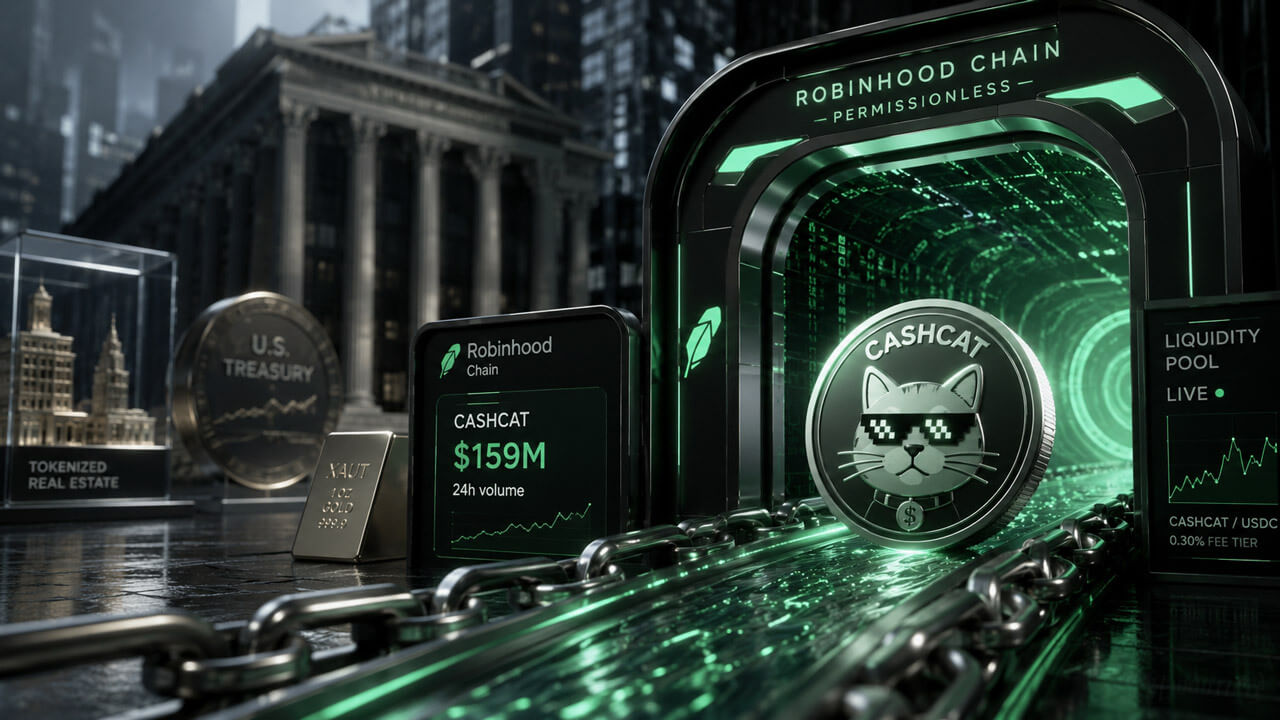
In late January 2026, Robinhood CEO Vlad Tenev highlighted that the GameStop short squeeze incident five years earlier could have been avoided with blockchain’s real-time settlement capabilities. Shortly after, Robinhood launched the testnet of Robinhood Chain, an Arbitrum-based Layer 2 network focused on tokenizing real-world assets (RWA), including stocks, ETFs, and private assets. Built on Arbitrum Orbit, Robinhood Chain leverages Ethereum for data availability and uses ETH as its native gas token. The platform combines Ethereum’s security with custom compliance features, allowing Robinhood to enforce regulatory rules while maintaining interoperability with existing DeFi infrastructure. Prior to the testnet, Robinhood had already been testing tokenized stocks in Europe for eight months. These assets are structured as derivative contracts pegged to the price of underlying equities—not as direct ownership claims. The system supports features like dividend pass-through and on-chain minting/burning tied to user positions. Robinhood acquired necessary regulatory licenses, including MiCA and MiFID approvals, partly through its acquisition of Bitstamp. The platform aims to enable 24/7 trading, instant settlement, and global accessibility with low fees. However, challenges remain, including legal ambiguity around asset representation, centralization risks (with Robinhood Europe as the sole counterparty), and potential pushback from traditional institutions. Robinhood Chain represents a significant step in blurring the lines between traditional finance and crypto, though its balance between compliance and decentralization remains a key point of observation.

marsbit02/12 08:34

Robinhood Ventures into L2, Focusing on RWA Tokenization

marsbit02/12 08:34

Tokens, Models, and Bubbles: The Crypto × AI Game in the Primary Market

Based on a two-year retrospective, this article analyzes the convergence of Crypto and AI from a primary market perspective. Initially, the crypto space heavily promoted "Crypto Helps AI" through three main narratives: computation power tokenization, data tokenization, and model tokenization. However, these efforts largely resulted in what the author calls a "tokenization illusion"—projects that issued tokens but lacked real product-market fit or sustainable business models. The piece critiques these approaches: decentralized compute networks often fail to meet enterprise reliability standards; tokenized data struggles with supply-demand alignment due to low user motivation and high professional requirements; and model tokenization is fundamentally flawed since AI models are non-scarce, easily replicable, and depreciate quickly. Additionally, projects focusing on verifiable inference (like ZKML or OPML) are solutions in search of a problem, as real-world AI failures are rarely due to malicious tampering but rather design errors or misconfigurations. The author references Vitalik Buterin’s updated views, which now present a more balanced perspective compared to two years ago. Buterin outlines four quadrants of Crypto × AI integration: two where crypto (especially Ethereum) provides trustless, economic layers for AI agents and private interactions, and two where AI enhances crypto—through local LLMs acting as user shields for security and AI improving market efficiency and DAO governance. The conclusion emphasizes that meaningful progress lies at the intersection of both fields, beyond mere tokenization or speculative narratives, and expresses hope for more substantive developments in the future.

比推02/12 06:16

Tokens, Models, and Bubbles: The Crypto × AI Game in the Primary Market

比推02/12 06:16

After Mainland China's Document No. 42 Sets the Tone, What is the Best RWA Token Standard?

China's "Document No. 42" (Yin Fa [2026] No. 42), issued by the People's Bank of China and eight other departments, formally recognizes and regulates Real World Asset (RWA) tokenization, defining it as the use of encryption and distributed ledger technology to convert asset ownership or rights into tokens. The document establishes a compliance pathway, requiring domestic entities to file with the China Securities Regulatory Commission (CSRC) and separating RWA from unregulated virtual currencies. Globally, the RWA market has grown significantly, reaching $23.7 billion. The article analyzes various token standards and their evolution. Early standards like ERC-3525 and ERC-3475, designed for bonds and contracts, saw limited adoption due to complexity. In contrast, successful application-first models like Aave's aToken (using a scaled balance mechanism for automatic interest accrual) and Lido's stETH (using a daily rebase model) thrive by prioritizing user experience and compatibility. For equity tokenization, platforms like Ondo and xStock on Solana use a "chain shares + multiplier" rebase model within the Token-2022 standard, adjusting display values for corporate actions like stock splits. Major exchanges and wallets (Jupiter, Binance, MetaMask) are increasingly supporting these tokenized assets. The author concludes that while China's regulatory clarity is positive, true success depends on leveraging blockchain's advantages—24/7 liquidity, fractionalization, transparency, and automation—to create practical value, rather than just defining perfect standards. The evolution should focus on user-centric solutions that address real market gaps.

marsbit02/12 06:10

After Mainland China's Document No. 42 Sets the Tone, What is the Best RWA Token Standard?

marsbit02/12 06:10

活动图片