# Сопутствующие статьи по теме Stocks

Новостной центр HTX предлагает последние статьи и углубленный анализ по "Stocks", охватывающие рыночные тренды, новости проектов, развитие технологий и политику регулирования в криптоиндустрии.

Currency and Stock Barometer丨Strategy Invested $204 Million to Purchase 3,015 Bitcoins Last Week; US-Listed Company GD Culture Board Approved Sale of 7,500 Bitcoins Last Week (March 3)

Crypto Market Weekly Roundup: Strategy Invests $204M in Bitcoin, GD Culture to Sell Holdings Last week saw significant activity among crypto treasury companies amid ongoing market volatility. Strategy (formerly MicroStrategy) led Bitcoin acquisitions, purchasing 3,015 BTC for $204.1 million—a 412.8% increase from the previous week—bringing its total holdings to 720,737 BTC. In contrast, NASDAQ-listed GD Culture approved the sale of its entire 7,500 BTC reserve to fund a stock repurchase plan, reflecting the financial pressure some firms face. Meanwhile, Ethereum treasury company FG Nexus sold 7,550 ETH (worth $14.06 million), accumulating an unrealized loss of approximately $82.8 million. ETHZilla rebranded to Forum Markets and pivoted to RWA tokenization, while Bitmine added 50,928 ETH ($98.53 million) to its holdings. Other notable updates include American Bitcoin reporting over 6,000 BTC in reserves and $185.2 million in annual revenue, and Solana treasury firm DeFi Development making a strategic investment in stablecoin protocol Apyx. Global public companies (excluding miners) now hold 981,150 BTC, accounting for 4.9% of the circulating supply. Market analysts suggest a potential consolidation trend among crypto treasury companies in 2026, especially for those trading below net asset value.

marsbit03/03 10:37

Currency and Stock Barometer丨Strategy Invested $204 Million to Purchase 3,015 Bitcoins Last Week; US-Listed Company GD Culture Board Approved Sale of 7,500 Bitcoins Last Week (March 3)

marsbit03/03 10:37

February 28 Market Summary: Inflation Nightmare Returns, Defensive Sectors Soar, Tech Stocks Crushed

February 28 Market Summary: Inflation Fears Return, Defensive Sectors Soar, Tech Stocks Tumble A hotter-than-expected Producer Price Index (PPI) report shattered market optimism, with core PPI surging 0.8% month-over-month, 2.7 times higher than forecasts. This triggered a significant sell-off, causing the Nasdaq to post its worst monthly performance since last March, down over 3%. Market dynamics shifted dramatically, showcasing a major rotation. Defensive sectors led gains: Utilities had their best month since 2003, while Energy continues to lead year-to-date. In contrast, tech-heavy sectors and the "Magnificent Seven" stocks mostly fell. The iShares Tech Software ETF plummeted nearly 10% for the month. Amid the downturn, Dell emerged as a standout, its stock soaring 22% after reporting staggering AI server orders and a record $43 billion backlog, providing tangible proof of robust AI infrastructure demand. The crypto market mirrored the risk-off sentiment, with Bitcoin falling below $66,000 and Ethereum losing the $2,000 level. Conversely, safe-haven assets rallied; gold approached its all-time high and silver surged 19% for the month. The core question unsettling markets is whether stubborn inflation is a temporary setback or a sign of its return, potentially forcing the Fed to delay rate cuts or even consider hiking again. This uncertainty threatens highly valued tech stocks and leveraged assets, as the market moves from narrative-driven growth to a focus on profitability and tangible returns.

marsbit02/28 01:43

February 28 Market Summary: Inflation Nightmare Returns, Defensive Sectors Soar, Tech Stocks Crushed

marsbit02/28 01:43

Nasdaq Stalls, But Power Stocks Keep Hitting New Highs? AI's Second Half: A Deep Dive into the 2026 U.S. Grid Modernization Investment Map

The U.S. stock market in 2026 shows a clear divergence: while the Nasdaq stagnates, industrial, energy, and utility stocks surge. This signals a shift in AI competition from algorithms to physical resources—specifically, power and grid infrastructure. The AI-driven explosion in data center energy consumption, alongside manufacturing reshoring and broader electrification (EVs, heat pumps), is straining an aging U.S. grid. Much of the infrastructure is decades old and ill-equipped for modern demands, leading to bottlenecks, extended delays for critical components like transformers, and rising costs. Grid modernization is not just about expansion but about creating a digital, bidirectional, and self-healing network. Key layers include: - Smart metering (AMI) for real-time data exchange, - Automation and self-healing systems (e.g., FLISR by GE Vernova), - Virtual power plants (VPPs) enabling decentralized energy distribution. Investment opportunities are stratified: - High-margin software/automation firms (e.g., GEV, Siemens, Itron), - Critical equipment manufacturers (e.g., Eaton, ABB, Schneider Electric), - Engineering and construction leaders (e.g., Quanta Services, MasTec) directly capturing infrastructure spending, - Regulated utilities (e.g., NextEra Energy, Duke Energy) managing upgraded networks. The value reassessment of power assets is underway, positioning the grid as a national strategic asset essential to AI and economic resilience.

marsbit02/27 13:31

Nasdaq Stalls, But Power Stocks Keep Hitting New Highs? AI's Second Half: A Deep Dive into the 2026 U.S. Grid Modernization Investment Map

marsbit02/27 13:31

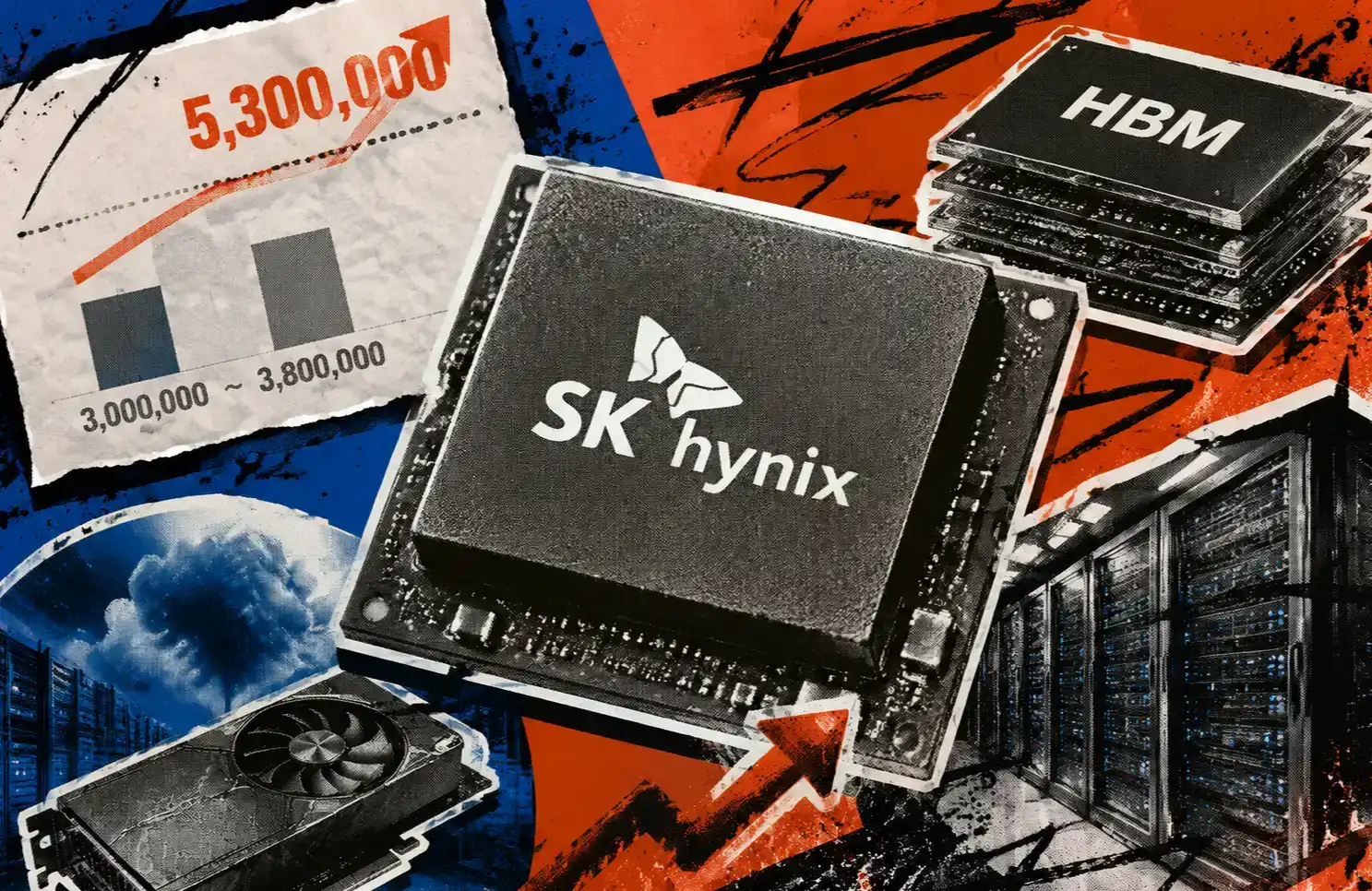
South Korean Youth Trading Stocks Overnight, Diving Headfirst into Samsung and SK Hynix

The article details a significant shift in South Korea's investment landscape, where young retail investors are moving from volatile cryptocurrencies to the booming semiconductor stocks, particularly Samsung Electronics and SK Hynix. This transition is driven by the explosive demand for AI-related chips, specifically High Bandwidth Memory (HBM), where these two Korean giants hold a near-oligopoly alongside Micron. Due to unprecedented demand from cloud providers, AI firms, and electronics manufacturers, HBM supply is critically low, with SK Hynix's inventory at a historic low of just four weeks. This scarcity has led to massive price increases for HBM and DRAM chips, fueling a dramatic surge in the companies' stock prices—SK Hynix's stock is up sixfold and Samsung's has quadrupled since early 2025. This rally has propelled the Korean KOSPI index past 6000 points, making it a top-performing global market. The piece explains that the AI era has inverted the traditional tech profit structure. HBM, now a critical and irreplaceable component for advanced GPUs, has given upstream memory suppliers unprecedented pricing power over downstream customers like NVIDIA. This has led to a fundamental "re-rating" of these semiconductor stocks. Consequently, online forums once dominated by crypto talk are now focused on "AI semiconductor concept stocks." Trading volume on crypto exchanges has plummeted, while stock market activity has soared. This shift is further encouraged by government policies aimed at strengthening the stock market and retaining domestic capital. The trend is so powerful that crypto exchanges have begun offering leveraged perpetual contracts on Korean stocks, symbolizing that in the AI age, semiconductors have become a more compelling investment than cryptocurrencies.

marsbit02/27 13:21

South Korean Youth Trading Stocks Overnight, Diving Headfirst into Samsung and SK Hynix

marsbit02/27 13:21

活动图片