# Сопутствующие статьи по теме Stocks

Новостной центр HTX предлагает последние статьи и углубленный анализ по "Stocks", охватывающие рыночные тренды, новости проектов, развитие технологий и политику регулирования в криптоиндустрии.

A $20 Million Loss Lesson: For Buying the Dip in U.S. Stocks, Just Remember These 'Three Dos and Three Don'ts'

"Losing 20 Million: A Painful Lesson on Bottom-Fishing in the U.S. Stock Market — Remember the 'Three Dos and Three Don'ts'" The author shares hard-earned insights after significant losses, concluding that while timing the peak is crucial for A-shares, bottom-fishing is key for U.S. stocks. The U.S. market's long-term upward trend makes buying the dip a core strategy, though it is psychologically challenging for many investors accustomed to A-shares' volatility. The article defines market corrections into three levels based on decline magnitude and duration: daily (5%+ drop or 2+ weeks), weekly (10%+ or 4+ weeks), and monthly (15%+ or 4+ months). Only 7 monthly corrections occurred in the S&P 500 over 20 years, each driven by macro events like rate hikes or crises. The core of U.S. stock bottom-fishing is a disciplined, batched approach. The "Three Dos and Three Don'ts" are: 1. Do plan batched entries; don’t make impulsive trades. 2. Prioritize "buying enough" over "buying cheap." 3. Use time-based batches (e.g., buying every few weeks) over price-based batches. For weekly corrections, a three-batch plan over ~10 weeks is suggested. For rarer monthly corrections, a 6-month plan with decreasing batch sizes (1/2, 1/3, 1/6) is advised. The strategy assumes the market’s long-term growth and relatively low volatility. The article also categorizes downturns: natural pullbacks, valuation-driven adjustments, and systemic crises (e.g., 2008, 2020). While black swan events are unpredictable, the key is to respond based on evolving realities rather than trying to predict them. The ultimate advice: stay engaged, assess risks as they develop, and remember that even severe crashes eventually recover.

marsbit02/14 09:28

A $20 Million Loss Lesson: For Buying the Dip in U.S. Stocks, Just Remember These 'Three Dos and Three Don'ts'

marsbit02/14 09:28

February 13 Market Summary: Apple's Worst Single-Day Performance in Five Years, Tonight's CPI is the Ultimate Judge

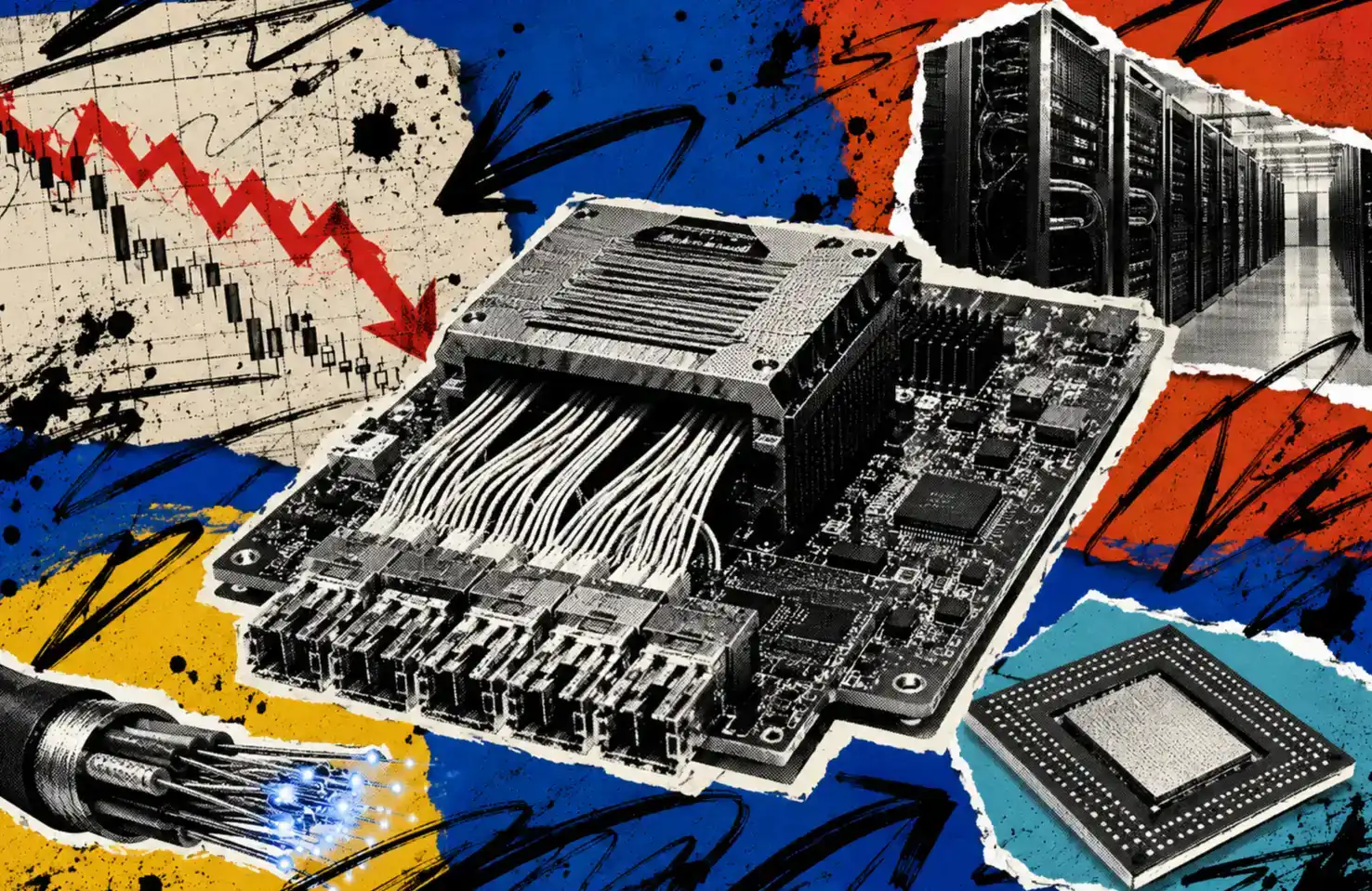
On February 12th, U.S. markets experienced one of their worst sessions of the year, with major indices declining sharply: the Dow fell 1.34%, the S&P 500 dropped 1.57%, and the Nasdaq plunged 2.03%. The sell-off was largely triggered by Cisco's earnings report. Despite posting record revenue and beating EPS estimates, Cisco’s stock plummeted over 12% due to concerns over shrinking margins from rising memory chip costs and tariff impacts. This raised doubts about the sustainability of AI-driven profitability. The panic spread across tech stocks: Apple fell 5%, Disney dropped 5.31%, and other giants like Meta, Amazon, Nvidia, and Microsoft also declined. Defensive stocks like Walmart and McDonald’s gained as investors sought safety. All eyes are now on the January CPI data, delayed due to a government shutdown and set for release on February 13th. Expectations are for a slight cooling in both headline and core inflation. A lower-than-expected CPI could revive rate-cut hopes and provide relief for risk assets, while a higher reading may further delay Fed easing and intensify selling pressure. Gold showed relative resilience, trading around $4,980-$5,000/oz, while silver fell more sharply. Bitcoin drifted toward $65,000 amid extreme fear in the crypto market, with ETF outflows and AI narrative concerns adding to the pressure. Tonight’s CPI data will serve as a critical catalyst for short-term direction across equities, commodities, and cryptocurrencies.

marsbit02/13 01:58

February 13 Market Summary: Apple's Worst Single-Day Performance in Five Years, Tonight's CPI is the Ultimate Judge

marsbit02/13 01:58

Robinhood Ventures into L2, Focusing on RWA Tokenization

In late January 2026, Robinhood CEO Vlad Tenev highlighted that the GameStop short squeeze incident five years earlier could have been avoided with blockchain’s real-time settlement capabilities. Shortly after, Robinhood launched the testnet of Robinhood Chain, an Arbitrum-based Layer 2 network focused on tokenizing real-world assets (RWA), including stocks, ETFs, and private assets. Built on Arbitrum Orbit, Robinhood Chain leverages Ethereum for data availability and uses ETH as its native gas token. The platform combines Ethereum’s security with custom compliance features, allowing Robinhood to enforce regulatory rules while maintaining interoperability with existing DeFi infrastructure. Prior to the testnet, Robinhood had already been testing tokenized stocks in Europe for eight months. These assets are structured as derivative contracts pegged to the price of underlying equities—not as direct ownership claims. The system supports features like dividend pass-through and on-chain minting/burning tied to user positions. Robinhood acquired necessary regulatory licenses, including MiCA and MiFID approvals, partly through its acquisition of Bitstamp. The platform aims to enable 24/7 trading, instant settlement, and global accessibility with low fees. However, challenges remain, including legal ambiguity around asset representation, centralization risks (with Robinhood Europe as the sole counterparty), and potential pushback from traditional institutions. Robinhood Chain represents a significant step in blurring the lines between traditional finance and crypto, though its balance between compliance and decentralization remains a key point of observation.

marsbit02/12 08:34

Robinhood Ventures into L2, Focusing on RWA Tokenization

marsbit02/12 08:34

活动图片