# Сопутствующие статьи по теме scandal

Новостной центр HTX предлагает последние статьи и углубленный анализ по "scandal", охватывающие рыночные тренды, новости проектов, развитие технологий и политику регулирования в криптоиндустрии.

Post a Tweet for $5 Million? The Price Tag for a President's Endorsement of a Meme Coin Exposed

Argentine President Javier Milei is accused of accepting a $5 million bribe to promote the meme token LIBRA on his X (formerly Twitter) account, according to a report by local media El Destape. The allegation is based on evidence recovered from the phone of a crypto lobbyist, Mauricio Novelli, who represented KIP Protocol, the entity behind LIBRA. The scandal erupted after Milei posted a tweet on February 15, 2025, endorsing LIBRA as a project aimed at supporting Argentine entrepreneurs. The token's market cap surged to $4.56 billion within 30 minutes, but it collapsed after insiders executed a "rug pull," cashing out over $100 million. Milei later deleted the tweet, claiming he was misled and that the post was intended to support private enterprise. Investigators uncovered a purported agreement between Milei and Hayden Davis, the alleged mastermind behind the scheme. The deal involved a $5 million payment—$1.5 million upfront, another $1.5 million after Milei publicly endorsed Davis as an advisor, and a final $2 million for a blockchain consulting contract. Phone records also showed frequent communication between Novelli and Milei’s office around the time of the tweet. Despite initial investigations by anti-corruption offices and Congress, no conclusive action was taken. The report suggests Milei was aware of the token’s speculative nature but proceeded for financial gain. Davis defended the scheme in an interview, arguing that meme token trading is a “casino” where such practices are expected. The incident highlights growing concerns over the ethical boundaries and regulatory challenges within the crypto industry.

比推03/17 12:11

Post a Tweet for $5 Million? The Price Tag for a President's Endorsement of a Meme Coin Exposed

比推03/17 12:11

$7 Billion Iran Bet Forces U.S. to Tighten Rules on Prediction Markets

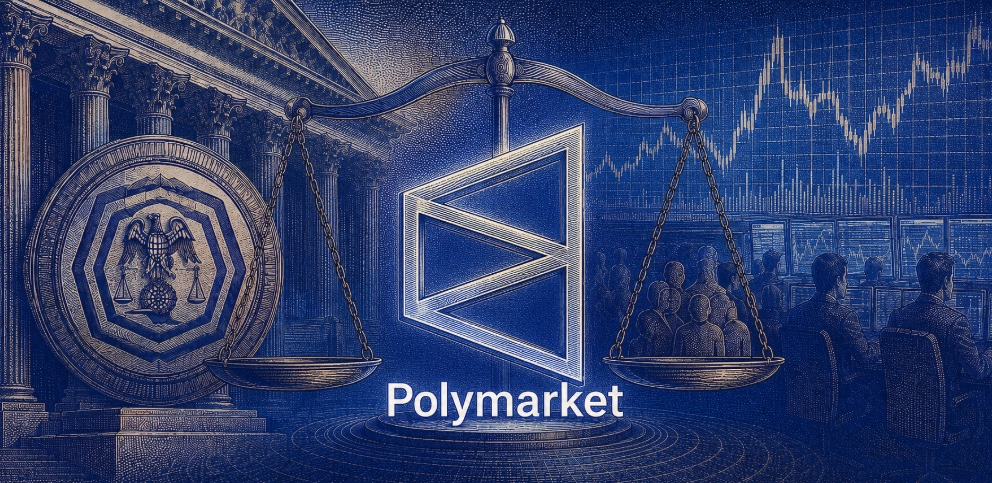
Polymarket and Kalshi, two prediction market platforms, are reportedly seeking funding at valuations of around $20 billion each. This coincides with increased regulatory scrutiny from U.S. lawmakers and the CFTC, driven by controversial contracts related to Iran. Approximately $529 million was wagered on contracts predicting the timing of an Iranian attack, and $150 million on contracts related to the potential ouster of Supreme Leader Khamenei. Six accounts allegedly profited around $1.2 million from well-timed trades just hours before an attack on Iranian officials. These events have intensified concerns about insider trading, market manipulation, and the use of sensitive or classified information. In response, U.S. legislators are drafting bills to restrict certain event contracts, while the CFTC is advancing new regulatory frameworks. Despite the controversy, prediction markets are gaining traction as information products. Major media outlets like CNBC and Dow Jones have partnered with these platforms to integrate predictive data into their reporting. However, the integration of such data into mainstream media raises questions about fairness, trust, and the potential influence on public perception. The core challenge lies in balancing innovation and growth with regulatory oversight, especially when contracts involve geopolitical events, assassinations, or military actions. The U.S. must decide whether to heavily regulate these markets or outright ban certain contract types to prevent abuse and protect sensitive information.

marsbit03/16 14:41

$7 Billion Iran Bet Forces U.S. to Tighten Rules on Prediction Markets

marsbit03/16 14:41

315 Exposes AI Poisoning, a Business from Putian to Silicon Valley

"315 Exposed: AI 'Poisoning' - A Business from Putian to Silicon Valley" During China's 315 consumer rights expose, a practice called Generative Engine Optimization (GEO) was revealed. GEO involves manipulating AI-generated responses by flooding the internet with promotional content, which AI models then scrape and present as factual recommendations. A tool called "Liqing GEO," sold on Taobao, demonstrated this by fabricating a fake smartwatch with absurd features ("quantum entanglement sensing," "black hole-level battery") and having AI recommend it within hours. This mirrors the early days of Search Engine Optimization (SEO), where paid rankings, notably by Putian-based hospitals on Baidu, dominated search results. Despite regulations, the core model remains: whoever controls the information gateway sells rankings. Now, with AI as the new gateway, SEO has simply become GEO. The business is significant. BlueFocus, a major marketing firm, invested millions in a GEO company, PureblueAI, serving clients like Ant Group and Volvo. While Pureblue claims to optimize real brand information, the technical method—flooding the web with content for AI to scrape—is identical to the "poisoning" tactic. This ambiguity fueled a stock market frenzy in late 2025, with GEO-related stocks like BlueFocus surging over 130% before executives cashed out. Simultaneously, Silicon Valley is formalizing this model. OpenAI announced ads in ChatGPT for free users, with sponsored links appearing below answers. While OpenAI claims ads don't influence content, the line between "poisoning" and "commercialization" blurs. The same practice—buying influence in AI outputs—shifts from a几百元 (hundreds of yuan) black-market tool to a potential $17 billion revenue stream for OpenAI. The trust红利 (trust dividend) users place in AI is now the new frontier for manipulation, echoing the SEO era's evolution but at an accelerated pace. The article concludes: answers may be free, but critical thinking shouldn't be outsourced.

比推03/16 11:27

315 Exposes AI Poisoning, a Business from Putian to Silicon Valley

比推03/16 11:27

Crypto Barbarians: The Jupiter System Still Owes the Market an Answer

The article "Encryption Barbarians: The Jupiter System Still Owes the Market an Answer" investigates the controversies surrounding the Jupiter ecosystem, particularly its affiliated projects Meteora and the founders Meow and Ben Chow, originally from the Mercurial Finance project backed by Alameda Research and FTX. After FTX's collapse, the team split into Jupiter (focused on liquidity aggregation) and Meteora (focused on dynamic market making), creating a vertically integrated ecosystem that controls everything from fiat on-ramps (via Moonshot acquisition) to trading and liquidity. This closed-loop system, while efficient, has been repeatedly accused of exploiting information asymmetry. Key controversies include: - Suspicious MET token airdrop distribution in October 2025, where a few wallets received disproportionately large allocations and showed patterns of coordinated dumping. - Suspected insider trading ahead of MET's listing on Upbit in November 2025. - The LIBRA token scandal in February 2025, where Meteora was accused of supporting a token that crashed after reaching a $4.6B market cap, causing $280M in losses. Ben Chow resigned and appointed law firm Fenwick & West (already under scrutiny for its work with FTX) for an independent investigation, which further damaged trust. While on-chain detective ZachXBT's recent report cleared Meteora in the Axiom Exchange insider trading case, the ecosystem remains under a cloud of suspicion over its centralized control, lack of transparency, and repeated patterns of operating in regulatory gray areas. The article concludes that the market is still waiting for real accountability from the Jupiter system.

marsbit03/11 05:49

Crypto Barbarians: The Jupiter System Still Owes the Market an Answer

marsbit03/11 05:49

活动图片