$7 Billion Iran Bet Forces U.S. to Tighten Rules on Prediction Markets

marsbitОпубликовано 2026-03-16Обновлено 2026-03-16

Введение

Polymarket and Kalshi, two prediction market platforms, are reportedly seeking funding at valuations of around $20 billion each. This coincides with increased regulatory scrutiny from U.S. lawmakers and the CFTC, driven by controversial contracts related to Iran. Approximately $529 million was wagered on contracts predicting the timing of an Iranian attack, and $150 million on contracts related to the potential ouster of Supreme Leader Khamenei. Six accounts allegedly profited around $1.2 million from well-timed trades just hours before an attack on Iranian officials. These events have intensified concerns about insider trading, market manipulation, and the use of sensitive or classified information. In response, U.S. legislators are drafting bills to restrict certain event contracts, while the CFTC is advancing new regulatory frameworks. Despite the controversy, prediction markets are gaining traction as information products. Major media outlets like CNBC and Dow Jones have partnered with these platforms to integrate predictive data into their reporting. However, the integration of such data into mainstream media raises questions about fairness, trust, and the potential influence on public perception. The core challenge lies in balancing innovation and growth with regulatory oversight, especially when contracts involve geopolitical events, assassinations, or military actions. The U.S. must decide whether to heavily regulate these markets or outright ban certain contract...

Written by: Andjela Radmilac

Compiled by: Saoirse, Foresight News

Polymarket and Kalshi are seeking funding at valuations that would place them among the top consumer fintech companies, while U.S. regulators are simultaneously accelerating the development of new rules for such products. It is reported that both companies are in early-stage funding negotiations, with valuations expected to reach approximately $20 billion each.

This funding boom coincides with a political storm.

Iran-related contracts have turned prediction markets from a niche forecasting tool into a controversial focal point involving insider information and war speculation. A Reuters investigation into the markets on Polymarket related to the timing of the attack and Khamenei's ouster found that approximately $529 million was wagered on contracts related to the timing of the attack, and about $150 million was bet on contracts related to Khamenei; meanwhile, sources indicate that six accounts, through precisely timed trades, collectively profited about $1.2 million.

Now, U.S. lawmakers are drafting relevant bills, and the U.S. Commodity Futures Trading Commission (CFTC) has also stated it will advance new regulatory rules.

Wall Street believes that event probability prediction will become part of the information system; but Washington is blocking it because it fears this system could benefit the wrong people at the worst possible time.

Why Wall Street is Bullish on Prediction Markets

Prediction markets can convert attention into trades, earn fees from those trades, and simultaneously generate real-time probability data, packaged as information products.

It is this data product that moves prediction markets out of the "gambling" category and classifies them as information tools similar to market data, polls, and financial terminals—because their output format is highly similar to market quotes.

Mainstream media have begun partnering with these platforms:

  • CNBC has signed a multi-year agreement with Kalshi to integrate its probability data into television and digital content starting in 2026.
  • Dow Jones has reached an exclusive deal with Polymarket to introduce prediction data into platforms like The Wall Street Journal and Barron's, treating contract prices as news infrastructure on par with earnings reports, interest rates, and election coverage.

These partnerships also amplify the impact of scandals: once probability data is embedded in mainstream media, it influences public perception of an event's likelihood and urgency. This is also why regulators believe platforms must adhere to higher standards in fairness, monitoring, and settlement.

This explains why, even as Iran-related trades spark political controversy, the valuations of both companies are rising.

Iran Incident Makes Prediction Markets a Washington Headache

The biggest advantage of prediction markets is early access to information. And the Iran-related contracts clearly show that these platforms are touching on sensitive information that the government tries to control.

On March 2, bets on the attack timing-related contracts reached $529 million, and contracts related to Khamenei's death and ouster reached about $150 million. Just hours before the attack on Iranian officials, six accounts suddenly injected funds and profited $1.2 million through these contracts.

As the conflict escalated, multiple reports pointed out that a large number of newly registered accounts made precise bets on Iran-related events. Such reports have thrust Polymarket from a crypto-niche platform directly into the sights of government regulation and law enforcement.

The core issues these platforms now face are: trust and fairness.

For prediction markets to function, users must believe the rules are stable, outcomes are determined consistently, and there is no insider advantage. Once the subject of trading is military action, the trust issue escalates into a political problem—because the motive for trading early could become a motive for leaking sensitive or even classified information.

This is also why the policy response has rapidly escalated.

Representative Mike Levin and Senator Chris Murphy are already drafting legislation aimed at restricting prediction markets. Congress will directly define which event contracts can be legally traded.

Additionally, CFTC Chairman Michael Selig stated that the agency has submitted an advance notice of proposed rulemaking to the White House Office of Management and Budget and is about to introduce a regulatory framework for prediction markets, which could affect all aspects from contract design to monitoring and enforcement.

The choice facing Washington is clear:

  • Acknowledge prediction markets as legal event contracts, strengthen regulation, clarify restrictions, and allow the industry to expand orderly under rules;
  • Directly prohibit contract categories related to war, assassination, and leader ousters because such trading极易 (is highly prone to) trigger insider trading and foster不良动机 (bad motives).

The data below reveals why this conflict is difficult to resolve:
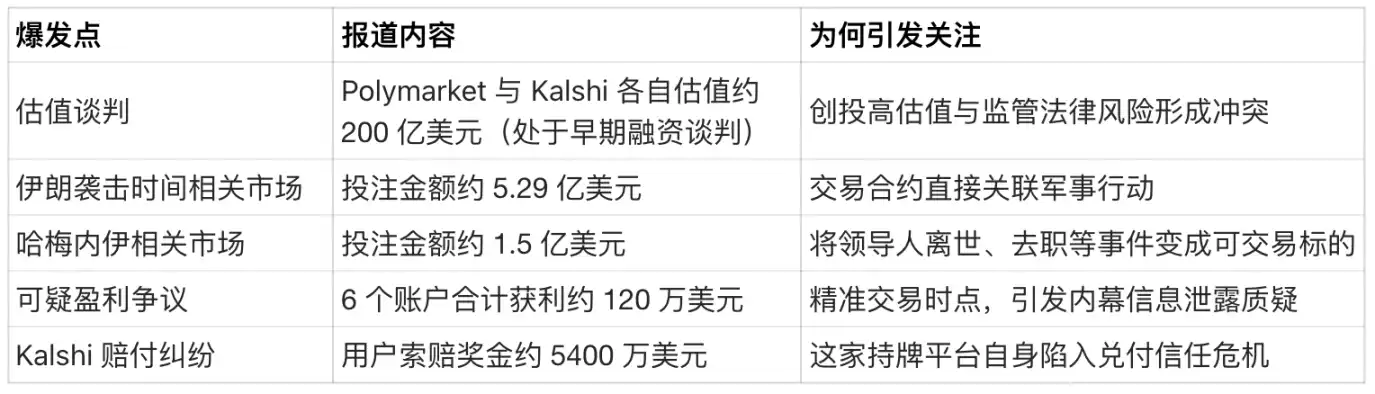
Kalshi's own dispute also shows that regulation alone cannot fully solve the trust problem.

On March 5, Kalshi faced a class-action lawsuit where users accused the platform of refusing to pay approximately $54 million in winnings—users had bet that Iran's supreme leader would step down before March 1. The plaintiffs claimed the platform only activated a "death-related exception clause" after the Iranian leader was attacked, using it to refuse payment.

But Kalshi stated that its rules regarding trades on leader deaths were already clear, and it had refunded fees and compensated users for losses, meaning users did not lose money.

This is precisely the contradictory dilemma currently facing investors and policymakers.

Investors hope the industry will achieve growth, expand its reach, and justifiably integrate probability prediction data into the mainstream information system.

Users hope that when event outcomes are controversial and emotionally charged, the platform rules will be stable and credible.

Regulators希望杜绝 (hope to eliminate) these markets turning sensitive state actions into tradable products, avoiding situations where "access to confidential intelligence yields optimal trading returns." Because once these trading prices begin to influence the public information environment, the associated risks evolve into a governance challenge.


Связанные с этим вопросы

QWhat is the total amount of money involved in the Iran-related contracts on Polymarket, and how was it distributed between the two main types of contracts?

AApproximately $679 million was involved in Iran-related contracts on Polymarket. This includes about $529 million bet on contracts related to the timing of an attack and approximately $150 million on contracts concerning the ousting or death of Supreme Leader Khamenei.

QWhy are US regulators and lawmakers moving to create new rules for prediction markets, specifically in response to the Iran-related events?

AUS regulators and lawmakers are moving to create new rules because the Iran-related contracts highlighted the risk of prediction markets being used for trading on sensitive or even classified information related to military actions and political assassinations. This raises concerns about insider trading, the potential to incentivize the leaking of state secrets, and the platforms' influence on public perception when their data is integrated into mainstream media.

QHow have mainstream media organizations partnered with prediction market platforms like Kalshi and Polymarket, and what does this signify for the industry?

AMainstream media organizations have formed significant partnerships with these platforms. CNBC has a multi-year deal with Kalshi to integrate its probability data into its TV and digital programming starting in 2026. Dow Jones has an exclusive partnership with Polymarket to bring prediction data to platforms like The Wall Street Journal and Barron's, treating the contract prices as part of their news infrastructure. This signifies the industry's attempt to legitimize itself as a provider of valuable information tools rather than mere gambling platforms.

QWhat specific incident involving six accounts on Polymarket raised suspicions of insider trading related to the Iran events?

AJust hours before a high-level Iranian official was attacked, six accounts suddenly deposited funds and placed bets on the relevant contracts. These accounts collectively profited approximately $1.2 million from their precisely timed trades, raising strong suspicions of insider trading based on non-public information about the impending event.

QWhat is the core dilemma facing investors, users, and regulators regarding the future of prediction markets, as illustrated by the article?

AThe core dilemma is a three-way conflict of interests: Investors want the industry to grow and for its probability data to be widely adopted into the mainstream information ecosystem. Users demand that platform rules remain stable and trustworthy, especially when settling emotionally charged and controversial events. Regulators aim to prevent these markets from turning sensitive state actions into tradable products, fearing it creates incentives for leaking机密情报 (classified intelligence) and poses a significant governance risk when trading prices begin to influence public opinion and the information environment.

Похожее

Треугольник невозможного — это вообще псевдопроблема

Автор Билли Гао утверждает, что основное ограничение для массового внедрения блокчейн-технологий не в классической «трилемме» (масштабируемость, децентрализация, безопасность), а в двух фундаментальных недостатках: отсутствии легитимности и конфиденциальности. Несмотря на создание мощнейшей криптографической системы, все транзакции и балансы по умолчанию прозрачны для всех, что аналогично постоянному налогу из-за MEV (максимально извлекаемой стоимости) и препятствует входу институционального капитала. Блокчейн — это медленный, дорогой, но беспристрастный компьютер общего пользования, идеально подходящий для учета активов, которыми и является сам этот учет (например, деньги). Однако его реальное использование ограничивается узкой прослойкой пользователей, тогда как крупные фонды и обычные люди не могут его применять из-за юридических рисков и полной публичности финансовой деятельности. Первый недостаток — легитимность — начинает решаться через регулирование (например, закон GENIUS). Второй и главный — «прозрачность как налог» — требует внедрения конфиденциальности по умолчанию с помощью современных криптографических инструментов, таких как доказательства с нулевым разглашением. Это позволит доказывать соответствие правилам (например, платежеспособность или KYC), не раскрывая самих данных. Таким образом, добавление проверяемой конфиденциальности к децентрализованному консенсусу — это чистое улучшение, которое откроет блокчейн для триллионов долларов институциональных и частных капиталов, для которых он изначально и был предназначен.

marsbit2 ч. назад

Треугольник невозможного — это вообще псевдопроблема

marsbit2 ч. назад

Трилемма невозможности — это искусственная проблема

**Резюме: "Невозможный треугольник" — это псевдопроблема** Криптоиндустрия построила мощнейшую криптографическую систему, но она не обеспечивает приватности финансовых операций по умолчанию. Все транзакции и балансы публичны. Основная причина, по которой триллионы долларов не переходят на блокчейн — не в масштабируемости (старая "трилемма" решена), а в двух других, более фундаментальных недостатках: **легитимности и конфиденциальности**. **Легитимность**: Безграничный доступ (permissionless) создаёт правовую неопределённость для крупного капитала. Однако с появлением регуляторных рамок (например, закона GENIUS) этот барьер начинает снижаться. **Конфиденциальность (Приватность)**: Прозрачность блокчейна — это не преимущество, а **налог**. Публичность каждой позиции и транзакции приводит к потерям от MEV, фронтраннинга и слежки, что неприемлемо для институциональных инвесторов, фондов и обычных пользователей. Парадокс в том, что система, построенная на криптографии, не шифрует основную деятельность пользователей — их финансы. Однако современные криптографические примитивы (например, доказательства с нулевым разглашением — zk-SNARKs) позволяют решить эту проблему, не жертвуя проверяемостью (аудитом) или соблюдением норм (compliance). Можно доказать платёжеспособность, пройденный KYC или соответствие лимитам, не раскрывая самих данных. **Вывод**: Добавление **доказуемой приватности с возможностью контролируемого раскрытия информации** — это чистое улучшение текущей модели. Оно закрывает главные барьеры для институционального капитала, превращая блокчейн из "публичной таблицы" в конфиденциальный и легитимный расчётный слой, для которого он, по сути, и был предназначен. Только тогда наступит переход к массовому использованию.

链捕手2 ч. назад

Трилемма невозможности — это искусственная проблема

链捕手2 ч. назад

Оптические чипы: коллективное расширение производства

Рост спроса на оптические чипы для ИИ-инфраструктуры стимулирует глобальную волну расширения производственных мощностей. В США Coherent получает государственное финансирование для расширения завода по производству 6-дюймовых InP-пластин, а также заключает стратегические сделки с NVIDIA. Nokia наращивает мощности по тестированию и упаковке фотонных чипов. В Японии JX Advanced Metals инвестирует в увеличение производства InP-подложек в 7–10 раз. Европейские компании, такие как Tower Semiconductor и ST, активно расширяют производство кремниевой фотоники, заключая долгосрочные соглашения. Китай демонстрирует агрессивный рост: Soarse расширяет производство чипов и модулей, Sanan Photonics наращивает выпуск InP-чипов, а Yunnan Germanium увеличивает мощности по производству пластин. Основной движущей силой является растущая потребность ИИ-центров обработки данных в пропускной способности, что требует большего количества оптических компонентов независимо от того, будут ли использоваться традиционные съемные модули или перспективные технологии, такие как CPO, NPO или гибридные архитектуры. Гонка за лидерство в эпоху фотоники набирает обороты, поскольку США, Япония, Европа и Китай стремятся укрепить свои позиции в цепочке поставок.

marsbit5 ч. назад

Оптические чипы: коллективное расширение производства

marsbit5 ч. назад

1996 или 1999? Первым испытанием Уолша стало «Как смотреть на ИИ»

Назначенный председателем ФРС Вош столкнулся с ключевой дилеммой: как оценить текущий бум искусственного интеллекта? Экономисты разделились на два лагеря. Одни считают, что рост производительности благодаря ИИ скоро подавит инфляцию, позволяя ФРС бездействовать. Другие предупреждают, что спрос опережает предложение, и промедление с повышением ставок приведёт к необходимости более резких мер в будущем. Вош, судя по заявлениям, склоняется к подходу 1996 года, когда Алан Гринспен не стал повышать ставки во время бума производительности, что оказалось верным решением. Однако нынешняя ситуация отличается: растущие тарифы, большой дефицит бюджета и снижение выгод глобализации создают дополнительное инфляционное давление. Критики, такие как глава Чикагского ФРС Гулсби, утверждают, что ожидаемый всеми рост производительности от ИИ уже сейчас вызывает перегрев экономики, так как люди и компании увеличивают расходы в ожидании будущих выгод. Это требует более жёсткой денежно-кредитной политики. Оппоненты отмечают, что многие домохозяйства не могут брать кредиты под будущий рост доходов, что ослабляет этот эффект. Вош также сталкивается с парадоксом: он хочет отказаться от практики «прогнозирующего руководства» (forward guidance), установленной как раз в 1999 году для предупреждения рынков о ужесточении политики. Если экономика пойдёт по сценарию 1999 года, ему придётся либо использовать эту практику, либо рисковать вызвать рыночные потрясения молчанием. Таким образом, первый серьёзный вызов для Воша — определить, повторяет ли экономика оптимистичный сценарий 1996 года или ведёт к необходимости жёстких мер по образцу 1999 года. От этого выбора зависит не только ближайшая политика ФРС, но и его историческая репутация.

marsbit7 ч. назад

1996 или 1999? Первым испытанием Уолша стало «Как смотреть на ИИ»

marsbit7 ч. назад

Отчет по Ethereum за первый квартал 2026 года: снижение комиссий, рекордное количество пользователей и транзакций

В первом квартале 2026 года сеть Ethereum продемонстрировала парадоксальную динамику: количество активных пользователей, транзакций и пропускная способность достигли исторических максимумов, в то время как комиссии за транзакции, общая заблокированная стоимость (TVL), объем торгов и рыночная капитализация ETH снизились. Этот феномен объясняется стратегическим переходом к этапу «низких комиссий для роста масштаба» после обновления Fusaka, которое удешевило блок-пространство. Парадокс Джевонса проявляется в том, что снижение стоимости использования высвобождает новый спрос. Ключевой тренд — смещение нарратива от DeFi-платформы к глобальному расчетному слою для институциональных финансов. Ethereum сохраняет доминирующую позицию в сегментах стейблкоинов (61,8% среди топ-5 сетей), токенизированных фондов (73%) и товаров (84%), привлекающих таких гигантов, как BlackRock и JPMorgan. Инвестиции в масштабирование и снижение комиссий нацелены на укрепление сетевых эффектов и долгосрочную ценность ETH как базового актива для расчетов в цифровой экономике.

marsbit9 ч. назад

Отчет по Ethereum за первый квартал 2026 года: снижение комиссий, рекордное количество пользователей и транзакций

marsbit9 ч. назад

Торговля

Спот
Фьючерсы
活动图片