# Сопутствующие статьи по теме Risk

Новостной центр HTX предлагает последние статьи и углубленный анализ по "Risk", охватывающие рыночные тренды, новости проектов, развитие технологий и политику регулирования в криптоиндустрии.

Bank of Korea Interprets the AI Semiconductor Cycle: The Most Dangerous Signal Lies in Financing

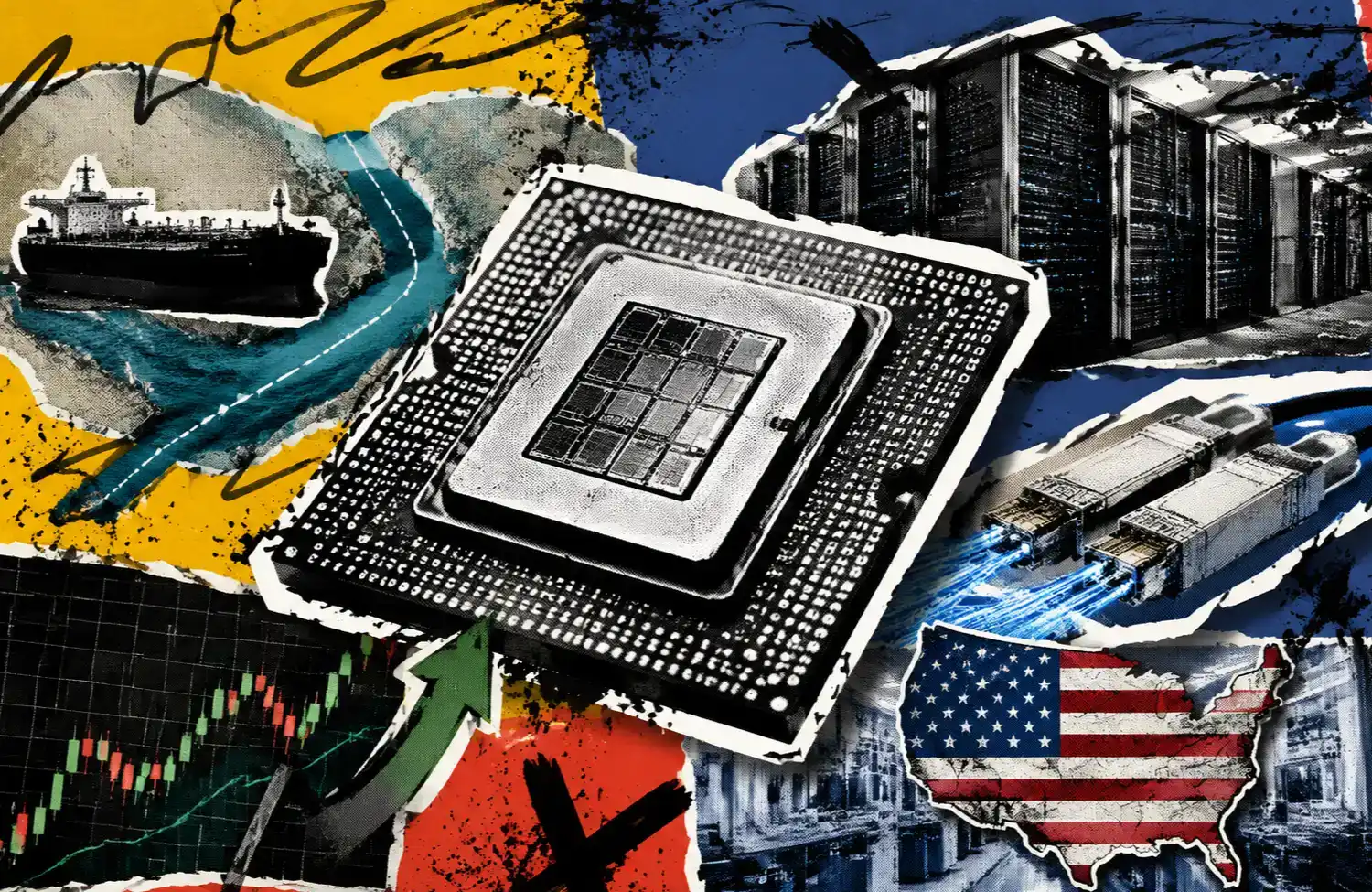
The Bank of Korea (BoK) released a report examining the sustainability of the current AI-driven semiconductor supercycle, concluding that the expansion is likely to continue until at least the first half of 2026. The report highlights three key differences from past cycles: unprecedented demand growth (driven by HBM and AI accelerators), severely constrained supply (due to complex HBM production and conservative industry expansion), and a significantly larger and longer supply-demand gap. Five critical factors will determine the cycle's longevity: 1. The profitability of AI investments, as market focus shifts from market share capture to earnings. 2. The ability of major tech firms to secure financing, with internal cash flows already insufficient to cover massive CAPEX, leading to increased corporate debt issuance and risky vendor financing structures reminiscent of the telecom bubble. 3. Uncertain impact of AI model efficiency improvements, which could either reduce per-unit demand or increase total consumption. 4. Expansion speed of major memory manufacturers, with significant new capacity from SK Hynix, Micron, and Samsung only expected from late 2027. 5. Ramping production from Chinese manufacturers, whose DRAM market share is projected to grow rapidly, pressuring prices. The report warns that financing fragility—evidenced by rising CDS spreads, off-balance-sheet SPV financing, and redemption halts in private credit funds—is the most critical risk. While the cycle remains robust through 2026, pressures are expected to build in 2027, with a heightened risk of overcapacity by 2028.

marsbit04/13 08:51

Bank of Korea Interprets the AI Semiconductor Cycle: The Most Dangerous Signal Lies in Financing

marsbit04/13 08:51

Will Quantum Computing Kill Bitcoin and Mining? Is This Alarmist?

The article addresses the recurring concern that quantum computing could break Bitcoin's encryption and disrupt mining. It references a Google Quantum AI white paper from March 2026, which suggests that the resources needed for a quantum computer to crack Bitcoin’s elliptic curve digital signature algorithm (ECDSA) have been reduced by about 20 times. Under ideal conditions, such an attack could theoretically derive a private key from a public key in roughly 9 minutes using 500,000 physical qubits. However, the threat is not immediate. Current quantum processors, like Google’s Willow (105 qubits) or IBM’s Condor (~1,121 qubits), are far from the scale required. The risk primarily targets transaction signatures—especially during the brief window when a transaction is broadcast but not yet confirmed, or when public keys have been historically exposed. It is estimated there is only a 10% probability of a “quantum break” by 2032. The impact on mining is considered negligible. Research indicates that quantum mining would require astronomically high qubit counts and energy—far exceeding entire national grids—making it economically and physically infeasible. The broader solution lies in post-quantum cryptography (PQC). Standards like ML-DSA and SLH-DSA are being developed, and Bitcoin improvement proposals such as BIP 360 aim to reduce quantum vulnerability by modifying transaction structures to avoid exposing public keys. While quantum computing poses a future risk to all public-key encryption systems—not just Bitcoin—the cryptocurrency ecosystem has time to adapt. Upgrades and migration to quantum-resistant algorithms are underway, ensuring the network evolves ahead of the threat.

marsbit04/11 14:40

Will Quantum Computing Kill Bitcoin and Mining? Is This Alarmist?

marsbit04/11 14:40

Aave Mired in a Crisis of Confidence: Service Providers Exit En Masse, Failures in Technology, Governance, and Risk Control

Aave, a leading DeFi lending protocol, is facing a severe internal crisis marked by the departure of key service providers, raising concerns about its governance, security, and future direction. The crisis began when Chaos Labs, the protocol's long-time risk management provider, terminated its relationship with Aave. The firm cited financial losses, the exit of other major contributors, and fundamental disagreements over the risk architecture of the upcoming Aave V4. Aave Labs declined Chaos Labs' demands for a significant fee increase and exclusive control over key functions like risk management and oracle services. This exit followed the departure of two other critical partners. BGD Labs, the primary technical contributor to Aave V3, accused Aave Labs of forcing an aggressive transition to V4 by limiting V3 development and devaluing its work. Subsequently, the Aave Chan Initiative (ACI), a major governance service provider, announced its planned exit, criticizing Aave Labs for centralizing power and controlling a large portion of voting tokens. The conflict highlights a central paradox within DAOs: the tension between founder-led vision and decentralized governance, and between long-term protocol health and short-term capital interests. Aave Labs is pushing for a more integrated and efficient "Aave Will Win" model with V4, arguing it is necessary for competing at an institutional level. However, critics warn this centralization comes at the cost of the protocol's decentralized credibility and increases systemic risk. The immediate impacts include a potential security downgrade, a loss of institutional knowledge, and damaged community trust. While Aave Labs views this as a painful but necessary transition, the market is watching cautiously as the protocol navigates this period of significant internal turmoil.

marsbit04/10 10:14

Aave Mired in a Crisis of Confidence: Service Providers Exit En Masse, Failures in Technology, Governance, and Risk Control

marsbit04/10 10:14

WLFI's $75 Million Lending Game: Dolomite Depositors Deeply Trapped

Author: ChandlerZ, Foresight News. On April 9, CoinDesk reported that World Liberty Financial (WLFI), a crypto project co-founded by the Trump family, conducted multiple collateralized loans through the DeFi lending protocol Dolomite, raising market concerns about insider relationships, circular financing, and liquidity risks. WLFI used approximately 5 billion WLFI tokens as collateral on Dolomite to borrow around $75 million in stablecoins, with over $40 million transferred to Coinbase Prime, likely for fiat conversion or OTC trading. Between February and April, WLFI executed a series of transactions, including depositing its own stablecoin (USD1) and WLFI tokens into Dolomite to borrow funds, and directly sending USD1 to Coinbase. Dolomite’s co-founder, Corey Caplan, is also an advisor to WLFI, and WLFI’s lending platform is built on Dolomite, indicating potential conflicts of interest. WLFI now accounts for about 55% of Dolomite’s total supplied liquidity. The USD1 pool has a 93% utilization rate, leaving limited liquidity for other depositors. If WLFI’s token price drops significantly, forced liquidations could cause severe losses for ordinary users. This incident follows previous controversies, including a $500 million investment deal linked to an Abu Dhabi royal, sanctions-related associations, and a prior USD1 depegging event. WLFI responded that there is no liquidation risk and emphasized its business growth, but questions about governance and risk management remain unanswered.

marsbit04/10 06:19

WLFI's $75 Million Lending Game: Dolomite Depositors Deeply Trapped

marsbit04/10 06:19

活动图片