# Сопутствующие статьи по теме Payment

Новостной центр HTX предлагает последние статьи и углубленный анализ по "Payment", охватывающие рыночные тренды, новости проектов, развитие технологий и политику регулирования в криптоиндустрии.

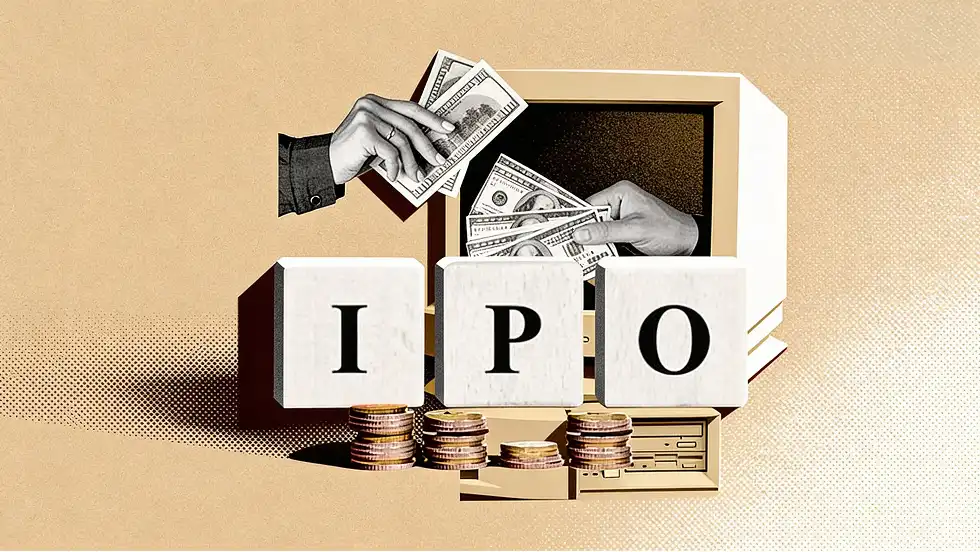
Behind RedotPay's Potential US Listing: The Structural Logic and Regulatory Boundaries of a Stablecoin Payment Platform

RedotPay, a Hong Kong-based stablecoin payment platform, is reportedly considering a U.S. IPO with a potential valuation exceeding $4 billion. This move highlights broader questions about how such platforms structure their operations across regulatory boundaries. Beyond functioning as a simple payment card, RedotPay operates as an integrated financial account system offering services including custody, crypto swaps, lending, remittances, and yield-earning products. Its legal structure involves multiple entities across jurisdictions (Hong Kong, Panama, Argentina, and the U.S.), each handling specific services under distinct regulatory frameworks. For instance, its Crypto Earn service is explicitly not offered to Hong Kong residents and is managed by its Panama entity. The platform’s terms of service clearly define fund usage—such as pooled and non-segregated assets in its Earn product—and acknowledge credit functions, aligning with credit card logic in certain regions. While RedotPay explicitly disclaims being a bank or a stored value facility, regulatory scrutiny will likely focus on functional realities rather than contractual disclaimers. An IPO would subject RedotPay to intense scrutiny regarding legal structure consistency, customer asset handling, risk disclosure, and alignment between growth narratives and compliance practices. The company’s emphasis on detailed legal terms and jurisdictional clarity may strengthen its position, but the key challenge remains demonstrating that its multi-entity framework can withstand regulatory and investor due diligence. Ultimately, RedotPay’s a trend in PayFi where success depends not only on product innovation but also on the ability to maintain legally robust and explainable operational structures across diverse regulatory environments.

marsbit03/01 01:32

Behind RedotPay's Potential US Listing: The Structural Logic and Regulatory Boundaries of a Stablecoin Payment Platform

marsbit03/01 01:32

Programmers Must Read: Job Hunting in Web3, Avoid These Four Types of High-Risk Gambling-Related Platforms

Chinese programmer "Xiao Wang" considers a Web3 career transition but faces job offers involving "perpetual contracts, on-chain gambling, and prediction markets," raising legal concerns. A legal team advises caution, identifying four high-risk platform types that may constitute illegal operations under Chinese law, despite attractive salaries and remote work: 1. **Web3 Gaming Platforms**: Often disguised as decentralized games (GameFi) but operate as on-chain casinos using USDT/ETH as chips, with smart contracts handling bets and payouts. Developers building betting logic, random number generators, or fund pools are considered key technical support in gambling operations. 2. **Perpetual Contract Development**: High-leverage crypto trading platforms (e.g., 150x) where users bet on price directions. Courts increasingly view these as gambling, and developers working on matching engines, liquidation systems, or referral programs face liability. 3. **Prediction Markets**: Framed as financial innovation for event forecasting, they essentially function as binary betting on outcomes (e.g., price movements or macro events). Technologists designing prediction contracts or oracle integrations are seen as enabling gambling mechanisms. 4. **Gambling Payment Platforms**: High-risk payment/clearing services for gambling sites, often masked as "payment solutions" or "USDT gateways." Developers building fiat/crypto deposit/withdrawal systems or currency exchange logic may be implicated in providing gambling-related financial services. Key advice: Reject any role where the core business involves "betting on outcomes with platform profit from odds/leverage." Conduct a two-step self-check: 1) Analyze the project’s overall model (white paper/website) for gambling patterns; 2) Scrutinize if your role involves critical components like betting logic, payout rules, or fund settlement. Prioritizing risk avoidance is crucial to prevent potential criminal liability and career disruption.

marsbit02/25 00:08

Programmers Must Read: Job Hunting in Web3, Avoid These Four Types of High-Risk Gambling-Related Platforms

marsbit02/25 00:08

When AI Reshapes the Shopping Journey, How Much Time Does PayPal Have Left?

PayPal's recent $200 million acquisition of Cymbio signals a strategic pivot to remain relevant in the emerging era of "Agentic Commerce," where AI agents increasingly handle product discovery, decision-making, and purchasing on behalf of users. This move aims to transform PayPal from a Web2 payment button into an embedded infrastructure layer within AI-driven commercial workflows, covering discovery, checkout, and fulfillment. The competitive landscape is rapidly evolving: Google and Shopify are developing the Universal Commerce Protocol (UCP) to control the routing layer, while OpenAI and Stripe are advancing the Agentic Commerce Protocol (ACP) to enable AI agents to execute transactions. Stripe, in particular, is positioning itself as the default "action layer" for AI commerce, mirroring its success as the internet’s payment API. Major forecasts suggest Agentic Commerce could capture $1 trillion in U.S. retail sales by 2030, representing up to one-third of online retail. For PayPal, Stripe, and other fintech players, the challenge is to embed themselves into these new protocol-based ecosystems—or risk being sidelined. Banks retain advantages in clearing and compliance but must adapt quickly, while crypto remains largely absent from current frameworks, presenting both a risk and potential opportunity. PayPal’s acquisition is less an offensive move than a necessary bid to maintain its seat at the table.

marsbit02/18 12:38

When AI Reshapes the Shopping Journey, How Much Time Does PayPal Have Left?

marsbit02/18 12:38

活动图片