# Сопутствующие статьи по теме Memory

Новостной центр HTX предлагает последние статьи и углубленный анализ по "Memory", охватывающие рыночные тренды, новости проектов, развитие технологий и политику регулирования в криптоиндустрии.

GPU Rental Prices Drop 30% in Three Weeks: AI Value Chain Migrating from Nvidia to Memory Chips

GPU rental prices for Nvidia's flagship B200 chip have fallen by approximately 30% over three weeks, dropping from a high of $6.11/hour to $4.22/hour. This decline signals a potential easing of the "compute scarcity" narrative that has long supported AI hardware valuations. Concurrently, the semiconductor market is witnessing a significant divergence: while the VanEck Semiconductor ETF (SMH) has risen 15% in the past month, with memory giants Micron and SanDisk each surging nearly 60%, Nvidia's stock has declined about 3% over the same period. Analysts suggest this shift indicates that the AI value chain's bottleneck and profits are migrating from compute (GPUs) to memory. Demand for high-bandwidth memory (HBM) remains intensely strong, with contract prices soaring over 100% in H1 2026, granting memory manufacturers significant pricing power. In contrast, increased B200 supply from improved manufacturing yields and competitive pressure from new cloud providers are softening GPU rental rates. While long-term contracts, like SpaceX's $30 billion deal with Google, show sustained large-scale demand for Nvidia hardware, the softening spot prices pressure the margins of cloud providers and could eventually impact Nvidia's order flow if chip prices don't adjust. The key takeaway for investors is not a weakening AI thesis, but a recalibration within the sector: pricing power appears to be strengthening for memory chipmakers while showing signs of strain for leading GPU suppliers.

marsbit5 ч. назад

GPU Rental Prices Drop 30% in Three Weeks: AI Value Chain Migrating from Nvidia to Memory Chips

marsbit5 ч. назад

18 Months, Over 50x Surge: KIOXIA's Epic Comeback

KIOXIA, a NAND flash memory giant, staged a dramatic comeback driven by AI demand. After a period of significant losses, a failed merger, and missed HBM opportunities, its 2024 IPO began modestly. However, fueled by explosive demand for AI data storage, its stock price skyrocketed over 50 times within 18 months, making it Japan's most valuable company, surpassing Toyota. Its Q1 FY2026 profit guidance soared 30-fold year-over-year, with 2026 NAND capacity already sold out. Key to its success is its 3D NAND technology, BiCS FLASH. As the inventor of NAND, KIOXIA advanced its technology through generations, reaching over 200 layers by 2023. Key innovations include CBA (CMOS directly Bonded to Array), which separately manufactures control circuits and memory arrays for better performance, and OPS (On Pitch Select Gate) to increase density. The company is now developing high-capacity packages like an 8TB solution stacking 32 dies. Looking beyond NAND, KIOXIA is exploring 3D DRAM with its OCTRAM technology, using oxide semiconductor transistors for ultra-low leakage to reduce power consumption. This fundamental research differs from HBM and represents a long-term bet to extend its 3D expertise from NAND into future DRAM architectures. KIOXIA's story highlights how technological assets and shifting market cycles can rapidly transform a company's fortunes. While questions remain about sustaining growth beyond the current AI boom, its resurgence demonstrates that in semiconductors, being down does not necessarily mean being out.

marsbit8 ч. назад

18 Months, Over 50x Surge: KIOXIA's Epic Comeback

marsbit8 ч. назад

Report Interpretation: J.P. Morgan Details Micron's Pre-Earnings Sentiment, Current Hardware Sector Dynamics

Morgan Stanley analyst Joshua Meyers' report (June 21, 2026) highlights key trends in the hardware and semiconductor sector ahead of Micron's earnings. The core takeaways are: 1. **Micron & Memory:** Memory remains a high-conviction long theme, driven by strong AI demand and rising ASPs. However, investor focus is shifting to the sustainability of Micron's >80% gross margins and the specifics of potential new long-term supply agreements (SCAs). 2. **Hardware Supply Chain:** AI-related demand for servers, networking, and storage remains robust, but company performance is diverging. Celestica (CLS) shows improved margin confidence, Western Digital and Seagate benefit from pricing, Fabrinet (FN) sees predictable AI optics growth, and Teradyne (TER) anticipates a new Google customer. 3. **AI Capex & WFE Forecasts:** JPMorgan increased its Wafer Fab Equipment (WFE) market growth forecasts to 28% in 2026 and 29% in 2027. AI infrastructure financing is evolving, with higher project-level debt reducing constraints on capex expansion. The report signals that while the AI-driven hardware cycle is strong, the market is entering a phase focused on execution verification (e.g., Micron's SCA details, Fabrinet's ramp with Amazon) and valuation sustainability. Key near-term signals include Micron's guidance, Arista Networks' outlook, and the pace of demand normalization post potential tariff-related pull-ins.

marsbit19 ч. назад

Report Interpretation: J.P. Morgan Details Micron's Pre-Earnings Sentiment, Current Hardware Sector Dynamics

marsbit19 ч. назад

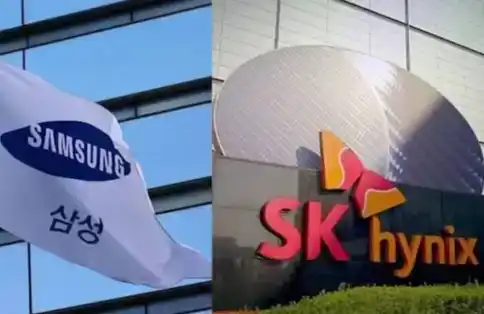
Soaring Export Data for Memory Chips, Market Is Redefining the Valuation Anchor for Memory Stocks

Korean storage export data for the first 20 days of June shows substantial year-on-year increases in both value and price-per-kilogram for categories like DRAM, NAND, and SSDs. This signals a potential shift beyond simple demand recovery, indicating rising prices and a product mix shift towards higher-value items, possibly influenced by AI infrastructure needs. A key point is that the surge in price-per-kilogram is not simply a uniform chip price hike. It reflects a combination of actual price increases and, more importantly, an export structure increasingly dominated by high-value-density products like HBM (High-Bandwidth Memory) and advanced DRAM, which are critical for AI servers. This suggests AI-driven demand may be spilling over from just HBM into broader memory markets. SK Hynix stands to benefit directly due to its leading HBM position. For Samsung and Micron, the implication is potential for greater margin elasticity if the tightness in high-end memory spreads to enterprise SSD and NAND prices. However, the storage sector remains cyclical. Risks include supply expansion, inventory changes, and potential slowdowns in broader AI capital expenditure. Ultimately, while the strong export data supports upward revisions for storage company earnings and fuels discussion of an "AI infrastructure bottleneck premium," a definitive valuation shift from a cyclical to a structural story depends on upcoming quarterly reports. Investors need confirmation from SK Hynix, Samsung, and Micron that improvements in average selling prices, product mix, and, crucially,毛利率 are sustained over multiple quarters.

marsbitВчера 04:29

Soaring Export Data for Memory Chips, Market Is Redefining the Valuation Anchor for Memory Stocks

marsbitВчера 04:29

The AI Bear Market Lasting Two Days Is Over; Why Did Funds Buy Back Storage Stocks First?

After a severe two-day selloff in early June that erased over $1 trillion from U.S. chip stock market value, capital is flowing back first to the memory sector. The correction was not driven by a collapse in AI demand but rather a market reassessment of high expectations. Stocks like Broadcom faced selling pressure despite strong AI revenue guidance, signaling a shift in focus from who has an "AI story" to who can most rapidly translate AI demand into verifiable profits and earnings per share (EPS). Memory companies, such as Micron and SK Hynix, are leading the recovery because their EPS growth is more immediately verifiable. The AI server boom directly increases demand for high-bandwidth memory (HBM) and high-capacity server DRAM, tightening supply and driving up contract prices for conventional DRAM and NAND Flash. This price increase, coupled with a shift to higher-margin products, flows directly into near-term revenue and profitability, as evidenced in recent earnings reports. In contrast, other AI semiconductor segments like GPUs, ASICs, and optical modules, while central to the long-term AI infrastructure story, face longer and less certain paths to EPS validation. Their growth depends more on future product cycles, customer adoption timelines, and capital expenditure plans. The rebound in memory stocks highlights a market preference for assets with shorter, more transparent EPS conversion cycles following the recent de-risking phase. However, this does not negate the potential of other AI hardware segments should they provide clearer near-term order visibility. The episode has raised the validation bar for all AI-related investments.

marsbit06/09 07:57

The AI Bear Market Lasting Two Days Is Over; Why Did Funds Buy Back Storage Stocks First?

marsbit06/09 07:57

Huang Renxun Dramatically 'Saves' South Korean Stock Market

In early June, South Korea's stock market experienced a sharp decline, with the KOSPI index dropping over 5% and triggering a trading halt. Amid this volatility, NVIDIA CEO Jensen Huang's visit to Seoul provided a dramatic boost to market sentiment. During his trip, Huang held a dinner meeting with SK Group Chairman Chey Tae-won and SK Hynix CEO Kwak Noh-Jung. He announced that NVIDIA's new Vera CPU would utilize SK Hynix DRAM and confirmed a multi-year technical collaboration between the two companies. This partnership aims to co-develop next-generation memory for NVIDIA's AI infrastructure roadmap, covering products from data center supercomputers to personal AI devices. Huang also publicly commented that AI company stocks were attractively priced. A key announcement was that NVIDIA's upcoming Vera Rubin AI supercomputer systems will use HBM4 memory, with supply qualifications granted to all three major suppliers: SK Hynix, Samsung Electronics, and Micron Technology. Despite this multi-sourcing strategy, Huang warned that the industry-wide chip shortage, affecting everything from wafers to packaging, is expected to persist for several years due to relentless demand from global AI factory construction. The collaboration extends beyond memory supply. SK Hynix will employ NVIDIA's AI platforms and Omniverse digital twin technology to enhance its own semiconductor design, simulation, and manufacturing processes, aiming for more autonomous factory operations. This visit builds upon a prior October 2025 agreement for SK Group to build a large-scale AI data center using over 50,000 NVIDIA GPUs. Huang's itinerary also included meetings with other Korean giants like Hyundai, LG, and Samsung, indicating NVIDIA's broader strategy to deepen ties with South Korea's tech industry.

链捕手06/08 15:45

Huang Renxun Dramatically 'Saves' South Korean Stock Market

链捕手06/08 15:45

活动图片