# Сопутствующие статьи по теме Economy

Новостной центр HTX предлагает последние статьи и углубленный анализ по "Economy", охватывающие рыночные тренды, новости проектов, развитие технологий и политику регулирования в криптоиндустрии.

Conversation with Bitwise Advisor: From K-Shaped Economy to AI Taking Jobs, How Can Bitcoin Save the Younger Generation?

Jeff Park, a macro strategist and advisor at Bitwise, argues that the traditional financial system is broken, particularly for young generations. He describes a "K-shaped economy" where asset inflation enriches the wealthy while leaving others behind, with unaffordable housing as a key symptom. Park explains that real estate is often a depreciating asset due to maintenance costs and taxes, yet it remains unattainable for many young people due to distorted demand from global capital flows. He proposes Bitcoin as a superior store of value—scarce, portable, and free from maintenance costs or excessive taxation. By diverting capital away from real estate, Bitcoin could help lower housing prices and increase accessibility. Park also discusses the decline of traditional "smart investing" (e.g., value stocks) and the rise of "ideological investing" in non-correlated assets like crypto, luxury goods, and collectibles. On AI, Park warns it could trigger extreme social inequality by eliminating jobs while boosting corporate profits. He believes this will push younger generations toward Bitcoin, not only as a hedge but also as a symbol of decentralization and data sovereignty—offering an alternative to centralized AI systems that use personal data without fair compensation. He advises a diversified portfolio with Bitcoin as a core holding to hedge against currency devaluation and systemic risk.

marsbit04/18 05:41

Conversation with Bitwise Advisor: From K-Shaped Economy to AI Taking Jobs, How Can Bitcoin Save the Younger Generation?

marsbit04/18 05:41

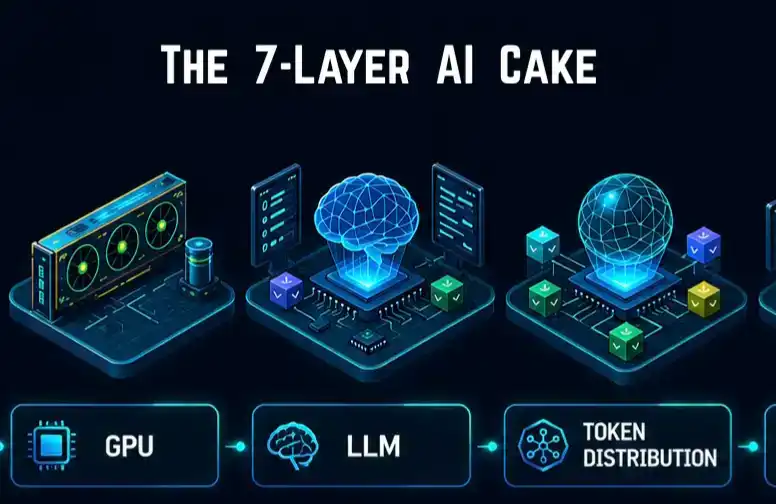
Industry Experts Gather, Reflections and Breakthroughs in the AI Agent Era

Industry experts gathered to discuss the challenges and opportunities in the AI Agent era. The event, co-hosted by several organizations, addressed key questions about model selection, token resource sustainability, and strategies for individuals and businesses to adapt. Conflux's Chief Architect highlighted the current trend of granting AI more autonomy, noting that its limitations in complex scenarios stem from difficulties in capturing and retaining key contextual constraints. Future advancements should focus on enhancing external memory, continuous learning, and domain-specific applications. Speakers from Tencent Cloud and Biteye shared practical insights. Tencent's WorkBuddy leverages multi-agent collaboration for tasks like resume screening and report generation, emphasizing enterprise-grade security. Biteye’s founder discussed mitigating AI hallucinations through rigorous code review processes, managing token consumption, and using platforms like Discord for agent coordination. Legal risks were also addressed, with a partner from Mankun Law advising on liability isolation, intellectual property protection, and mitigating platform dependency risks. Investors noted that AI is still in its early stages, with technology rapidly evolving. They emphasized investing in foundational layers like compute power and exploring AI-Web3 convergence. The discussion concluded that AI should be viewed as a productivity tool rather than a threat. Customizable agents can significantly enhance efficiency, but successful implementation requires careful engineering, security measures, and human oversight to integrate AI into complex workflows effectively.

marsbit04/08 05:51

Industry Experts Gather, Reflections and Breakthroughs in the AI Agent Era

marsbit04/08 05:51

Bhutan, A Country Betting 9% of Its GDP on Bitcoin

Bhutan, a small Himalayan kingdom, has made a dramatic and high-stakes bet on Bitcoin, investing up to 9% of its GDP in cryptocurrency mining infrastructure. The country leveraged its abundant hydroelectric power—a natural resource that often produces surplus energy—to mine Bitcoin starting around 2019-2020. This initiative was led by its sovereign wealth fund, Druk Holding and Investments (DHI), under CEO Ujjwal Deep Dahal, as a strategic move to diversify foreign reserves and escape economic dependency on India, which buys most of Bhutan's electricity under restrictive terms. At its peak, Bhutan held an estimated 13,000 Bitcoin. However, it has since sold significant portions to address fiscal needs, including a $72 million sale in 2023 to fund a 50% salary increase for public servants amid a severe brain drain. More ambitiously, the government pledged up to 10,000 Bitcoin (worth ~$1 billion) to fund the Gelephu Mindfulness City (GMC), a proposed special economic zone with a projected cost of $100 billion—nearly 30 times Bhutan’s 2025 GDP. The country also engaged in sophisticated on-chain strategies, such as using ETH as collateral for loans on platforms like Aave, though it faced near-liquidation during market downturns. While Bitcoin mining has helped reduce the current account deficit and boost reserves, it hasn’t solved deep-seated issues like youth unemployment, which remains high at 18%, driving significant emigration. Despite national-level gains, many citizens continue to seek opportunities abroad, highlighting the disconnect between macroeconomic gambles and everyday livelihoods.

marsbit04/08 03:14

Bhutan, A Country Betting 9% of Its GDP on Bitcoin

marsbit04/08 03:14

活动图片