# Сопутствующие статьи по теме DAO

Новостной центр HTX предлагает последние статьи и углубленный анализ по "DAO", охватывающие рыночные тренды, новости проектов, развитие технологий и политику регулирования в криптоиндустрии.

Second Largest Whale Cuts Losses and Liquidates, Can AAVE Still Be Bought Amid Deepening Divisions?

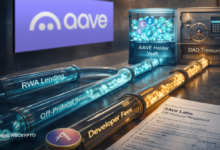
The second-largest AAVE whale, excluding the project team, protocol contracts, and CEXs, has sold 230,000 AAVE tokens at a significant loss of $13.45 million, causing a 12% price drop. This sell-off reflects growing tensions between Aave Labs and the community over governance and fund allocation. The conflict began when Aave switched its default swap aggregator to Cow Swap, redirecting front-end transaction fees—previously sent to the Aave DAO treasury—to Aave Labs instead. Community members estimated this change could divert over $10 million annually from the DAO to the team, raising concerns about transparency and control. Aave Labs argued that front-end products are separate from the protocol and that the team has the right to monetize them. In response, a proposal was made to transfer control of Aave’s brand assets (domains, social accounts, etc.) to token holders. Founder Stani Kulechov opposed the proposal, citing its oversimplification of complex legal and operational issues, further escalating community backlash. The situation highlights deeper structural challenges in DeFi governance, where protocol value, team control, and community rights intersect. The outcome of an ongoing snapshot vote on the proposal may determine AAVE’s short-term price direction and long-term community trust. If the conflict signals fundamental misalignment between Aave Labs and the DAO, this could mark the start of continued tension rather than an isolated incident.

marsbit12/22 04:13

Second Largest Whale Cuts Losses and Liquidates, Can AAVE Still Be Bought Amid Deepening Divisions?

marsbit12/22 04:13

Second Largest Whale Cuts Losses and Liquidates, Can AAVE Still Be Bought Amid Deepening Conflict?

The second-largest AAVE whale, excluding the project team, protocol contracts, and exchanges, has sold off 230,000 AAVE tokens (worth approximately $38 million) at a loss, causing a 12% price drop. The sale occurred amid growing tensions between the Aave team and its community over governance and financial control. The conflict began when the community discovered that Aave Labs, without prior communication, redirected front-end exchange fees—previously directed to the Aave DAO treasury—to its own address after switching the default trading path to Cow Swap. This change could divert an estimated $10 million annually from the community to the team. Aave Labs defended the move, arguing that front-end products are separate from the protocol and that the team has the right to monetize its own infrastructure. In response, a proposal was made to transfer control of Aave’s brand assets—including domains and social accounts—to AAVE token holders. Founder Stani Kulechov opposed the proposal, calling it oversimplified and poorly structured, further escalating community backlash. The situation highlights deeper structural tensions in DeFi between team-controlled products and community-governed protocols. The outcome of the ongoing snapshot vote on the proposal may significantly influence AAVE’s price and long-term community trust.

Odaily星球日报12/22 04:10

Second Largest Whale Cuts Losses and Liquidates, Can AAVE Still Be Bought Amid Deepening Conflict?

Odaily星球日报12/22 04:10

Why Are Crypto Project Acquisitions Now Excluding Tokens?

Recent acquisitions in the crypto space, such as Circle’s purchase of Interop Labs (developers of Axelar Network), have sparked controversy by focusing on acquiring teams and intellectual property while excluding the native tokens. In the Axelar case, the AXL token and network remain independent, leading to a 15% price drop and community backlash. Similar patterns emerged in other acquisitions: Kraken’s Ink acquired Vertex Protocol’s team and tech but abandoned the VRTX token, causing a 75% crash. Pump.fun acquired Padre and invalidated its token without compensation, and Coinbase integrated Vector.fun’s tech without involving the TNSR token. These cases reflect a broader “acquihire” trend common in Web2, where companies acquire talent and tech but avoid equity or token obligations. In crypto, however, this often leaves retail token holders with no rights or financial benefits, as tokens are designed to avoid regulatory scrutiny as securities—offering utility or governance instead of ownership or profit-sharing. This has led to growing tension between project teams and token holders, exemplified by Aave’s recent governance proposal to assert DAO control over IP, equity, and revenue—highlighting the misalignment between token-based incentives and traditional equity structures. The trend raises fundamental questions about the value and rights attached to tokens in decentralized ecosystems.

marsbit12/18 01:12

Why Are Crypto Project Acquisitions Now Excluding Tokens?

marsbit12/18 01:12

Compliance Guide for Utility Token Issuance

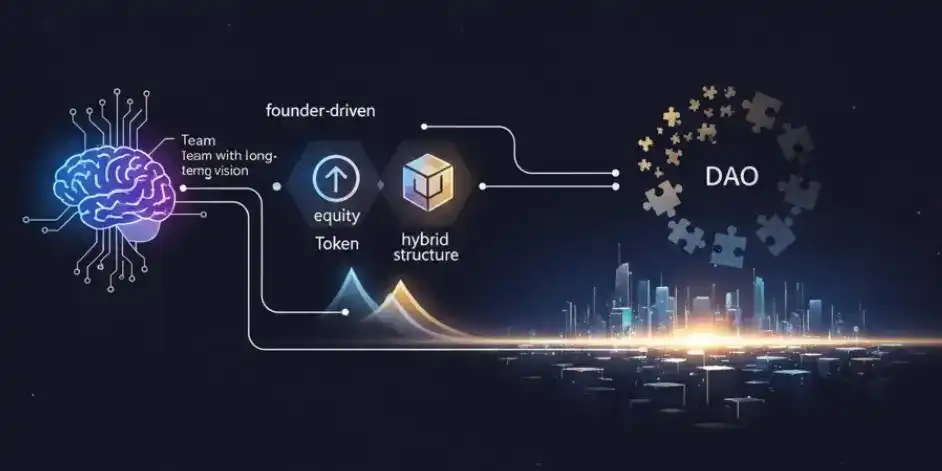
"Functional Token Issuance Compliance Guide" This guide outlines the legal framework for issuing utility tokens, emphasizing that regulatory risk depends not on the token's description, but on its economic reality. A token's classification as a security is determined by market behavior and investor expectations, not technical promises, as seen in cases like Telegram's TON. Projects fall into two main categories with different compliance paths: Infrastructure projects (e.g., Bitcoin, Celestia) often use fair launches for lower risk, while Application-layer projects (e.g., DeFi, GameFi) require careful legal structuring due to higher regulatory scrutiny. Key stages and actions are detailed: * **Testnet Phase:** Separate development (DevCo) and token/ecosystem (Foundation) entities. Use equity + token warrants for fundraising, not direct token sales, to avoid triggering securities laws prematurely. * **Mainnet Launch (TGE):** This is a high-risk phase. Ensure clear disclosure of token utility, allocation, lock-ups, and conduct KYC/AML. Avoid marketing that promises profit. Public airdrops and sales are closely watched. * **DAO Stage:** Achieve true decentralization by relinquishing team control to community governance (e.g., Uniswap DAO). This "verifiable exit" is crucial for reducing securities risk. The core compliance challenge is proactively demonstrating the token is *not* a security by emphasizing its functional use, avoiding profit promises, and progressively decentralizing. Compliance is a continuous process, not a one-time approval. A robust legal structure is the essential foundation for a sustainable project.

marsbit12/17 02:11

Compliance Guide for Utility Token Issuance

marsbit12/17 02:11

ENS Governance Crisis: Decentralization = Low Quality and Inefficiency

ENS Governance Crisis: Decentralization Leads to Inefficiency and Mediocrity In November 2025, ENS founder Nick Johnson publicly criticized the state of ENS DAO, warning that political infighting was driving away dedicated contributors and risking the organization's takeover by inexperienced or self-interested participants. This sparked a broader discussion about systemic failures in the DAO's structure. Limes, the DAO's long-serving secretary, proposed dissolving three key working groups (Meta-Governance, Ecosystem, and Public Goods), arguing that the current structure incentivized relationship preservation over truth-seeking and lacked mechanisms to remove underperforming contributors. He highlighted that poor contributors drive out talented ones, and the system inherently discourages honesty. Multiple high-caliber contributors, including lawyers, programmers, and scientists, confirmed they had exited due to a toxic culture of gatekeeping, conflicts of interest, and self-dealing. Critical questions were discouraged, and the drafting of essential documents like a constitution was mishandled, leading to wasted funds and stagnation. Analyst clowes.eth noted that the working groups saw almost no new active participants throughout the year, and the governance model failed to attract or empower leaders. Participants avoided sharing honest opinions due to political repercussions, making mediocrity the norm. The core issue is distorted incentives: when future funding depends on relationships, the rational choice is to avoid criticism, leading to log-rolling (mutual proposal support), adverse selection (talented people leave), and low decision quality. This is compounded by the "DAO premium," where services cost 2-3 times more than in traditional organizations. The openness that initially empowered the DAO became its weakness, as it allowed participation based on availability rather than capability without quality control. Nick Johnson supported a "pause" rather than abolition of the groups, acknowledging concerns about the DAO's ability to meet legal obligations if professional contributors leave. The community split into two camps: one advocating for a comprehensive, paid audit before any structural changes, and another pushing for immediate dissolution and action. Deeper issues were highlighted, including a lack of transparency from ENS Labs, the core development team funded by the DAO, which operates opaquely despite its central role. The crisis underscores a fundamental challenge: in consensus-based systems, saying the truth carries high relational, political, and opportunity costs. Without mechanisms to reward honesty and ensure accountability, decentralization can lead to institutional silence and inefficiency. Proposed solutions range from radical ideas like stripping voting rights from service providers to pragmatic steps like creating a more centralized operational company (OpCo) within the DAO for better execution. The debate continues, with elections delayed and proposals under review. The crisis remains unresolved, but the organization's willingness to self-reflect and consider dismantling its own structure is a notable achievement in itself.

marsbit12/16 07:13

ENS Governance Crisis: Decentralization = Low Quality and Inefficiency

marsbit12/16 07:13

活动图片