# Сопутствующие статьи по теме Conflict

Новостной центр HTX предлагает последние статьи и углубленный анализ по "Conflict", охватывающие рыночные тренды, новости проектов, развитие технологий и политику регулирования в криптоиндустрии.

The New York Times: After Trump's Return to the White House, Major Retreat in SEC's Crypto Lawsuits

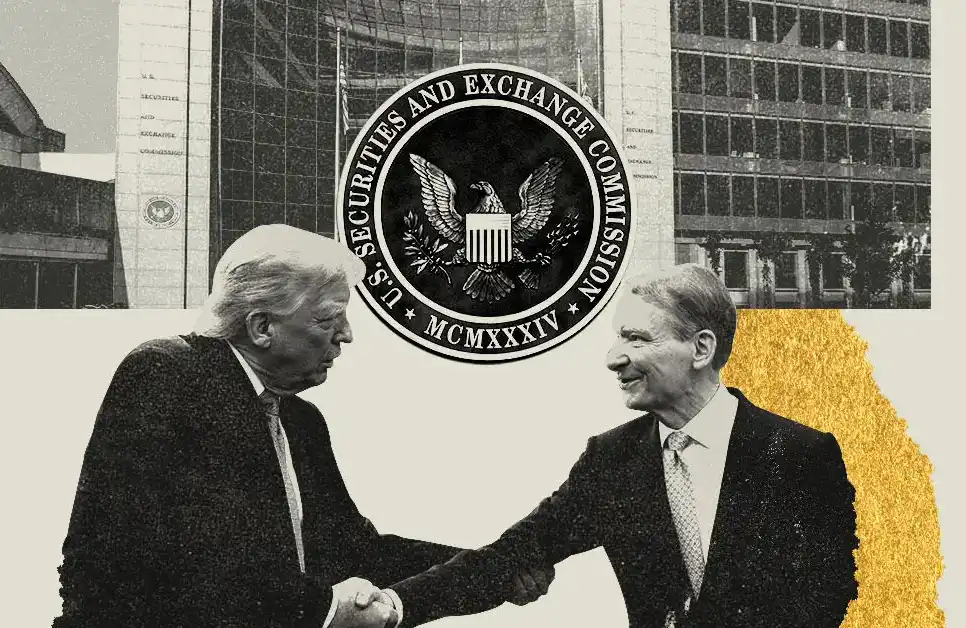
In a significant policy reversal following Donald Trump's return to the White House, the U.S. Securities and Exchange Commission (SEC) has dramatically scaled back its enforcement actions against the cryptocurrency industry. An investigation by The New York Times found that over 60% of ongoing crypto-related cases were either paused, settled favorably, or dropped entirely under the new administration. Key findings include the SEC dropping seven crypto cases, five of which involved firms with known financial ties to Trump. An additional seven cases saw reduced charges or lenient settlements, with three linked to Trump associates. The remaining nine active cases involve entities with no known connection to the former president. The SEC stated its shift was based on legal and policy considerations, not political favoritism, citing long-standing internal opposition to many crypto lawsuits. However, the timing coincides with Trump’s pro-crypto stance and his family’s business ventures in the sector, including the World Liberty Financial project. Notable cases dropped or softened include those against Binance, Ripple Labs, and Gemini Trust. The latter is operated by the Winklevoss twins, who have financial and business ties to the Trump family. While no direct evidence of presidential pressure was found, the pattern suggests a stark departure from the aggressive enforcement seen under the Biden administration. The policy shift has raised concerns among former SEC officials about investor protection and market integrity, while the crypto sector celebrates reduced regulatory pressure.

marsbit12/16 09:22

The New York Times: After Trump's Return to the White House, Major Retreat in SEC's Crypto Lawsuits

marsbit12/16 09:22

New York Times Investigation: Internal Strife, Favoritism... What Details Lie Behind Trump's 'Crypto Amnesty'?

An investigation by The New York Times reveals a dramatic shift in the U.S. SEC’s enforcement approach toward the cryptocurrency industry following former President Donald Trump's return to office. The analysis of court records and internal documents shows the SEC halted, dropped, or softened more than 60% of ongoing crypto cases inherited from the Biden administration. Notably, the agency dropped seven cases outright—five of which involved defendants with public ties to Trump—and made concessions in seven others. In contrast, it maintained its legal stance only in cases where no clear connection to Trump existed. The SEC defended the policy reversal as based on legal and jurisdictional concerns, not political favoritism. The report highlights that multiple companies that benefited from the SEC’s pullback had financial links to Trump or his family—including through his cryptocurrency venture, World Liberty Financial—or had contributed to his political efforts. Examples include Binance, Ripple, Tron, Cumberland, and Gemini, operated by the Winklevoss twins. Under the Biden administration, the SEC filed 105 crypto-related cases, compared to zero since Trump’s return. Current and former SEC officials expressed concern that the agency’s retreat risks undermining investor protection and encouraging unchecked industry practices.

比推12/15 21:44

New York Times Investigation: Internal Strife, Favoritism... What Details Lie Behind Trump's 'Crypto Amnesty'?

比推12/15 21:44

Crypto Money Printer Wants to Buy Juventus: The Battle Between Europe's Old and New Money

Tether, the world's largest stablecoin issuer, has launched a bold bid to acquire Italian football giant Juventus, offering a 20.74% premium for the 65.4% stake held by Exor, the holding company of the Agnelli family. The all-cash offer includes an additional €1 billion investment pledge. However, Exor swiftly rejected the proposal, stating there are "no negotiations" for a sale. The move is led by Tether’s CEO Paolo Ardoino, an Italian native and lifelong Juventus fan. His attempt to buy his childhood club follows months of tension. After becoming the club’s second-largest shareholder earlier in 2025, Ardoino was excluded from a capital increase and faced resistance when seeking board representation. Exor instead backed club legend Giorgio Chiellini in a symbolic move to defend tradition. The Agnellis, who have controlled Juventus for over a century, view the club as a family legacy and symbol of Italian industrial heritage. Despite the club’s financial struggles—including massive losses, accounting scandals, and exclusion from Champions League revenue—Exor has repeatedly injected funds to maintain control. The family perceives crypto-based wealth as speculative and unstable, in contrast to their industrial-rooted fortune. The clash represents a broader cultural conflict between “old money” and “new money.” While European football clubs increasingly partner with crypto firms, traditional dynasties like the Agnellis remain resistant. Ardoino’s determination, however, signals that the push for acceptance is only beginning.

marsbit12/15 05:34

Crypto Money Printer Wants to Buy Juventus: The Battle Between Europe's Old and New Money

marsbit12/15 05:34

The Dark Side of Altcoins

The article "The Dark Side of Altcoins" argues that most cryptocurrency tokens inevitably fail due to a fundamental structural conflict between company equity and token holders. Most crypto projects are essentially traditional companies with equity-held founders, VC investors, and profit motives, which later issue a token. This creates irreconcilable incentives: equity seeks to capture value (revenue, profit, control) for the company and shareholders, while tokens need value (fees, buybacks, governance) to accrue to the protocol and holders. Equity almost always wins, leading to token value drainage. The piece highlights Hyperliquid as a rare success because it avoided VC equity financing entirely. Without a board or pressure to deliver value to shareholders, it could direct all economic value to its protocol and token. Legally, tokens cannot function like stocks without being deemed unregistered securities (if they offer dividends, ownership, etc.), which would trigger severe regulatory crackdowns. The optimal structure is one where the company holds no equity, captures no revenue, and all value flows to token holders via protocol mechanisms, with a DAO governing economic decisions. However, the only way to eliminate all conflict is to become a fully decentralized protocol like Bitcoin or Ethereum, with no company, no equity, and neutral, autonomously running infrastructure. The core issue is structural, not market conditions. Tokens are mathematically destined to fail if the project had VC rounds, private token sales, investor unlock schedules, or allows the company to capture revenue. Success requires value directed to the protocol, no VC equity, aligned founder/tokenholder incentives, and an economically irrelevant company. The solution is for investors to stop funding poorly designed projects. The future of the industry depends on capital flowing to projects with sound tokenomics, like those pioneered by Hyperliquid, MetaDAO, and Street.

深潮12/11 10:13

The Dark Side of Altcoins

深潮12/11 10:13

Solana Lending Internal Conflict: The Power Struggle Behind Foundation Mediation

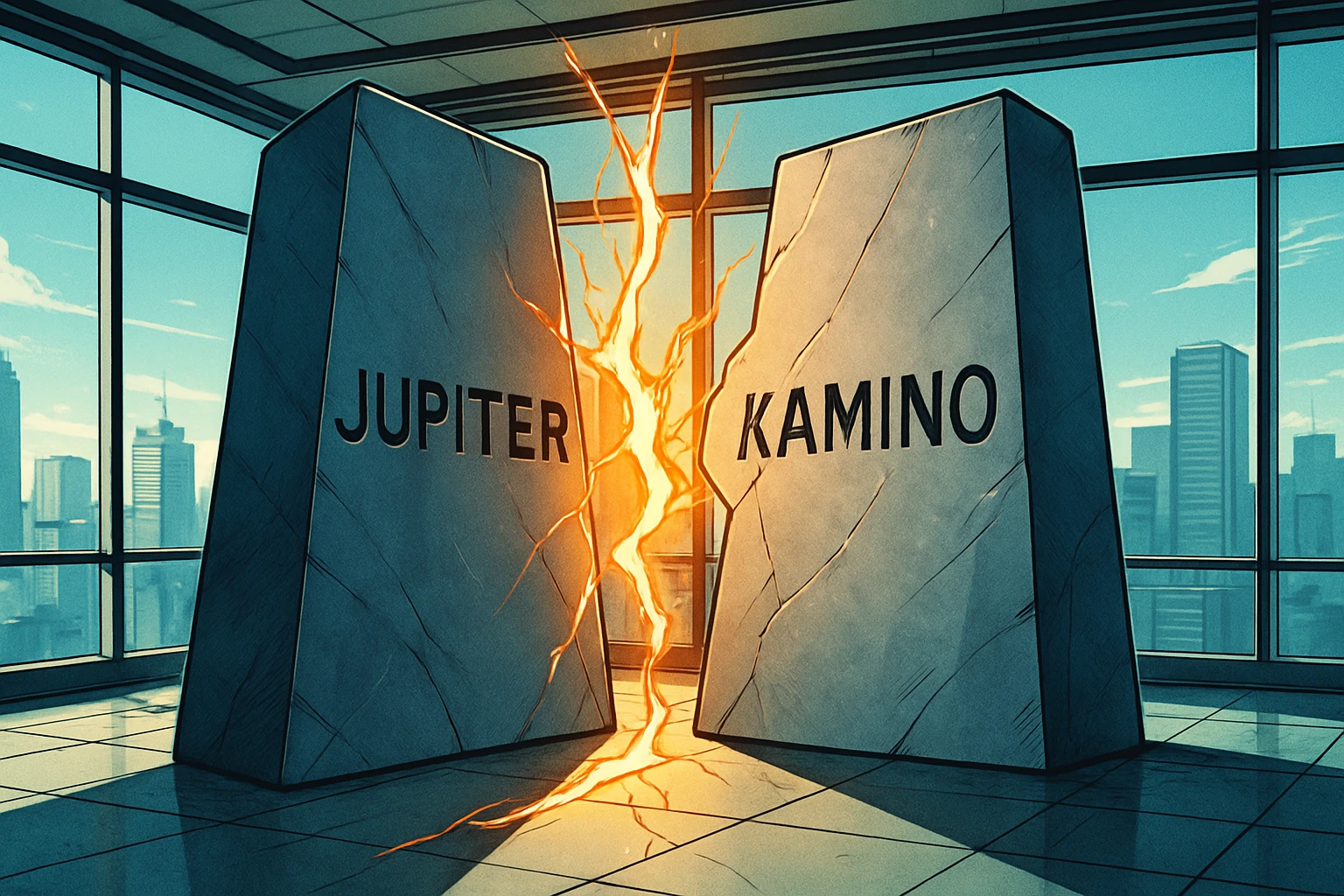
Over the weekend, a public dispute erupted between Solana's two leading lending protocols, Jupiter Lend and Kamino. The conflict originated from Jupiter's earlier marketing claims that its lending product featured "risk isolation," implying that different lending pools would not be exposed to cross-contagion in the event of an asset failure. However, after Jupiter Lend launched, the market observed that its design did not align with the conventional understanding of risk isolation. The protocol allows for the rehypothecation (re-use) of collateral across pools to improve capital efficiency, which critics argue creates potential channels for risk contagion. Kamino's co-founder, Marius Ciubotariu, publicly accused Jupiter of misleading users with false advertising and subsequently blocked a migration tool from Kamino to Jupiter Lend. The core of the debate lies in differing interpretations of "risk isolation." Jupiter and its supporters argue their model offers a balanced approach with independent pool configurations, while Kamino and its allies insist that any form of rehypothecation negates true risk isolation and constitutes a failure in disclosure. The dispute drew reactions from key ecosystem players. Multicoin Capital, an investor in Kamino, strongly criticized Jupiter, accusing the team of either incompetence or intentional deception. In contrast, the Solana Foundation President, Lily Liu, called for unity, urging the two projects to focus on growing the overall market share against competitors like Ethereum rather than engaging in internal conflict. The clash is seen as an inevitable result of intensifying competition in a shrinking market. Jupiter Lend has been rapidly capturing market share from the formerly dominant Kamino since its launch. In a tighter, post-market-crash environment where safety is a paramount concern, Kamino seized on a perceived vulnerability in Jupiter's product design to launch a competitive attack. The incident highlights the fierce battle for dominance in Solana's DeFi lending sector.

比推12/08 16:55

Solana Lending Internal Conflict: The Power Struggle Behind Foundation Mediation

比推12/08 16:55

活动图片