# Сопутствующие статьи по теме Circle

Новостной центр HTX предлагает последние статьи и углубленный анализ по "Circle", охватывающие рыночные тренды, новости проектов, развитие технологий и политику регулирования в криптоиндустрии.

Tether Signs Big Four Auditor, Circle's Compliance Moat Collapses, Stock Plummets 20%

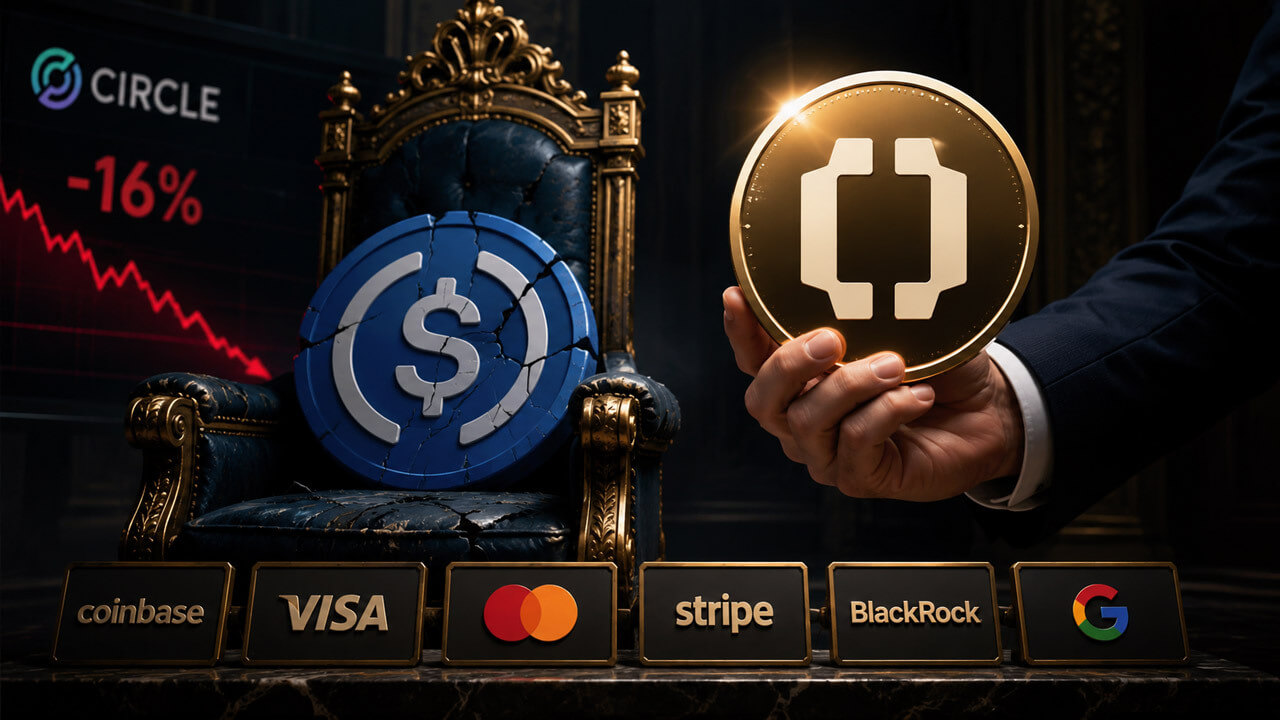
Tether, the world's largest stablecoin issuer, has announced it has engaged one of the Big Four accounting firms to conduct its first-ever comprehensive independent financial audit. This move is seen as a major step toward transparency for the company, which has long faced scrutiny over its reserve backing. The announcement had an immediate market impact, with shares of its competitor Circle, issuer of USDC, plummeting up to 20%. The audit is positioned as a turning point for Tether, which paid nearly $60 million in fines in 2021 following investigations by the New York Attorney General and the CFTC over misrepresentations about its reserves. While Tether has since published quarterly attestations, this full audit is considered a significant upgrade in legitimacy. This development directly challenges Circle's key advantage of perceived regulatory compliance and transparency. With a market cap of over $184 billion, Tether's newfound transparency could solidify its dominant position and attract more institutional capital. The article also details Tether's broader compliance strategy, including the launch of a fully U.S.-regulated stablecoin, USAT, designed to comply with the GENIUS Act. Furthermore, Tether has enhanced its cooperation with law enforcement, assisting in numerous investigations and freezing billions in assets linked to illicit activity. In conclusion, Tether's audit marks a pivotal moment for the entire stablecoin industry, signaling a shift towards greater institutionalization and transparency that aligns with traditional financial standards.

Odaily星球日报03/25 13:39

Tether Signs Big Four Auditor, Circle's Compliance Moat Collapses, Stock Plummets 20%

Odaily星球日报03/25 13:39

From Tencent and Circle: Looking at the Easy and Hard Questions of Investment

The article contrasts the investment prospects of Tencent and Circle in the AI era, framing the decision as a choice between "easy" and "hard" problems, inspired by Charlie Munger's philosophy. Tencent's stock has declined despite strong earnings, as the market shifted from fearing insufficient AI investment to worrying about excessive spending. The author argues this pessimism is overdone. WeChat's nascent AI agent, Yuanbao, is seen as a prototype for a future, more powerful system-native agent. Crucially, this agent would have system-level permissions to seamlessly interact with the massive Mini Program ecosystem (housing apps like Meituan, Didi, etc.), making it a practical, usable product for billions. The author believes the high-probability success of this inevitable development makes investing in Tencent an "easy" decision that the market is currently overlooking. Conversely, Circle's recent rise is fueled by the AI narrative, specifically the belief that AI agents will require blockchain-based stablecoins for settlement, with USDC as the leading compliant option. The author deconstructs this bullish thesis, identifying high uncertainties in its core assumptions: whether AI transactions will *necessarily* use stablecoins (vs. other protocols like Google's UCP), USDC's ability to maintain its lead against competitors like Tether or PayPal, and whether stablecoins even possess strong network effects in an agent-dominated world where cost and friction are paramount. The compounding uncertainty makes investing in Circle a "hard" problem, riskier than market sentiment suggests. In summary, the author posits that Tencent presents a clear, high-probability opportunity (easy), while Circle's future is built on a chain of speculative assumptions (hard).

marsbit03/21 11:20

From Tencent and Circle: Looking at the Easy and Hard Questions of Investment

marsbit03/21 11:20

After $1.26 Trillion: Why Are Circle and Stripe Rushing to Pay 'Wages' to AI Agents?

The article discusses the significant rise of stablecoins, particularly USDC, as the preferred payment method for AI agents. In March 2026, Circle and Stripe are competing to build stablecoin infrastructure for AI agent payments, with USDC processing $1.26 trillion in transactions, accounting for 70% of stablecoin activity. Key points include: - AI agents require programmable, instant, low-friction payment systems, which traditional finance (banks, credit cards) cannot provide. Stablecoins on blockchain meet these needs with 24/7 transfers, smart contract automation, and price stability. - Data shows 98.6% of AI agent payments on platforms like Stripe's x402 use USDC, indicating stablecoins are becoming the default for machine-to-machine transactions. - Regulatory developments are supporting this growth: Hong Kong is issuing its first stablecoin licenses, the US OCC has proposed a federal framework, and the EU has MiCA regulations, signaling global institutional adoption. - Stablecoins act as a "blood system" connecting the digital and real economies, facilitating both internal digital transactions (e.g., tokenized assets) and external fiat conversions. - Risks include security vulnerabilities, regulatory fragmentation, and market instability, but the trend is clear: stablecoins are evolving from crypto tools to essential infrastructure for AI-driven economies. The article concludes that as AI agents autonomously transact, stablecoins will be critical infrastructure, urging businesses and investors to prepare for this shift.

marsbit03/14 00:41

After $1.26 Trillion: Why Are Circle and Stripe Rushing to Pay 'Wages' to AI Agents?

marsbit03/14 00:41

Circle Doubles in a Month: What Is the Market Betting On?

Circle's stock (CRCL) has experienced significant volatility, doubling in February 2025 after a sharp post-IPO decline. This surge occurred while Bitcoin fell 40%, indicating a decoupling from the broader crypto market. The key driver is a fundamental shift in how the market values Circle and its USDC stablecoin. Previously viewed as a cyclical crypto play, USDC's growth accelerated during the bear market, with its circulating supply rising 72% to a record $753 billion. This growth is increasingly driven by traditional finance and global payments, not speculative crypto trading. Major partnerships with Visa, Mastercard, JPMorgan, and Intuit are embedding USDC into mainstream payment infrastructure. The passage of the GENIUS Act in July 2025 provided a federal regulatory framework, creating a moat for compliant issuers like Circle and helping USDC gain market share against USDT. USDC also surpassed Tether in on-chain transaction volume. A major future growth narrative centers on AI Agent payments. Circle and others are developing infrastructure for machine-to-machine transactions, offering 24/7 settlement at a fraction of the cost of traditional systems. While current non-interest revenue from these new use cases remains under 5% of total revenue, the potential market is vast, with predictions of a multi-trillion-dollar stablecoin and AI Agent economy by 2030. Circle's $23 billion valuation largely bets on this future narrative becoming reality.

marsbit03/12 01:09

Circle Doubles in a Month: What Is the Market Betting On?

marsbit03/12 01:09

After the Rise of Stablecoin Status, Old Partners Circle and Stripe Compete for Each Other's Turf

Stablecoin Ecosystem Shift: Former Partners Circle and Stripe Now Compete as Boundaries Blur The stablecoin industry, once characterized by clear divisions of labor, is undergoing a significant transformation. Circle, the issuer of the USDC stablecoin, and Stripe, the global payment processor, were long-time partners. Circle focused on the "issuance layer," minting digital dollars, while Stripe managed the "payment layer," integrating them into commercial flows. This dynamic is changing as both companies strategically expand into each other's domains, driven by the maturation of the stablecoin market into a potential trillion-dollar financial infrastructure. Circle is moving beyond its role as a mere issuer. Its new strategy involves building a comprehensive payment network to capture more value from the circulation of USDC. Key initiatives include the Arc blockchain, the Cross-Chain Transfer Protocol (CCTP) for liquidity, and the Circle Payments Network (CPN), an open standard payment coordination network. This shifts Circle from a stablecoin supplier to an infrastructure builder. Conversely, Stripe is moving downward from the payment layer to control the underlying financial rails. Its acquisition of stablecoin infrastructure firm Bridge, which recently received preliminary approval for a U.S. trust bank charter, is a critical step. Stripe is also co-developing the Tempo blockchain and acquired wallet infrastructure company Privy, aiming to master the entire stack from issuance to settlement. The result is that these former allies are now on a collision course in the middle of the stablecoin value chain. The competition is evolving from a race for market share in stablecoin supply to a broader contest over who will control the fundamental networks and rails through which digital dollars flow. This signals the industry's transition from a crypto-native experiment to a full-scale rebuild of financial infrastructure.

Odaily星球日报03/09 05:01

After the Rise of Stablecoin Status, Old Partners Circle and Stripe Compete for Each Other's Turf

Odaily星球日报03/09 05:01

活动图片