# Сопутствующие статьи по теме CFTC

Новостной центр HTX предлагает последние статьи и углубленный анализ по "CFTC", охватывающие рыночные тренды, новости проектов, развитие технологий и политику регулирования в криптоиндустрии.

The 20% Threshold Audit: Which of the Top 20 Cryptocurrencies Will Perish Under the CLARITY Act?

**Audit of the Top 20: Which Cryptocurrencies Will the CLARITY Act Kill?** Scheduled for a final push in December 2025, the U.S. CLARITY Act introduces a critical 20% threshold. If any single entity or affiliated party controls more than 20% of a network's token supply or validation power, the asset is classified as a "digital security" under the SEC's strict jurisdiction. If it remains below, it is a "digital commodity" under the more lenient CFTC. An audit of the top 20 cryptocurrencies reveals a stark divide: **The Safe Haven (Digital Commodities):** * **Bitcoin (BTC):** 0% control. The gold standard of decentralization. * **Ethereum (ETH):** <1% control. Highly dispersed validators and foundation holdings. * **Dogecoin (DOGE) & Litecoin (LTC):** Near 0% control. Their simple, early PoW issuance is now a major compliance advantage. **The Red Zone (At High Risk):** * **XRP:** High risk. Ripple's massive escrowed holdings could be deemed "entity-controlled." * **BNB:** High risk. Strong association with Binance exchange and its controlled burn mechanism. * **TON:** High risk. Historically concentrated supply from early mining. * **Sui & Aptos:** Extreme risk. Classic "VC coins" with teams, investors, and foundations holding over 50%. * **Layer 2 Tokens (e.g., ARB, OP):** Medium-High risk. Their DAO treasuries often hold 30-40+% of supply, which could be viewed as a single entity. **The Grey Zone:** * **Solana (SOL):** Its status is unclear. FTX's collapse dispersed supply, but the foundation and VC holdings remain a focus for regulators. The 360-day grace period will trigger a market reckoning. Projects may desperately airdrop or burn tokens to dilute control, accept a security" label and face liquidity death on major exchanges, or be preemptively delisted. The outcome will be a "gentrification" of crypto, splitting the market into compliant, institutional "digital commodities" and a shadowy world of illiquid "digital securities." Investors must now scrutinize token distribution or risk being locked out of liquidity.

marsbit12/12 09:40

The 20% Threshold Audit: Which of the Top 20 Cryptocurrencies Will Perish Under the CLARITY Act?

marsbit12/12 09:40

Decade-Long Tug-of-War Concludes: "Crypto Market Structure Bill" Races Toward Senate

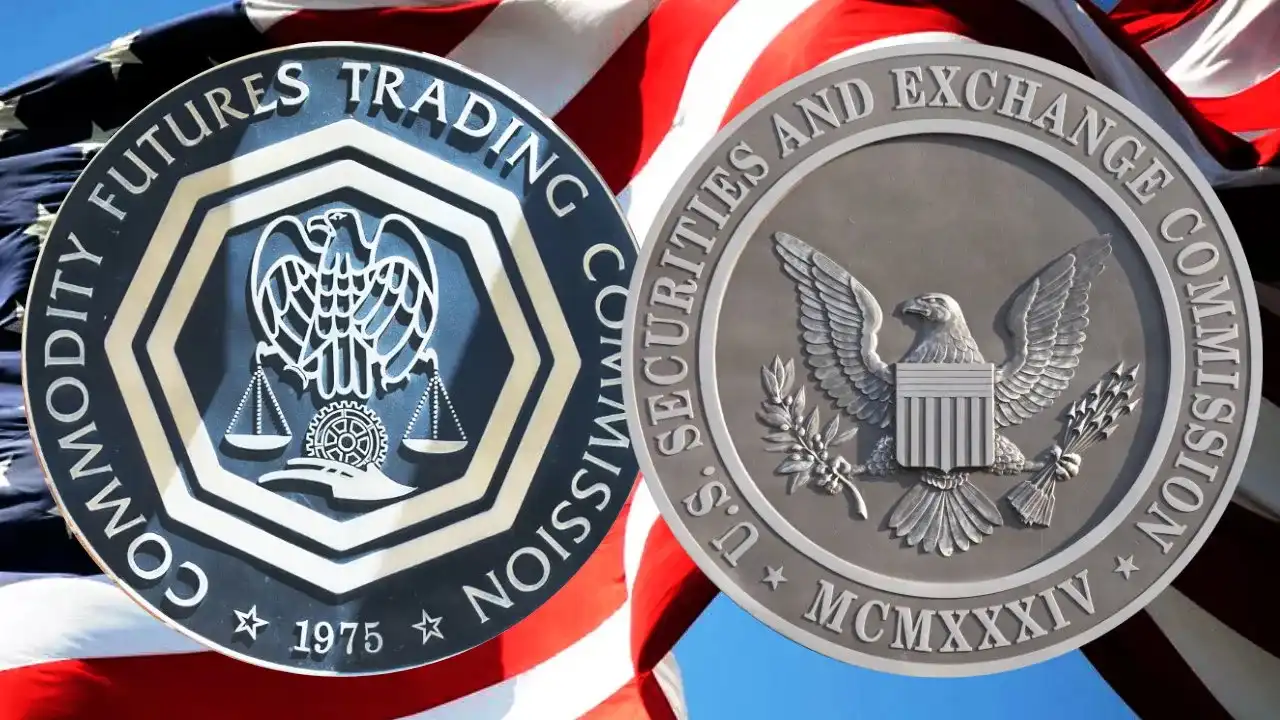
After a decade of regulatory uncertainty, the U.S. is advancing the "Cryptocurrency Market Structure Act" (CLARITY Act), which is expected to move into the Senate for revision and voting next week. The bill, which passed the House with overwhelming support in July, aims to end the long-standing debate over whether digital assets are securities or commodities by introducing a clear classification framework. The core of the legislation distinguishes between "digital commodities" and "digital securities." Most tokens issued on decentralized blockchains will be classified as digital commodities under CFTC jurisdiction, while only those meeting the Howey test will remain regulated as securities by the SEC. The bill also establishes a "mature blockchain" exemption, allowing highly decentralized networks like Bitcoin and Ethereum to avoid SEC registration. Additionally, digital commodity trading platforms must register with the CFTC, with a 360-day interim registration period to ensure a smooth transition. The act mandates coordination between the CFTC and SEC through a joint advisory committee to prevent regulatory gaps. It also protects decentralized finance (DeFi) participants by exempting non-custodial, non-profit roles from broker-dealer regulations. This legislative push aligns with broader regulatory shifts under the Trump administration, which has appointed crypto-friendly leaders to key agencies like the SEC, CFTC, and FDIC. These changes, along with recent CFTC initiatives to allow spot crypto trading on regulated platforms, signal a structural shift toward embracing digital assets. The bill is poised to complement earlier stablecoin legislation, positioning the U.S. as a potential global leader in crypto regulation and attracting institutional investment, though challenges in DeFi oversight and international coordination remain.

marsbit12/12 09:14

Decade-Long Tug-of-War Concludes: "Crypto Market Structure Bill" Races Toward Senate

marsbit12/12 09:14

Weekly Review and Outlook | Circle Issues 500 Million USDC on Solana; Japan Plans to Include Crypto Assets in Securities Regulatory Framework; Gemini Approved by CFTC to Establish Prediction Market; Fed Cuts Benchmark Rate by 25 Basis Points

This week in crypto and financial markets was marked by significant developments and regulatory shifts. Circle issued an additional 500 million USDC on the Solana network, reflecting strong demand for the stablecoin, with trading volume exceeding $11.9 billion within 24 hours. Dubai Customs partnered with Binance to explore crypto payments for trade and logistics, aiming to enhance efficiency and reduce costs. Twenty One Capital, backed by Tether and Bitfinex, began trading on the NYSE, though its stock fell 20% on the first day. Strive launched a $500 million ATM financing plan, partly to acquire more BTC, while American Bitcoin increased its holdings to 4,783 BTC. Japan's FSA proposed bringing crypto assets and IEOs under securities regulations, requiring stricter disclosures and cracking down on insider trading. Jupiter announced its own stablecoin, JUP USD, and acquired RainFi to offer peer-to-peer lending services. Gemini received CFTC approval to launch a blockchain-based prediction market, potentially expanding into crypto derivatives. The Federal Reserve cut interest rates by 25 basis points to 3.50%-3.75%, responding to slowing economic growth. Looking ahead, HashKey Group plans to raise up to HK$1.67 billion in its Hong Kong IPO on December 17. Several tokens, including Starknet, Arbitrum, and LayerZero, are scheduled for unlocks next week, which may influence market liquidity.

cointelegraph_中文12/12 07:25

Weekly Review and Outlook | Circle Issues 500 Million USDC on Solana; Japan Plans to Include Crypto Assets in Securities Regulatory Framework; Gemini Approved by CFTC to Establish Prediction Market; Fed Cuts Benchmark Rate by 25 Basis Points

cointelegraph_中文12/12 07:25

Mars Morning Post | After Fed Rate Cut, US Dollar Records Worst Single-Day Performance Since September; Trump: Rate Cut Too Small, Could Have Been Doubled

Mars News, Dec 11 — Following the Fed’s decision to cut interest rates by 25 basis points, the US dollar recorded its worst single-day performance since September, with the dollar index falling 0.4%. Fed Chair Powell emphasized labor market risks and downplayed inflation concerns, contributing to the decline. President Trump criticized the move, calling the cut “too small” and suggesting it should have been doubled. In other developments, Stripe acquired the team behind crypto wallet Valora to expand its stablecoin services. The CFTC launched an innovation council with members including Polymarket, Kraken, and Gemini. GameStop reported a $9.4 million decrease in its Bitcoin holdings in Q3. Elon Musk hinted at a potential SpaceX IPO, while Michael Saylor argued that limiting passive Bitcoin investment would be counterproductive. A new wallet accumulated 1,200 BTC, and the crypto fear and greed index rose to 29, a one-month high. Meanwhile, the Norwegian central bank announced it sees no current need for a CBDC, citing an already efficient payment system. Paxful agreed to plead guilty to U.S. charges and will pay $7.5 million in fines. a16z Crypto opened its first office in Seoul. Analysts noted the Fed’s dovish tone, projecting 100 basis points in rate cuts next year, though internal divisions remain. Powell stated that further rate hikes are not the base case, and the focus is on whether to hold or cut rates.

marsbit12/11 05:39

Mars Morning Post | After Fed Rate Cut, US Dollar Records Worst Single-Day Performance Since September; Trump: Rate Cut Too Small, Could Have Been Doubled

marsbit12/11 05:39

Securities or Commodities? A Decade-Long Tug-of-War Ends as the 'Crypto Market Structure Act' Races to the Senate

The "Cryptocurrency Market Structure Act" (CLARITY Act) is advancing to the U.S. Senate for final review after passing the House with strong support. The bill aims to resolve the long-standing regulatory debate over whether cryptocurrencies are classified as securities or commodities. It introduces a clear framework: tokens on decentralized blockchains are defined as "digital commodities" under CFTC oversight, while those meeting the Howey test remain securities regulated by the SEC. Key provisions include a "mature blockchain" exemption for highly decentralized networks like Bitcoin and Ethereum, a 360-day temporary registration pathway for trading platforms, and a fundraising exemption of up to $75 million for certain token offerings with enhanced disclosure. The bill also establishes a joint advisory committee to improve coordination between the CFTC and SEC and explicitly exempts non-custodial DeFi actors from broker-dealer regulations. This legislative effort aligns with the Trump administration's pro-crypto stance, including the appointment of industry-friendly leaders at key agencies like the SEC and CFTC, and recent moves to allow regulated spot crypto trading on CFTC-approved exchanges. If enacted, the law would provide regulatory clarity, encourage institutional adoption, and position the U.S. as a leader in the digital asset space.

Odaily星球日报12/10 11:03

Securities or Commodities? A Decade-Long Tug-of-War Ends as the 'Crypto Market Structure Act' Races to the Senate

Odaily星球日报12/10 11:03

活动图片