# Сопутствующие статьи по теме AI

Новостной центр HTX предлагает последние статьи и углубленный анализ по "AI", охватывающие рыночные тренды, новости проектов, развитие технологий и политику регулирования в криптоиндустрии.

9 TGE Projects Worth Watching in Q1 2026 (With Participation Guide)

Here is a concise English summary of the article: This article highlights nine notable crypto projects with Token Generation Events (TGEs) scheduled for Q1 2026, providing a brief overview and participation guide for each. **Key Projects & TGE Details:** * **Brevis:** A ZK-powered off-chain compute engine. Its BREV token launched on Binance Alpha on January 6th. No public sale was held. * **Fogo:** A new SVM-based Layer 1 blockchain. Its FOGO token airdrop is scheduled for shortly after its mainnet launch on January 13th. Users can interact with its ecosystem to potentially qualify. * **Infinex:** A full-stack DeFi platform by Synthetix's founder. Its public token sale is ongoing until January 10th, with a TGE planned for late January. * **Zama:** A company focused on Fully Homomorphic Encryption (FHE). A sealed-bid Dutch auction for its ZAMA token starts soon, with TGE expected around the end of January. * **Rainbow:** A user-friendly Web3 wallet. Its public sale has ended, but users can still earn points through app interactions. TGE is confirmed for February 5th. * **Rails:** A decentralized perpetual futures DEX. Users can complete quests and trade to earn points. TGE, delayed from late 2025, is predicted for early February. * **Gensyn:** A decentralized compute network for AI. Its public sale is over. Tokens from the sale are claimable in early February, indicating a TGE around that time. * **StandX:** A DeFi project combining synthetic stablecoins and a perps DEX, founded by ex-Binance futures team members. An ongoing points program offers a potential airdrop. A Q1 TGE is anticipated. * **OpenMind:** A decentralized network for intelligent machines. Users could complete tasks for badges. Recent foundation activity suggests a TGE may be imminent. The article serves as a snapshot of upcoming launches, but readers must conduct their own research (DYOR) due to the highly time-sensitive and speculative nature of the information.

Odaily星球日报01/06 07:45

9 TGE Projects Worth Watching in Q1 2026 (With Participation Guide)

Odaily星球日报01/06 07:45

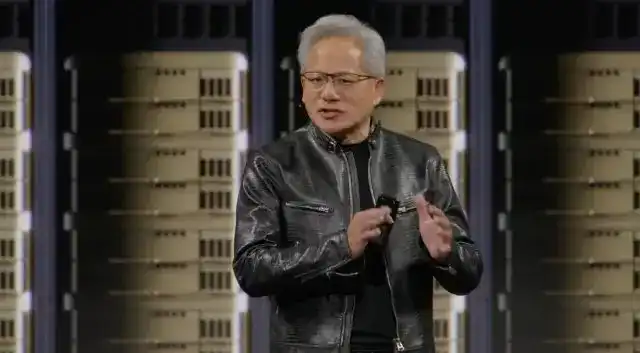
Jensen Huang Announces 8 New Products in 1.5 Hours, NVIDIA Fully Bets on AI Inference and Physical AI

NVIDIA CEO Jensen Huang unveiled eight major announcements during his CES 2026 keynote, focusing on advancing AI inference and physical AI technologies. The centerpiece was the NVIDIA Vera Rubin POD AI supercomputer, which integrates six custom chips—Vera CPU, Rubin GPU, NVLink 6 Switch, ConnectX-9 SuperNIC, BlueField-4 DPU, and Spectrum-X CPO—designed for协同 performance. The Rubin GPU offers 5x higher inference and 3.5x higher training performance than Blackwell, with support for HBM4 memory. The Vera Rubin NVL72 system delivers 3.6 EFLOPS in NVFP4 inference performance in a single rack, with enhanced memory bandwidth. NVIDIA also introduced the Spectrum-X Ethernet CPO for improved power efficiency, a推理上下文内存存储平台 to optimize KV cache storage and reduce recomputation, and the DGX SuperPOD based on Rubin architecture, cutting token costs for large MoE models to 1/10. On the software side, NVIDIA expanded its open-source offerings, including new models and datasets, and emphasized the rise of physical AI. The company open-sourced the Alpha-Mayo model for autonomous driving, enabling reasoning-based decision-making, and announced production-ready NVIDIA DRIVE platforms for Mercedes-Benz. Partnerships with Siemens and robotics firms like Boston Dynamics were highlighted, underscoring NVIDIA’s full-stack approach to AI infrastructure and real-world AI applications.

marsbit01/06 04:36

Jensen Huang Announces 8 New Products in 1.5 Hours, NVIDIA Fully Bets on AI Inference and Physical AI

marsbit01/06 04:36

The 'Mastermind' Behind the Venezuela Incident? An Article to Unravel the AI Intelligence Empire—Palantir

Venezuela Event and the "AI Intelligence Empire": A Look at Palantir Global attention has recently focused on a swift, high-precision operation in Venezuela, with speculation that Palantir Technologies—a data integration and AI decision-making company whose stock surged nearly 20-fold in two and a half years—provided the digital intelligence backbone. Although no official confirmation exists, the company's reputation and past involvement in missions like the capture of Osama bin Laden have fueled market narratives linking it to the operation. Founded in 2003 by Peter Thiel, Palantir operates as a data and AI-driven operating system for governments, militaries, and large enterprises. Its core capability lies in its Ontology" model, which integrates disparate data sources into a unified semantic framework, enabling real-time situational awareness and decision-making in high-stakes environments like military and intelligence operations. Beyond defense, Palantir has expanded into the crypto sector with “Foundry for Crypto,” offering compliance, anti-money laundering, and risk management solutions for exchanges and institutions. It serves as infrastructure—not a direct participant—in crypto. While founders like Thiel are personally bullish on Bitcoin, the company remains focused on its role as an enterprise AI and data platform. Palantir embodies multiple narratives: a tool for national security, a driver of enterprise digital transformation, and a behind-the-scenes actor in geopolitics and crypto compliance.

marsbit01/06 03:51

The 'Mastermind' Behind the Venezuela Incident? An Article to Unravel the AI Intelligence Empire—Palantir

marsbit01/06 03:51

The Most Centralized Giant in the Crypto World Starts Selling the 'Decentralized AI' Dream

Tether, the highly centralized issuer of the USDT stablecoin, reported $13 billion in profit in 2024—far exceeding the combined revenues and losses of major AI firms like OpenAI and Anthropic. With only 150 employees, Tether earns primarily by investing user funds in U.S. Treasury bonds, profiting from the interest without paying users any yield. Now, Tether is aggressively investing in AI. It loaned over $600 million to Northern Data, Europe’s largest GPU cloud provider with over 10,000 Nvidia H100 GPUs. It also released QVAC Genesis, a massive open-source AI training dataset, and acquired Blackrock Neurotech, a brain-computer interface company, for $200 million. Total AI-related investments approach $1 billion, with potential additional deals in robotics sector. Despite its centralized control over USDT reserves and lack of external audits, Tether promotes a “decentralized AI” vision—advocating for local AI operation and individual data ownership. Critics find this ironic, given Tether’s opaque governance. Tether’s move into AI may stem from concerns over declining Treasury yields and a desire to position itself as a tech innovator. Unlike AI startups burning billions without clear profitability, Tether uses stablecoin profits to fund speculative AI bets—insulating itself from sector risks while gaining influence. The article suggests that in 2026, the best business model in AI might be not doing AI at all, but rather funding it with profits from a separate, lucrative venture.

比推01/05 14:50

The Most Centralized Giant in the Crypto World Starts Selling the 'Decentralized AI' Dream

比推01/05 14:50

活动图片