Автор: Сяо Бай
Эта статья — оригинальный авторский материал, мнения являются личным пониманием автора, ETHPanda отредактировала и структурировала содержание.
Блокчейн всегда подчёркивал «контроль над своими активами», но мало кто серьёзно отвечал на другой вопрос: насколько реальным является этот контроль, если пользователь в принципе не понимает, что он подписывает? От слепой подписи (blind signing) к понятной подписи (Clear Signing) — Ethereum добавляет очень базовый, но запоздалый элемент пазла, постепенно превращая подписание транзакций из понятного программистам в понятное обычным пользователям.
Слепая подпись — это не невнимательность пользователя
Ещё когда я только начал пользоваться криптокошельками, у меня был вопрос.
Почему каждый раз, когда я нажимаю «Подписать», в кошельке появляется куча шестнадцатеричного кода?
Я ведь нажал на странице Swap, Mint, Claim, Approve, но на этапе подтверждения в кошельке экран внезапно превращается в кучу символов, начинающихся с 0x. При этом в обучающих видео постоянно напоминают: не подписывайте что попало, именно так фишинговые сайты крадут активы.
Получается противоречие.
С одной стороны, говорят обычным пользователям: подпись опасна, смотри внимательно. С другой — показывают то, на что нужно смотреть, в формате, который обычный человек в принципе не понимает.
Это не небрежность пользователей, сам этот интерфейс античеловечен.
Позже я узнал, что у этого явления есть название — blind signing, слепая подпись. Когда вы нажимаете «Подтвердить», с криптографической точки зрения вы действительно авторизуете транзакцию, но на уровне человеческого понимания вы подписываете непонятную бумажку.
Проблема не в том, что пользователь не знает о важности безопасности, а в том, что у него просто нет достаточно информации, чтобы оценить, безопасно это или нет.
Недавно Фонд Ethereum объявил о запуске Clear Signing с прямой целью: сделать human-readable transaction signing (читаемое человеком подписание транзакций) стандартным опытом. На сайте Clear Signing это объясняют ещё проще: See what you sign — чтобы вы действительно видели, что подписываете.
Это не просто оптимизация интерфейса кошелька, а восполнение того базового элемента инфраструктуры, которого Ethereum всегда не хватало для обычных пользователей.
Безопасность кошельков в прошлом в основном сводилась к предупреждениям до совершения действия. Например, некоторые расширения заранее проверяли, не фишинговый ли сайт, и сигнализировали красным, если был риск. Кошельки вроде Rabby также сделали многое для предпросмотра транзакций и предупреждения о рисках, позволяя увидеть, как примерно изменится баланс активов после подписания.
Всё это очень полезно.
Но это больше похоже на добавление охранника рядом с транзакцией, а не на решение проблемы на уровне самой подписи. Вам всё равно приходится доверять расширению, доверять симуляции кошелька, доверять его способности распознать риск от этого сайта и этой транзакции.
Clear Signing пытается перевести транзакцию на человеческий язык
Clear Signing пытается решить проблему на более фундаментальном уровне.
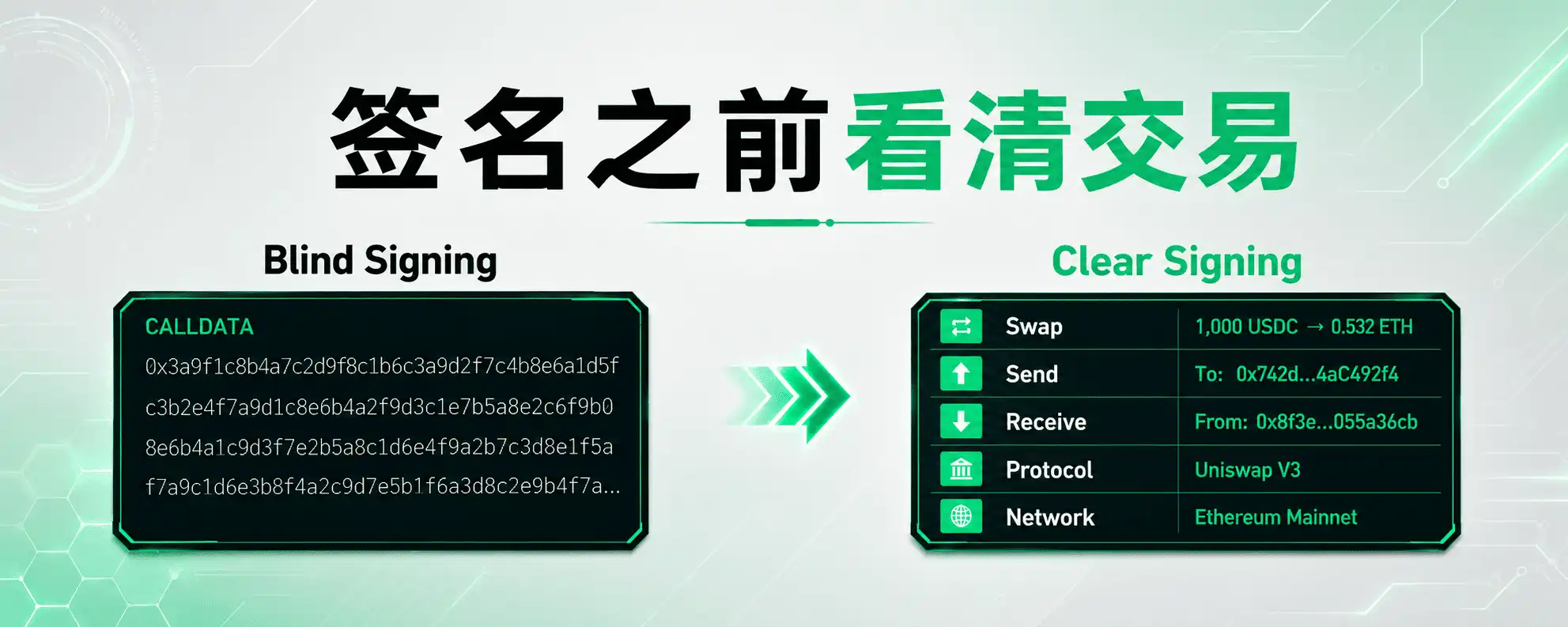
Оно не просто говорит вам «этот сайт может быть опасен», а позволяет сторонам протокола описывать семантику транзакции в стандартном формате, чтобы кошелёк мог стабильно переводить calldata в действия, понятные человеку.
Например, раньше вы видели длинную строку hex.
В идеальном будущем вы должны видеть: Swap, отправляю 1,000 USDC, минимум получу 0.42 WETH, протокол — Uniswap V3, сеть — Ethereum.
Вот так должна выглядеть страница подтверждения подписи для человека.
Здесь можно вспомнить слова учителя Рея. В своём посте он сказал очень верную, на мой взгляд, фразу: «Структурированный код всё ещё остаётся кодом».
Эта фраза фактически указывает на разницу между EIP-712 и ERC-7730. EIP-712 превращает изначально хаотичное содержимое подписи в структурированные данные, но структурированность не равна читаемости для человека. Обычному пользователю нужен не просто аккуратный список имён переменных и параметров, а язык действий, который можно понять с первого взгляда.
Учитель Рэй также описал Clear Signing как **«добавление слоя перевода между кодом и обычным пользователем»**. Это очень хорошая метафора.
Как работают ERC-7730 и Registry
Ключевым стандартом, лежащим в основе Clear Signing, является ERC-7730.
Он определяет формат JSON-метаданных.
Говоря простым языком, стороны протокола могут написать для функций своего контракта «переводной словарь». Как именно следует показывать пользователю ту или иную функцию контракта, тот или иной параметр, поле суммы — всё это стороны протокола заранее прописывают по стандарту и отправляют в публичный реестр (registry). Кошелёк перед подписанием обращается к этому словарю и переводит низкоуровневые calldata в понятную пользователю страницу подтверждения.
ABI может сообщить кошельку, что здесь есть uint256 amount.
Но ABI не всегда может сообщить пользователю, что это amount — это 6 знаков после запятой для USDC или 18 знаков для ETH, и не всегда может сказать, является ли эта операция Swap, Stake, Approve или Claim.
ERC-7730 добавляет именно этот семантический слой.
А registry играет роль публичного каталога. Репозиторий clear-signing-erc7730-registry содержит файлы метаданных в каталоге реестра. Стороны протокола отправляют файлы описаний, а кошельки и инструменты, прочитав их, получают возможность отображать транзакцию в более понятном для человека виде.
По состоянию на снимок от 7 мая 2026 года на сайте Clear Signing, registry уже охватывает 44 протокола, опубликовано 346 дескрипторов. Среди них уже можно увидеть такие проекты, как 1inch, Aave, Circle, Lido, Uniswap, Safe, WalletConnect, WETH.
Это не волшебный выключатель, но направление верное
Выглядит немало, но на самом деле Clear Signing только начинается.
Не стоит думать, что после сообщения Фонда Ethereum все проблемы со слепыми подписями вдруг исчезли. В реальности огромное количество контрактов ещё не зарегистрировано по ERC-7730, и кошельки тоже не смогут подключиться за одну ночь. На сайте чётко указано, что Ledger уже поддерживает, а Trezor ещё в разработке. Другим кошелькам, инструментам и протоколам тоже потребуется время для интеграции.
Поэтому реальные проблемы, на которые указал учитель Кос, очень важны. Протоколам нужно завершить регистрацию по спецификации ERC-7730, чтобы кошельки и инструменты с поддержкой ERC-7730 могли лучше анализировать и отображать информацию. При этом существующие возможности кошельков по анализу, симуляции и предупреждению о рисках терять нельзя.
Я с этим полностью согласен.
Clear Signing решает вопрос, что заявляется в транзакции. Симуляция транзакций, как в Rabby, решает вопрос, что может произойти в результате её выполнения. Одно смотрит на намерение, другое — на результат. По-настоящему хороший опыт безопасности кошелька должен включать оба уровня.
Потому что злоумышленники не перестанут эволюционировать.
Если в будущем пользователи начнут доверять понятной подписи, злоумышленники могут попытаться отправлять вводящие в заблуждение метаданные или обходить отображение с помощью нишевых контрактов, незарегистрированных контрактов, сложных пакетных транзакций. В официальной документации также специально упоминается, что кошелькам нужно самостоятельно решать, каким реестрам, сигналам проверки (review signal) и атестациям (attestation) доверять.
Поэтому Clear Signing — это не волшебный выключатель, а скорее новая отраслевая дисциплина.
Стороны протокола должны чётко прописывать семантику транзакций.
Реестр должен обеспечивать проверку и сигналы доверия.
Кошельки должны решать, какие метаданные можно показывать.
Пользователи наконец-то не будут вынуждены смотреть на китайскую грамоту.
Я думаю, это особенно важно для китайского сообщества.
Многие не хотят входить в ончейн-экосистему не потому, что не желают, а потому что барьер действительно слишком высок. Большинство пользователей — не программисты, и даже программисты не обязательно разбираются в Solidity, calldata, ABI, selector, permit, delegatecall.
Ранний ончейн-опыт часто предполагал, что пользователь сам должен нести затраты на понимание.
Не понимаешь — значит, недостаточно профессионален.
Тебя обманули — значит, был недостаточно осторожен.
Боишься пользоваться — значит, ещё не научился.
Но это не та позиция, которая должна быть у массового приложения.
Если финансовая система требует, чтобы обычный пользователь понимал шестнадцатеричный код перед подписанием, это не проблема в обучении пользователей, а проблема того, что продукт и инфраструктура ещё не выросли.
Раньше в зимней программе стажировок Web3 от LXDAO и ETHPanda я тоже высказывал похожие мысли. Тогда я предложил PR по добавлению курса безопасности в Headbook, с простой идеей: объяснить, как кошелёк анализирует первые четыре шестнадцатеричных символа селектора функции, чтобы понять её смысл. В то время у меня не было целостного решения, я просто наивно полагал, что пользователь не должен гадать о своей судьбе, глядя на hex.
Теперь, оглядываясь назад, ERC-7730 — это более системный ответ на этот вопрос.
Это не просто анализ первых четырёх символов селектора, а возможность для протокола описывать функции, поля, суммы, адреса, контекст в виде верифицируемых, переиспользуемых структурированных метаданных, потребляемых кошельком.
Это важнее, чем просто поиск имени функции.
Потому что имя функции тоже может обманывать. Злонамеренная функция может называться claimRewards, а может — deposit. Ценность отображения не только в том, чтобы сказать, как называется функция, а в том, чтобы показать действие, актив, сумму, протокол, сеть и границы риска, соответствующие этой подписи.
Это и есть право на информированное согласие.
На ранних этапах Ethereum, чтобы смарт-контракты могли быстро работать, пожертвовали многим в плане читаемости для человека. Это исторически понятно. Без быстрых экспериментов тогда не было бы DeFi, NFT, DAO и всей EVM-экосистемы позже.
Но технический долг никуда не исчезает, он лишь возвращается с ростом пользовательской базы в виде фишинга, ошибочных подписей, злонамеренных разрешений, краж с холодных кошельков.
Взгляд в будущее
Появление Clear Signing по крайней мере показывает, что экосистема Ethereum начала серьёзно расплачиваться по этому долгу.
Я не думаю, что это изменит опыт использования кошельков для всех за несколько месяцев. Более реалистичный прогноз: в ближайшие годы, по мере того как основные протоколы будут отправлять метаданные, основные кошельки постепенно будут добавлять поддержку, а механизмы аудита и атестации совершенствоваться, понятная подпись будет медленно становиться стандартным опытом.
Но направление верное.
Блокчейн не должен вечно оставаться на стадии «решаются пользоваться только те, кто разбирается в коде». Истинная массовость — это не в том, чтобы каждый научился читать calldata, а в том, чтобы каждый перед подписанием мог на своём языке понять, на что он даёт разрешение.
Мир устал от слепых подписей.
В этом и заключается смысл Clear Signing: оно не делает кошелёк красивее, а медленно возвращает пользователю право знать, что он подписывает.