Silicon Valley Moguls Gather for 'Werewolf' Reality Show, Billionaires Engage in Power Gameplay

marsbitОпубликовано 2026-06-08Обновлено 2026-06-08

Введение

Silicon Valley elites, including OpenAI's Sam Altman, Anduril's Palmer Luckey, and Signal's Moxie Marlinspike, gathered not for a tech discussion, but to film a reality show playing "Mafia" (the US version of Werewolf). The show, titled *MAFIA*, is produced by the legendary venture capital firm Founders Fund. Held at the historic Tosca Cafe in San Francisco, the game revealed participants' real-time decision-making and personalities under pressure. Altman applied analytical logic, Luckey's playful style made him an early target, and Marlinspike skillfully shifted the group's thinking. The session quickly devolved into a battle of intuition and accusation after Figma's Dylan Field was eliminated first. More than just entertainment, the show is seen as a public experiment and a rebellion against standard VC narratives. It demonstrates how Silicon Valley's new elite leverages "infotainment" to build influence. As traditional media wanes, figures like Founders Fund are taking control of content creation, understanding that narrative control and public performance are becoming crucial capital in the internet age. The strategic thinking, persuasive communication, and rapid decision-making displayed in the game mirror the very skills that drive their real-world success.

By: Ye Zhen

If you were to imagine a closed-door gathering of Silicon Valley's top power players, you would most likely think of artificial intelligence, the chip war, robotics, defense technology, or the next generation of the internet.

After all, the people seated in the room include OpenAI founder Sam Altman, defense tech unicorn Anduril founder Palmer Luckey, Figma founder Dylan Field, Signal founder Moxie Marlinspike, and a group of investors directing the flow of hundreds of billions of dollars in capital.

But a recent gathering in San Francisco was nothing like that.

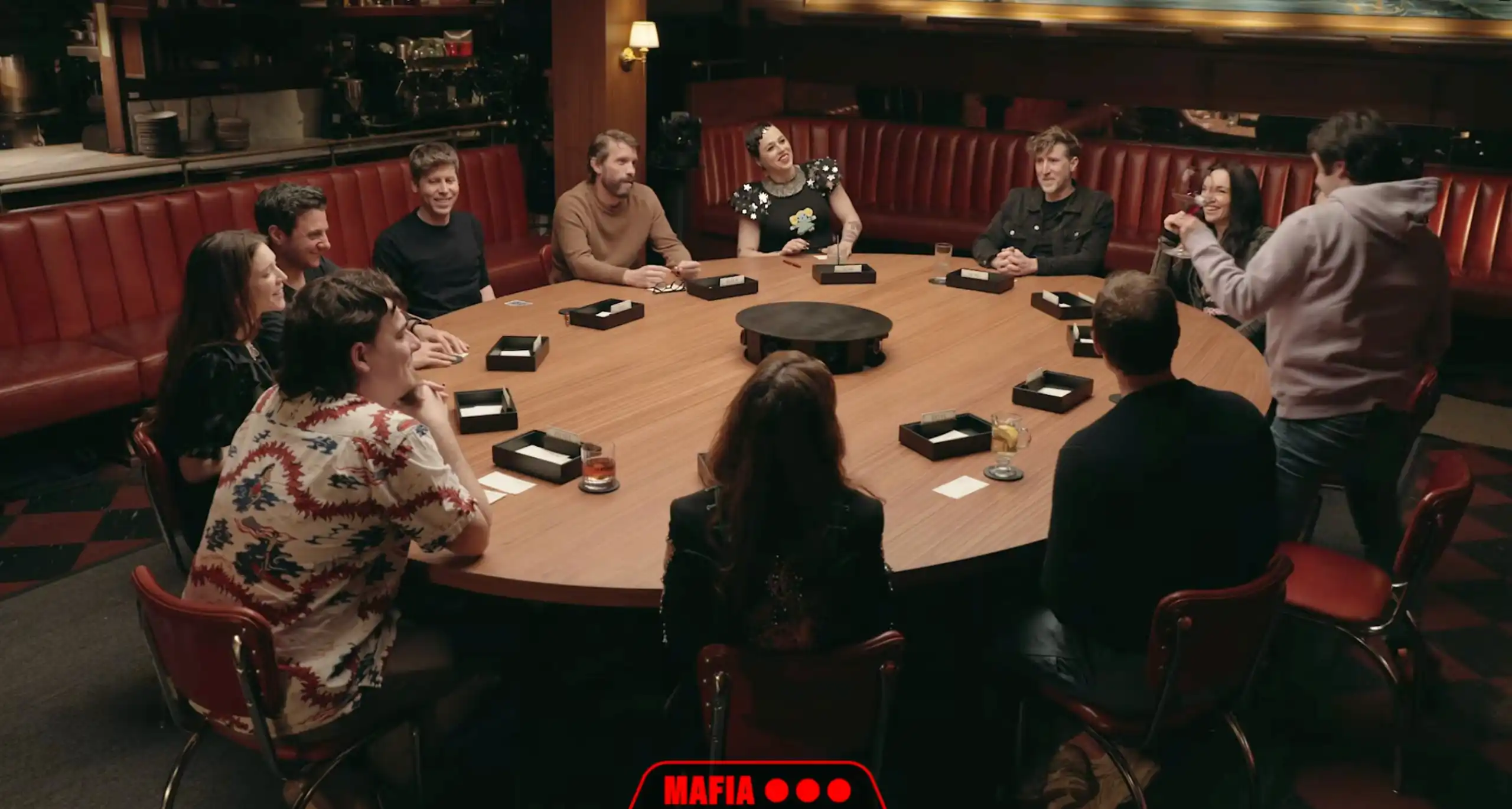
No one discussed AI models, nor did anyone talk about funding rounds and valuations. Instead, this group of Silicon Valley's smartest and most powerful people sat around a circular table and seriously started playing a game of Werewolf.

To be precise, the American version of Werewolf—Mafia.

What's even more interesting is that this was not a private gathering among friends, but a formally filmed and publicly broadcast reality show.

The show is simply called "MAFIA," and the producer is one of Silicon Valley's most legendary and controversial venture capital firms: Founders Fund.

Founders Fund might not be as well-known as Sequoia or Hillhouse, but if you mention the companies it has invested in, its weight becomes immediately apparent: Facebook, SpaceX, Palantir, Stripe, Airbnb, Anduril, and OpenAI have all appeared in its investment portfolio.

This investment firm, founded by Peter Thiel and other members of the "PayPal Mafia," has participated in almost all of Silicon Valley's most important technological waves over the past two decades. And now, it's doing something that seems completely unrelated to investing—making a variety show.

Of course, simply understanding "MAFIA" as a tech circle reality show might underestimate Founders Fund's true intentions.

It resembles more of a public experiment packaged as entertainment.

Why Are These Billionaires Obsessed with Werewolf?

The opening of the show is surreal.

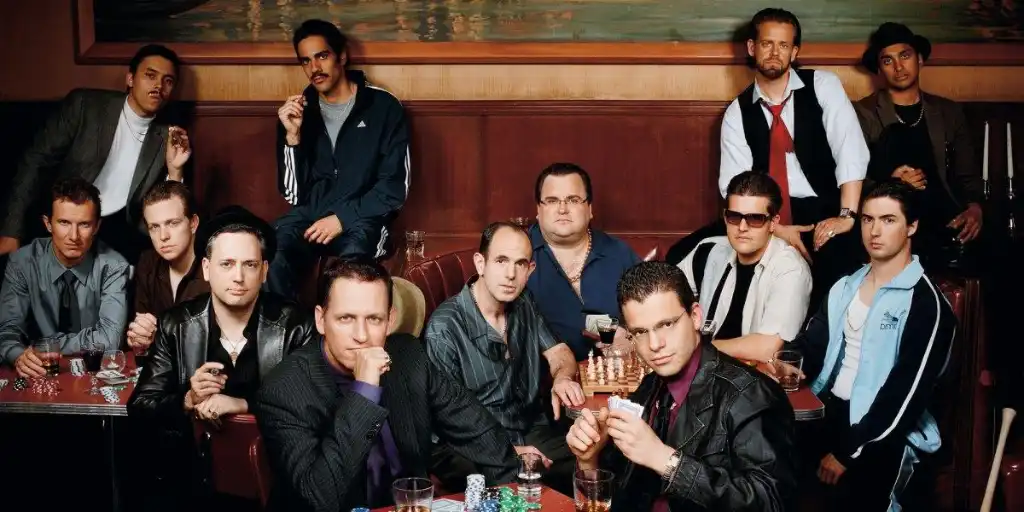
The location is the legendary Tosca Cafe in San Francisco, a place that holds the iconic group photo of the "PayPal Mafia."

(The iconic "PayPal Mafia" group photo refers to a famous team photo in Silicon Valley's tech history, taken during a gathering of PayPal's early core members. It has been repeatedly referenced to symbolize the enormous influence this group had on the subsequent Silicon Valley entrepreneurial ecosystem.)

And this time, seated around the table is the new generation of Silicon Valley's power core:

  • Sam Altman (OpenAI Founder & CEO)
  • Palmer Luckey (Anduril Industries Founder)
  • Dylan Field (Figma Co-founder & CEO)
  • Moxie Marlinspike (Signal Co-founder)
  • Bryan Johnson ("Don't Die" Project Founder)
  • Trae Stephens (Founders Fund Partner)
  • Ryan Petersen (Flexport Founder & CEO)

If you simply added up the market value and influence of these individuals' companies, this table could almost be seen as a miniature "global tech economy."

But the first thing they did was: close their eyes, commit a murder, and vote.

In the view of Founders Fund's Head of Marketing, Mike Solana, this seemingly absurd arrangement is actually a deliberate rebellion against the traditional VC content format.

Over the past decade-plus, the most common narrative style in the tech world has been founders telling standardized life stories on podcasts: loving programming, failing at a startup, changing the world.

After hearing enough, everyone started to sound similar.

But Werewolf is different.

It doesn't give you time to prepare, nor does it allow you to package your narrative.

You must judge others' intentions in an extremely short time and make decisions under conditions of severe information asymmetry. The behavioral patterns revealed under this kind of pressure are often closer to true personality than any interview.

Thus, this game essentially becomes a "personality development experiment."

Sam Altman dissects everyone's speech logic like he's analyzing an AI model; Palmer Luckey continues his characteristic banter, becoming a target within minutes of the game starting due to his excessive activity; and Signal founder Moxie Marlinspike delivers the most brilliant moment of the entire show—with just one sentence, he successfully changes everyone's frame of thinking.

Silicon Valley Moguls at the Card Table

The game spiraled out of control from the first night.

After Figma founder Dylan Field was executed by the mafia in the first round, the situation quickly plunged into an information vacuum, forcing everyone to rely on intuition and experience for deduction.

AI policy expert Ryan Beiermeister took the lead, questioning Trae Stephens and Bryan Johnson for overreacting upon hearing the news of the death, while biohacker Josie Zayner defended Bryan by saying he "watches too many Korean dramas."

Just as everyone was talking over each other, Sam Altman spoke up. Relying on extremely calm defense and analytical skills, he began analyzing others' statements and defenses.

When Signal founder Moxie confidently accused biohacker Josie Zayner of being in the mafia, Altman sensed something off:

"It's interesting that Moxie, as an experienced player, would take such a big risk to accuse a newbie... This highly certain way of speaking feels very 'mafia.' Moxie, I think you are the most like mafia."

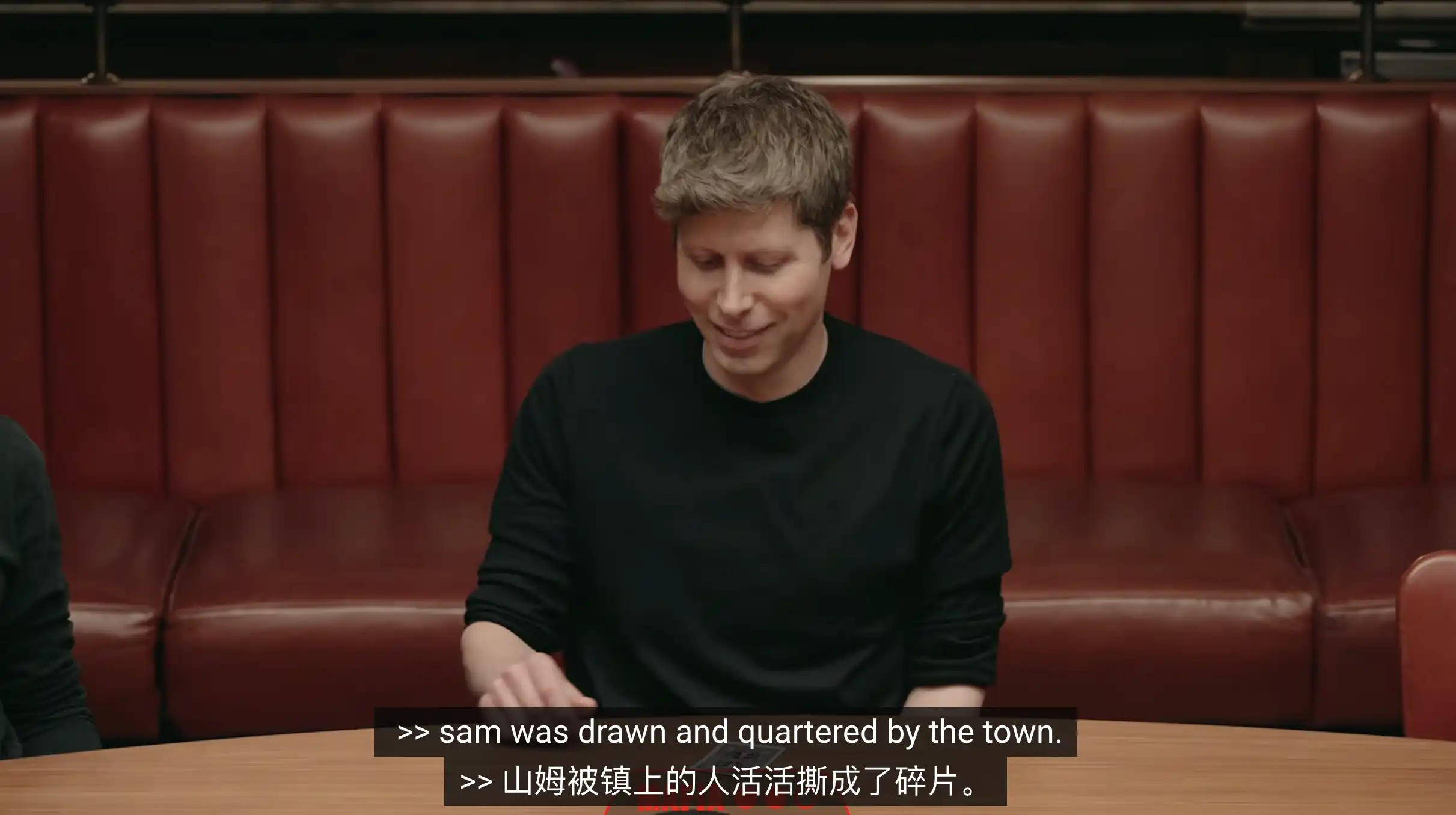
However, this open-play strategy instantly made him a target. In the third night's vote, Altman was regretfully eliminated.

When the host announced he had been "drawn and quartered" by the townspeople, the room erupted in laughter. Someone even added, "At least this proves he's not a super-intelligent AI."

The Silicon Valley "New Wealth Password" in the Age of Infotainment

After the "MAFIA" reality show premiered on YouTube and X, it quickly drew attention within the tech circle, with the first episode easily surpassing ten thousand views in a short time.

Against the backdrop of traditional media's gradual decline and the cancellation of some talk shows, Silicon Valley's VC giants are ostentatiously taking up the baton of content creation. From a16z's heavy investment in its media matrix earlier, to OpenAI's recent acquisition of the tech talk show TBPN, to Founders Fund now personally producing entertainment variety shows, the underlying business logic is highly consistent.

In modern society, reshaped by social media, the path to power and influence is increasingly paved with "Infotainment."

Whether it's Bryan Johnson gaining traffic by showcasing bizarre anti-aging routines online, or Elon Musk bolstering his business empire through his personal influencer network, Silicon Valley's new generation of elites understand better than anyone—in the internet age, controlling traffic, crafting narratives, and even performing skillfully in public are becoming the most crucial forms of business capital.

Although the venture capital moguls were playing a game at this long table, the precise defense, logical deconstruction, highly persuasive eloquence, and decisive actions they demonstrated in the face of insufficient information are precisely the underlying genes that have made them successful in the real business world.

Связанные с этим вопросы

QWhat is the name of the reality TV show featuring Silicon Valley elites playing a version of 'Mafia' (Werewolf) and who produced it?

AThe reality TV show is called 'MAFIA', and it was produced by the venture capital firm Founders Fund.

QAccording to the article, what is the deeper purpose behind the 'MAFIA' show, beyond just being a reality program?

AThe article suggests the show is a 'public experiment packaged as entertainment,' designed to reveal the true personalities of the participants under pressure, acting as a 'personality development experiment' rather than just a game.

QWho are some of the notable Silicon Valley figures mentioned as participants in the 'MAFIA' game?

ANotable participants include Sam Altman (OpenAI), Palmer Luckey (Anduril), Dylan Field (Figma), Moxie Marlinspike (Signal), Bryan Johnson ('Don't Die' project), Trae Stephens (Founders Fund), and Ryan Petersen (Flexport).

QHow did Sam Altman's gameplay style lead to his elimination from the 'MAFIA' game, as described in the article?

ASam Altman used a very analytical, open strategy, calmly dissecting others' arguments. He directly accused Moxie Marlinspike of being Mafia. This 'playing with open cards' made him a target, leading to his elimination by vote in the third round.

QWhat broader trend in Silicon Valley does the article connect the production of shows like 'MAFIA' to?

AThe article connects it to the trend of Silicon Valley elites and VC firms heavily investing in content creation and 'infotainment' to control narratives, generate influence, and attract attention, which is seen as a new form of commercial capital in the internet age.

Похожее

$9.4 Billion: The Largest Robotics Funding This Year Has Emerged

Munich-based humanoid robotics company Neura has completed a $1.4 billion (approximately RMB 94.9 billion) Series C funding round, valuing the company at around $7 billion and positioning it among the global leaders in the sector. The investment round is notable not just for its size—reportedly the largest in robotics this year—but also for its strategic backers, which include tech giants like NVIDIA and Amazon, alongside established industrial players such as German engineering firms Bosch and Schaeffler. This mix of investors signals a significant shift in the industry's focus from technological demonstrations and general-purpose narratives toward practical, industrial deployment and commercialization. Neura's approach centers on developing humanoid robots for defined, high-value industrial tasks rather than pursuing a general-purpose model. Its early validation comes from a partnership with BMW, where its robots are being tested on actual production lines. The involvement of Bosch and Schaeffler, companies deeply embedded in global manufacturing, underscores a growing belief that humanoid robots are transitioning from labs to viable factory-floor solutions. The article highlights two converging trends driving investment: advancements in AI and large language models, which enhance robots' perception and decision-making in unstructured environments, and mounting pressure from labor shortages and rising costs in major manufacturing regions. The funding landscape is now bifurcating between companies like Figure AI, focusing on versatile general-purpose robots, and firms like Neura, targeting specific vertical industrial applications with clearer, shorter paths to ROI. While technical hurdles remain, the core challenges for widespread adoption are increasingly seen as engineering and commercial in nature: managing the high integration and customization costs for different factory environments and establishing robust, localized maintenance and service networks. The record investment in Neura, particularly from industrial capital, indicates the industry's growing confidence in moving from proving feasibility to solving the practical problems of scalability, reliability, and building sustainable business models around humanoid robots in real-world settings like automotive manufacturing and hazardous labor environments.

marsbit2 ч. назад

$9.4 Billion: The Largest Robotics Funding This Year Has Emerged

marsbit2 ч. назад

"119 to 176 Dollars": Behind SpaceX's Listing, MSX Once Again Successfully Executes the Pre-IPO Closed Loop

Following May's 300% gain on Cerebras, MSX delivered another outstanding performance during SpaceX's listing night. On June 12, SpaceX (SPCX) launched on Nasdaq, reaching a high of $176. This marked the successful culmination of MSX's Pre-IPO project launched in March, where users subscribed at $119, achieving gains of approximately 40-48%. This event validated MSX's complete Pre-IPO mechanism, a crucial advantage in a market where access to top-tier private company equity is typically limited to institutions. MSX's model provides a full cycle for users: subscription (at $119 for SpaceX), real-time on-chain portfolio tracking, optional early redemption, seamless conversion to tradable spot assets (SPCX.M) upon IPO, and final settlement in stablecoins. This end-to-end process distinguishes MSX from platforms that faced settlement issues during the SpaceX IPO, highlighting that the core challenge of Pre-IPO is not just access, but a clear exit and conversion path post-listing. This success with SpaceX is MSX's second major Pre-IPO verification, following the Cerebras listing in May, which yielded ~300% returns for early participants. These back-to-back achievements demonstrate MSX's capability to source, structure, and deliver real assets through a replicable on-chain model. The true barrier for Pre-IPO products lies not in providing an entry point, but in ensuring reliable fulfillment from subscription through to post-IPO liquidity. MSX's proven闭环 (closed-loop) process addresses this, offering Web3 users a structured way to access high-growth, pre-public companies in sectors like AI and frontier tech. MSX plans to continue expanding its Pre-IPO portfolio with this focus on authenticity, transparency, and post-listing execution.

Odaily星球日报15 ч. назад

"119 to 176 Dollars": Behind SpaceX's Listing, MSX Once Again Successfully Executes the Pre-IPO Closed Loop

Odaily星球日报15 ч. назад

Торговля

Спот
Фьючерсы

Популярные статьи

Как купить S

Добро пожаловать на HTX.com! Мы сделали приобретение Sonic (S) простым и удобным. Следуйте нашему пошаговому руководству и отправляйтесь в свое крипто-путешествие.Шаг 1: Создайте аккаунт на HTXИспользуйте свой адрес электронной почты или номер телефона, чтобы зарегистрироваться и бесплатно создать аккаунт на HTX. Пройдите удобную регистрацию и откройте для себя весь функционал.Создать аккаунтШаг 2: Перейдите в Купить криптовалюту и выберите свой способ оплатыКредитная/Дебетовая Карта: Используйте свою карту Visa или Mastercard для мгновенной покупки Sonic (S).Баланс: Используйте средства с баланса вашего аккаунта HTX для простой торговли.Третьи Лица: Мы добавили популярные способы оплаты, такие как Google Pay и Apple Pay, для повышения удобства.P2P: Торгуйте напрямую с другими пользователями на HTX.Внебиржевая Торговля (OTC): Мы предлагаем индивидуальные услуги и конкурентоспособные обменные курсы для трейдеров.Шаг 3: Хранение Sonic (S)После приобретения вами Sonic (S) храните их в своем аккаунте на HTX. В качестве альтернативы вы можете отправить их куда-либо с помощью перевода в блокчейне или использовать для торговли с другими криптовалютами.Шаг 4: Торговля Sonic (S)С легкостью торгуйте Sonic (S) на спотовом рынке HTX. Просто зайдите в свой аккаунт, выберите торговую пару, совершайте сделки и следите за ними в режиме реального времени. Мы предлагаем удобный интерфейс как для начинающих, так и для опытных трейдеров.

1.5k просмотров всегоОпубликовано 2025.01.15Обновлено 2026.06.02

Как купить S

Sonic: Обновления под руководством Андре Кронье – новая звезда Layer-1 на фоне спада рынка

Он решает проблемы масштабируемости, совместимости между блокчейнами и стимулов для разработчиков с помощью технологических инноваций.

2.3k просмотров всегоОпубликовано 2025.04.09Обновлено 2025.04.09

Sonic: Обновления под руководством Андре Кронье – новая звезда Layer-1 на фоне спада рынка

HTX Learn: Пройдите обучение по "Sonic" и разделите 1000 USDT

HTX Learn — ваш проводник в мир перспективных проектов, и мы запускаем специальное мероприятие "Учитесь и Зарабатывайте", посвящённое этим проектам. Наше новое направление .

1.8k просмотров всегоОпубликовано 2025.04.10Обновлено 2025.04.10

HTX Learn: Пройдите обучение по "Sonic" и разделите 1000 USDT

Обсуждения

Добро пожаловать в Сообщество HTX. Здесь вы сможете быть в курсе последних новостей о развитии платформы и получить доступ к профессиональной аналитической информации о рынке. Мнения пользователей о цене на S (S) представлены ниже.

活动图片