Автор оригинала | Джозеф Халом, генеральный директор Sharplink
Компиляция | Odaily Planet Daily Цинь Сяофэн (@QinXiaofeng 888 )
Примечание редактора: 15 июня ETH мощно отскочил, взлетев более чем на 10% за один день, развеяв предыдущее уныние. Джозеф Халом, генеральный директор Sharplink, опубликовал в X длинную статью под названием «Веха: количество разработчиков Ethereum превысило миллион».
Он заявил, что ключевое преимущество Ethereum заключается не в скорости, а в том, что он объединил самую большую и глубокую базу талантов; реальный ров заключается в долгосрочной экосистеме, построенной на композируемости, стандартизации и заслуживающей доверия нейтральности; эти строители сосредоточены на таких передовых задачах, как масштабируемость и квантоустойчивость, продолжая укреплять позиции Ethereum в качестве операционной системы по умолчанию для финансового интернета. (Рекомендуем к прочтению «Генеральный директор Sharplink: продавать ETH сейчас — всё равно что продавать Amazon во время пузыря доткомов»)
Ниже представлен оригинальный текст Джозефа Халома, скомпилированный Odaily Planet Daily. Наслаждайтесь~
————————
Я только что вернулся из Азии, где общался с разработчиками Ethereum и лидерами экосистемы. Особо хочу отметить Nonce Classic, Four Pillars и DSRV в Сеуле, а также наших друзей из SNZ и недавно открывшийся в Гонконге Ethereum Community Hub — это первое постоянное физическое пространство сообщества Ethereum в Азии, поддерживаемое Фондом Ethereum.
Меня потрясла не только страсть, но и строгость и амбициозность местных строителей. Уровень проектов, дух экспериментов и долгосрочное мышление, проявляющееся в глобальной экосистеме Ethereum, произвели на меня впечатление и вдохновили.
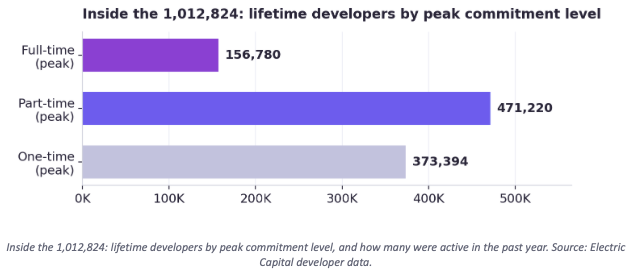
И именно эти живые личности дали реальные лица одной цифре: по данным Electric Capital, общее количество разработчиков Ethereum превысило один миллион — точнее, 1,012,824 уникальных контрибьютора. Ни одна другая экосистема в криптопространстве не может с этим сравниться.
Веха, на которой стоит задержаться
Миллион — это круглое число, а круглые числа часто бывают пустыми, но в этот раз всё иначе. За ним стоит крупнейшая в истории база технических талантов, собранная вокруг открытой, бессертификационной блокчейн-сети — и что важнее, эта база талантов продолжает углубляться и расширяться.
Из этого миллиона примерно 232 тысячи разработчиков оставались активными в течение последних двенадцати месяцев.
Почему Ethereum: действительно ключевой вопрос
На протяжении многих лет обсуждения в криптопространстве вращались вокруг скорости, комиссий и пропускной способности. Каждый новый блокчейн заявлял, что он «быстрее Ethereum». Но самый важный вопрос в криптопространстве никогда не звучал как «какой блокчейн самый быстрый», а скорее как:
«Где выберут строительство на долгосрочную перспективу самые талантливые строители?»
В этом отношении Ethereum по-прежнему уникален. Его преимущества лежат не только на техническом уровне, но являются институциональными, культурными, экономическими и композиционными — это накопленный за десятилетие осадок разработчиков, инфраструктуры, стандартов, инструментов, ликвидности, исследований, приложений и социальной координации, который никакая другая экосистема не может воспроизвести.
Ethereum стал операционной системой по умолчанию для программируемых финансов и формирования капитала в нативной среде интернета.
Что строят этот миллион и почему это углубляет ров?
То, почему миллион разработчиков так важен, заключается в том, чем они занимаются прямо сейчас. Сегодня акцент сместился на самые сложные и рискованные темы в отрасли: масштабируемость базового протокола, конфиденциальность, квантоустойчивость и запуск на нём агентных систем (agentic systems).
Гламестердам — защита основных ценностей в процессе инноваций. Запланированное на 2026 год обновление Гламестердам демонстрирует, как Ethereum может двигаться вперёд, защищая при этом свои основные ценности. Ключевые изменения включают: встроенное разделение пропозеров и билдеров (ePBS), списки доступа на уровне блоков (BALs) для поддержки параллельного исполнения и более высокой пропускной способности, а также возможное повышение лимита газа — всё это значительно повысит ёмкость уровня Layer 1. Масштабирование для будущих потребностей при сохранении заслуживающей доверия нейтральности, безопасности и справедливости MEV — вот динамическое проявление рва.
Синхронная композируемость (Synchronous Composability) — сделать так, чтобы множество Rollup'ов работали как одна цепь. Композируемость всегда была сверхспособностью Ethereum; следующий скачок — распространение её поверх Layer 2. Нативные Rollup'ы и "Based Rollup", в сочетании с синхронной композируемостью, — это и есть решение. Контракт на одном Rollup'е может напрямую вызывать контракт в основной сети или на другом Rollup'е в рамках одной атомарной транзакции — без мостов, без ожидания. Linea, Ethereum Economic Zone, Gnosis, Zisk и сотрудничающие команды Фонда Ethereum работают над объединением этого дизайна с доказательствами в реальном времени. Результат: десятки Rollup'ов перестают быть изолированными сетями и начинают работать слаженно, как одна цепь. Это прямой ответ на критику о «фрагментации».
Квантоустойчивость (Quantum Resistance) — самое значительное лидерство Ethereum. Ни одна другая мейнстримная экосистема не подготовлена к постквантовой эпохе лучше, чем Ethereum. Дорожная карта «Lean Ethereum», созданная в начале 2026 года специализированная команда Фонда Ethereum по постквантовой безопасности, информационный центр pq.ethereum.org, а также более десяти команд клиентов, еженедельно запускающих сети разработчиков для постквантовой совместимости — всё это составляет скоординированный план миграции с открытым исходным кодом, нацеленный примерно на 2029 год. Когда квантовый риск станет реальностью, институты, хранящие триллионы активов, будут заботить только об одном: какой блокчейн подготовился раньше и лучше всех.
Ров за пределами разработчиков: композируемость, стандарты и доверие
Это преимущество в разработчиках самоусиливается благодаря тому, как построен Ethereum. Его самый глубокий сетевой эффект — не ликвидность, а глубина композируемости: приложения — кредитование, стейблкоины, биржи, кошельки, токенизированные активы, оракулы, Rollup'ы Layer 2 — взаимодействуют друг с другом через общие стандарты, и разработчикам никогда не приходится начинать с нуля. EVM — это уровень приложений криптопространства, а навыки Solidity работают на Base, Arbitrum, Optimism, Polygon, zkSync, Scroll, Linea и сотнях других сетях.
Изучение технологического стека Ethereum максимизирует выбор, что, в свою очередь, раскручивает маховик — больше разработчиков, больше инструментов, больше ликвидности, больше институтов, что привлекает ещё больше разработчиков для создания композируемых протоколов и активов. Ликвидность порождает ликвидность, композируемость порождает композируемость.
Более того, Ethereum доминирует там, где реально концентрируется ценность, а не там, где больше всего шума:
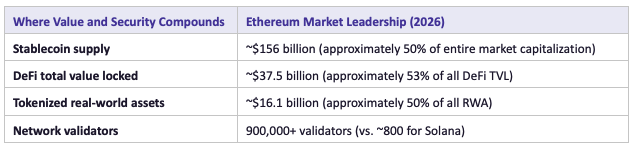
Три силы дополнительно углубляют это лидерство:
- Заслуживающая доверия нейтральность (Credible neutrality) — Ethereum защищают более 900 тысяч валидаторов (в Solana около 800), и крупные институты высоко ценят такую децентрализацию и нейтральность платформы.
- Модульность (Modularity) — Rollup'ы, такие как Base, Arbitrum, Optimism, не дробят Ethereum, а расширяют его, превращая во всё более связанную модульную интернет-экономику, одновременно наследуя безопасность основной сети.
- Культура (Culture) — Ethereum непропорционально сильно привлекает самых выдающихся исследователей, криптографов и авторов стандартов EIP, которые задают направление всей отрасли. Это последнее преимущество также самое трудное для форка.
Есть только один Ethereum
Генерировать активность в сети — это одно, а быть долгосрочным координационным слоем для нативных интернет-финансов — тем слоем, которому доверяют крупнейшие мировые финансовые институты — совсем другое. Ethereum доминирует в сознании крупных владельцев активов, и эти институты в первую очередь ценят доверие, безопасность и ликвидность. Я знаю это не понаслышке, из своего опыта работы в BlackRock.
На технологических рынках экосистемы со временем консолидируются вокруг стандартов, ликвидности и доли внимания разработчиков. Это и есть ров Ethereum.
После общения с этими разработчиками, строителями и лидерами экосистем в Сеуле и Гонконге я как никогда уверен в конкурентных преимуществах Ethereum. Я встретил людей, строящих следующее поколение финансовой инфраструктуры — будущих основателей нашей отрасли и архитекторов агентных финансов (agentic finance). Именно эти люди и команды изменят мир.
Будущее Ethereum происходит прямо сейчас.