Автор: Wall Street Insights
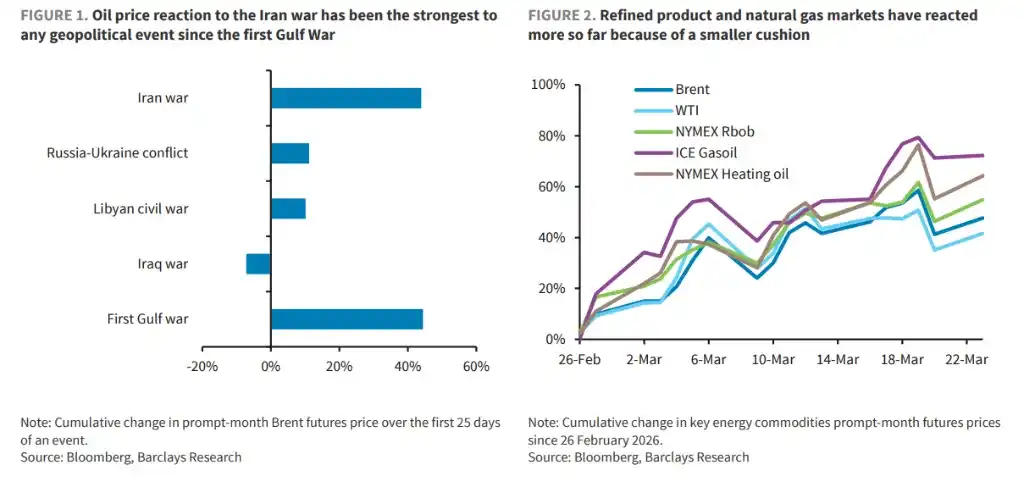
Война с Ираном стала самым сильным геополитическим шоком для мирового энергетического рынка со времен войны в Персидском заливе в 1990 году.
С начала войны с Ираном 26 февраля 2026 года цена на нефть марки Brent за всего 25 дней взлетела на 44%, оптовая цена на американский бензин (Rbob) выросла на 48%, цена на американское дизельное топливо поднялась на 51%, а европейское дизельное топливо подорожало на 58%.
Последнее исследование Barclays Capital предупреждает: то, когда закончится война, напрямую определит, вернется ли цена на нефть к базовому сценарию в 85 долларов за баррель или превысит 110 долларов за баррель. Для инвесторов пять ключевых катализирующих факторов — прогресс в достижении военных целей, финансовая борьба в Конгрессе, число потерь американских войск, розничная цена на бензин и личная оценка Трампа — являются ключевыми переменными для ценообразования на энергетическом рынке.
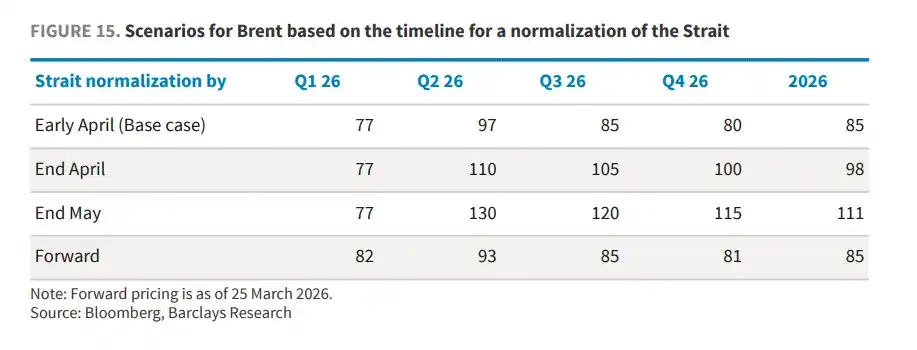
Barclays считает, что тренд цен на нефть разойдется в трех ключевых временных точках: если Ормузский пролив вернется к нормальному судоходству в начале апреля, Barclays сохраняет базовый прогноз средней цены на нефть Brent в 2026 году на уровне 85 долларов за баррель; если это отложится до конца апреля, средняя цена может быть переоценена примерно до 98 долларов за баррель; если затянется до конца мая, средняя цена может достичь 111 долларов за баррель. Каждый день задержки эффектом снежного кома накапливает дефицит запасов, что толкает вверх ценовой центр.
Пять ключевых факторов: основные переменные, определяющие конец войны
Аналитик по публичной политике Barclays Майкл Маклин выделил пять возможных катализаторов окончания войны с Ираном:
Ключевой момент первый: Достижение военных целей
Согласно CCTV News, США ранее четко обозначили три цели в отношении Ирана: уничтожить возможности Ирана по производству баллистических ракет и дронов; нанести удар по иранскому флоту для обеспечения свободы судоходства в Ормузском проливе; разрушить военную и промышленную базу Ирана, лишив его на多年 способности к внешним атакам. Важно отметить, что цели не включают смену режима или иранскую ядерную программу.
Президент Трамп в начале войны оценивал, что операция продлится "четыре-пять недель". Сейчас война вступила в третью неделю, и, согласно заявлениям Белого дома, возможно, находится на средней стадии.
Однако, судя по количеству целей для ударов, в Центральном командовании США еще не наблюдается явного переломного момента сокращения операций, продолжаются дополнительные развертывания войск. Хотя частота ракетных и дроновых атак Ирана по ОАЭ, Кувейту, Саудовской Аравии и Бахрейну значительно снизилась, они еще не полностью прекратились, что указывает на сохранение Ираном некоторой наступательной способности. Barclays считает, что до дальнейшего снижения этих показателей еще нельзя断定, что военные цели достигнуты.
Ключевой момент второй: Сдерживание со стороны Конгресса — Закон о военных полномочиях устанавливает жесткий крайний срок 31 мая
Закон о военных полномочиях предусматривает, что в течение 60 дней после развертывания вооруженных сил и представления доклада Конгрессу президент должен получить授权 Конгресса (AUMF), президент может продлить этот срок еще на 30 дней, после истечения 90 дней военные действия должны быть прекращены в принудительном порядке. Трамп представил доклад 2 марта, thus расчетный жесткий крайний срок в 90 дней — 31 мая.
Для принятия AUMF в Сенате требуется 60 голосов, при этом у республиканцев в настоящее время только 53 места. Демократы уже четко выразили свою позицию через два голосования по резолюциям против — поэтому AUMF крайне маловероятно будет принят, 31 мая является институциональной жесткой границей окончания войны.
Экономические издержки войны также быстро растут: за первую неделю было потрачено около 110-120 миллиардов долларов, текущие ежедневные операционные расходы снизились примерно до 5 миллиардов долларов, а общие совокупные расходы на данный момент оцениваются примерно в 210 миллиардов долларов.
Для сравнения, номинальные затраты на 13-летнюю войну в Ираке составили 8150 миллиардов долларов; общие располагаемые расходы на оборону в 2026 финансовом году составляют 8390 миллиардов долларов. Кроме того, "Великий прекрасный закон" (One Big Beautiful Bill) уже авансировал Министерству обороны 1500 миллиардов долларов, что на данный момент provides определенную финансовую буферизацию.
Ключевой момент третий: Рост потерь американских войск将进一步 подорвет общественную поддержку
Barclays заявляет, что поддержка этой войны внутри США хрупка и имеет явную партийную дифференциацию.
По состоянию на 22 марта, средний показатель опросов RealClearPolitics показывает: уровень поддержки составляет лишь 41%, против — 49%. Общий рейтинг одобрения президента Трампа slightly снизился с 43% до 42%, что является самым низким показателем за его второй срок (самый низкий за первый срок был 37% в декабре 2017 года).
На данный момент погибло 13 американских солдат.
Исторический опыт показывает, что войны обычно вызывают "эффект сплочения вокруг флага" (rally-around-the-flag), краткосрочно повышая рейтинг президента, но Трамп не получил этого эффекта. Общее правило таково: чем дольше война, чем больше потерь, чем пессимистичнее公众前景 победы, тем сильнее антивоенные настроения.
Ключевой момент четвертый: Цена на бензин достигает "политической красной линии" — $5/галлон является ключевым порогом
В июле 2022 года, во время правления Байдена, пиковая средняя национальная цена на бензин составила 5.01 доллара за галлон.
Для республиканцев непревзойдение этого "пика Байдена" является психологическим политическим рубежом, что соответствует цене на нефть WTI примерно в 120 долларов за баррель, что более чем на 20% выше текущей цены на нефть.
В настоящее время официальные лица республиканской партии仍持较为乐观的态度, считая, что даже если цены на нефть будут испытывать краткосрочное давление, у них будет достаточно времени, чтобы снизиться к Дню труда (до того, как инвесторы真正开始关注中期选举) по мере окончания войны. Администрация также приняла ряд мер для试图缓解 давления цен, включая释放战略储备 и豁免相关制裁.
Ключевой момент пятый: Трамп "объявляет победу" и主动 меняет курс
Barclays считает, что независимо от реального прогресса на поле боя, всегда существует возможность: Трамп может в определенный момент主动 объявить о победе и закончить войну. Ранее, когда его спросили, как он определит, когда война закончится, ответ Трампа был показательным — "когда я почувствую это нутром (when I feel it in my bones)".
Barclays четко указывает, что временной点 этого катализирующего фактора практически completely непредсказуем.
В общении с клиентами распространена аналогия: предыдущий разворот политики Трампа после "Дня освобождения" (объявление пошлин 2 апреля 2025 года) уже выработал у инвесторов условный рефлекс, склоняющий их считать, что резкое падение рынка может заставить Трампа изменить курс.
Но Barclays считает, что текущая реакция рынка еще недостаточно "паническая": после Дня освобождения индекс S&P 500 упал примерно на 12%, а с начала этой войны упал лишь примерно на 5%; доходность 10-летних казначейских облигаций США после Дня освобождения подскочила на 60 базисных пунктов, в этот раз выросла лишь примерно на 40 базисных пунктов; спреды доходности инвестиционного уровня после Дня освобождения расширились на 26 базисных пунктов, пиковое значение в этот раз расширилось лишь на 9 базисных пунктов. Что более важно, приостановить действие исполнительного указа о пошлинах гораздо проще, чем закончить реальную войну.
Риски роста цен на нефть заметно смещены вверх
Ключевое суждение Barclays заключается в следующем: текущий рост цен на нефть является не спекулятивным пузырем, а отражением реального дисбаланса спроса и предложения.
До войны нефть Brent была недооценена примерно на 19% относительно исторической справедливой стоимости, подразумеваемой уровнем запасов ОЭСР, и примерно на 15% относительно модели альтернативных издержек; чистые спекулятивные long позиции по Brent и WTI в конце 2025 года находились на 2-м процентиле исторически крайне низкого уровня с 2014 года.
Динамическая эволюция пяти катализирующих факторов — прогресс военных целей, финансовая борьба в Конгрессе, число потерь американских войск, розничная цена на бензин и личная оценка Трампа — will be最重要的高频跟踪 измерения для определения направления энергетического рынка в ближайшее время. Barclays четко указывает, что в условиях неопределенности риск прогноза по нефти Brent в 2026 году в 85 долларов за баррель смещен в сторону повышения.