Автор: Deep Tide TechFlow
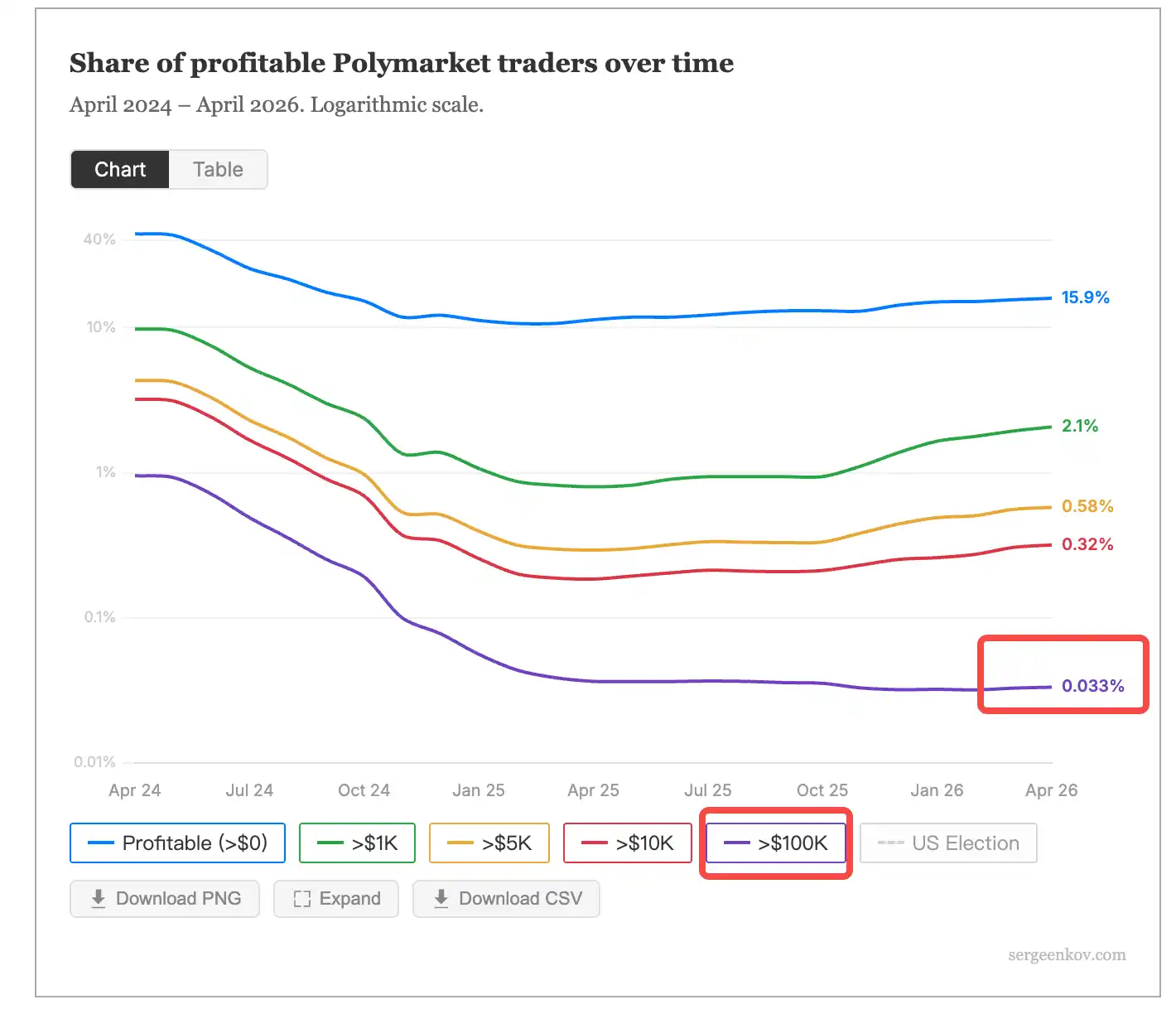
Введение от Deep Tide: Новый анализ 2,5 миллионов кошельков на Polymarket, проведенный ончейн-исследователем Андреем Сергеенковым, показывает, что 84,1% трейдеров находятся в убытке, и только 2% адресов получили совокупную прибыль свыше 1000 долларов, при этом 840 адресов (0,033%) заработали более 100 000 долларов. Время публикации этого отчета весьма показательно — Polymarket только что получил эксклюзивное право стать партнером рынка прогнозов MLB по цене до 300 миллионов долларов и активно наращивает базу розничных пользователей.
Распределение богатства на ончейн-рынках прогнозов оказалось еще более жестоким, чем многие предполагали.
Согласно сообщению The Defiant от 6 апреля, независимый ончейн-исследователь Андрей Сергеенков опубликовал отчет об анализе прибылей и убытков, охватывающий 2,5 миллиона кошельков Polymarket, с данными по состоянию на 1 апреля 2026 года. Ключевой вывод: 84,1% трейдеров теряют деньги, и только менее 16% адресов показали какую-либо положительную доходность.
Это не первое подобное исследование. В декабре 2025 года блокчейн-аналитик DeFi Oasis проанализировал 1,7 миллиона адресов и 124 миллиона транзакций, и тогда вывод заключался в том, что 70% трейдеров не получают прибыли. Выборка данных Сергеенкова больше, а методология улучшена (учтены ранее упущенные операции сплитинга и мерджа токенов), в результате доля убыточных трейдеров выросла с 70% до 84%.
Вершина пирамиды: менее 0,26% зарабатывают более 5000 долларов в месяц
Сергеенков проалежил все потоки USDC в сети Polygon (включая покупку, продажу, погашение, сплитинг и мердж) и провел полный анализ данных транзакций двух смарт-контрактов: CTF Exchange и NegRisk CTF Exchange.
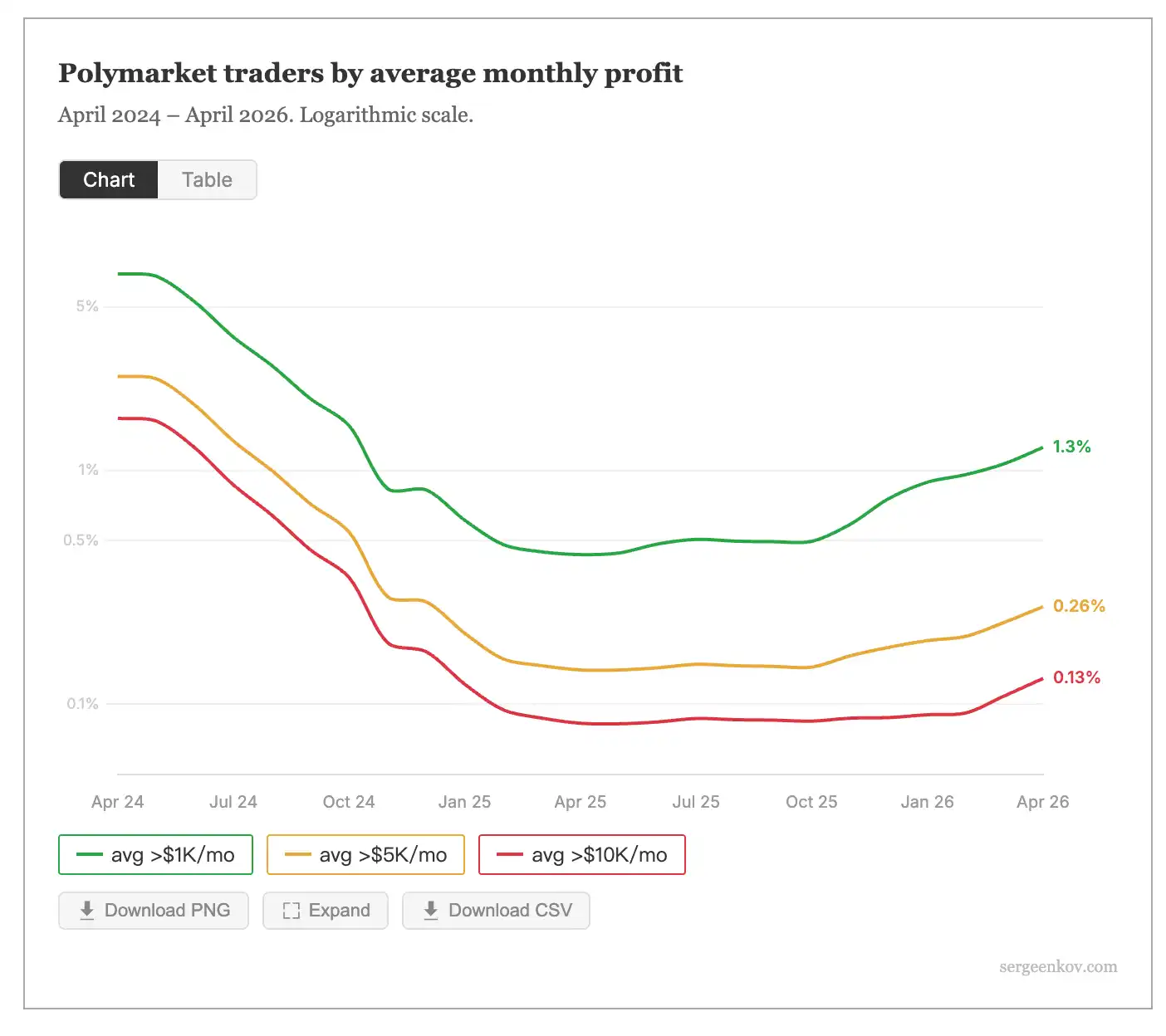
Цифры в сегменте высокой прибыли довольно красноречивы: адреса со средней месячной прибылью свыше 1000 долларов составляют 1,25%; свыше 5000 долларов — всего 0,26%, около 6600 адресов; свыше 10 000 долларов осталось только 3250, что составляет 0,13% от всех трейдеров.
Что еще важнее — вопрос устойчивости. Из тех 6600 адресов с месячной прибылью свыше 5000 долларов, 53% были активны всего один месяц, а затем исчезли, и только 2,6% торговали непрерывно более года. Сергеенков резюмирует в отчете: «Большинство трейдеров приходят, некоторое время торгуют, а затем уходят».
Этому противостоит стабильный сбор прибыли арбитражниками на дне. Академическая статья из испанского Института IMDEA Networks, проанализировавшая 86 миллионов ончейн-транзакций между апрелем 2024 и апрелем 2025 года, показала, что арбитражные трейдеры извлекли около 40 миллионов долларов прибыли только на спредах. Один кошелек показал максимальный доход в 2 миллиона долларов от 4049 сделок, в среднем зарабатывая 496 долларов за сделку.
Ручная торговля розничных инвесторов проигрывает ботам, информация高度 сконцентрирована
Корень убытков не сложен. Исследование IMDEA показывает, что максимальная прибыль сосредоточена в руках кошельков, использующих автоматизированные стратегии: арбитражные боты, алгоритмы маркетмейкинга и системы высокочастотной торговли. Розничные трейдеры, торгующие вручную, обычно входят в рынок уже после того, как корректировка цен завершилась.
В этом заключается ключевое отличие预测市场 от традиционных азартных игр. Order book Polymarket полностью公开, данные в блокчейне прозрачны, но эта прозрачность, наоборот, позволяет профессиональным трейдерам легче создавать системные преимущества. Квантовый кошелек, оснащенный API с низкой задержкой и вероятностными моделями, и обычный пользователь, который открывает приложение и делает ставку только после новостей, находятся на совершенно разных игровых полях.
Согласно данным Token Terminal, номинальный объем торгов Polymarket за последние 30 дней составил около 9,8 миллиарда долларов, а monthly active traders — примерно 462,6 тысячи. Рост самой платформы не вызывает вопросов, но связь между ростом пользователей и их прибыльностью обратная — данные Сергеенкова показывают, что падение доли прибыльных трейдеров напрямую коррелирует с пиками роста пользователей, особенно с наплывом после президентских выборов в США в ноябре 2024 года.
Инструмент агрегации информации или игра с нулевой суммой?
Этот отчет вновь разжег старые дебаты: кому на самом деле служат预测市场?
Ключевой аргумент сторонников — агрегация информации. Официальные данные Polymarket утверждают, что за месяц до определения результата точность ценовых прогнозов превышает 94%. Другими словами, даже если 84% трейдеров теряют деньги, рынок в целом продолжает производить ценные вероятностные сигналы. По сути, теряющие розничные трейдеры платят за оценку информации.
Критики则认为, когда 84% участников платформы терпят убытки, а прибыль高度 сконцентрирована в руках автоматизированных трейдеров, отличие от казино — лишь игра слов в регулировании. Особенно в сфере спортивных контрактов границы между预测市场 и спортивными ставками намеренно размываются.
Оценка Polymarket превысила 20 миллиардов долларов, а Intercontinental Exchange (материнская компания NYSE) в октябре 2025 года вложила 2 миллиарда долларов. Капитал явно ставит на историю роста预测市场.
Но отчет Сергеенкова задает простой вопрос: когда хлынет следующая волна из 2,5 миллионов пользователей, будет ли их судьба отличаться от судьбы предыдущей волны?



















