Первая битва проекта "Стеклянное крыло" компании A завершилась триумфом. За 30 дней Mythos обнаружил 10 000 критических уязвимостей и даже предотвратил мошенничество на 1,5 миллиона долларов! Перед лавиной отчётов разработчики уже кричат о помощи: «Хватит искать! Мы не успеваем всё исправлять!»
Только что Anthropic обнародовала новость, потрясшую мировые технологические и кибербезопасные круги.
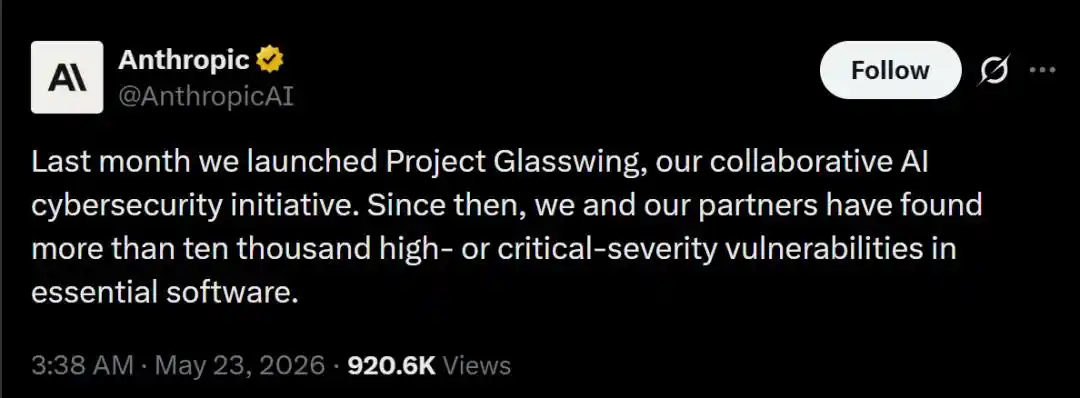
Официально опубликован отчёт за первый месяц секретной операции "Проект Стеклянное крыло".
В этой секретной операции Anthropic впервые задействовала новейшую флагманскую модель следующего поколения — Claude Mythos Preview.
Всего за 30 дней, совместно с примерно 50 мировыми ИТ-гигантами и разработчиками ПО для критической инфраструктуры, она выявила более 10 000 уязвимостей высокого и критического уровня опасности!
Что ещё страшнее, она не только находит уязвимости, но и способна автоматически строить цепочки атак "от начала до конца".
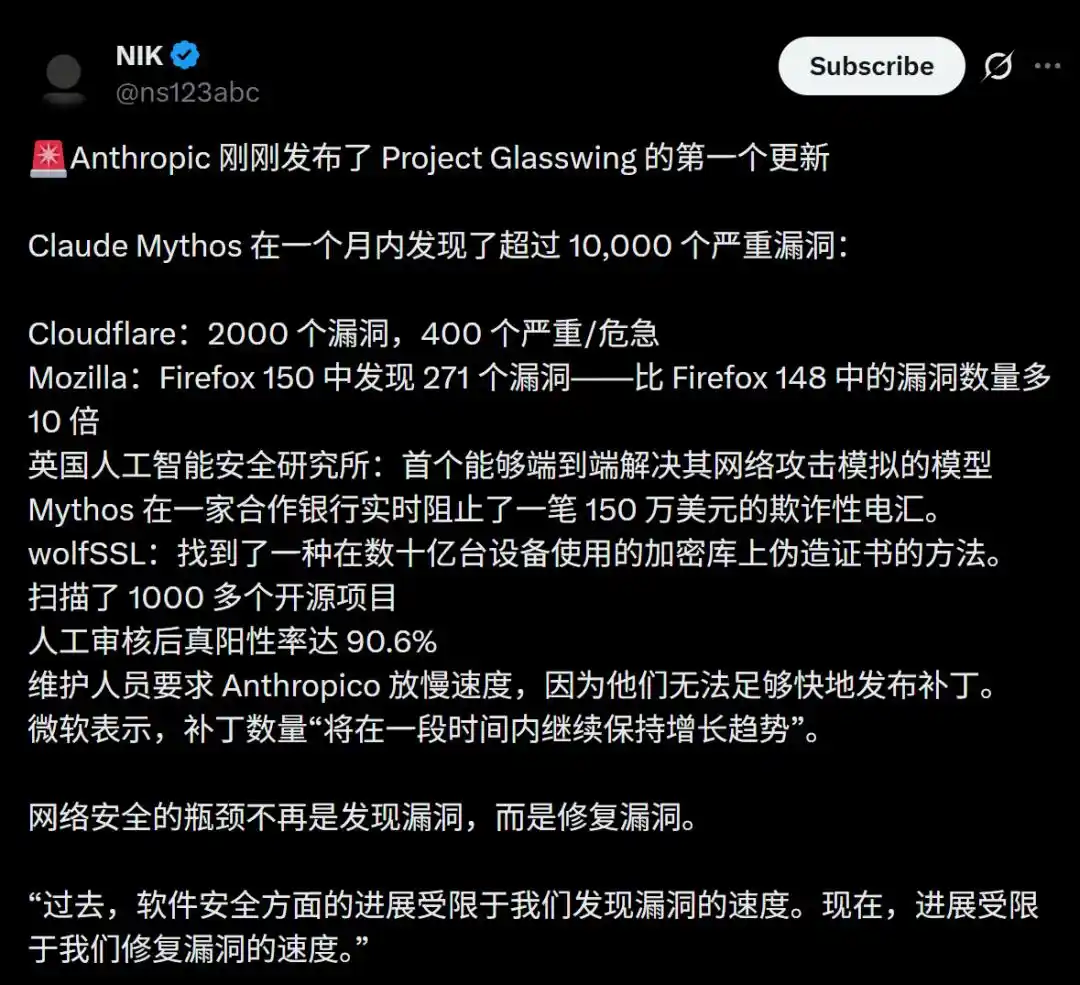
Более того, в реальных операциях одного из банков-партнёров она успешно предотвратила перевод на сумму 1,5 миллиона долларов в результате телефонного мошенничества!
Вся сфера кибербезопасности впала в шок.
Некоторые эксперты по безопасности даже в отчаянии воскликнули в X: «AI перевернул основы интернета... Нам, возможно, действительно конец!»
Безумные 30 дней
Мировые технологические гиганты на собственном опыте убедились, насколько Mythos ужасает
В апреле 2026 года Anthropic тайно запустила Project Glasswing (Проект Стеклянное крыло). Название символизирует надежду сделать самое важное проприетарное и открытое ПО в мире прозрачным и безопасным.
В пилотную программу вошли около 50 разработчиков ПО для критической инфраструктуры.
Когда они получили тестовый доступ к Claude Mythos Preview, всего за месяц их представления о мире были полностью разрушены.
Вот этот ослепительный отчёт —
Cloudflare сообщает, что в крайне критических системах ядра Mythos обнаружил сразу 2000 уязвимостей! Из них 400 относятся к высокому или критическому уровню опасности.
Что ещё невероятнее, команда безопасности Cloudflare с изумлением отметила: уровень ложных срабатываний у этого ИИ даже ниже, чем у лучших человеческих тестировщиков безопасности.
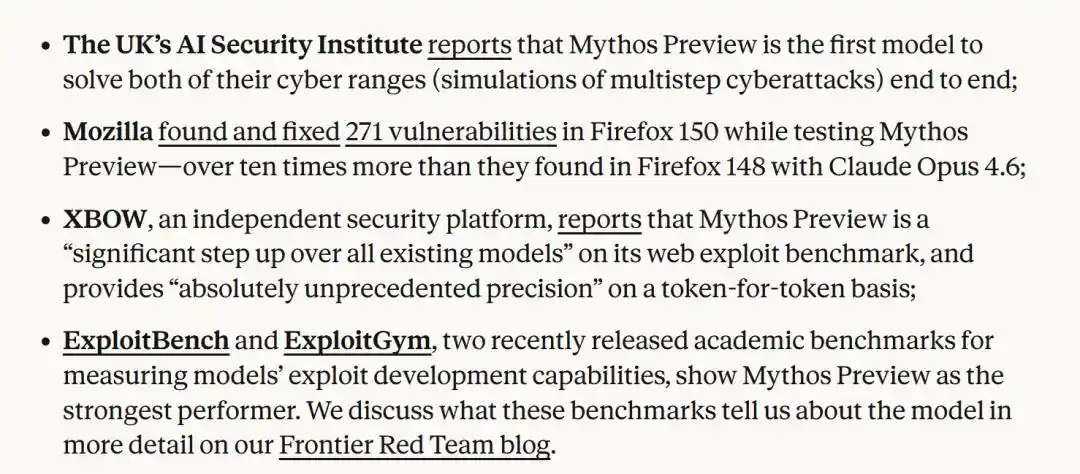
В тестах последнего браузера Mozilla Firefox 150 Mythos исправил 271 уязвимость высокого уровня опасности.
Это число более чем в 10 раз превышает количество уязвимостей, обнаруженных с помощью Opus 4.6 в версии Firefox 148!
Отчёт OpenBSD просто леденит душу: Mythos в кодовой базе OpenBSD выявил древний баг, скрывавшийся целых 27 лет!
Более того, модели даже не понадобилось вмешательство человека — она сама построила полную цепочку эксплуатации уязвимости.

Британский Институт безопасности ИИ дал официальное подтверждение. Они заявили, что Mythos Preview — первая в мире модель ИИ, способная полностью, от начала до конца, пройти их двойной сетевой полигон.
Mythos также блестяще проявил себя в реальной обороне.
В одном из банков-партнёров группа хакеров уже успешно взломала электронную почту клиента и использовала технологию клонирования голоса с помощью ИИ для совершения мошеннического звонка.
В самый критический момент, когда перевод на 1,5 миллиона долларов вот-вот должен был уйти, модель Mythos, анализируя в реальном времени цепочку аномальных действий, мгновенно распознала мошенничество и принудительно заблокировала транзакцию!
«Мы, человеческие эксперты по безопасности, выглядим как первобытные люди с копьями, наблюдающие за пролетающим над головой истребителем F-22», — с горечью написал в X один из участников закрытого тестирования.
Миллиарды незащищённых устройств по всему миру спасены Mythos!
Однако Mythos также спровоцировал кризис производительности.
Раньше главным узким местом в кибербезопасности было обнаружение уязвимостей. Чтобы найти одну критическую уязвимость нулевого дня, ведущим белым хакерам могли потребоваться недели или даже месяцы.
Теперь Claude Mythos сократил стоимость и время поиска уязвимостей до «бесконечно близкого к нулю».
Anthropic использовала его для сканирования более 1000 ключевых открытых проектов, поддерживающих работу интернета. Результаты леденят кровь —
Всего обнаружено 23 019 уязвимостей, включая 6 202 уязвимости высокого или критического уровня по оценке Mythos!
Чтобы убедиться, что ИИ не «бредит», Anthropic привлекла 6 ведущих мировых независимых компаний по исследованию безопасности для перекрёстной ручной проверки.
Результаты подтвердили: точность ИИ по истинно положительным срабатываниям (т.е. уязвимость реально существует) достигает 90,6%! В итоге было подтверждено, что 1094 из них являются неоспоримыми уязвимостями высокого или критического уровня.
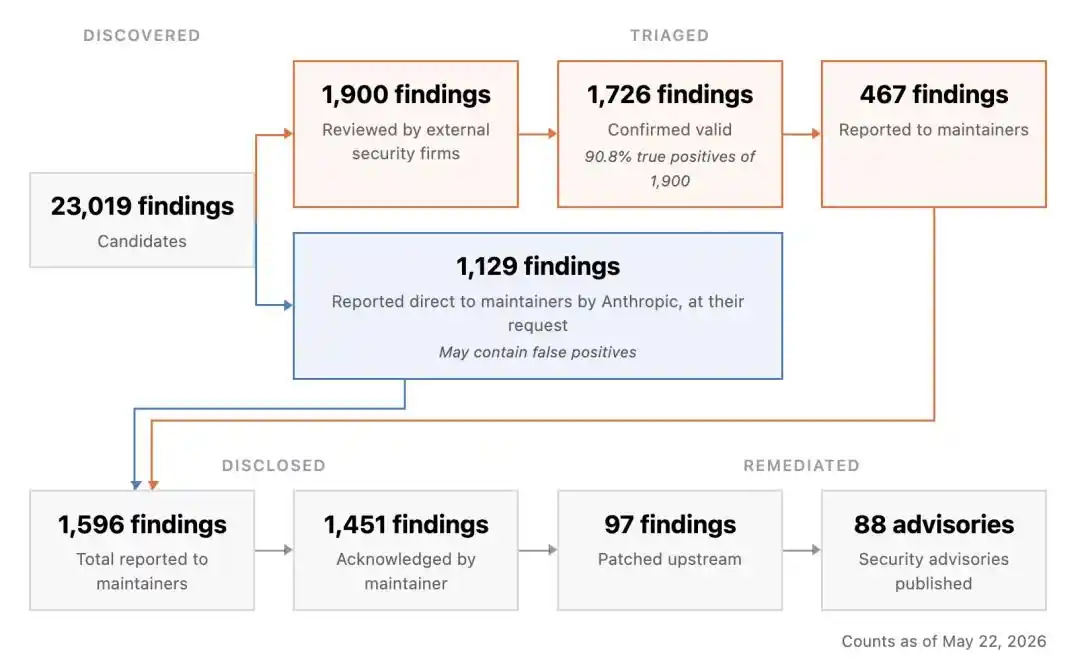
Информационная панель уязвимостей open-source, отображающая уязвимости всех уровней серьёзности
Здесь необходимо упомянуть чрезвычайно показательный случай — wolfSSL.
wolfSSL — это крайне известная библиотека криптографии с открытым исходным кодом, используемая миллиардами устройств по всему миру (включая IoT-устройства, маршрутизаторы, умные автомобили и т.д.).
Однако перед Mythos защита wolfSSL оказалась беспомощной. Mythos не только обнаружил крайне скрытую логическую уязвимость, но и самостоятельно написал код атаки!
Используя этот код, хакеры могут произвольно подделывать цифровые сертификаты, создавая чрезвычайно убедительные сайты банков или страницы входа в почту без каких-либо изъянов.
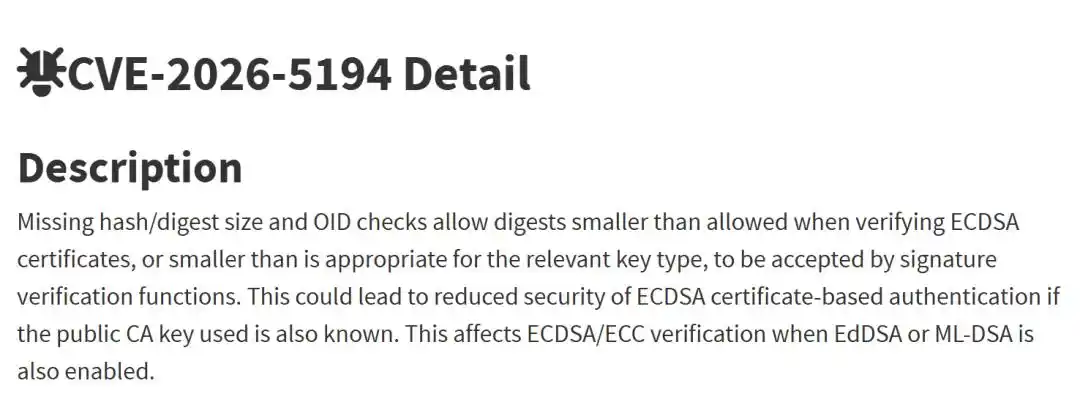
Если бы эта уязвимость не была заранее обнаружена и исправлена благодаря Mythos, её использование киберпреступниками привело бы к непредсказуемым последствиям.
Миллиарды устройств по всему миру фактически всё это время были на грани опасности. На этот раз их спас Mythos.
Эпический переворот: поиск багов больше не узкое место, исправление — вот оно!
По мере продвижения Project Glasswing возникло уникальное явление, никогда ранее не встречавшееся в истории кибербезопасности.
«Узким местом кибербезопасности больше не является поиск уязвимостей. Теперь узкое место таково: скорость исправления уязвимостей людьми сильно отстаёт от скорости их обнаружения ИИ.»
Для сопровождающих проекты с открытым исходным кодом это настоящий кошмар.

Отчёты об уязвимостях от Anthropic летят в сообщества open-source, как снежинки. Авторы уже не справляются.
«Хватит искать! Умоляю, замедлите темп! Мы действительно не успеваем всё исправлять!»
По данным Anthropic, в последнее время несколько сопровождающих open-source-проектов прислали письма с «мольбой о пощаде», прося замедлить темп раскрытия информации об уязвимостях. Потому что катастрофически не хватает рук.
Даже получив подробный отчёт, разработчику-человеку в среднем требуется целых две недели, чтобы исправить одну уязвимость высокого уровня опасности.
В настоящее время из 1129 уязвимостей, отправленных Anthropic авторам open-source, успешно закрыты заплатками только 75 уязвимостей высокого уровня. Текущая экосистема безопасности серьёзно перегружена!
Магия против магии: оборона от Anthropic
Раз люди уже не справляются, будем бороться магией с магией.
Anthropic решительно представила план «Набор инструментов защитника».
Во-первых, это выпущенный с размахом Claude Security.
Это автоматизированный инструмент, созданный специально для клиентов корпоративной версии Claude. Его логика такова: я не только помогу найти уязвимости в вашей кодовой базе, но и сразу напишу патчи для их исправления.
Всего за три недели после запуска корпоративные клиенты с помощью Opus 4.7 уже молниеносно исправили более 2100 уязвимостей!
Во-вторых, это «Программа проверки сети».
Anthropic начала разрешать профессиональным белым хакерам, пентестерам и командам красных и синих в легальных рамках снимать некоторые «замки безопасности» с модели Claude для законных исследований уязвимостей и тестирования на полигонах.
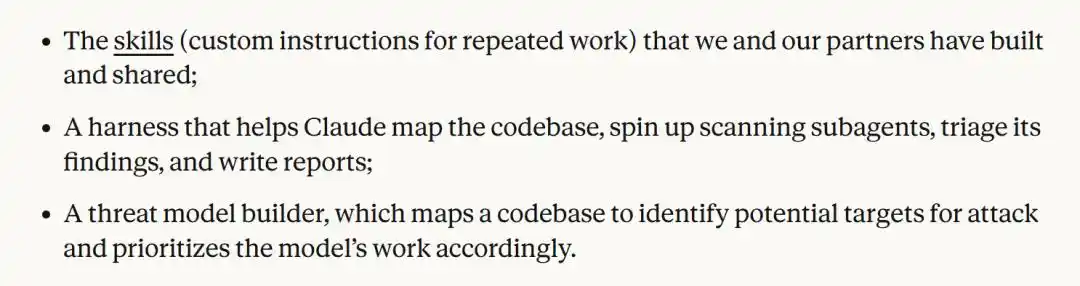
Что ещё интереснее, Anthropic открыла исходный код целого «конвейера по поимке багов».
1. Настраиваемые инструкции (Skills): учат, как заставить ИИ сохранять концентрацию для глубокого анализа кода.
2. Автоматизированный фреймворк (Harness): система управления, позволяющая Claude автоматически обходить огромные кодовые базы, клонировать под-агентов для параллельного сканирования, автоматически сортировать уязвимости и генерировать отчёты.
3. Генератор моделей угроз (Threat Model Builder): просто закиньте в него код, и ИИ автоматически определит самые уязвимые «слабые места» в системе, расставив приоритеты для ключевой защиты.
Сетевой гигант Cisco также выступил, объявив об открытии исходного кода системы «Foundry Security Spec» для создания линии обороны оценки безопасности, подобной Mythos.
С этого момента именно ИИ обнаруживает уязвимости, затем ИИ генерирует патчи, а человек отвечает только за финальную проверку.
Это и есть конечная форма кибербезопасности будущего.
Дамоклов меч: когда же Mythos будет официально выпущен?
Итак, когда же Claude Mythos официально откроется?
Anthropic пока сохраняет крайнюю осторожность.
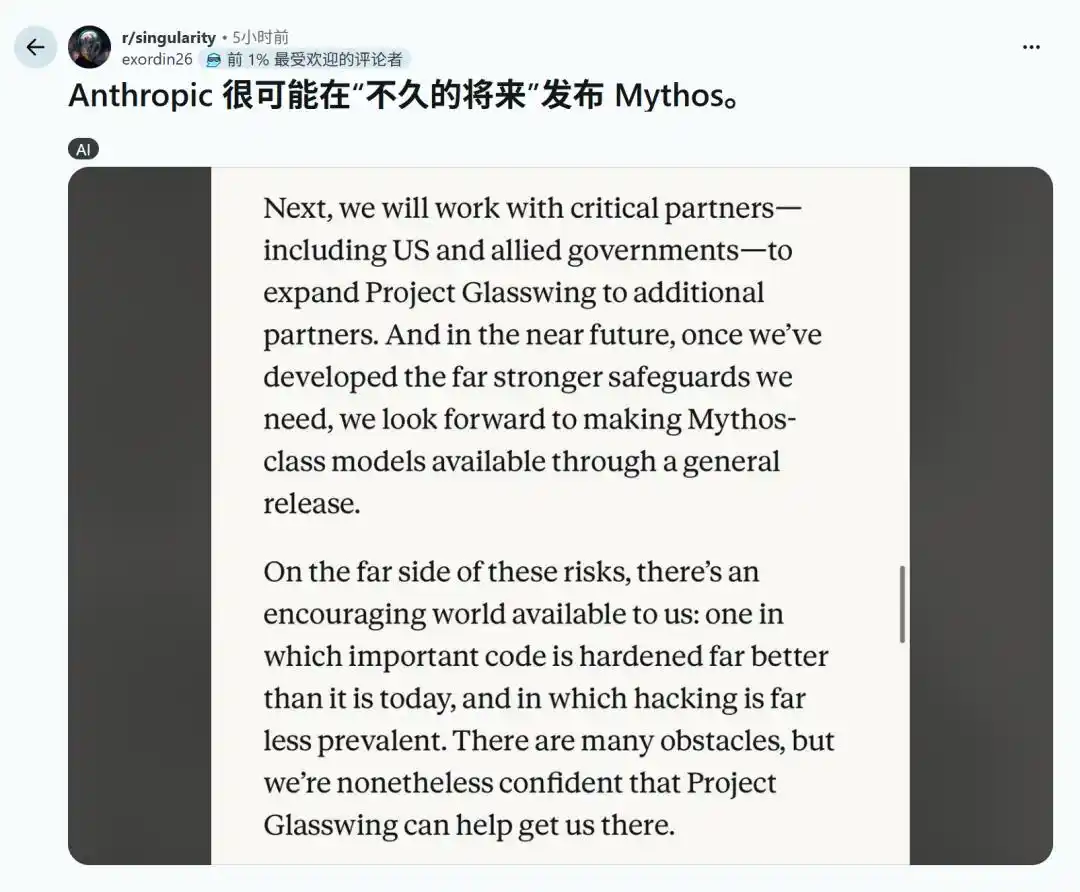
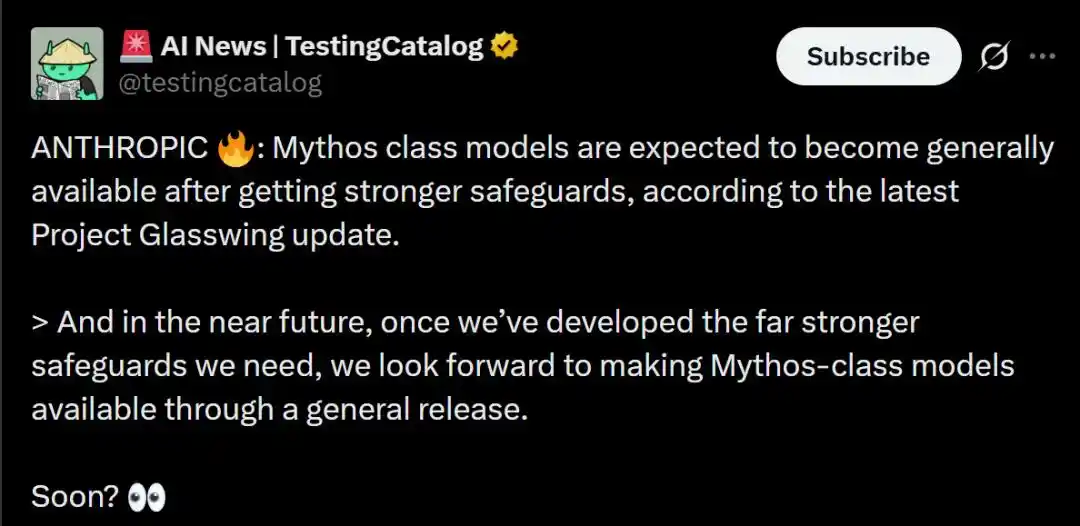
Они заявляют, что как только будут построены «более мощные, более высокоуровневые защитные барьеры», модели уровня Mythos обязательно будут полностью выпущены для публичного доступа!
Сейчас её ещё нельзя выпускать, потому что она слишком опасна.
Как говорится в тестовом отчёте XBOW: Mythos Preview в тестах на эксплуатацию веб-уязвимостей демонстрирует «межпоколенческое значительное превосходство над всеми существующими моделями», проявляя даже в генерации каждого токена «беспрецедентную, абсолютную точность».
Anthropic отчётливо понимает, что сейчас в мире нет ни одной компании с достаточно мощными механизмами безопасности, чтобы на 100% гарантировать невозможность злоупотребления этой моделью.
Если сегодня обнародовать API Mythos, то завтра хакерские группы по всему миру и даже некоторые экстремистские организации смогут с крайне низкими затратами массово производить тысячи инструментов для эксплуатации уязвимостей нулевого дня.
Компьютеры обычных людей, системы больниц, центры управления энергосетями столкнутся с катастрофой!


Anthropic даёт следующие рекомендации:
1. Сокращайте цикл выпуска патчей! Сокращайте цикл выпуска патчей! Сокращайте цикл выпуска патчей! Не копите обновления, выпуская раз в месяц, используйте существующие инструменты ИИ (например, Opus 4.7), как можно быстрее предоставляя пользователям исправления безопасности.
2. Стратегия принудительного обновления. Разработчики должны максимально упростить установку обновлений для пользователей, а для тех, кто упорно не обновляется, применять принудительное отключение от сети. Возвращение к основам безопасности.
3. Усиление многофакторной аутентификации (MFA), укрепление конфигураций по умолчанию, ведение подробных журналов. Затишье перед бурей

Затишье перед бурей
Месяц, совместная работа более 50 гигантов, 10 000+ критических уязвимостей, предотвращение мошенничества на 1,5 миллиона долларов... Это лишь первые результаты Claude Mythos Preview.
Сейчас разработчики-люди переживают период болезненных перемен — их захлёстывают отчёты от ИИ, они латают баги, скрывавшиеся два-три десятка лет.
Но, как и предвидит Anthropic —
«Преодолев эти риски, перед нами откроется захватывающий мир: в нём важнейший человеческий код будет закалён и станет в сотни раз прочнее, чем сегодня, а хакерские атаки превратятся в крайне редкий исторический термин.»
Давайте в тишине поблагодарим тех ИИ, что неустанно анализировали сотни миллионов строк кода.
Вполне возможно, они только что защитили вас от смертельного ядерного взрыва.
Источники:
https://x.com/AnthropicAI/status/20579091025425495
Статья из WeChat Official Account «新智元» (New Zhiyuan), автор: ASI启示录, редактор: Aeneas Moses