Автор | Messari
Компиляция | Odaily Planet Daily (@OdailyChina)
Переводчик | Дин Дан (@XiaMiPP)
Примечание редактора: В то время как Биткоин продолжает "рисовать ворота" (двигаться в боковом диапазоне), а его цена колеблется в интервале от 80 000 до 90 000 долларов, внимание рынка, вероятно, по-прежнему в основном сосредоточено на самом Биткоине. Однако, актив, представляющий направление приватности, ZEC, вновь демонстрирует независимую динамику, его цена пробила уровень в 500 долларов и в настоящее время временно составляет 518 долларов, показав рост почти на 40% от минимума на данном этапе. Еще более контрастным является то, что ZEC когда-то был включен в список кандидатов на голосование за делистинг на Binance, но во второй половине 2025 года наступил его звездный час, когда рост на этапе достиг почти 13 раз.
Это изменение от "периферийного актива" к "активу, переоцененному рынком", также поднимает более важный вопрос:Является ли рост ZEC лишь кратковременной концентрацией эмоций и манипуляцией капитала, или же приватность как свойство денег систематически переоценивается?Messari пытается объяснить, почему рынок вновь обратил внимание на ZEC в данный момент времени, исходя из таких измерений, как денежные свойства, регуляторная среда и структурные изменения Биткоина. Следующий текст взят из @MessariCrypto публикации«The Crypto Theses 2026».

Среди всех криптоактивов, кроме BTC и ETH, у ZEC в 2025 году произошло наиболее значительное изменение в "восприятии денежных свойств". Долгое время ZEC находился за пределами "денежной иерархии криптовалют", рассматриваясь как нишевая приватная монета, а не как реальный денежный актив. Но по мере роста опасений по поводу финансового наблюдения и ускорения институционализации и организации Биткоина, приватность вновь рассматривается рынком как ключевое денежное свойство, а не просто предпочтение少数 гиков или идеологических групп.
Биткоин доказал, что несуверенные цифровые валюты могут работать в глобальном масштабе; но он не сохранил свойство приватности, к которому люди давно привыкли при использовании наличных денег. Каждая транзакция транслируется в полностью прозрачный публичный реестр, и любой, используя обозреватель блоков, может отслеживать и анализировать их. Ирония сильна: инструмент, изначально призванный ослабить государственный контроль, в конечном итоге непреднамеренно построил финансовую "паноптическую тюрьму".
Zcash, используя криптографию с нулевым разглашением (zero-knowledge), объединяет денежную политику Биткоина с свойством приватности наличных денег. В текущей системе цифровых активов ни один актив не может предложить такую проверенную длительной практикой и детерминированную гарантию приватности, как последняя версия пула приватности Zcash. Это делает ZEC чрезвычайно трудной для复制рования формой "частных денег".
Мы считаем, что рынок именно на этой точки переоценил ZEC относительно BTC — рассматривая его как "идеальную форму приватной криптовалюты" и позиционируя как инструмент хеджирования против роста государства-наблюдателя и процесса институционализации Биткоина.
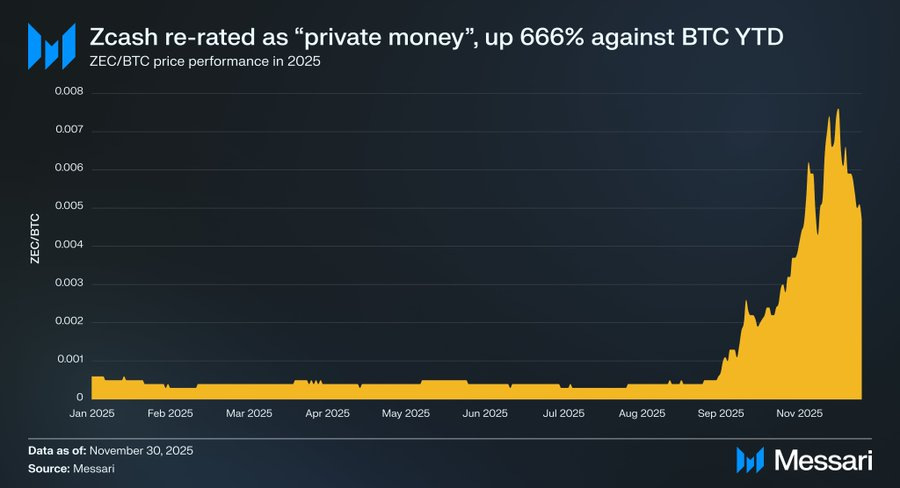
С начала года рост ZEC к BTC составил 666%, рыночная капитализация выросла до примерно 70 миллиардов долларов, и в какой-то момент он превзошел XMR по рыночной капитализации, став самой капитализированной приватной монетой. Эта относительная сила показывает, что рынок начинает рассматривать ZEC и XMR вместе как жизнеспособные формы приватной криптовалюты.
Приватность на Биткоине: почти непроходимый путь
Биткоин почти не может внедрить на уровне протокола архитектуру пула приватности, подобную Zcash, поэтому утверждение, что "Биткоин в конечном итоге поглотит ценностное предложение Zcash", несостоятельно.
Сообщество Биткоина известно своей высококонсервативной технической культурой, отдающей приоритет отвердеванию механизмов для максимального сокращения поверхности атаки и поддержания целостности денежной системы. Если внедрять функции приватности на уровне протокола, необходимо вносить изменения в核心ную архитектуру Биткоина, что introduces potential риски инфляционных уязвимостей, угрожая его основной денежной надежности. Для Zcash этот риск приемлем, потому что приватность сама по себе является его核心ным ценностным предложением.
Кроме того, внедрение криптографии с нулевым разглашением на базовом уровне значительно снизит масштабируемость блокчейна. Для предотвращения двойного расходования необходимо использовать nullifier (инвалидатор) и хешированные структуры нот, что создает долгосрочную скрытую проблему "раздувания состояния". Nullifier по сути является только растущим списком, который со временем постоянно увеличивается, и в конечном итоге может привести к значительному увеличению ресурсных затрат на запуск нод. Если ноды будут вынуждены хранить постоянно растущий набор nullifier'ов, степень децентрализации Биткоина будет существенно ослаблена, поскольку порог запуска нод будет со временем повышаться.
Как упоминалось ранее, при отсутствии софт-форка, способного поддерживать ZK-верификацию (например, OP_CAT), ни одно решение второго уровня Биткоина не сможет унаследовать безопасность Биткоина и одновременно достичь уровня приватности Zcash. Вы либо вводите доверенного посредника (как в федеративных структурах), либо принимаете длительную и высокоинтерактивную задержку вывода (как в модели BitVM), либо просто полностью передаете выполнение и безопасность независимой системе (как в суверенных роллапах).
Пока эта格局 не изменится, не существует реального пути, который одновременно сочетал бы безопасность Биткоина и приватность Zcash. Это и есть фундаментальная причина уникальной ценности ZEC как приватной криптовалюты.
Инструмент хеджирования приватности против CBDC
Срочность потребности в приватности further усиливается на фоне последовательного появления цифровых валют центральных банков (CBDC). В настоящее время около половины стран мира изучают или уже выпустили CBDC.
Ключевой характеристикой CBDC является "программируемость": эмитент может не только отслеживать каждую транзакцию, но и напрямую контролировать, как, когда и где используются средства. Средства甚至可以 быть настроены на работу только у указанных merchants или в определенных географических зонах.
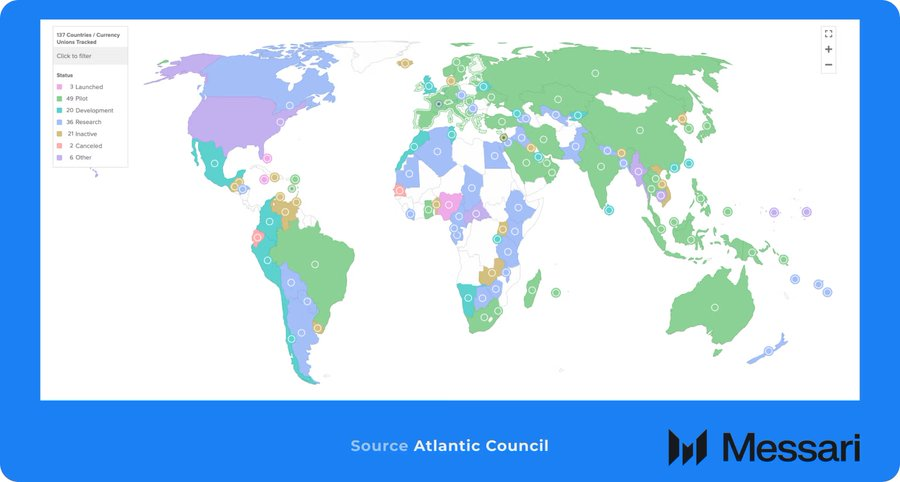
Это не антиутопическая фантазия, а уже происходящая реальность:
- Нигерия (2020): Во время протестов #EndSARS против полицейского насилия Центральный банк Нигерии заморозил банковские счета нескольких организаторов протестов и феминистских групп, вынудив движение полагаться на криптовалюты для продолжения работы.
- США (2020–2025): Регуляторы и крупные банки под предлогом "репутационного риска" провели дебанкинг ряда законных, но политически нежелательных отраслей. Проблема стала настолько серьезной, что Белый дом распорядился провести расследование, а исследовательский отчет OCC за 2025 год также зафиксировал системные ограничения для нефтегазовой отрасли, оружия, контента для взрослых и криптоиндустрии.
- Канада (2022): Во время протестов "Свободного конвоя" правительство Канады, ссылаясь на Закон о чрезвычайных ситуациях, заморозило банковские и криптосчета протестующих и мелких жертвователей без санкции суда. Королевская канадская конная полиция даже внесла 34 адреса самодепозитных криптокошельков в черный список, потребовав от всех регулируемых бирж прекратить с ними transactions. Этот инцидент ясно показал, что западные демократии также готовы weaponize финансовую систему для подавления политического инакомыслия.
В эпоху, когда "деньги можно запрограммировать, чтобы контролировать вас", ZEC предлагает четкий "механизм выхода". Но значение Zcash не ограничивается бегством от CBDC, оно становится все более важным и для защиты самого Биткоина.
Страховой механизм против "кооптации" Биткоина
Как подчеркивали Naval Ravikant, Balaji Srinivasan и другие, Zcash по сути является страховкой для维护 видения финансовой свободы Биткоина.
Биткоин быстро концентрируется в中心化тивных entities: централизованные биржи持有 около 3 миллионов BTC, ETF持有 около 1.3 миллиона, публичные компании持有 около 829,000. В общей сложности около 5.1 миллиона BTC (24% от общего предложения) в настоящее время находятся под контролем第三方 кастодианов.
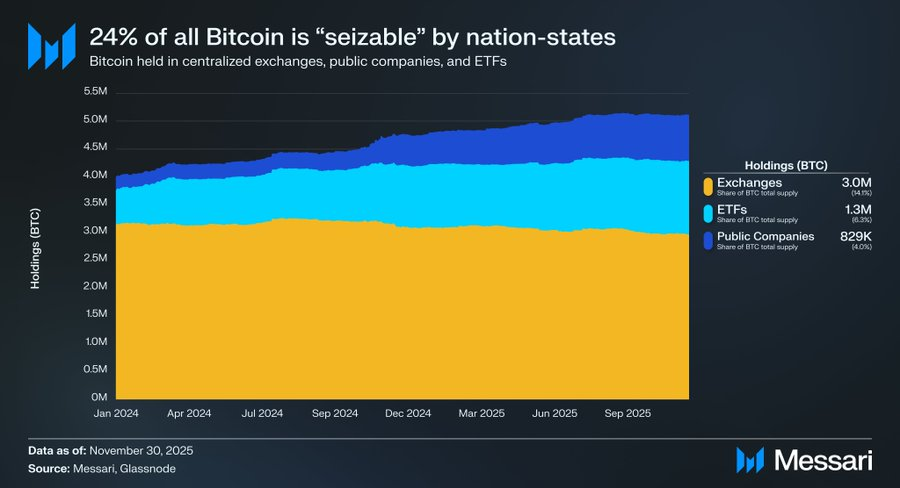
Это означает, что теоретически около четверти предложения BTC подвержено риску регуляторной конфискации. Эта структура高度 похожа на условия централизации, когда правительство США конфисковало золото в 1933 году. Тогда правительство США через Исполнительный указ 6102 принудительно изъяло у граждан золотые запасы сверх 100 долларов, обменяв их по фиксированной цене на бумажные деньги, процесс осуществлялся не с помощью насилия, а через банковскую систему.
Для Биткоина путь完全一致. Регуляторам не нужно掌握 ваш私钥, им只需要拥有 юридическую юрисдикцию над кастодианами. Как только政府向 BlackRock, Coinbase等机构下达执法命令, эти компании по юридическим обязательствам могут только заморозить и передать持有的 BTC. Без изменения ни единой строчки кода, почти четверть предложения BTC может быть "национализирована" в одночасье.
Кроме того, при高度 прозрачности блокчейна самодепозит также не является достаточной защитой. Любой BTC, выведенный с KYC-биржи или брокерского счета, в конечном итоге оставляет отслеживаемый "бумажный след".
Держатели BTC могут, конвертировав в Zcash, разорвать эту цепочку кастодианства и регулирования, осуществив "воздушную изоляцию" богатства.一旦 средства попадают в пул приватности Zcash, их направление становится для наблюдателя криптографическим "черной дырой". Регуляторы могут видеть, что средства покинули сеть Биткоина, но не могут узнать их конечное направление. Конечно, сила этой анонимности полностью зависит от операционной безопасности: повторное использование адресов, получение активов через KYC-биржи оставляют постоянную связь до входа в пул приватности.
Путь к PMF прокладывается
Спрос на приватные деньги всегда существовал, проблема заключалась в том, что Zcash в прошлом было трудно "донести до пользователя". Долгое время высокое потребление памяти, длительное время доказательства и сложная настройка десктопного клиента делали приватные транзакции медленными и отпугивающими обычных пользователей. Ряд недавних прорывов на инфраструктурном уровне систематически устранил эти препятствия.
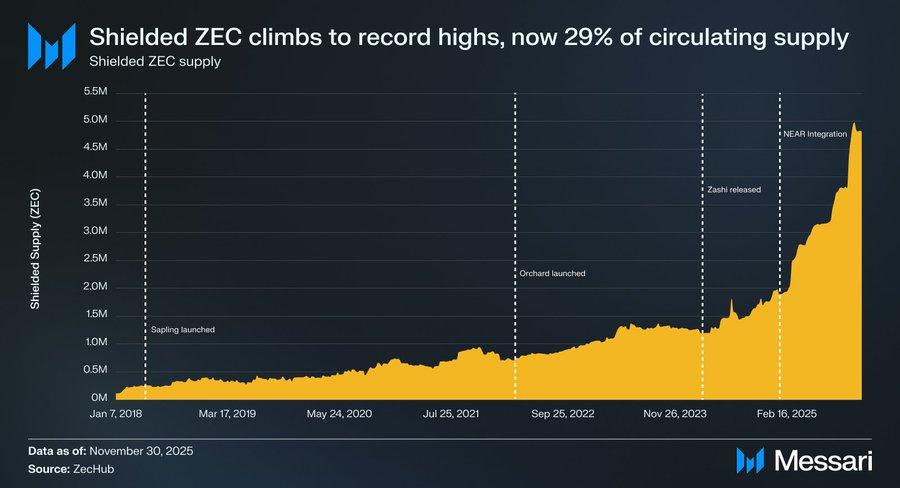
Обновление Sapling снизило потребность в памяти на 97% (до примерно 40 МБ), время доказательства сократилось на 81% (примерно 7 секунд), что сделало возможными мобильные приватные транзакции.

Хотя Sapling решил проблему скорости, доверенная настройка (trusted setup) оставалась焦点ом сообщества приватности. Затем Orchard, внедрив Halo 2, полностью устранил зависимость от доверенной настройки и ввел унифицированные адреса (Unified Addresses), объединив прозрачные и приватные адреса в единую точку входа, что значительно снизило когнитивную нагрузку на пользователя.
Эти улучшения最终 привели к выпуску в марте 2024 года мобильного кошелька Zashi. Благодаря абстрактному дизайну унифицированных адресов, Zashi свел操作 приватных транзакций к нескольким нажатиям на экране, сделав "приватность" опытом по умолчанию.
После решения проблемы UX, распространение стало последним препятствием. Пользователи по-прежнему полагались на централизованные биржи для внесения и вывода ZEC на свои кошельки. Интеграция NEAR Intents устранила зависимость пользователей от централизованных бирж, позволив им напрямую обменивать активы, такие как BTC, ETH, на ZEC в приватном состоянии, и даже использовать приватный ZEC для支付 на任意 адреса в 20 блокчейнах.
Эти меры совместно помогли Zcash обойти историческое трение, подключиться к глобальной ликвидности и对接иться с реальным рыночным спросом.
Взгляд в будущее
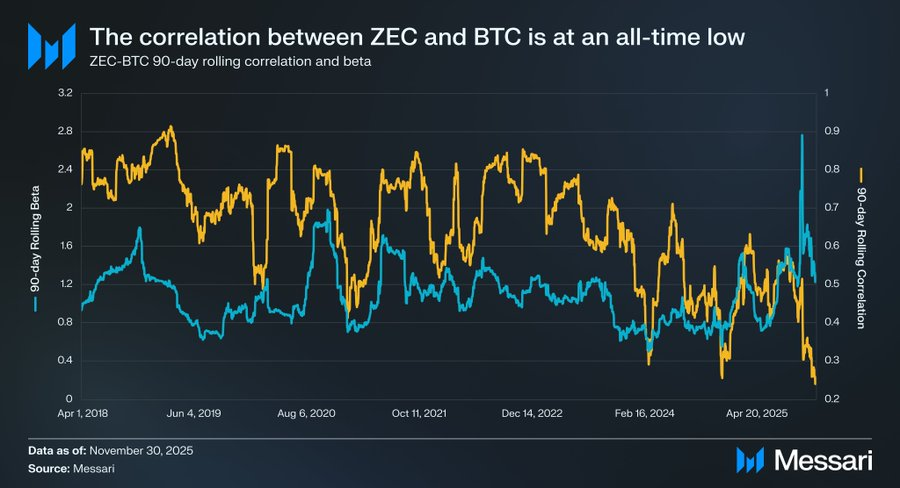
С 2019 года скользящий коэффициент корреляции ZEC с BTC持续 снижается, с 0.90 до недавних 0.24; в то же время скользящий Beta ZEC к BTC вырос до исторического максимума. Это расхождение表明, что рынок присваивает свойству приватности Zcash независимую премию.
Мы не считаем, что ZEC превзойдет BTC. Биткоин благодаря своей прозрачности предложения и аудируемости утвердил свое положение как самой надежной криптовалюты; а Zcash как приватная монета неизбежно несет компромисс между приватностью и аудируемостью.
Но ZEC完全可以, не заменяя BTC, carve out свою собственную нишу. Они не решают одну и ту же проблему, а выполняют разные роли в системе криптовалют: BTC — это "надежная криптовалюта", оптимизированная для прозрачности и безопасности, а ZEC — "приватная криптовалюта", созданная для приватности и конфиденциальности.
В этом смысле успех ZEC не зависит от победы над Биткоином, а在于 дополняет те属性, от которых Биткоин deliberately отказался.
Связанное чтение
Возрождение приватных монет: от кандидата на делистинг Binance до 13-кратного роста, молниеносное возрождение ZEC





















