Judging Bitcoin's Bottom Range from Indicators Rather Than Faith

比推Опубликовано 2026-02-03Обновлено 2026-02-03

Введение

Based on key metrics rather than sentiment, this analysis examines potential Bitcoin bottom ranges after its recent drop below $75,700. A market poll suggests 30% of investors see the bottom between $60,000–$75,000. Glassnode data indicates the network-wide average cost basis is $55,900, a critical support level. The ahr999 indicator, falling below 0.45 for the first time since 2023, signals a buying opportunity, recommending accumulation under $76,000. Analyst Willy Woo’s CVDD model points to a hard bottom near $45,000, while large holder "Strategy’s" average cost of $76,040 is another key level to watch. These metrics suggest cautious accumulation at current levels, though macroeconomic and ETF influences may prevent a drop to previous cycle lows.

Author: Ma He, Foresight News

Original Title: Five Key Indicators to Decode Bitcoin's Iron Bottom, Is the Buying Opportunity Here?


Wintermute stated last week that $85,000 is a key point for BTC and that it would choose a direction in the near future. Unfortunately, the direction was not upward but sharply downward.

On February 2, BTC once fell to $75,700, ETH fell to $2,220, and a number of altcoins continued to decline. In terms of liquidation data, according to Coinglass data, $435 million was liquidated in the past 12 hours, with long positions liquidated at $324 million.

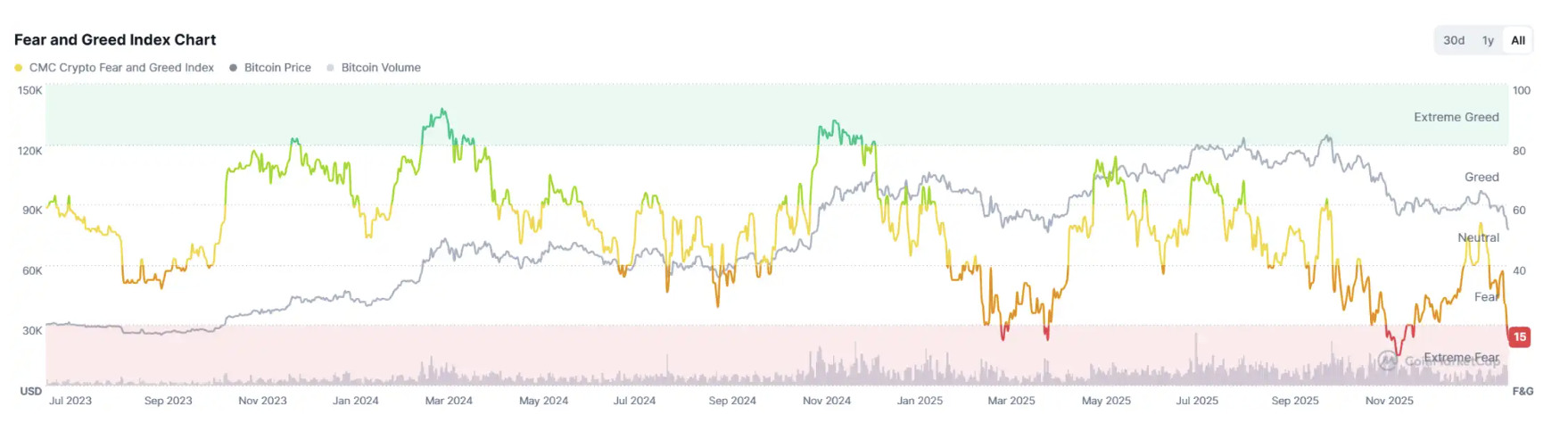
The market fear index is 15, and market sentiment has once again fallen into extreme fear.

After the market turns bearish, where is the bottom range of BTC? Five major data indicators reveal the secret for you.

Data Survey: 30% of Users Believe BTC's Bottom Range is Between $60,000 and $75,000

On January 30, Foresight News conducted an investor market confidence survey. On that day, the BTC price was at $84,000 when the market survey questionnaire was conducted, and it has fallen significantly in the following days, so the results of this data questionnaire are for reference only.

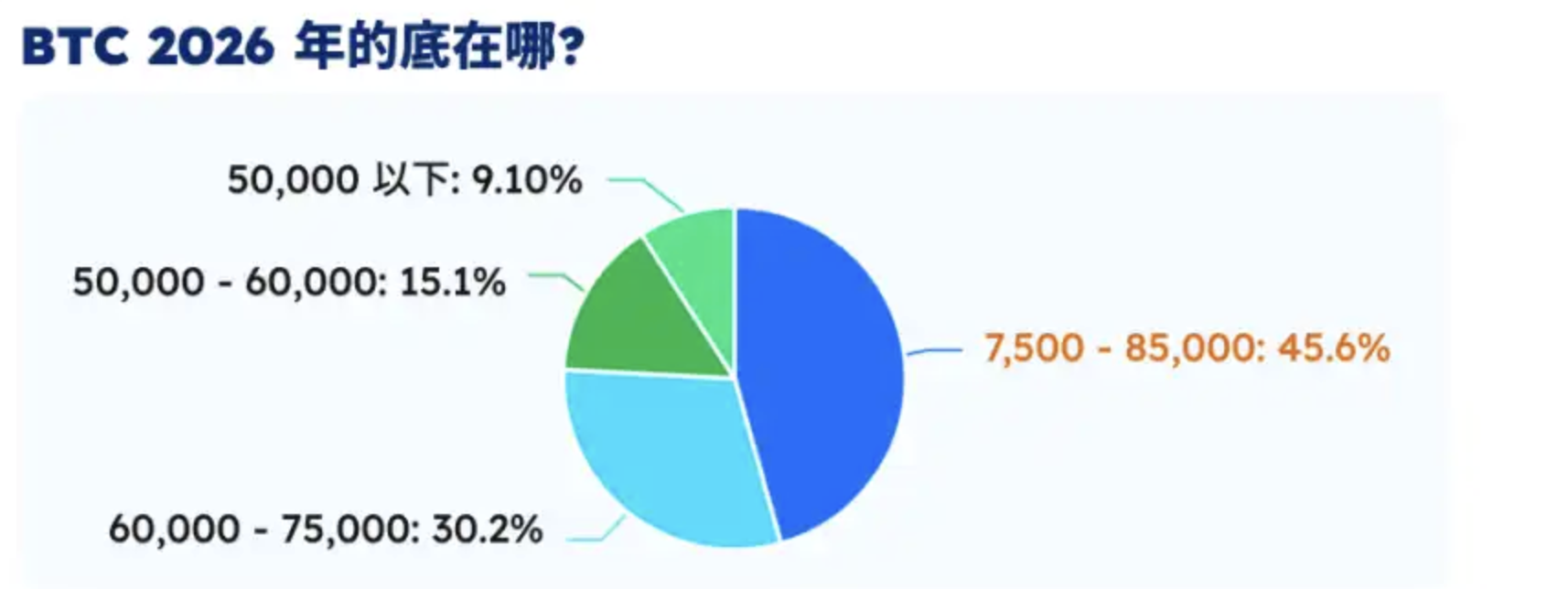
The voting questionnaire showed (1,189 participants voted) that most respondents (45.6%) believe that BTC's bottom price in 2026 will be between $75,000 and $85,000. Another 30.2% of respondents believe the bottom price will be between $60,000 and $75,000.

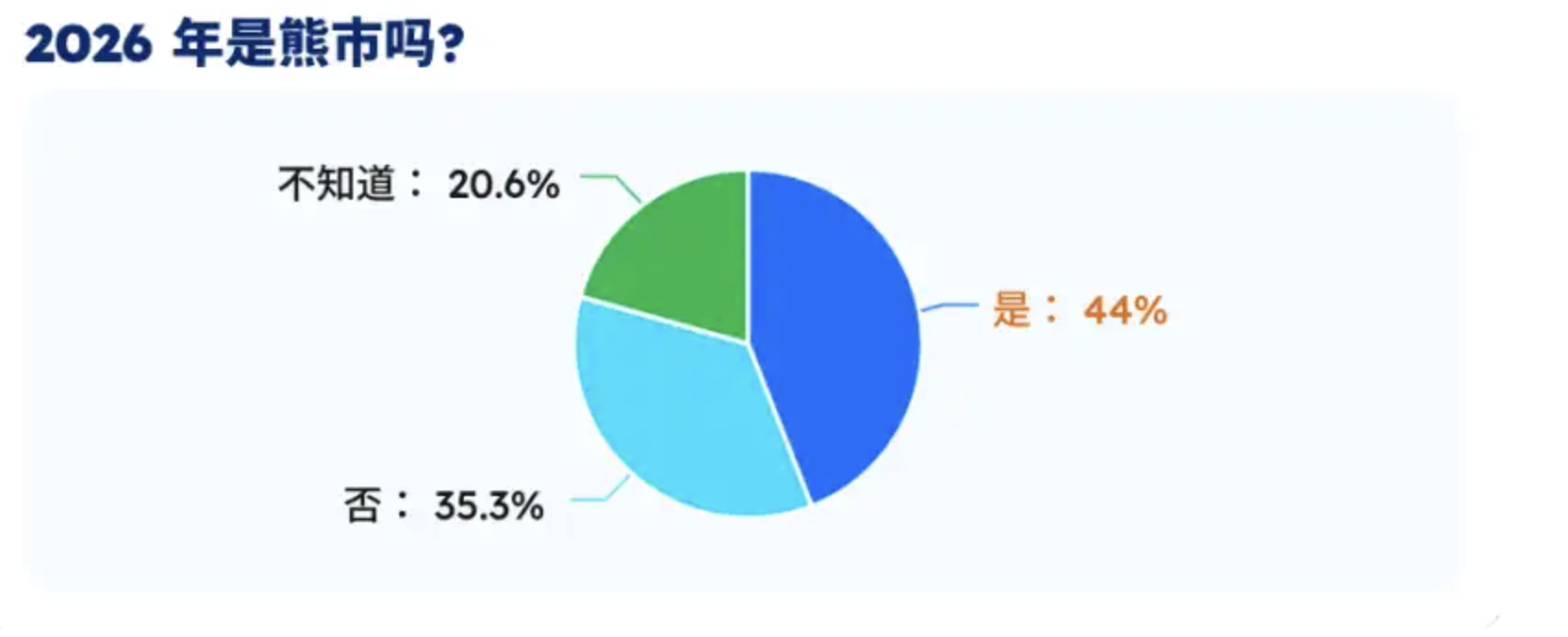
44% of respondents believe that 2026 will be a bear market, while 35.3% of respondents disagree, believing it is not a bear market. Another 20.6% of respondents said they were unsure.

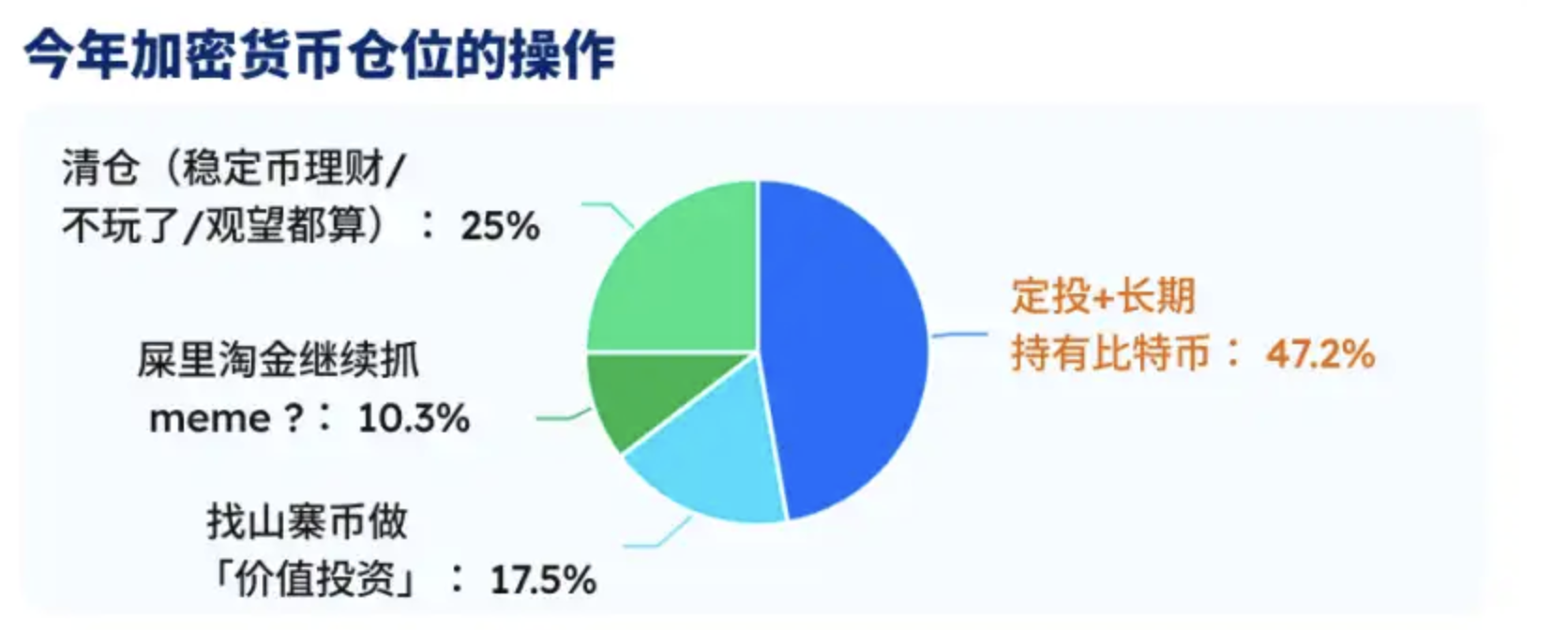
Nearly half of the respondents (47.2%) choose to dollar-cost average and hold Bitcoin for the long term. Another 25% of respondents choose to liquidate their positions and switch to stablecoin wealth management or wait and see the market. 17.5% of respondents are looking for altcoins for value investment.

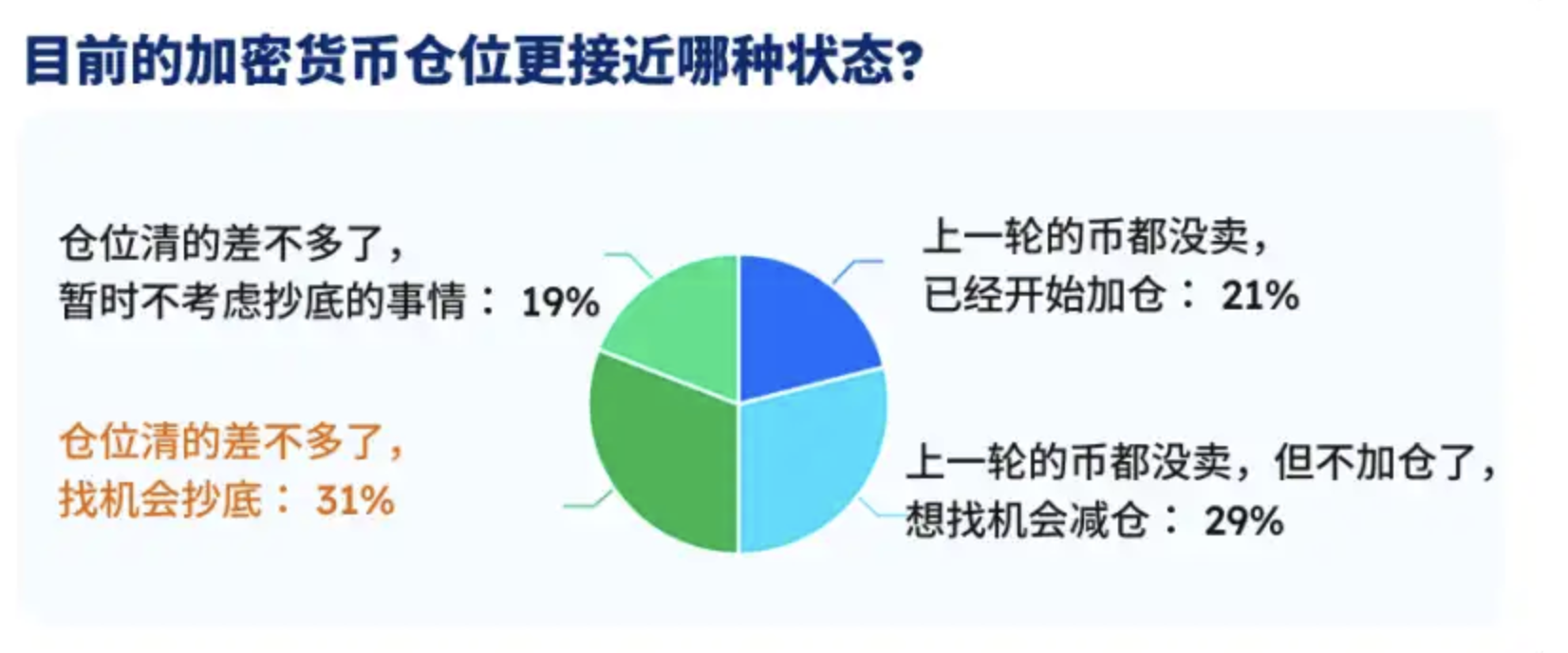
Currently, among the voting respondents, 31% said they have almost cleared their positions but are still looking for opportunities to buy the dip. 29% of respondents said they have not sold the coins from the last round but are temporarily not adding to their positions and want to find opportunities to reduce them. 21% of respondents said they have not sold the coins from the last round and have already started adding to their positions.

Glassnode Shows BTC's Full Network On-Chain Cost is $55,900

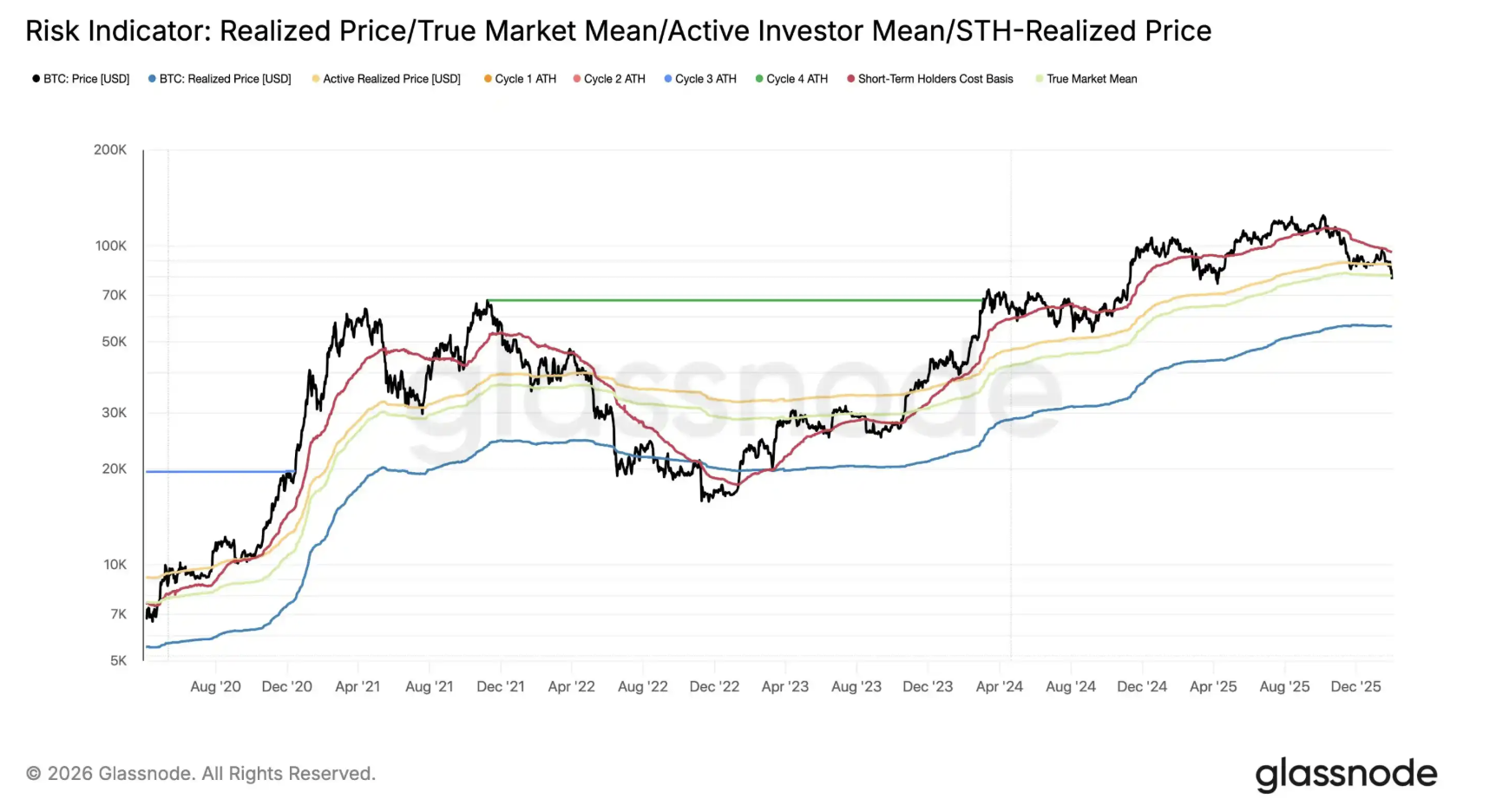
Bitcoin fell below $78,000. Glassnode updated the key on-chain price distribution of Bitcoin as follows: STH (Short-Term Holder) cost basis, reflecting the average holding price of new buyers/traders who entered the market in recent months, is $95,400.

The average investment amount of active investors, the current average holding cost of traders who are truly "on the field" is $87,300; the Realized Market Mean, focusing on the cost of actual traders in the secondary market, is $80,500. The Realized Price, representing the average cost basis of all coins across the entire network, is $55,900.

That is, when the BTC price is below $80,500, the price you buy is lower than the cost price of other recent traders. If BTC falls below $55,900, it means the price you buy is already lower than the average cost of the entire network.

In the 2022 cycle bear market, the BTC price once fell below the average cost basis of the entire network. In this cycle, influenced by factors such as macro liquidity and spot ETFs, whether BTC will fall below $55,900 remains unknown.

ahr999 Indicator Shows Accumulation Signal

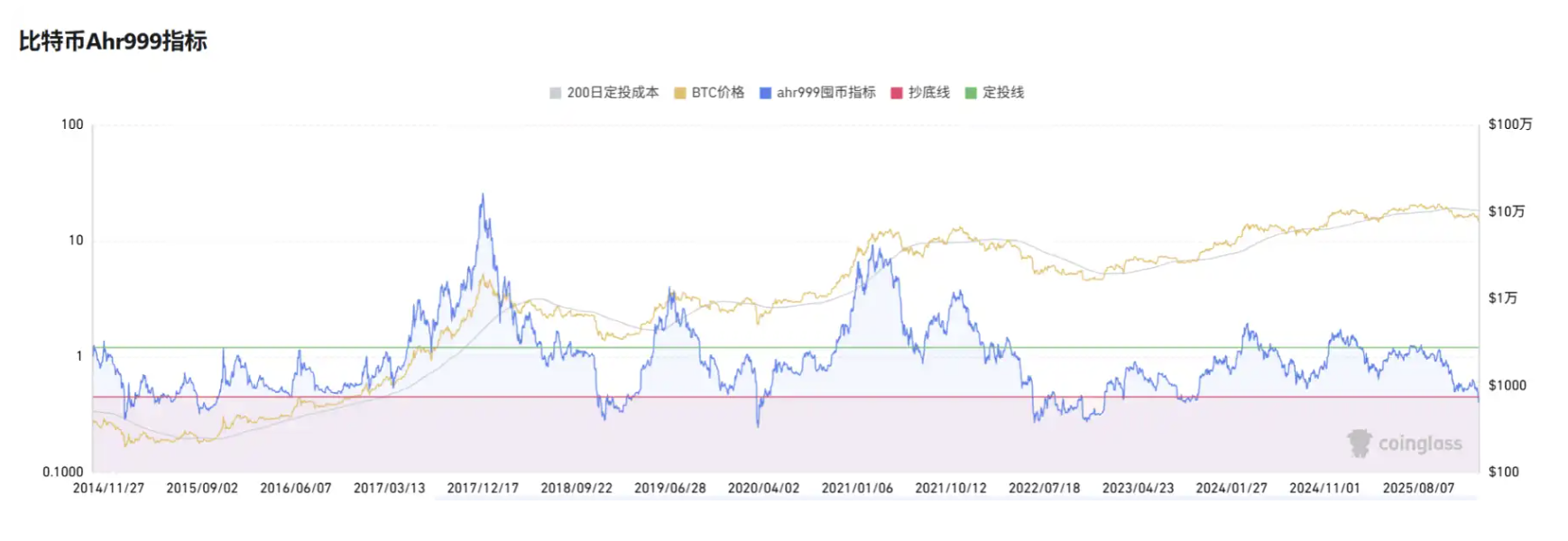
The ahr999 indicator was invented years ago by Weibo user ahr999 to evaluate BTC's short-term returns and price deviations. The calculation formula for this indicator is (current price / 200-day dollar-cost average cost) × (current price / exponential growth valuation), where the exponential growth valuation is based on a fitting curve of historical prices and block heights, representing the long-term "fair value". Historical experience shows: ahr999 < 0.45 is the low-price buying zone; 0.45-1.2 is suitable for dollar-cost averaging; >1.2 is the high-price zone.

On February 1, 2026, ahr999 fell below 0.45 for the first time, the first time in 839 days since October 16, 2023, marking a potential market bottom. The current break below the threshold suggests that the BTC price is significantly lower than long-term growth expectations, similar to the end of the 2023 bear market. This signal strongly suggests buying the dip, but it needs to be confirmed with volume to avoid false breakouts. Buying strategy: If ahr999 stabilizes below 0.45, you can buy in batches below $76,000, and reduce positions when it rebounds above 1.2.

Willy Woo Indicator Shows BTC's Iron Bottom is $45,000

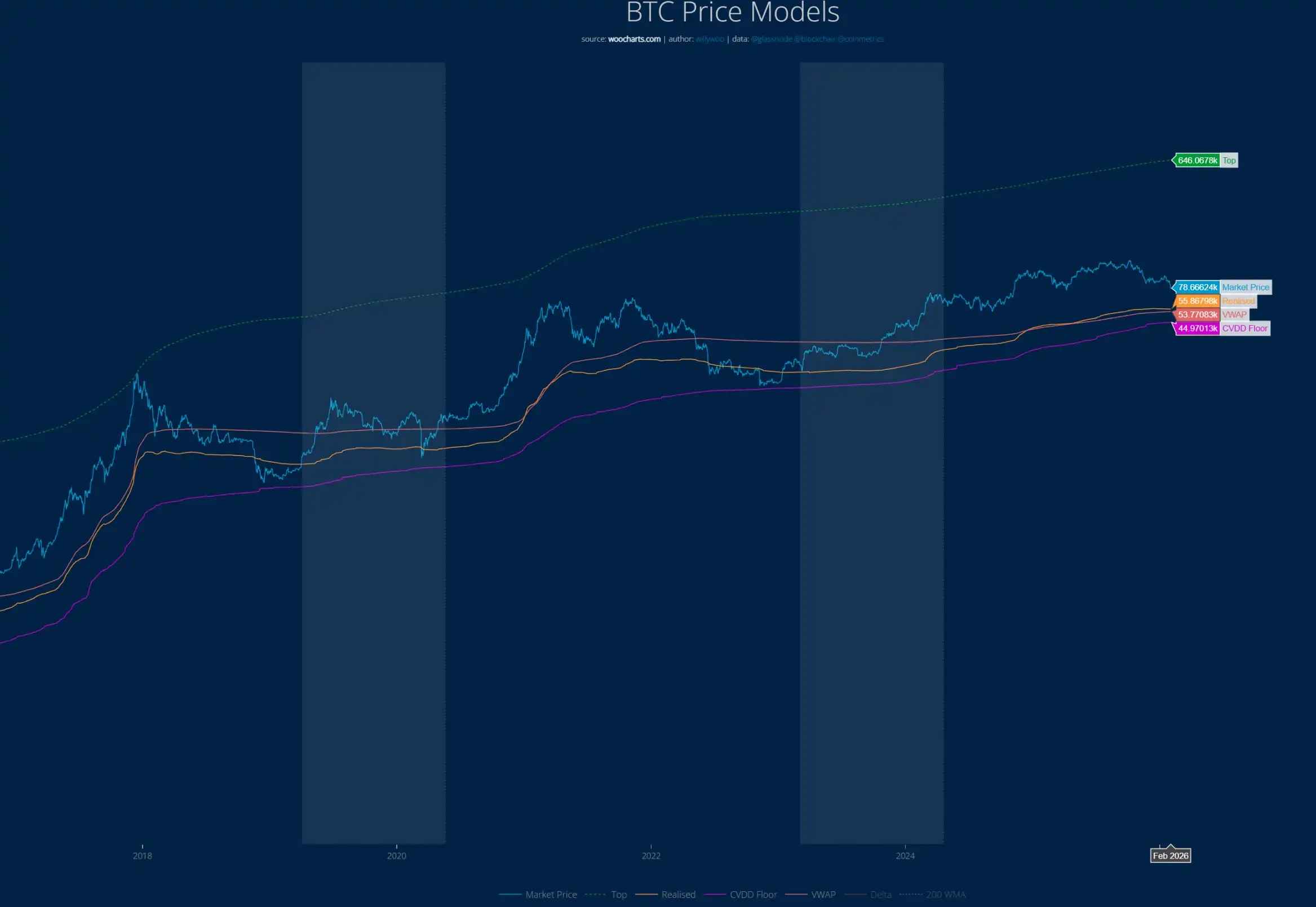
The indicator developed by well-known analyst Willy Woo is the CVDD model. When Bitcoin is transferred from an old investor who bought at $1 to a new investor who buys at $100,000, the new investor will evaluate the value of these Bitcoins based on a higher bottom price, which helps raise the perceived bottom price of the entire supply globally. Active custodian rotation (i.e., Bitcoin frequently transferred between different investors or custodians) may also indicate that investors value these Bitcoins highly."

When many whales transfer BTC to new Bitcoin wallet addresses, the market bottom price is rising.

The BTC price has never fallen to the red line (CVDD model). Currently, the CVDD indicator shows its iron bottom is about $45,000. In past cycles, BTC once fell below the yellow line position in the chart. Currently, this range is $53,000 to $56,000.

Strategy's Bitcoin Cost Price is $76,040

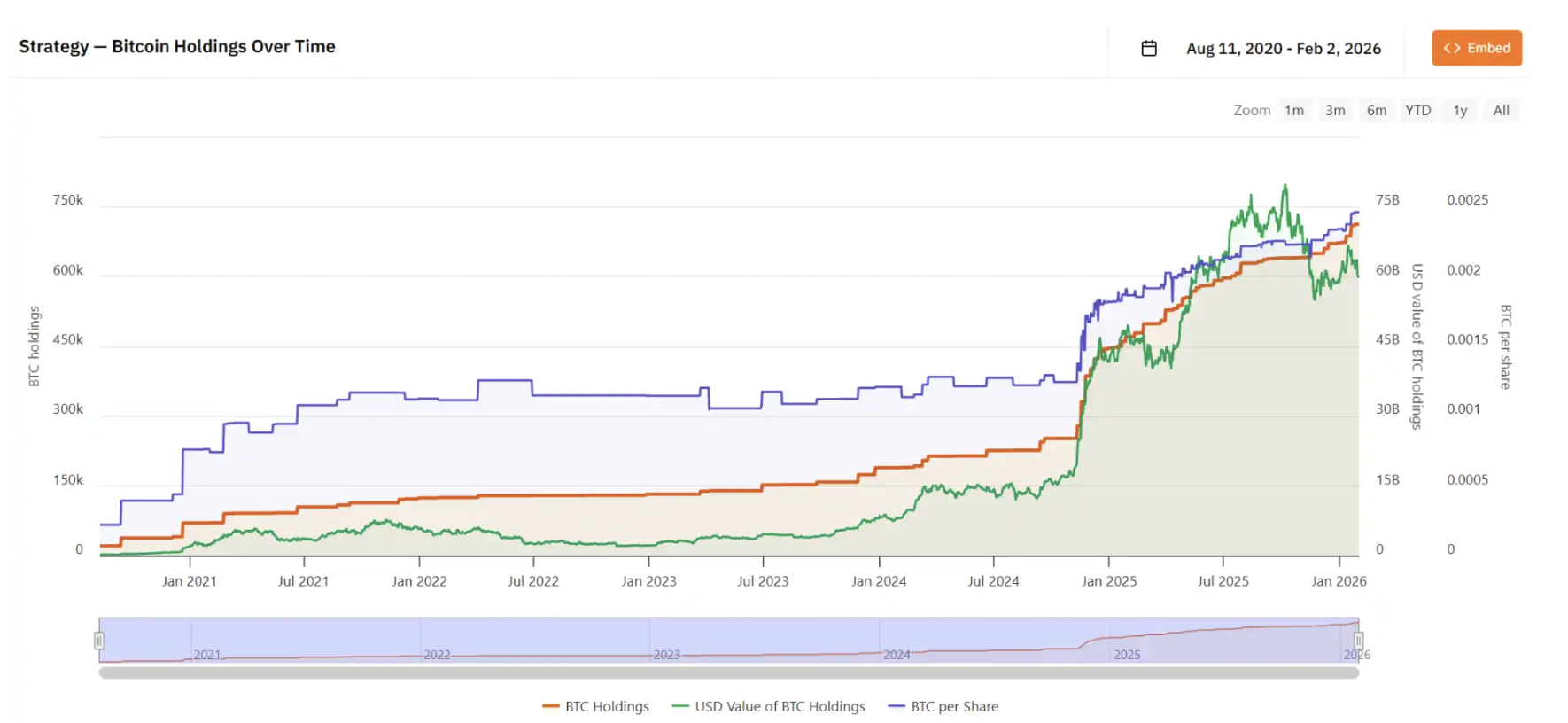
As of February 2, the well-known Bitcoin accumulation大户 (large holder) Strategy holds a total value of approximately $54.2 billion, holding 712,647 BTC, with an average holding cost of approximately $76,040.

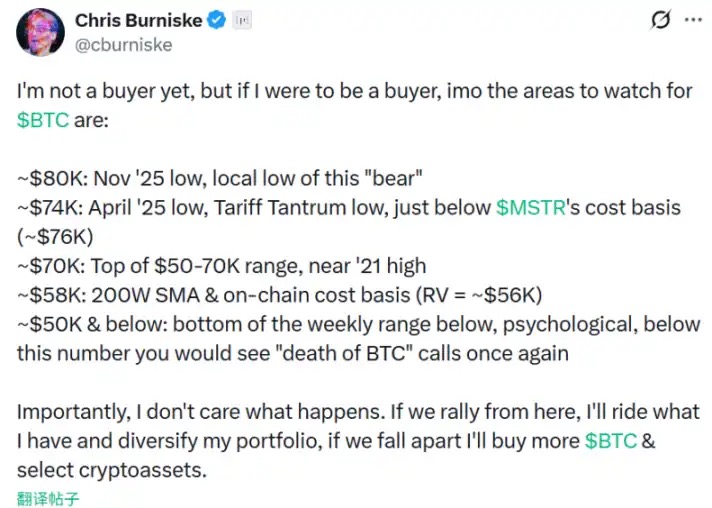
Historically, the area below its cost average price is the bottom range. Placeholder partner Chris previously stated that the $74,000 to $76,000 range is a price line worth paying close attention to.


Twitter:https://twitter.com/BitpushNewsCN

Bitpush TG Communication Group:https://t.me/BitPushCommunity

Bitpush TG Subscription: https://t.me/bitpush
Original link:https://www.bitpush.news/articles/7608201

Связанные с этим вопросы

QWhat is the ahr999 indicator and what does it suggest about the current Bitcoin market?

AThe ahr999 indicator, created by Weibo user ahr999, evaluates Bitcoin's short-term returns against price deviation. Its formula is (current price / 200-day dollar-cost averaging cost) × (current price / exponential growth valuation). A value below 0.45 indicates a low-price buying zone. On February 1, 2026, it dropped below 0.45 for the first time since October 16, 2023, suggesting a potential market bottom and a strong buy signal.

QAccording to the glassnode data, what is the average cost basis for the entire Bitcoin network and its significance?

AAccording to glassnode, the average cost basis for the entire Bitcoin network is $55,900. This represents the average price at which all coins in the network were acquired. If the BTC price falls below this level, it means a buyer is purchasing below the network's average cost, which historically occurred during the 2022 bear market cycle.

QWhat does Willy Woo's CVDD model indicate about Bitcoin's potential price floor?

AWilly Woo's CVDD (Coin Days Destroyed) model suggests a hard price floor for Bitcoin. The price has never fallen below the red line on this model, which currently indicates a floor of approximately $45,000. In past cycles, BTC has fallen below the yellow line on the model, which is currently in the range of $53,000 to $56,000.

QWhat was the average holding cost of the major Bitcoin holder 'Strategy' mentioned in the article?

AThe major Bitcoin holder referred to as 'Strategy' has an average holding cost of approximately $76,040 for their 712,647 BTC. Historically, prices below this average cost have represented a bottom range, and it is considered a key price level to watch by analysts like Chris from Placeholder.

QWhat were the results of the Foresight News investor survey regarding the predicted bottom price for BTC in 2026?

AIn the Foresight News investor survey with 1,189 participants, 45.6% of respondents believed the bottom price for BTC in 2026 would be between $75,000 and $85,000. Another 30.2% thought the bottom would be between $60,000 and $75,000. Additionally, 44% of respondents believed 2026 would be a bear market.

Похожее

Anthropic's IPO Launch: Commercial Miracle or Valuation Bubble?

Anthropic has confidentially filed for an IPO, led by Morgan Stanley and Goldman Sachs, potentially going public by October. Following its latest $650 billion funding round, its pre-IPO valuation stands at $965 billion, with projections reaching up to $2 trillion at listing, which would make it the highest-valued private company ever. The article, written by Fu Sheng, addresses skepticism that this represents an AI bubble akin to the 2000 dot-com crash. It argues the current situation differs fundamentally. Unlike the internet bubble era, which relied on speculative narratives with little revenue, Anthropic's valuation is backed by unprecedented, measurable financial performance. Key data points include: * **Revenue Growth:** ARR skyrocketed from $10 billion in early 2025 to $470 billion by May 2026, targeting $100 billion by year-end—a growth curve unmatched in business history. * **Profitability:** It achieved operating profitability in Q2 2026 with an estimated $5.6 billion profit. * **Efficiency:** With ~3,000 employees and ~$470 billion ARR, its revenue per employee exceeds $10 million. Products like Claude Code, launched less than a year ago, already generate $25 billion in annualized revenue. * **Enterprise Adoption:** It boasts a strong enterprise client base, with 8 of the Fortune 10 and over 1,000 large firms spending over $1 million annually on Claude. The valuation is framed using a traditional SaaS model (e.g., a 10x Price-to-Sales multiple on $100 billion revenue). The author contends the core question for analysts has shifted from "How big could this be?" to "How much is it earning and will earn next quarter?" The discussion extends beyond Anthropic to a broader paradigm shift: the transition from a "carbon-based" to a "silicon-based" economy. Companies are increasingly prioritizing investment in compute and AI capabilities over human resources, as these directly scale productivity and competitive advantage. Anthropic's IPO is thus positioned not just as a corporate milestone, but as a price anchor for this new economic era.

链捕手11 мин. назад

Anthropic's IPO Launch: Commercial Miracle or Valuation Bubble?

链捕手11 мин. назад

Near Returns to the AI Stage: Transformation into a Public Chain Due to 'Payroll Difficulties,' Agent and Privacy Emerge as New Growth Narratives

NEAR Returns to AI Origins: From Payroll Struggles to Blockchain, Now Focusing on AI Agents and Privacy NEAR Protocol's journey began not with grand blockchain ambitions, but from a practical hurdle: its AI startup founders, including Transformer paper co-author Illia Polosukhin, couldn't efficiently pay international developers in 2017. This led them to pivot and build a high-performance, scalable blockchain. After years navigating various crypto narratives like sharding and cross-chain interoperability, NEAR is now leveraging its AI roots to re-enter the AI arena. A key driver is its "NEAR Intents" layer, which abstracts complex cross-chain transactions. Users simply state their goal (e.g., swap BTC for ETH), and a solver network finds the optimal route. This system has processed over $20B in cross-chain volume, generating significant fee revenue. A major growth area is private transactions via "Confidential Intents/Swaps," which hide trade details until settlement to protect against MEV and front-running. Remarkably, private swaps recently accounted for over 40% of NEAR's transaction volume, highlighting strong demand but also potential regulatory scrutiny. With its AI-founder pedigree, NEAR is positioning itself at the intersection of blockchain, AI agents, and privacy, aiming to become infrastructure for the emerging agent economy while navigating the challenges of its rapid adoption.

marsbit2 ч. назад

Near Returns to the AI Stage: Transformation into a Public Chain Due to 'Payroll Difficulties,' Agent and Privacy Emerge as New Growth Narratives

marsbit2 ч. назад

From Ethereum to AI's 'CROPS': What Exactly is This Set of 'Slow Variables' That Vitalik Repeatedly Emphasizes?

In recent discussions, Vitalik Buterin has frequently emphasized the concept of "CROPS," a framework defining core values for Ethereum's development. CROPS stands for Censorship Resistance, Capture Resistance, Open Source, Privacy, and Security. Initially outlined in the Ethereum Foundation's "EF Mandate," it represents a commitment to user sovereignty, ensuring that the network resists external control, remains open, protects privacy, and prioritizes security. The relevance of CROPS extends beyond Ethereum's foundational principles, becoming crucial in the context of AI integration. As AI agents begin handling wallet operations and automated transactions, the risk increases that users may cede control over their digital assets, privacy, and intentions to centralized AI service providers. A "CROPS AI" would therefore emphasize local execution where possible, privacy-preserving remote model calls (e.g., using zero-knowledge proofs), and transparent, verifiable processes to maintain user agency. Vitalik highlights a significant convergence between "CROPS Ethereum access layer" and "CROPS AI." Both address the same fundamental challenge: how users can access powerful services—be it blockchain data via RPCs or AI models—without exposing sensitive information or relinquishing ultimate control. This intersection points toward a future digital entry point that is more private, secure, and user-controlled. Ultimately, CROPS is not merely an abstract ideal but a practical guidepost. It steers development—from protocol resilience and wallet design to AI agent safety—towards a future where users retain self-sovereignty even as digital systems grow more complex and powerful. In an era of accelerating AI adoption, these "slow variables" of censorship resistance, openness, privacy, and security may define Ethereum's enduring value.

marsbit2 ч. назад

From Ethereum to AI's 'CROPS': What Exactly is This Set of 'Slow Variables' That Vitalik Repeatedly Emphasizes?

marsbit2 ч. назад

Торговля

Спот
Фьючерсы

Популярные статьи

Как купить S

Добро пожаловать на HTX.com! Мы сделали приобретение Sonic (S) простым и удобным. Следуйте нашему пошаговому руководству и отправляйтесь в свое крипто-путешествие.Шаг 1: Создайте аккаунт на HTXИспользуйте свой адрес электронной почты или номер телефона, чтобы зарегистрироваться и бесплатно создать аккаунт на HTX. Пройдите удобную регистрацию и откройте для себя весь функционал.Создать аккаунтШаг 2: Перейдите в Купить криптовалюту и выберите свой способ оплатыКредитная/Дебетовая Карта: Используйте свою карту Visa или Mastercard для мгновенной покупки Sonic (S).Баланс: Используйте средства с баланса вашего аккаунта HTX для простой торговли.Третьи Лица: Мы добавили популярные способы оплаты, такие как Google Pay и Apple Pay, для повышения удобства.P2P: Торгуйте напрямую с другими пользователями на HTX.Внебиржевая Торговля (OTC): Мы предлагаем индивидуальные услуги и конкурентоспособные обменные курсы для трейдеров.Шаг 3: Хранение Sonic (S)После приобретения вами Sonic (S) храните их в своем аккаунте на HTX. В качестве альтернативы вы можете отправить их куда-либо с помощью перевода в блокчейне или использовать для торговли с другими криптовалютами.Шаг 4: Торговля Sonic (S)С легкостью торгуйте Sonic (S) на спотовом рынке HTX. Просто зайдите в свой аккаунт, выберите торговую пару, совершайте сделки и следите за ними в режиме реального времени. Мы предлагаем удобный интерфейс как для начинающих, так и для опытных трейдеров.

1.4k просмотров всегоОпубликовано 2025.01.15Обновлено 2026.06.02

Как купить S

Sonic: Обновления под руководством Андре Кронье – новая звезда Layer-1 на фоне спада рынка

Он решает проблемы масштабируемости, совместимости между блокчейнами и стимулов для разработчиков с помощью технологических инноваций.

2.3k просмотров всегоОпубликовано 2025.04.09Обновлено 2025.04.09

Sonic: Обновления под руководством Андре Кронье – новая звезда Layer-1 на фоне спада рынка

HTX Learn: Пройдите обучение по "Sonic" и разделите 1000 USDT

HTX Learn — ваш проводник в мир перспективных проектов, и мы запускаем специальное мероприятие "Учитесь и Зарабатывайте", посвящённое этим проектам. Наше новое направление .

1.8k просмотров всегоОпубликовано 2025.04.10Обновлено 2025.04.10

HTX Learn: Пройдите обучение по "Sonic" и разделите 1000 USDT

Обсуждения

Добро пожаловать в Сообщество HTX. Здесь вы сможете быть в курсе последних новостей о развитии платформы и получить доступ к профессиональной аналитической информации о рынке. Мнения пользователей о цене на S (S) представлены ниже.

活动图片