Jane Street Halts "10 AM Dump", BTC Stages Strong V-Shaped Rebound Nearing $70K Mark

Odaily星球日报Опубликовано 2026-02-26Обновлено 2026-02-26

Введение

BTC experienced a strong V-shaped rebound, approaching the $70,000 mark, with ETH and SOL also showing significant gains. Market sentiment improved as Bitcoin spot ETFs recorded net inflows, potentially ending a five-week outflow streak. The rally was fueled by a mix of market dynamics, including allegations against Jane Street for allegedly suppressing Bitcoin’s price through systematic trading practices, though some analysts dismissed long-term manipulation claims. Positive quarterly earnings from Circle and Nvidia further boosted confidence, highlighting strong demand for stablecoins and AI-related investments. Institutional interest grew, with university endowments beginning to allocate to crypto ETFs, and mining firms showed resilience amid market volatility. The rebound provided a renewed narrative for market optimism, though its sustainability remains to be seen.

Original | Odaily Planet Daily (@OdailyChina)

Author | Ding Dang (@XiaMiPP)

OKX market data shows that over the past 24 hours, BTC experienced a strong V-shaped rebound, once approaching the key $70,000 level, currently trading at $68,000 with a 24H gain of 6.1%. ETH and SOL also showed very strong performance, following Bitcoin's rebound with significant rallies. ETH once broke through $2,100, with a 24H maximum gain of 15%, currently trading at $2,050; SOL once broke through $90, currently trading at $87 with a 24H gain of 8.1%. Market sentiment has noticeably warmed up. All three have now reached key resistance levels; watch whether they can hold and continue to advance.

In US stocks, the Dow rose 0.63%, the S&P 500 rose 0.81%, and the Nasdaq rose 1.26%; the crypto sector collectively strengthened, with Circle surging 35.47%, recouping losses from the past month in a single day.

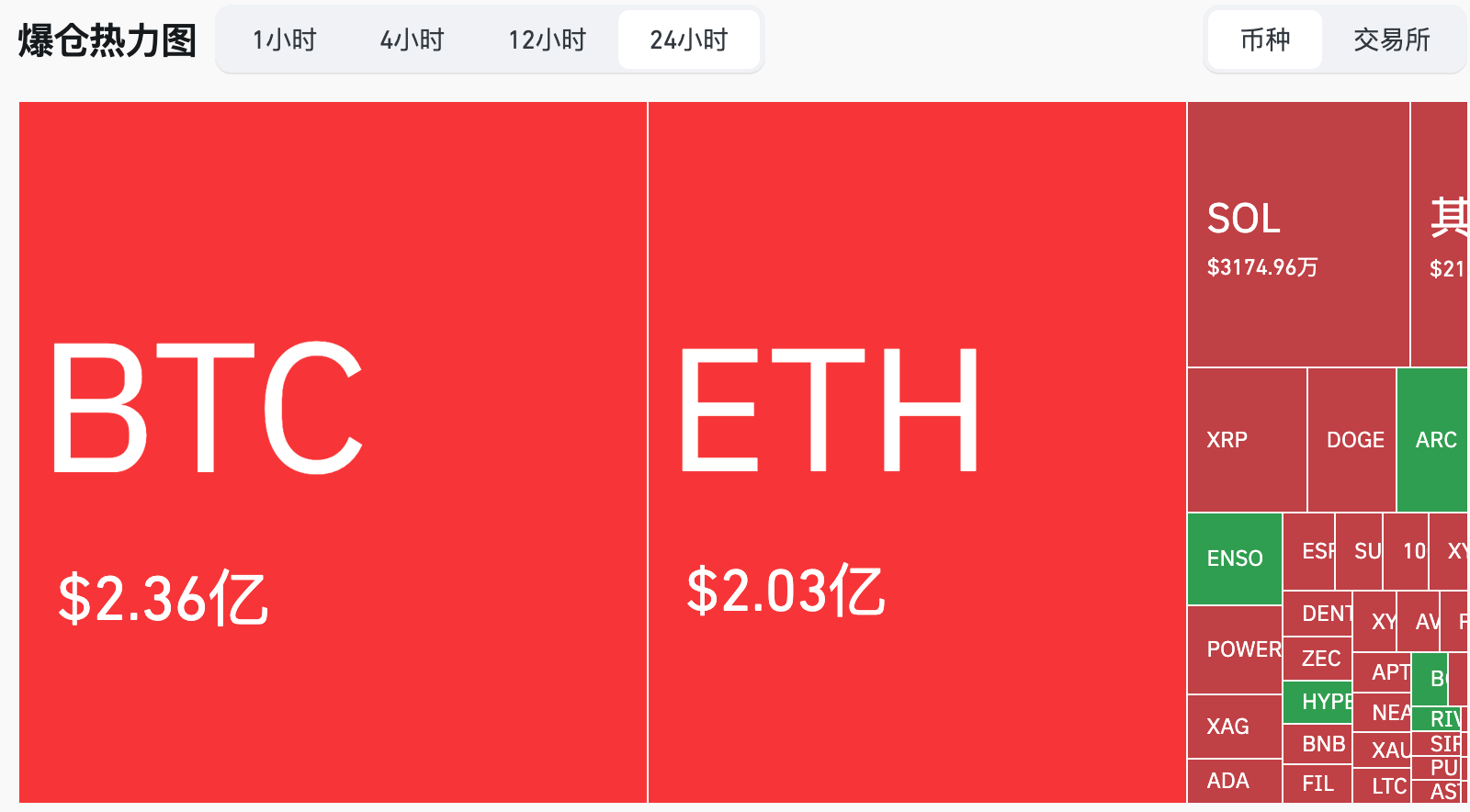
In derivatives, over the last 24 hours, the total liquidation amount was $579 million, with long liquidations at $115 million and short liquidations at $464 million. The largest single liquidation occurred on Hyperliquid - BTC-USD, worth $10.4154 million.
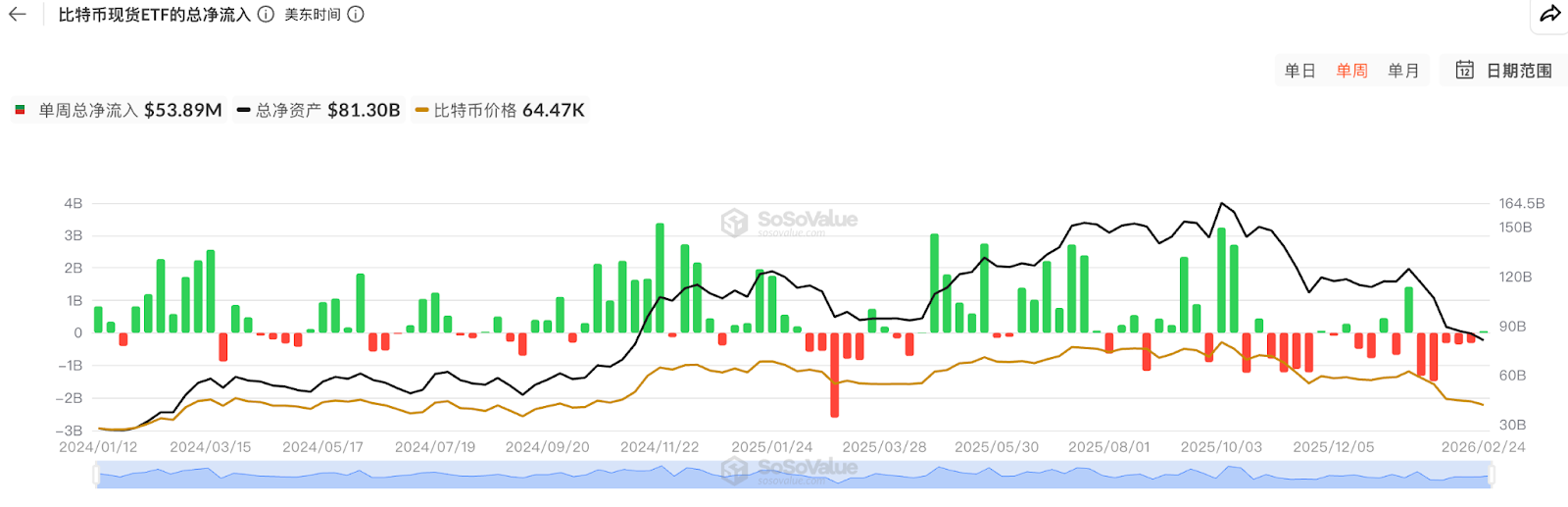
On the capital front, according to sosovalue data, Bitcoin spot ETFs recorded a net inflow of $250 million yesterday, potentially ending the previous five consecutive weeks of net outflows. Lookonchain monitoring showed that in the past 5 hours, BlackRock's Bitcoin exchange-traded fund IBIT saw a net inflow of 1,225 BTC, valued at $83.92 million.
"Bitcoin Should Be Worth at Least $150,000"

This morning, the crypto industry was shaken by one sentence: "As everyone knows, Bitcoin should be worth at least $150,000 right now."

The reason is that as the liquidators of Terraform Labs sued the renowned US market maker Jane Street, it unveiled a storm of market speculation that had been brewing for months. A widely circulated long post on X (by Justin Bechler) connected three clues, pointing directly to Jane Street systematically suppressing the Bitcoin price through its privileged position, keeping it far below its "deserved" level.

The core allegations are divided into three acts: First, the "insider old account" of the Terra/LUNA collapse. It allegedly used insider information obtained through a private group "Bryce's Secret," created by former intern Bryce Pratt, to exit early and accelerate the crash. The lawsuit claims these trades "could not have been achieved without non-public information" and seeks compensation;

Second, the "10 AM sharp dump" pattern. Almost every trading day, Bitcoin would mysteriously plummet by 2-3% around this time, precisely liquidating leveraged positions, only to rebound hours later. On-chain analysis from Glassnode and others showed this algorithmic selling pressure was highly regular. Coincidentally: After the Terra lawsuit was exposed, this "10 AM plunge" pattern briefly disappeared; once the spotlight faded, it returned;

Third, super bullish on the surface, but疑似 massive net short in reality. Public 13F filings show Jane Street holds over 20 million shares of IBIT (once nearing a market value of $2.5 billion), with MSTR holdings surging 473%, appearing super bullish on the surface. But industry insiders claim Jane Street表面上 accumulated large Bitcoin spot inventories through the ETF creation/redemption mechanism, but实际上 likely used this as a basis to issue大量 Bitcoin options, hedging with derivatives to remain directionally neutral. This is equivalent to continuously投放 synthetic Bitcoin supply into the market, thereby削弱 Bitcoin's scarcity narrative and creating long-term upward resistance for the spot price.

The storm triggered by this statement continues to发酵. Whether the allegations against Jane Street by the Terraform liquidators are substantiated awaits court裁决. However, this controversy has provided an emotional outlet for the market.

For more insider details, also refer to Odaily Planet Daily's just-published article 《From the Terra Collapse to the "10 AM Strike", How Did Jane Street Play the Markets Across Two Continents?》

However, Monad co-founder Keone Hon also stated that the conspiracy theory of Jane Street suppressing Bitcoin below $150,000 doesn't hold water. Hedging short IBIT positions with long futures means that, on average, other parties end up holding short futures positions, which they must hedge with long spot positions. The sum of all positions in the market (converted to delta) always equals the total supply of Bitcoin (approx. 20 million). Of course, any single party can decide to go short, thereby increasing long positions. In short, hedging futures with ETFs means there are always offsetting positions in the market; the market can be distorted short-term but can hardly defy the conservation of supply and demand long-term.

Market Confidence from Two Earnings Reports

If the conspiracy theory provided emotional tension for the market, what truly pushed the price upward were perhaps two better-than-expected earnings reports.

First, Circle delivered an exceptionally漂亮 Q4 and full-year 2025 earnings report. Q4 revenue reached $770 million, a year-on-year increase of 77%, up 4.1% quarter-on-quarter, exceeding previous market expectations of $749 million. Most importantly, EPS (earnings per share) also far exceeded expectations, indicating significantly enhanced profitability, primarily benefiting from the recovery in USDC scale and interest income brought by the high-interest-rate environment. Simultaneously, USDC circulation increased significantly year-on-year, and on-chain transaction volume continued to expand, indicating that the structural demand for stable币 is still rising. This is the core reason for the market's positive feedback. It at least proves that the panic caused by previous whale sell-offs was more about portfolio rebalancing, and the funds are still within the crypto industry—they might just be waiting for the right moment to "buy the dip."

The second earnings report came from NVIDIA. Its Q4 revenue of $68.1 billion and data center revenue of $62.3 billion both exceeded market expectations, and it once again provided an optimistic quarterly revenue forecast, guiding around $78 billion, higher than the market's estimate of $73 billion, indicating that large-scale AI computing construction remains on track.

This is crucial for the AI narrative. The market needs NVIDIA to prove that the AI investment boom can translate into sustained real money, alleviating concerns about an AI bubble.

Institutional Allocation and Miner Movements

Subtle changes have already appeared on the demand side.

Several university endowment funds are adjusting their investment strategies against the backdrop of declining returns on traditional assets and beginning to allocate to cryptocurrency ETFs. Harvard University and Brown University have disclosed holdings of Bitcoin and Ethereum ETF positions in their latest 13F filings. Although relatively small compared to their overall portfolio size, it shows that digital assets have moved from the fringe of institutional finance into the mainstream toolbox.

Amid Bitcoin's successive declines, many small and medium-sized DATs have surrendered one after another, choosing to sell their held Bitcoin or terminate buying plans. It seemed like only Strategy remained the market's sole major bullish force. However, DDC Enterprise Limited announced an additional purchase of 50 BTC this week, bringing its total Bitcoin holdings to 2,118. This marks the company's seventh consecutive week of increasing its Bitcoin holdings, currently ranking 34th globally among publicly listed companies by Bitcoin holdings.

Movements in the mining sector are also worth noting. While the Bitcoin price fell, several mining company stock prices rose against the trend. For example, TeraWulf's stock price rose 31% month-to-date, Cipher Mining rose 8%; Hut 8 rose 6%; Core Scientific remained basically flat. Analysis suggests that Bitcoin miners are currently among the targets with high short interest from hedge funds. If fundamentals improve, it could trigger short-covering rallies. Moreover, these companies have locked in long-term and attractive power contracts, giving them a structural advantage on the energy cost side. Their strategic value extends beyond单纯的 Bitcoin mining operations. Capital is flowing to "structural winners", while traditional miners may face the risk of being marginalized.

Conclusion

This V-shaped rebound may not be the starting point of a trend reversal, but it accomplished something more important: providing the market with a new explanatory framework. When the market regains reasons to explain price increases, risk appetite has the potential to rebuild.


Связанные с этим вопросы

QWhat was the key accusation against Jane Street in the recent market controversy?

AJane Street was accused of systematically suppressing Bitcoin prices through privileged market positions, including alleged insider trading related to Terra/LUNA's collapse, a pattern of '10 AM sharp price dumps' in Bitcoin, and holding massive net short positions while publicly appearing bullish via ETF holdings.

QWhat were the main factors that contributed to Bitcoin's strong V-shaped rebound according to the article?

AThe rebound was driven by a combination of market sentiment shift due to the Jane Street controversy, two better-than-expected earnings reports from Circle and Nvidia, and renewed institutional interest from university endowments and continued Bitcoin accumulation by companies like DDC Enterprise.

QHow did Circle's Q4 2025 financial performance impact market confidence?

ACircle's Q4 revenue reached $770 million, a 77% year-over-year increase, exceeding expectations. Its EPS also significantly surpassed forecasts, demonstrating enhanced profitability. The growth in USDC circulation and on-chain transaction volume indicated strong structural demand for stablecoins, boosting market confidence.

QWhat unusual trading pattern was allegedly linked to Jane Street's activities?

AA highly regular algorithmic selling pattern was observed where Bitcoin would drop 2-3% almost precisely around 10 AM Eastern Time each trading day, liquidating leveraged long positions before often rebounding hours later. This pattern briefly disappeared after the Terra lawsuit was publicized.

QWhat does the article suggest about the current state of Bitcoin mining companies?

ADespite Bitcoin's price decline, some mining company stocks like TeraWulf and Cipher Mining saw significant gains. This is attributed to their attractive long-term power contracts providing a structural cost advantage, making them 'structural winners' and potential targets for short covering, while traditional miners risk being marginalized.

Похожее

How Many Tokens Away Is Yang Zhilin from the 'Moon Chasing the Light'?

The article explores the intense competition between two leading Chinese AI companies, DeepSeek and Kimi (Moon Dark Side), and the mounting pressure on Yang Zhilin, the founder of Kimi. While DeepSeek re-emerged after 15 months of silence with its powerful V4 model—boasting 1.6 trillion parameters and low-cost, long-context capabilities—Kimi has been focusing on long-context processing and multi-agent systems with its K2.6 model. Yang faces a threefold challenge: technological rivalry, commercialization pressure, and investor expectations. Despite Kimi’s high valuation (reaching $18 billion), its revenue heavily relies on a single product with low paid conversion rates, while DeepSeek’s strategic silence and open-source influence have strengthened its market position and valuation prospects, now targeting over $20 billion. Both companies reflect broader trends in China’s AI ecosystem: Kimi aims for global influence through open-source contributions and agent-based advancements, while DeepSeek prioritizes foundational innovation and hardware independence, notably shifting to Huawei’s chips. Their competition is seen as vital for China’s AI progress, with the gap between top Chinese and U.S. models narrowing to just 2.7% on the Elo rating scale. Ultimately, the article argues that this rivalry, though anxiety-inducing for leaders like Zhilin, is essential for driving innovation and solidifying China’s role in the global AI landscape.

marsbit4 ч. назад

How Many Tokens Away Is Yang Zhilin from the 'Moon Chasing the Light'?

marsbit4 ч. назад

TechFlow Intelligence Bureau: ChatGPT Helps Amateur Mathematician Crack 60-Year-Old Problem, CFTC Sues New York Regulator Over Coinbase and Gemini

An amateur mathematician, with the assistance of ChatGPT, has solved a combinatorial mathematics puzzle originally proposed by Hungarian mathematician Paul Erdős in the 1960s. This marks another milestone in AI-aided mathematical research, demonstrating the evolving capabilities of large language models in formal reasoning. In other AI developments, OpenAI introduced a new privacy filter tool for enterprise API usage, automatically screening sensitive data. Meanwhile, the Qwen3.6-27B model achieved 100 tokens per second on a single RTX 5090 GPU using quantization, significantly lowering the cost barrier for local AI deployment. In crypto and Web3, the U.S. CFTC sued New York’s financial regulator, challenging its oversight of Coinbase and Gemini—a first-of-its-kind federal-state regulatory clash. Following a vulnerability, KelpDAO and major DeFi protocols established a recovery fund. Tether froze $344 million in assets linked to Iran’s central bank upon U.S. Treasury request, highlighting the centralized control risks in stablecoins. Separately, Litecoin underwent a 3-hour chain reorganization to undo a privacy-layer exploit. In the U.S., former President Trump invoked the Defense Production Act to address power grid bottlenecks affecting AI data centers and dismissed the entire National Science Board, raising concerns over research independence. A retail trader gained 250% on a $600k Intel options bet amid AI-related speculation. Xiaomi announced its first performance electric vehicle, targeting rivals like Tesla. Meanwhile, iPhone users reported devices automatically reinstalling a hidden app daily, suspected to be MDM-related. A Chinese securities report noted that A-share institutional crowding has reached its second-longest streak since 2007, signaling high valuations and potential style rotation. The day’s developments reflect a dual narrative: AI is enabling unprecedented individual breakthroughs, while centralized power structures—whether governmental or corporate—are becoming more assertive, underscoring that decentralization is as much a political-economic challenge as a technical one.

marsbit5 ч. назад

TechFlow Intelligence Bureau: ChatGPT Helps Amateur Mathematician Crack 60-Year-Old Problem, CFTC Sues New York Regulator Over Coinbase and Gemini

marsbit5 ч. назад

Торговля

Спот
Фьючерсы

Популярные статьи

Тест по Bitcoin Биткоина

HTX Learn: Изучите Bitcoin halving и Заработаете Токены USDT

3.0k просмотров всегоОпубликовано 2024.04.16Обновлено 2024.04.16

Тест по Bitcoin  Биткоина

Что такое $BITCOIN

ЦИФРОВОЕ ЗОЛОТО ($BITCOIN): Комплексный анализ Введение в ЦИФРОВОЕ ЗОЛОТО ($BITCOIN) ЦИФРОВОЕ ЗОЛОТО ($BITCOIN) — это проект на основе блокчейна, работающий в сети Solana, который стремится объединить характеристики традиционных драгоценных металлов с инновациями децентрализованных технологий. Хотя он носит имя Биткойн, часто называемого “цифровым золотом” из-за его восприятия как средства хранения ценности, ЦИФРОВОЕ ЗОЛОТО является отдельным токеном, предназначенным для создания уникальной экосистемы в ландшафте Web3. Его цель — позиционировать себя как жизнеспособный альтернативный цифровой актив, хотя детали его применения и функциональности все еще развиваются. Что такое ЦИФРОВОЕ ЗОЛОТО ($BITCOIN)? ЦИФРОВОЕ ЗОЛОТО ($BITCOIN) — это токен криптовалюты, специально разработанный для использования в блокчейне Solana. В отличие от Биткойна, который выполняет широко признанную роль хранения ценности, этот токен, похоже, сосредоточен на более широких приложениях и характеристиках. Примечательные аспекты включают: Инфраструктура блокчейна: Токен построен на блокчейне Solana, известном своей способностью обрабатывать высокоскоростные и недорогие транзакции. Динамика предложения: ЦИФРОВОЕ ЗОЛОТО имеет максимальное предложение, ограниченное 100 квадриллионами токенов (100P $BITCOIN), хотя детали о его обращающемся предложении в настоящее время не раскрыты. Утилита: Хотя точные функциональные возможности не описаны, есть указания на то, что токен может быть использован для различных приложений, потенциально связанных с децентрализованными приложениями (dApps) или стратегиями токенизации активов. Кто создатель ЦИФРОВОГО ЗОЛОТА ($BITCOIN)? На данный момент личность создателей и команды разработчиков, стоящих за ЦИФРОВЫМ ЗОЛОТОМ ($BITCOIN), остается неизвестной. Эта ситуация типична для многих инновационных проектов в области блокчейна, особенно тех, которые связаны с децентрализованными финансами и феноменом мем-криптовалют. Хотя такая анонимность может способствовать культуре, ориентированной на сообщество, она усиливает опасения по поводу управления и ответственности. Кто инвесторы ЦИФРОВОГО ЗОЛОТА ($BITCOIN)? Доступная информация указывает на то, что у ЦИФРОВОГО ЗОЛОТА ($BITCOIN) нет известных институциональных спонсоров или значительных венчурных капиталовложений. Проект, похоже, функционирует по модели пирингового взаимодействия, сосредоточенной на поддержке и принятии сообществом, а не на традиционных путях финансирования. Его активность и ликвидность в основном сосредоточены на децентрализованных биржах (DEX), таких как PumpSwap, а не на устоявшихся централизованных торговых платформах, что еще больше подчеркивает его подход, ориентированный на grassroots. Как работает ЦИФРОВОЕ ЗОЛОТО ($BITCOIN) Операционные механизмы ЦИФРОВОГО ЗОЛОТА ($BITCOIN) можно подробно описать на основе его дизайна блокчейна и характеристик сети: Механизм консенсуса: Используя уникальный механизм доказательства истории (PoH) Solana в сочетании с моделью доказательства доли (PoS), проект обеспечивает эффективную валидацию транзакций, что способствует высокой производительности сети. Токеномика: Хотя конкретные дефляционные механизмы не были подробно описаны, большое максимальное предложение токенов подразумевает, что оно может быть предназначено для микротранзакций или нишевых случаев использования, которые еще предстоит определить. Интероперабельность: Существует потенциал для интеграции с более широкой экосистемой Solana, включая различные платформы децентрализованных финансов (DeFi). Однако детали относительно конкретных интеграций остаются неуточненными. Хронология ключевых событий Вот хронология, которая подчеркивает значимые вехи, касающиеся ЦИФРОВОГО ЗОЛОТА ($BITCOIN): 2023: Первоначальное развертывание токена происходит в блокчейне Solana, отмеченное его адресом контракта. 2024: ЦИФРОВОЕ ЗОЛОТО приобретает видимость, когда оно становится доступным для торговли на децентрализованных биржах, таких как PumpSwap, позволяя пользователям обменивать его на SOL. 2025: Проект наблюдает спорадическую торговую активность и потенциальный интерес к инициативам, возглавляемым сообществом, хотя на данный момент не зафиксировано никаких значительных партнерств или технических достижений. Критический анализ Сильные стороны Масштабируемость: Основная инфраструктура Solana поддерживает высокие объемы транзакций, что может повысить полезность $BITCOIN в различных сценариях транзакций. Доступность: Потенциально низкая цена торговли за токен может привлечь розничных инвесторов, способствуя более широкому участию благодаря возможностям дробного владения. Риски Отсутствие прозрачности: Отсутствие публично известных спонсоров, разработчиков или процесса аудита может вызвать скептицизм относительно устойчивости и надежности проекта. Волатильность рынка: Торговая активность сильно зависит от спекулятивного поведения, что может привести к значительной волатильности цен и неопределенности для инвесторов. Заключение ЦИФРОВОЕ ЗОЛОТО ($BITCOIN) является интригующим, но неоднозначным проектом в быстро развивающейся экосистеме Solana. Хотя он пытается использовать нарратив “цифрового золота”, его отход от установленной роли Биткойна как средства хранения ценности подчеркивает необходимость более четкого различения его предполагаемой утилиты и структуры управления. Будущее принятие и усвоение, вероятно, будут зависеть от решения текущей непрозрачности и более четкого определения его операционных и экономических стратегий. Примечание: Этот отчет охватывает синтезированную информацию, доступную на октябрь 2023 года, и с тех пор могут произойти события.

99 просмотров всегоОпубликовано 2025.05.13Обновлено 2025.05.13

Что такое $BITCOIN

Fractal Bitcoin: масштабирование Биткоина с помощью рекурсивной системы

Fractal Bitcoin — масштабное Layer-1-решнение, созданное на базе кода Биткоина, позволяющего достигать бесконечного масштабирования с помощью рекурсивного подхода.

2.2k просмотров всегоОпубликовано 2025.06.30Обновлено 2025.06.30

Fractal Bitcoin: масштабирование Биткоина с помощью рекурсивной системы

Обсуждения

Добро пожаловать в Сообщество HTX. Здесь вы сможете быть в курсе последних новостей о развитии платформы и получить доступ к профессиональной аналитической информации о рынке. Мнения пользователей о цене на BTC (BTC) представлены ниже.

活动图片