Hyperliquid Goes To University — This Study Is Now Required Reading For Traders

bitcoinistОпубликовано 2026-03-30Обновлено 2026-03-30

Введение

Hyperliquid's founder Jeff Yan visited Harvard Business School on March 26, where a case study titled "Hyperliquid: The Everything Exchange" was taught to MBA students and regulators. The study examines Hyperliquid’s architecture, governance, and risk controls, focusing on the tension between innovation and systemic risk. Key questions include who controls upgrades and emergency powers, the transparency of order-book operations, and how the platform would handle catastrophic failures. The case also compares Hyperliquid to centralized exchanges like FTX and other DeFi protocols, questioning whether its "core writer" model concentrates too much power. For traders, the study underscores that liquidation and backstop mechanisms are critical in determining loss distribution during high volatility, signaling that DeFi derivatives are now being treated as systemically important.

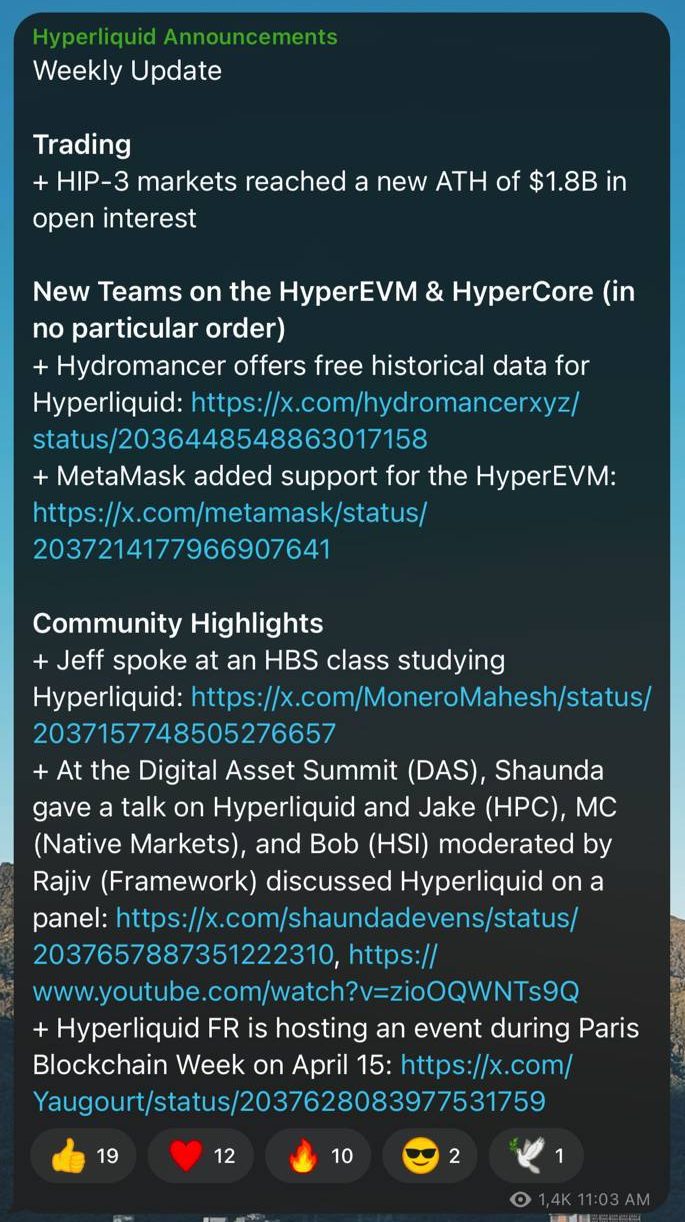
Hyperliquid’s Weekly Update highlights the visit Jeff Yan, the DEX’s founder, paid to Harvard Business School the past March 26.

Hyperliquid announces its founder speaking in a HBS class study through its Telegram Channel.

Hyperliquid: The Everything Exchange

As if its growing ascend to the crypto stardom wasn’t enough for Hyperliquid, with recent milestones such as launching the PURR common stock on the Nasdaq Options Market, or rolling out a fiat on-ramp, the leading perp DEX is now on Ivy League levels. Professor Shikhar Ghosh, lecturer Mahesh Ramakrishnan and researcher Shweta Bagai taught a study case on Hyperliquid to MBA students and regulators, as Ramakrishnan said himself on a post on the social network X. As part of the lecture, Ramakrishnan interviewed Jeff Yan.

The case study, titled “Hyperliquid: The Everything Exchange”, consists in a structured deep dive into Hyperliquid’s architecture, business model, governance, and risk controls. Its aim is to help students and regulators think through where to draw the line between innovation and systemic risk.

Related Reading: Cardano Founder Hoskinson Just Released A Free Book On Zero-Knowledge

As it delves into the history and technical foundation of the platform, the study poses three key questions: Who ultimately controls upgrades and emergency powers on the chain? How transparent are order‐book operations and liquidation mechanics for outside observers? And what happens to users if the “core” team disappears, or if a catastrophic failure hits liquidity?

The case pushes students to compare Hyperliquid’s design choices with centralized exchanges like FTX and with more “credibly neutral” DeFi protocols, explicitly framing it as a test of whether “CeFi in DeFi clothing” is acceptable.

Some independent researchers have argued that Hyperliquid’s stack concentrates significant power in a “core writer” layer that can influence balances, transactions, and even reported volume, blurring the line between on‐chain and off‐chain control. The Harvard study effectively forces students to decide whether such administrative levers are a necessary safety valve or an unacceptable hidden risk, especially after FTX‐Alameda’s use of opaque arrangements and volume games.

Hyperliquid’s liquidation machinery has already drawn scrutiny from on‐chain sleuths and high‐frequency traders. Critics have argued the system can trigger forced unwinds aggressively in fast markets, concentrating risk in the insurance/backstop layer rather than distributing it transparently across participants.

What This Means For Traders

The Harvard case leans into this tension: it explicitly asks whether Hyperliquid’s backstop and insurance mechanisms are robust enough to survive a multi‐sigma meltdown without socialized losses or “special treatment” for favored accounts.

Top business schools and regulators now treat “DeFi” derivatives venues as potential systemically relevant infrastructure, not fringe experiments, which could shape future policy and enforcement priorities. The message to traders is simple: liquidation and backstop design are not academic footnotes: they’re model‐risk levers that decide who eats the loss when volatility hits.

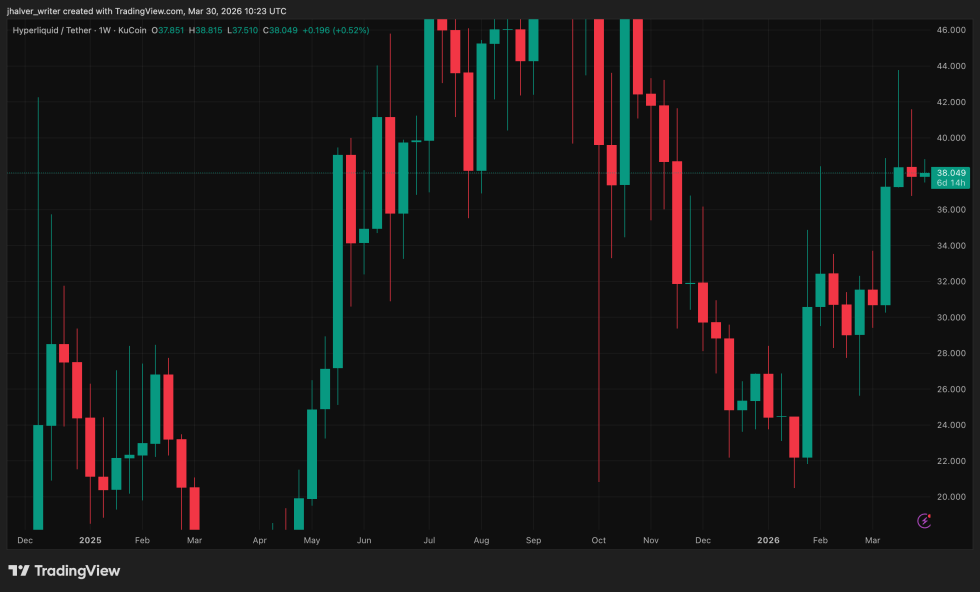
HYPE, Hyperliquid's native token, trades for $38. Source: HYPEUSDT on Tradingview

Cover image from Perplexity, HYPEUSDT chart from Tradingview

Связанные с этим вопросы

QWhat was the main purpose of Jeff Yan's visit to Harvard Business School on March 26?

AJeff Yan, the founder of Hyperliquid, visited Harvard Business School to participate in a case study interview about Hyperliquid, which was being taught to MBA students and regulators.

QWhat is the title of the Harvard Business School case study about Hyperliquid and what are its key focus areas?

AThe case study is titled 'Hyperliquid: The Everything Exchange'. It focuses on Hyperliquid's architecture, business model, governance, risk controls, and the tension between innovation and systemic risk.

QAccording to the article, what are the three key questions the Harvard case study poses about Hyperliquid?

AThe three key questions are: 1) Who ultimately controls upgrades and emergency powers on the chain? 2) How transparent are order-book operations and liquidation mechanics for outside observers? 3) What happens to users if the 'core' team disappears, or if a catastrophic failure hits liquidity?

QWhat criticism does the article mention regarding Hyperliquid's liquidation system?

ACritics argue that Hyperliquid's liquidation system can trigger forced unwinds aggressively in fast markets, concentrating risk in the insurance/backstop layer rather than distributing it transparently across participants.

QWhat is the significance of top business schools and regulators studying DeFi derivatives venues like Hyperliquid, according to the article?

AIt signifies that these venues are now being treated as potential systemically relevant infrastructure, not fringe experiments, which could shape future policy and enforcement priorities.

Похожее

Торговля

Спот
Фьючерсы

Популярные статьи

Как купить S

Добро пожаловать на HTX.com! Мы сделали приобретение Sonic (S) простым и удобным. Следуйте нашему пошаговому руководству и отправляйтесь в свое крипто-путешествие.Шаг 1: Создайте аккаунт на HTXИспользуйте свой адрес электронной почты или номер телефона, чтобы зарегистрироваться и бесплатно создать аккаунт на HTX. Пройдите удобную регистрацию и откройте для себя весь функционал.Создать аккаунтШаг 2: Перейдите в Купить криптовалюту и выберите свой способ оплатыКредитная/Дебетовая Карта: Используйте свою карту Visa или Mastercard для мгновенной покупки Sonic (S).Баланс: Используйте средства с баланса вашего аккаунта HTX для простой торговли.Третьи Лица: Мы добавили популярные способы оплаты, такие как Google Pay и Apple Pay, для повышения удобства.P2P: Торгуйте напрямую с другими пользователями на HTX.Внебиржевая Торговля (OTC): Мы предлагаем индивидуальные услуги и конкурентоспособные обменные курсы для трейдеров.Шаг 3: Хранение Sonic (S)После приобретения вами Sonic (S) храните их в своем аккаунте на HTX. В качестве альтернативы вы можете отправить их куда-либо с помощью перевода в блокчейне или использовать для торговли с другими криптовалютами.Шаг 4: Торговля Sonic (S)С легкостью торгуйте Sonic (S) на спотовом рынке HTX. Просто зайдите в свой аккаунт, выберите торговую пару, совершайте сделки и следите за ними в режиме реального времени. Мы предлагаем удобный интерфейс как для начинающих, так и для опытных трейдеров.

1.2k просмотров всегоОпубликовано 2025.01.15Обновлено 2025.03.21

Как купить S

Sonic: Обновления под руководством Андре Кронье – новая звезда Layer-1 на фоне спада рынка

Он решает проблемы масштабируемости, совместимости между блокчейнами и стимулов для разработчиков с помощью технологических инноваций.

2.2k просмотров всегоОпубликовано 2025.04.09Обновлено 2025.04.09

Sonic: Обновления под руководством Андре Кронье – новая звезда Layer-1 на фоне спада рынка

HTX Learn: Пройдите обучение по "Sonic" и разделите 1000 USDT

HTX Learn — ваш проводник в мир перспективных проектов, и мы запускаем специальное мероприятие "Учитесь и Зарабатывайте", посвящённое этим проектам. Наше новое направление .

1.8k просмотров всегоОпубликовано 2025.04.10Обновлено 2025.04.10

HTX Learn: Пройдите обучение по "Sonic" и разделите 1000 USDT

Обсуждения

Добро пожаловать в Сообщество HTX. Здесь вы сможете быть в курсе последних новостей о развитии платформы и получить доступ к профессиональной аналитической информации о рынке. Мнения пользователей о цене на S (S) представлены ниже.

活动图片