Google TPU Shipments Revised Up by 50%

marsbitОпубликовано 2026-06-17Обновлено 2026-06-17

Введение

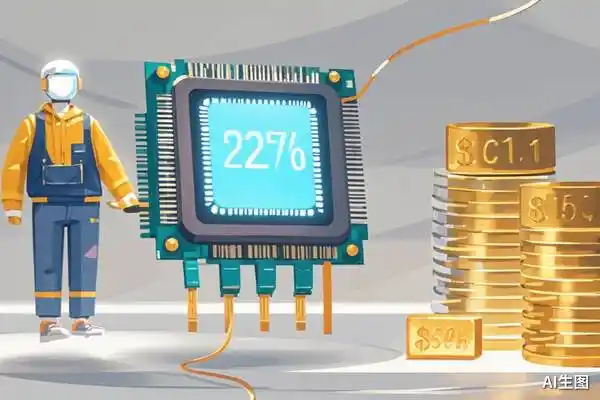
Recent industry research indicates a significant upward revision in the shipments of Google's TPU (Tensor Processing Unit) chips. Previous expectations for 2027 were set at around 10 million units, but new estimates now point to 15 million units, a 50% increase. This substantial boost directly translates to higher demand across the entire supporting supply chain. Google's TPU clusters utilize a standardized all-optical interconnect architecture. Consequently, key hardware components are deeply integrated and scaled in fixed ratios with the chips. The 15 million TPU target will drive corresponding demand increases for NPO optical engines (roughly a 1:1 match), 1.6T optical modules, OCS optical switches, high-end server power supplies, fiber optics & MPO connectors, and liquid cooling solutions. Among these, liquid cooling is highlighted as the sector experiencing the most significant transformation and offering the most stable potential for excess returns. As next-generation TPU chips reach power levels where traditional air cooling is insufficient, liquid cooling becomes essential. 2026 is forecasted as the first year of substantial adoption for Google's liquid cooling solutions. This shift, coupled with delivery and capacity bottlenecks faced by incumbent overseas manufacturers, is creating a prime window for domestic Chinese suppliers to enter and secure Google's core supply chain. The market size for Google-specific liquid cooling is projected to potentially triple from ...

Recently, the AI computing power sector has experienced a crucial revision in expectations.

Several overseas institutions have quietly raised their shipment forecasts for Google's TPUs, directly overturning the market's previously conservative view on hardware demand for computing power in 2027.

Previously, the industry generally used a lower estimate of 10 million TPUs to calculate supporting demand. However, the latest industry research indicates this figure is likely to be revised up directly to 15 million, representing a 50% new increment.

The significant ramp-up in Google TPU shipments will undoubtedly and tangibly transmit to every link in the entire industry chain, benefiting core sectors such as NPO optical engines, 1.6T optical modules, OCS optical switches, server power supplies, optical fibers & MPOs, and liquid cooling simultaneously.

It is important to know that, unlike the elastic game with NVIDIA's computing power chain, the supporting logic for the Google TPU supply chain is very solid. Hardware ratios are basically fixed, with almost no scenario of demand shrinkage.

Google's TPU clusters adopt a standardized all-optical interconnection architecture. Each hardware component is deeply bound and highly matched with the chip: NPO optical engines and TPUs are basically matched 1:1. 15 million TPUs correspond to an increment of tens of millions of high-speed optical engines;

The previously market-estimated demand for over 30 million 1.6T optical modules will also expand accordingly;

Furthermore, procurement demand for OCS optical switches and high-end server power supplies will also rise in sync with the chip scale.

In simple terms, each upward revision of Google TPU shipment expectations lifts the demand and earnings expectations for the entire computing power supporting chain by another step.

Coupled with the potential for TPU shipments to reach 30–35 million units by 2028 in the longer term, the industry has officially entered a long cycle of sustained growth and rising prosperity. We are now only in the initial stage of performance realization and market uptrend.

Among these core beneficiary sectors, liquid cooling is the direction with the most significant changes and the most stable potential for excess returns in this round.

Previously, market perception of liquid cooling remained on a slow logic of gradual industry penetration and steady growth. However, with the finalization of Google TPU's ramp-up schedule, liquid cooling is officially ushering in a "earnings acceleration + industry reshuffle" dual-driver market, and its investment value has been thoroughly unlocked.

Institutions generally believe that the power consumption of the new generation TPU chips has surged significantly. Traditional air cooling has reached its physical limits and can no longer handle it. Google's new computing power clusters have fully switched to liquid cooling solutions.

According to institutional forecasts, 2026 will be the true first year of volume ramp for Google's liquid cooling.

Specifically, small batch deliveries will start in mid-to-late June, with large-scale volume ramp officially beginning in Q3. The performance realization in the second half of the year is expected to be very high.

But beyond short-term earnings release, the more noteworthy change in the liquid cooling industry is the disruptive window of opportunity for reshaping the competitive landscape.

For a long time, the global high-end liquid cooling market was firmly monopolized by a few leading players from Taiwan, Japan, and the United States.

But now, these overseas players have clearly hit a development bottleneck.

On one hand, their own product performance cannot keep up with the heat dissipation demands of Google's high-power TPUs, and their technological iteration speed lags severely;

On the other hand, existing production capacity is mostly occupied by other computing power sectors, leaving no spare capacity to accept Google's new orders. This has led to a continuous decline in the delivery capability and customer response efficiency of overseas manufacturers, and their once-stable market share has begun to show noticeable looseness.

This provides domestic manufacturers with an excellent window for positioning.

The AI supply chain has a distinct characteristic: whoever gets in first, gets certified first, and secures market share first can lock in stable orders for the next 2–3 years.

Now, domestic liquid cooling manufacturers, leveraging advantages like fast iteration, stable delivery, and sufficient capacity, are continuously entering Google's core supply chain. The trend of domestic substitution has become irreversible.

From a market space perspective, liquid cooling is a typical beneficiary sector of "computing power inflation," with a very logical narrative of both volume and price increases.

According to institutional calculations, as TPU shipments climb from 10–15 million units in 2027 to 30–35 million units in 2028, the market size dedicated to Google's liquid cooling will break through from the hundred-billion level to the 300-billion level, nearly tripling in two years.

Simultaneously, the single-chip power of TPUs continues to upgrade, moving from 1.4 MW towards 2.2 MW and 3 MW. This drives continuous updates and iterations of high-value core components like cold plates and CDUs, increasing the value of single-system liquid cooling solutions and further broadening the industry's profit margin.

The logic for the optical fiber sector is also being continuously refreshed.

In the past, optical fiber was always viewed as a traditional cyclical communications product, with its performance and valuation tied to operator procurement cycles, resulting in significant volatility.

But now, AI computing power construction has completely rewritten its industry logic. Optical fiber has transformed into an indispensable strategic and scarce resource for AIDC computing power clusters.

A severe mismatch in supply and demand structure is the core confidence supporting optical fiber's sustained strength in this round.

Global cloud vendors are accelerating the deployment of AIDC computing power centers. The construction of high-density computing power clusters is generating massive demand for optical fiber interconnection.

However, the expansion cycle for optical fiber preforms is as long as 18–24 months. Short-term production capacity completely fails to keep up with the explosive market demand, and the supply-demand gap in overseas markets continues to widen.

To lock in stable future supply, global leading cloud vendors like Google, Amazon, and Microsoft are proactively signing long-term volume-lock agreements.

This means that, backed by long-term agreements, optical fiber's product prices and shipment volumes will tend to stabilize, completely freeing it from the past industry pain point of major cyclical fluctuations.

From industry data, domestic optical fiber, with its globally leading production capacity, cost, and technological advantages, is steadily capturing the full benefit of globalized dividends.

Institutions predict that China's optical fiber export volume will reach 200–300 million core kilometers in 2026, capturing nearly half of the global AIDC optical fiber demand.

Furthermore, the large-scale deployment of TPU clusters continuously drives the supporting demand for optical fibers and MPO connectors. The growth certainty and sustainability of the optical fiber industry chain have significantly improved, and its valuation will gradually shift from that of a traditional cyclical stock to a high-growth computing power asset.

Beyond the two core sectors of liquid cooling and optical fiber, the upward revision in TPU supply also synchronously drives a comprehensive recovery in supporting segments like NPO optical engines, 1.6T optical modules, OCS optical switches, and server power supplies, leading to a broad-based uptrend across the entire chain.

Among these, optical communication is the most stable fundamental component of the entire industry chain.

NPO optical engines are deeply bound and rigidly matched 1:1 with TPUs. The increment of 15 million TPUs directly creates massive demand for high-speed optical engines.

1.6T optical modules, as the core interconnection hardware for the new generation of computing power clusters, see their demand scale continuously expand with the TPU ramp-up. Leading companies have full order books, and the pace of earnings realization is very clear.

Additionally, OCS optical switches, as core hardware in Google's TPU clusters responsible for dynamic bandwidth scheduling, see demand steadily climb with the scaled deployment of TPUs. Moreover, current market understanding of them is still insufficient, presenting a decent expectation gap.

Regarding the server power supply sector, it is already benefiting from technological iteration dividends. High-density TPU cabinets are comprehensively promoting the replacement of traditional power supplies with high-voltage DC power supplies. Overseas manufacturers lag in iteration speed, allowing domestic manufacturers to顺势切入 the supply chain, opening up a new incremental space for substitution.

Overall, the current investment focus in the AI computing power industry chain is gradually shifting from the pure "chip computing power game" towards the确定性增量 of computing power infrastructure support.

This round of significant upward revision in Google TPU supply, coupled with the potential for doubling in the longer term, will further lock in earnings certainty for the next two years for the entire computing power supporting industry chain.

This article is from the WeChat public account "Gelonghui Thunder Zone" (ID: glh-tlq), author: Tianya.

Связанные с этим вопросы

QAccording to the article, what is the revised shipment expectation for Google TPUs, and by what percentage does it increase?

AThe revised shipment expectation for Google TPUs is 15 million units, up from the previous baseline of 10 million units. This represents a 50% increase.

QWhat are the two core beneficiary sectors highlighted in the article due to the increase in Google TPU shipments?

AThe two core beneficiary sectors highlighted are liquid cooling and optical fiber.

QWhy does the article state that liquid cooling is entering a 'performance acceleration + industry reshuffle' phase?

AThe article states this because the new generation of TPU chips has significantly higher power consumption, making traditional air cooling inadequate. This forces a shift to liquid cooling solutions ('performance acceleration'). Concurrently, overseas suppliers are facing development bottlenecks in technology and capacity, creating a window for domestic Chinese manufacturers to gain market share ('industry reshuffle').

QWhat is the key reason the article gives for the strong performance and supply-demand mismatch in the optical fiber sector?

AThe key reason is the long lead time (18-24 months) required to expand production capacity for fiber preforms. This makes it impossible for supply to keep up with the explosive demand from global AI data center (AIDC) construction, creating a significant and widening supply gap.

QWhich component is described as having a rigid 1:1 matching ratio with Google TPUs?

AThe NPO (Near-Packaged Optics) optical engine is described as having a rigid 1:1 matching ratio with Google TPUs.

Похожее

Conversation with Arthur Hayes: AI Has Drained Market Liquidity, BTC Will Be Below 100k by Year-End

In this June 2026 podcast interview, BitMEX co-founder Arthur Hayes explains his decision to sell his major crypto holdings (HYPE, NEAR, Worldcoin, Zcash). His rationale is based on a macro view linking oil prices, the Iran conflict, US politics, and an impending AI bubble burst. Hayes argues that high oil prices, driven by the ongoing war, will pressure domestic US inflation. To salvage the Republican Party's chances in the midterm elections, he believes Donald Trump may pivot to a populist, anti-AI stance—advocating for taxes and regulation—which would deflate the AI investment narrative. He sees the AI sector, particularly massive capital expenditure on data centers, as having absorbed nearly all excess market liquidity (around $1.5 trillion in debt issuance since 2025), starving other assets like Bitcoin. He highlights the upcoming SpaceX IPO at a ~$1.8 trillion valuation and 100x price-to-sales ratio as a potential tipping point. If these hyped IPOs underperform, it could shatter market confidence in AI. In such a scenario, all risk assets, including crypto, would fall together as correlations converge to 1 during a broad correction. Hayes has moved his portfolio into Treasuries and energy stocks (like ExxonMobil), predicting Bitcoin will be below $100k by year-end. He sees a potential crypto bull market only after the AI frenzy cools, liquidity stops flowing exclusively into AI, and possibly after a significant market downturn prompts new monetary stimulus.

marsbit2 мин. назад

Conversation with Arthur Hayes: AI Has Drained Market Liquidity, BTC Will Be Below 100k by Year-End

marsbit2 мин. назад

Fed's Internal Doves Flock to Hawkish Stance, Warsh's Debut "Between a Rock and a Hard Place"

U.S. Federal Reserve officials who previously advocated for rate cuts, including Governor Christopher Waller, have recently shifted their stance, with many now not ruling out the possibility of future rate hikes. This sets a challenging stage for new Fed Chair Kevin Warsh's first policy meeting. Appointed by President Trump based on his dovish views, Warsh now faces a committee where the debate has pivoted from "when to cut" to "whether to hike," driven by persistent inflation above 3%, a strong labor market, and supply-side pressures from AI infrastructure demands and geopolitical tensions. Key figures illustrate the shift. Governor Waller, once concerned about employment, now says data has pushed him toward considering rate increases. Even moderate voices like Governor Lisa Cook, while expecting inflation to ease, have indicated readiness to hike if it fails to do so. Long-time hawks such as regional Fed presidents Beth Hammack, Lorie Logan, and Neel Kashkari have grown more vocal, arguing that the real policy rate is effectively falling and that action may soon be needed. The upcoming Fed meeting is expected to keep rates steady but will likely remove the "easing bias" from its statement, signaling a neutral stance between cuts and hikes. The quarterly "dot plot" is anticipated to show most officials projecting no cuts this year, with some potentially indicating hikes. Chair Warsh, a critic of the Fed's reliance on forward guidance like the dot plot, must navigate communicating this pivot using tools he has questioned, all while steering policy in a direction counter to the preferences of the president who appointed him. The consensus suggests the Fed's next move could well be a rate increase.

marsbit1 ч. назад

Fed's Internal Doves Flock to Hawkish Stance, Warsh's Debut "Between a Rock and a Hard Place"

marsbit1 ч. назад

The Trillion-Yuan Market Cap 'Yi Zhong Tian': Who is the True Value King?

The article analyzes the three leading Chinese optical module companies, collectively nicknamed "Yi Zhong Tian": Xinyisheng, Zhongji Innolight, and TFC Optical Communication. It evaluates their "cost-performance" not by current stock price, but through three lenses: PEG ratio (growth vs. valuation), earnings quality, and premium/discount for certainty. Xinyisheng shows the most attractive PEG ratio and high profitability, but its valuation reflects discounts for risks like high customer concentration and reliance on overseas markets. Zhongji Innolight, the most expensive, commands a premium for its market leadership, dominant share in key products like 800G/1.6T modules, and higher earnings certainty, though it faces geopolitical risks. TFC Optical, as an upstream component supplier ("water seller"), has the highest gross margin and bets on the long-term CPO/NPO architecture trend, but trades at a high valuation with more stable, less explosive growth. The core argument is that while these companies dominate module assembly, the true profit pool and technological moat lie upstream in laser and switch chips, currently controlled by U.S. firms like Lumentum and Coherent. The long-term "cost-performance" for these Chinese leaders hinges on whether the domestic industry, exemplified by companies like Yuanjie Technology, can successfully move up the value chain into high-power laser chips. Otherwise, their high growth may remain confined to the lower-margin assembly segment.

marsbit1 ч. назад

The Trillion-Yuan Market Cap 'Yi Zhong Tian': Who is the True Value King?

marsbit1 ч. назад

Has the Crypto Market Bottomed? Here's What Institutions Think

The crypto market is in a period of significant debate, with leading institutions offering differing views on whether a bottom has been reached. Three prominent firms have published detailed analyses: * **Galaxy Digital** argues Bitcoin has **not yet bottomed**. Their analysis of 13 historical indicators across six dimensions (valuation, profit-taking, miner pressure, etc.) shows only four are fully met. They project a potential bottom range between $30k and $54k. * **NYDIG** states a bottom is **possible but not likely**. While metrics are close to historic bear market extremes, they note the absence of a classic panic-selling event. They also suggest increased institutional adoption may have structurally altered the market cycle, potentially leading to a shallower downturn. * **Standard Chartered Bank** asserts the **bottom has already occurred** at around $59k. They cite two key factors: potential US-Iran diplomatic progress and the anticipated SpaceX IPO, which they believe absorbed capital and caused ETF selling pressure that is now subsiding. They forecast a year-end price target of $100k. Despite the surface-level disagreement, the reports share critical common ground more valuable for long-term investors: 1. All three believe the market bottom will form **within this year**. 2. All agree the current price is **closer to the bottom than to previous highs**. 3. All maintain a **bullish long-term outlook** for Bitcoin and a new cycle. The core takeaway is that while the exact bottom price ($40k, $50k, or $60k) is debated, the consensus is that a bottom is imminent. For long-term holders, the primary focus should not be pinpointing the absolute low, but on the future potential for prices to reach $100k, $200k, or higher. The fundamental thesis for Bitcoin—sovereign debt accumulation, inflation, declining trust in centralized institutions, global digitization, and improved accessibility—remains intact and is arguably strengthening. The overall landscape is viewed as more favorable than in previous crypto winters.

marsbit1 ч. назад

Has the Crypto Market Bottomed? Here's What Institutions Think

marsbit1 ч. назад

Торговля

Спот
Фьючерсы

Популярные статьи

Неделя обучения по популярным токенам (2): 2026 может стать годом приложений реального времени, сектор AI продолжает оставаться в тренде

2025 год — год институциональных инвесторов, в будущем он будет доминировать в приложениях реального времени.

1.8k просмотров всегоОпубликовано 2025.12.16Обновлено 2025.12.16

Неделя обучения по популярным токенам (2): 2026 может стать годом приложений реального времени, сектор AI продолжает оставаться в тренде

Обсуждения

Добро пожаловать в Сообщество HTX. Здесь вы сможете быть в курсе последних новостей о развитии платформы и получить доступ к профессиональной аналитической информации о рынке. Мнения пользователей о цене на AI (AI) представлены ниже.

活动图片