За последние три с лишним года OpenAI практически сформировала первое впечатление публики о больших моделях: 400 миллионов еженедельных активных пользователей, оценка в 852 миллиарда долларов и ChatGPT — вход в AI для всех.
В общественном сознании именно она должна была стать той компанией, которая первой наладит коммерциализацию.
Однако рыночные данные принесли невероятный разворот:
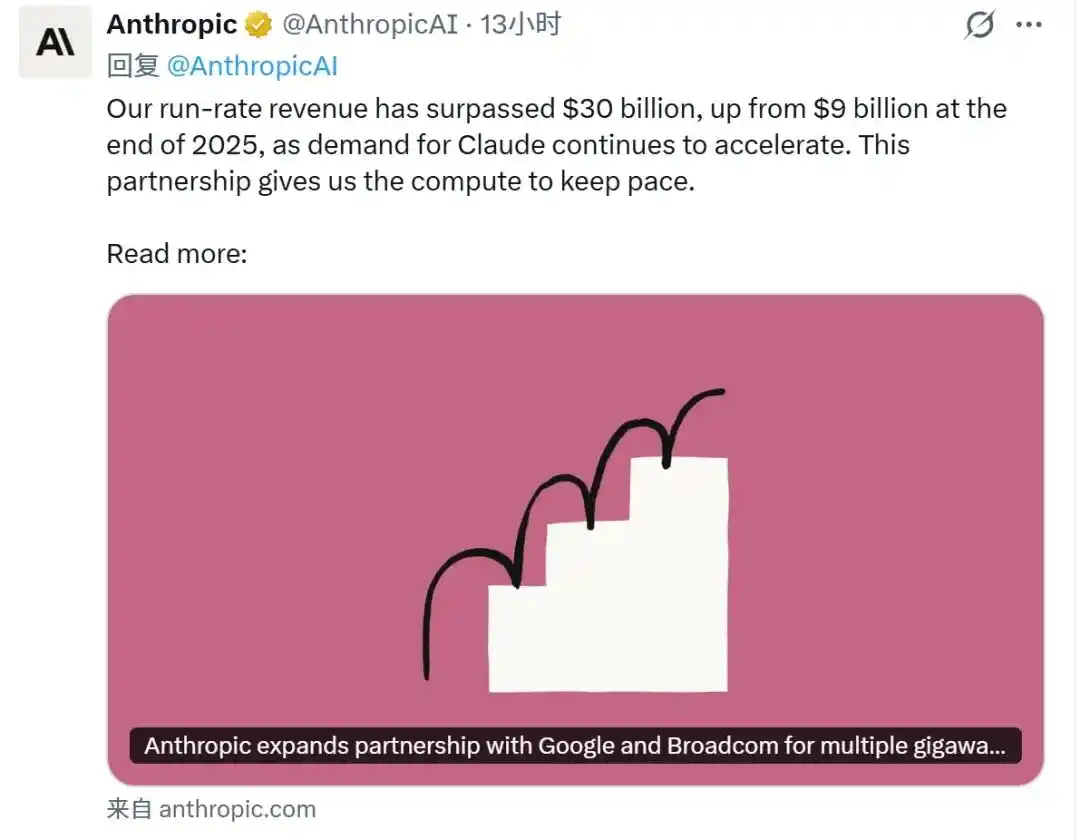
7 апреля американская компания больших моделей Anthropic сообщила, что ее годовой доход (ARR) достиг 300 миллиардов долларов.
Эта сумма превысила показатель OpenAI в 250 миллиардов долларов (по состоянию на конец февраля 2026 года), и Anthropic стала компанией больших моделей с самым высоким доходом в мире.
Почему компания, у которой нет такого входа, как ChatGPT, и такого масштаба платформы, как у OpenAI, смогла обогнать OpenAI по доходам?
На что поставила Anthropic?
Чтобы понять успех Anthropic, нужно сначала увидеть ее фундаментальное расхождение с OpenAI.
Около 2022 года, после взрывной популярности ChatGPT, вся отрасль копировала чат-ботов, но Anthropic направила ресурсы в, казалось бы, скучную инфраструктуру — стабильность API, расширение контекстного окна и модель под названием Claude.
С первого дня позиционирование Anthropic заключалось не в создании лучшего чат-инструмента, а во встраивании движка для повышения производительности предприятий.
Такая сдержанность в позиционировании в 2023-2024 годах казалась консервативной и даже отсталой.
Тогда ежедневная активность ChatGPT была в десятки раз выше, чем у Anthropic, а оценка OpenAI стремительно росла.
Но когда в 2025 году произошел настоящий взрыв корпоративных расходов на AI, заблаговременная подготовка Anthropic начала окупаться.
В списке ее клиентов появились такие поставщики профессиональных информационных услуг, как Thomson Reuters, технологические единороги Кремниевой долины, а также множество ведущих учреждений в области финансов, права и здравоохранения — эти клиенты платят за повышение производительности.
Финансовые данные показывают, что около 80% доходов Anthropic поступает от корпоративных клиентов, причем многие из них платят по мере использования. Как только какой-либо корпоративный сценарий начинает активно использоваться, доход быстро растет.
Для сравнения, структура доходов OpenAI более диверсифицирована, в настоящее время в основном за счет подписок на ChatGPT, на API и лицензирование приходится около 15-20%.
Пока OpenAI направляет ресурсы на потребительские функции, такие как голосовой чат и генерация изображений в ChatGPT, Anthropic продолжает развивать корпоративные возможности.
Выпущенный в 2025 году Claude Code от Anthropic был признан сообществом разработчиков神器 (божественным инструментом) для программирования, став опорой производительности для корпоративных инженерных команд.
Более того, разница в ценовых стратегиях同样耐人寻味 (также заставляет задуматься).
ChatGPT Plus от OpenAI, независимо от того, использует его пользователь 1 раз или 1000 раз, имеет потолок дохода в 20 долларов.
Anthropic использует многоуровневое ценообразование, от 20 до 200 долларов, с оплатой за потребление токенов: чем глубже использование, тем выше доход.
В основе этого лежит признание корпоративными клиентами ценности инструментов производительности, которое far exceeds (намного превышает) готовность частных потребителей платить за развлечения в чате.
Наблюдение венчурного капиталиста из Кремниевой долины точно попадает в цель:
OpenAI строит Диснейленд для потребителей, а Anthropic прокладывает платную дорогу к核心系统 (ключевым системам) предприятий. Первое требует постоянных инноваций и маркетинговых затрат, второе, будучи построенным, имеет极低的维护成本 (очень низкие затраты на обслуживание), а плата за проезд может расти год от года.
Разрыв в кодинге
Anthropic превзошла OpenAI благодаря корпоративной стратегии, но возникает вопрос:
Что именно поддерживает объем в 300 миллиардов долларов на ее обширной корпоративной карте доходов?
Ответ указывает на, казалось бы, нишевый, но на самом деле невероятно мощный сегмент: Кодинг (программная помощь).
В корпоративном бизнесе Anthropic кодинг — не единственный источник дохода.
Анализ документов, автоматизация обслуживания клиентов, юридическая проверка — все эти сценарии вносят вклад в доход, но кодинг, несомненно, является категорией с самой сильной определенностью, самым быстрым ростом и最能体现 (наиболее ярко демонстрирующей) готовность предприятий платить.
Эта определенность得到了极致验证 (получила максимальное подтверждение) в коммерческих показателях Claude Code.
В апреле 2025 года годовой доход этого помощника по AI-программированию для разработчиков составлял всего 17 миллионов долларов;
К ноябрю эта数字飙升至 (цифра взлетела до) 1 миллиарда долларов, установив рекорд самого быстрого роста в истории корпоративного программного обеспечения.
В феврале 2026 года ARR Claude Code превысил 2.5 миллиарда долларов, что составило более 18% от общего дохода Anthropic.
Что еще более важно, так это здоровье его структуры доходов: на корпоративные подписки приходится более половины, и с начала года этот показатель вырос в четыре раза.
Это означает, что Claude Code не только вносит значительный вклад в доход, но и становится超级品类 (супер-категорией) для проникновения Anthropic на корпоративный рынок.
Для сравнения, реакция OpenAI в сфере кодинга кажется медленной и пассивной.
В структуре доходов OpenAI доход, связанный с кодингом, в течение длительного времени был практически равен нулю.
Данные показывают, что до начала 2026 года коммерческий вклад OpenAI в специализированные продукты для кода был ничтожен.
Когда OpenAI осознала стратегическую ценность сегмента кодинга,转而 (переключилась на) внутреннюю разработку Codex и, наконец, выпустила его в виде приложения для macOS в феврале 2026 года, рыночная格局 уже определилась.
По оценкам Menlo Ventures, доля OpenAI на рынке корпоративного кодинга составляет лишь 21%, что значительно ниже 54% у Anthropic.
Хотя модели OpenAI всегда были мощными, на рынке B2B технологическое лидерство — это лишь входной билет.
Найти такие strongly confirmed (сильно подтвержденные) сценарии, как кодинг, и упаковать технологию в инфраструктуру производительности, за которую предприятия готовы платить постоянно, — вот настоящий 护城河 (ров).
А в Китае эта война AI за корпоративный сектор разворачивается в другой форме.
Отечественные производители захватывают корпоративный сегмент
Anthropic увеличила доход с помощью корпоративных рабочих процессов, OpenAI вынуждена наверстывать упущенное — этот сигнал, конечно, видят и отечественные производители.
Как ведущие крупные компании, так и стартапы各自以不同的切入方式 (своими способами входа), борются за это первое коммерциализированное поле битвы.
Например, среди крупных компаний типичным примером является ByteDance, которая в настоящее время объединяет базовое облако и модели, а также приложения верхнего уровня, такие как офисные и coding, на одной корпоративной AI-платформе.
Согласно данным IDC, в первом полугодии 2025 года доля Volcano Engine на рынке MaaS составила 49,2%, что позволило занять первое место.
Объем вызовов большой модели Douban更是全球领先 (даже лидирует в мировом масштабе). По состоянию на апрель 2026 года количество корпоративных клиентов,累计token使用超过 (накопленное использование токенов превысило) 1 триллион, увеличилось со 100 в конце прошлого года до 140.
Это indicates (указывает), что ByteDance превращает вызовы моделей в инфраструктурный бизнес, который корпоративные клиенты持续消耗 (постоянно потребляют).
Feishu уже не просто инструмент для совместной работы, а AI, упакованный прямо в корпоративные пакеты.
Согласно документации Feishu за апрель 2026 года, предприятия могут напрямую приобретать многоуровневые AI-решения, такие как AI Basic, AI Business, AI Business Plus, AI Enterprise.
А Trae,作为字节的coding入口 (как вход в кодинг для ByteDance), в декабре 2025 года推出企业版 (выпустила корпоративную версию), включив рабочий процесс разработчиков в эту корпоративную сеть.
Если再看 (еще посмотреть) на компанию больших моделей из startup-сектора, то стратегия Zhipu AI более очевидно корпоративная.
Финансовые отчеты показывают, что годовая выручка Zhipu AI за 2025 год составила 724 миллиона юаней, причем на локальные развертывания пришлось 73,7%, с ростом более чем на 100% в годовом исчислении. При этом ARR платформы API за последние 12 месяцев вырос в 60 раз.
Это表明 (показывает), что выручка Zhipu AI поступает не просто от популярности моделей, а от двух最典型 (самых типичных) видов корпоративных платежей: один — за локальное развертывание, другой — за вызовы cloud API.
В первом квартале 2026 года, после повышения цен на API на 83%, объем вызовов токенов仍增长了400% (все еще вырос на 400%). Такая定价权 (прайсинговая власть) — возможность повышать цены без потери пользователей — уникальна среди отечественных производителей.
Zhipu AI доказывает, что даже без такой完整的生态 (полной экосистемы), как у крупных компаний, можно сначала нарастить доход за счет корпоративных развертываний и вызовов.
Фактически, успех Anthropic и集体转向 (коллективный разворот) отечественных производителей указывают на один и тот же вывод:
На корпоративном рынке AI самая сильная модель больше не является приоритетом номер один. Высокочастотные рабочие процессы и измеримое повышение производительности — вот главные факторы выбора AI-продуктов предприятиями.
Во втором тайме AI真正的较量才刚开始 (настоящее соревнование только начинается).
Эта статья из WeChat официального аккаунта «世界模型工场» (Мировая фабрика моделей), автор: 世界模型工场





















