Автор: Брэд Стоун, Bloomberg
Перевод: Saoirse, Foresight News
За два месяца до краха на фондовом рынке «Черного понедельника», который спровоцировал Великую депрессию, экономист из Массачусетса по имени Роджер Бэбсон выразил глубокую озабоченность по поводу ажиотажа среди мелких инвесторов, занимающих деньги для игры на бирже. В своей речи он заявил: «Рано или поздно произойдет крах рынка, и он может иметь разрушительные последствия». После этого рынок упал на 3%, что в то время назвали «обвалом Бэбсона». Но, как пишет Эндрю Росс Соркин в своей увлекательной новой книге «1929 год: инсайды величайшего краха Уолл-стрит и как он разрушил нацию», в последующие недели «рынок отбросил мрачные прогнозы Бэбсона», отчасти благодаря оптимизму в отношении новых массовых потребительских товаров, таких как радио и автомобили. «Инвесторы с „воображением“ снова взяли верх».
Сегодня многие такие же «пророки катастроф», как Бэбсон, предупреждают о рисках в области искусственного интеллекта (ИИ), особенно в отношении оценок публичных и частных технологических компаний и их слепой погони за трудно достижимой целью — искусственным общим интеллектом (ИОИ), под которым понимаются системы, способные выполнять почти все человеческие задачи и даже превосходить человеческие возможности. По данным аналитической компании Omdia, к 2030 году технологические компании будут тратить на центры обработки данных почти 1,6 триллиона долларов в год. Ажиотаж вокруг ИИ огромен, но его перспективы как инструмента получения прибыли все еще остаются полностью гипотетическими, что сбивает с толку многих трезвомыслящих инвесторов. Однако, как и столетие назад, менталитет «страха упустить следующую большую возможность» заставляет многие компании игнорировать эти «апокалиптические предсказания». Аналитик по климатическим финансам и энергетической инфраструктуре из Центра публичных предприятий Адваит Арун заявил: «Эти компании играют в игру „Безумные подсказки“, считая, что эти смелые технологии решат все существующие проблемы». Недавно он опубликовал отчет в стиле, похожем на высказывания Бэбсона, под названием «Либо пузырь, либо ничего», в котором подвергает сомнению схемы финансирования проектов центров обработки данных и указывает, что «мы, несомненно, все еще находимся в фазе иррационального изобилия».
Технологические акции стремительно растут:
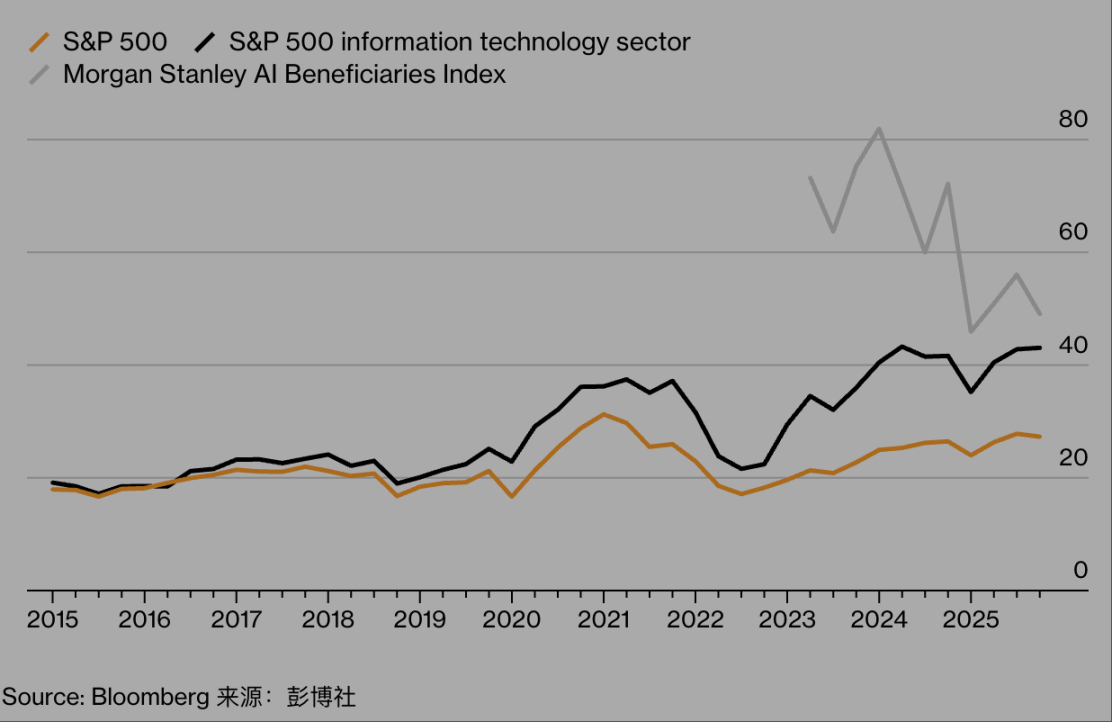
Источник: Bloomberg
(На этом графике тремя линиями индексов (S&P 500, сектор информационных технологий S&P 500, индекс выгод AI от Morgan Stanley) показано, как с 2015 по 2025 год акции, связанные с концепцией искусственного интеллекта на американском рынке, сначала резко выросли на волне спекуляций, а затем отступили из-за схлопывания пузыря, демонстрируя расхождение с динамикой общего рынка и традиционных технологических секторов, что отражает спекулятивный ажиотаж и риски отлива в сфере ИИ.)
Журналистам обычно следует избегать споров о том, переоценен ли какой-либо ресурс или технология. У меня нет твердой позиции относительно того, находимся ли мы в «пузыре ИИ», но я подозреваю, что сам вопрос, возможно, слишком узок. Если определить «спекулятивный пузырь» как «неустойчивый рост стоимости актива, оторванный от его определяемых фундаментальных показателей», то, оглядевшись, можно увидеть, что пузыри есть почти повсюду, и они, кажется, синхронно надуваются и сдуваются.
Генеральный директор Всемирного экономического форума Бёрге Бренде указал, что в сфере золота и государственных облигаций могут существовать пузыри. Недавно он заявил, что с момента Второй мировой войны общая долговая ситуация в странах никогда не была настолько серьезной; а по состоянию на 12 декабря цена золота за год взлетела почти на 64%. Многие финансовые работники считают, что пузырь существует и в сфере частного кредитования. Этот рынок объемом 3 триллиона долларов, на котором крупные инвестиционные институты предоставляют кредиты (многие из них用于 строительство центров обработки данных для ИИ), не подпадает под регулирование строгой банковской системы. Основатель и генеральный директор управляющей компании DoubleLine Capital Джеффри Гундлах недавно в подкасте Bloomberg «Odd Lots» назвал это непрозрачное, нерегулируемое хаотичное кредитование «мусорным кредитованием»; генеральный директор JPMorgan Джейми Даймон назвал его «спусковым крючком финансового кризиса».
Самое абсурдное явление наблюдается в тех областях, где «трудно определить внутреннюю стоимость». Например, с начала года до 6 октября общая рыночная капитализация BTC выросла на 636 миллиардов долларов, но по состоянию на 12 декабря не только отыграла весь рост, но и показала еще большее падение. По данным криптомедийной компании Blockworks, объем торгов виртуальными «Мем-монетами», используемыми для увековечивания интернет-трендов, в январе достиг пика в 1700 миллиардов долларов, а к сентябрю рухнул до 190 миллиардов. Лидерами падения стали TRUMP и MELANIA — эти монеты были выпущены первой семьей США за два дня до инаугурации президента, и с 19 января их стоимость упала на 88% и 99% соответственно.
Многие инвесторы оценивают эти криптовалюты не с точки зрения их потенциала создания внутренней стоимости для акционеров и общества (как, например, при оценке акций традиционной компании, публикующей прибыль), а просто видят в них возможность «быстро заработать большие деньги». Они относятся к криптовалютам с такой же спекулятивной心态, как к подходу к столу для игры в кости во время поездки в Лас-Вегас.
За попытками инвесторов (особенно тех, кого привлекают криптовалюты, спортивные ставки и онлайн-рынки прогнозов) «манипулировать» финансовыми рынками как казино, могут стоять демографические причины. Недавний опрос Harris Poll показал, что 60% американцев сегодня стремятся накопить огромное состояние; среди респондентов поколения Z и миллениалов 70% заявили, что хотят стать миллиардерами, в то время как среди поколения X и бумеров этот показатель составил лишь 51%. Исследование финансовой компании Empower в прошлом году показало, что поколение Z считает, что для «финансового успеха» необходима зарплата почти в 600 000 долларов в год и чистая стоимость активов в 10 миллионов долларов.
Благодаря видео в TikTok, групповым чатам, Reddit и «мгновенному и неизбежному» характеру интернета, люди по всему миру теперь могут одновременно узнавать о возможностях заработка. В принципе, это может показаться нормальным, но на практике это вызывает волну подражания, острую конкуренцию и «групповое мышление» — явление, которое делает новый сериал Apple TV «Pluribus» как никогда актуальным. Традиционная экономика с ее сложными и разнообразными измерениями уступила место «экономике внимания»: то, чем в данный момент одержимы все люди в мире.
В деловом мире фокусом этой «коллективной одержимости» является ИИ; в поп-культуре, после «ажиотажа вокруг Педро Паскаля», появился «ажиотаж вокруг Сидни Свини», а также «тренд 6-7» (если у вас дома нет подростка, можете погуглить). За последний год, благодаря таким знаменитостям, как участница корейской поп-группы BLACKPINK Лиза, «милые, но бесполезные плюшевые игрушки в виде животных», выпущенные китайским производителем игрушек Pop Mart International Group, завоевали мировую популярность, давайте назовем это «Labubble» (имеется в виду ажиотаж вокруг Labubu).
В пищевой промышленности также явно существует «белковый пузырь»: от производителей попкорна до производителей сухих завтраков — все рекламируют «содержание белка» в своих продуктах, чтобы привлечь заботящихся о здоровье потребителей и пользователей GLP-1 (сахароснижающий препарат, часто используемый для похудения). В медиасфере, возможно, также существуют пузыри в области новостных рассылок Substack, подкастов с участием знаменитостей (таких как «Say More» Эми Полер, «Archetypes» Меган Маркл) и «авторизованных документальных биографических фильмов о знаменитостях», которые выходят почти каждую неделю (последние новинки на Netflix: «Быть Эдди» об Эдди Мерфи, биографический фильм о Виктории Бекхэм). Автор книги «Пустое пространство: история культуры XXI века» У. Дэвид Маркс говорит: «Сегодня «референтная группа» каждого человека является глобальной, выходя далеко за пределы видимого окружения и превосходя его реальный класс и статус. На этих рынках могут возникать «глобально синхронные движения», которые были абсолютно невозможны в прошлом».
Конечно, риски в области ИИ намного выше, чем у продуктов, связанных с «ажиотажем Labubu». Ни одна компания не хочет отставать, поэтому все отраслевые гиганты изо всех сил стараются двигаться вперед, создавая вычислительную инфраструктуру с помощью «сложных схем финансирования». В некоторых случаях это involves «специальные purpose vehicle» (вспомните те SPV времен финансового кризиса 2008 года?) — эти структуры берут на себя debt для закупки графических процессоров компании NVIDIA (то есть чипов для ИИ), и некоторые наблюдатели полагают, что эти чипы могут обесцениваться быстрее, чем ожидалось.
Технологические гиганты способны выдержать любые последствия этого «ажиотажа, вызванного FOMO»: они в основном оплачивают центры обработки данных за счет прочных балансов, и даже если белые воротнички普遍 считают, что «текущей версии ChatGPT уже достаточно для написания годовой самооценки», эти гиганты могут спокойно реагировать. Но другие компании принимают более рискованные меры. Oracle — консервативный поставщик баз данных, вряд ли могущий стать претендентом в ажиотаже вокруг ИИ — привлекает debt в размере 38 миллиардов долларов для строительства центров обработки данных в Техасе и Висконсине.
Другие так называемые «новые облачные провайдеры» (такие как относительно молодые компании CoreWeave, Fluidstack) строят специализированные центры обработки данных для ИИ, майнинга биткоинов и других целей, эти компании также активно занимают. На этом этапе «кумулятивное воздействие» пузыря ИИ начинает выглядеть все более серьезным. Управляющий директор инвестиционной компании D.A. Davidson & Co. Гил Лурия, чье мнение напоминает Роджера Бэбсона столетней давности, заявил: «Когда некоторые учреждения берут в debt миллиарды долларов на строительство центров обработки данных, не имея реальных клиентов, я начинаю беспокоиться. Кредитование спекулятивных инвестиций никогда не было мудрым решением».
Исследовательница экономических циклов подъема и спада с многолетним стажем, венесуэльско-британского происхождения, Карлота Перес также выражает обеспокоенность. Она указывает, что в «хрупкой экономике казино с чрезмерным leverage, где пузырь лопается, как только распространяются сомнения», технологические инновации превращаются в высокорисковые спекуляции. Она написала в электронном письме: «Если крах произойдет в сферах ИИ и криптовалют, это может спровоцировать глобальный кризис невообразимых масштабов. Исторически сложилось, что真正 продуктивная золотая эра наступает только тогда, когда финансовый сектор расплачивается за свое поведение (а не постоянно получает помощь) и общество сдерживает его с помощью разумного регулирования». А до тех пор крепче держитесь за свою плюшевую игрушку Labubu.





















