Farewell to Brute Force Computing: Reconstructing the Valuation Logic of AI for Science through HKUST's "GrainBot"

marsbitОпубликовано 2026-03-05Обновлено 2026-03-05

Введение

In 2026, Hong Kong's AI sector is rapidly transitioning from infrastructure development to deep application deployment. A key example is GrainBot, an AI tool developed by a team led by Prof. Guo Yike at HKUST, which represents a significant shift from general-purpose AI to specialized scientific discovery. GrainBot addresses critical challenges in materials science, particularly in analyzing microstructures like grain boundaries in materials used in semiconductors, batteries, and solar panels. Traditionally, this required manual, time-consuming, and error-prone analysis of microscopy images. GrainBot automates this process using computer vision and deep learning to accurately identify, segment grains, and quantify geometric features. It also correlates microstructural data with macro-material properties, as demonstrated in its application to perovskite solar cell research. This breakthrough highlights a broader trend in AI for Science (AI4S), where value is measured not by user metrics but by accelerated R&D cycles and novel discoveries. GrainBot’s potential to drastically shorten development timelines or uncover new materials with superior properties underscores a new valuation logic centered on industrial intellectual property. Hong Kong’s strength in combining domain expertise (e.g., materials science, chemistry) with AI capabilities creates a competitive advantage, positioning it as a hub for "autonomous labs" that integrate AI analysis with robotic experimentation. ...

In 2026, Hong Kong's artificial intelligence sector is experiencing a "high-density explosion." If last month's budget plan, which included a HK$3 billion computing power subsidy, was a shot in the arm for the industry, then the recent series of major academic breakthroughs and high-level industry dialogues indicate that Hong Kong's AI is rapidly transitioning from the "infrastructure development" phase to the deep waters of "application deployment."

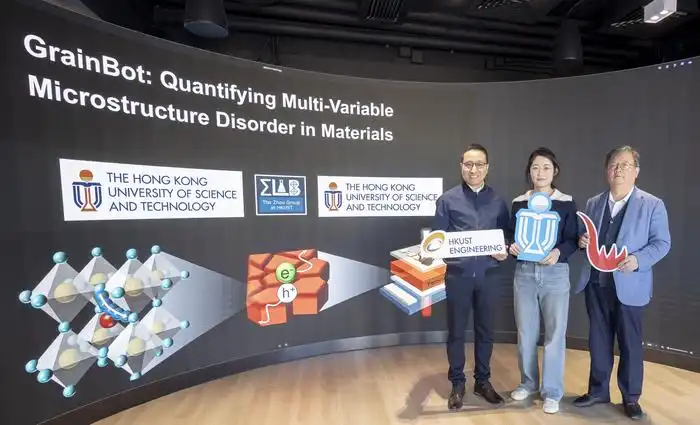
Just yesterday (March 3), while most market observers were still focused on the computing power inflation of NVIDIA's latest GPU or which parameter-heavy general-purpose large model OpenAI had released, a team led by Professor Guo Yike, the Provost of the Hong Kong University of Science and Technology (HKUST), dropped a bombshell in both academic and industrial circles—GrainBot.

This is not just another AI toolbox; it is a quintessential example of "AI for Science" (AI4S) moving from concept to industrial application. As a long-time observer of the quantitative technology and deep tech sectors, I believe the emergence of GrainBot signifies that the focus of Hong Kong's AI development is shifting from "general-purpose chatbots" to "vertical discoveries." For financial professionals, understanding the logic behind GrainBot is key to identifying the alpha in hard tech investments over the next five years.

(Image source: analyticalscience.wiley.com)

To understand the value of GrainBot, we must first understand the "pain points" of materials science.

In the upstream of high-end manufacturing, such as semiconductors, new energy batteries, and photovoltaic panels, material performance often determines the success or failure of a product. And material performance—whether it's conductivity, strength, or corrosion resistance—largely depends on its microstructure, i.e., the size, shape, and distribution of "grains." For a long time, materials scientists have been like artisans with magnifying glasses. They use scanning electron microscopes (SEM) or atomic force microscopes (AFM) to capture thousands of images, then rely on PhD students or researchers to spend hundreds of hours manually identifying, tracing, and annotating the boundaries of each grain. This is not only highly inefficient but also fraught with human subjectivity and error.

The emergence of GrainBot is essentially equipping the microscope with an "L4-level autonomous driving brain."

According to the latest research published in Cell Press's flagship journal "Matter," GrainBot uses advanced computer vision (CV) and deep learning algorithms to automatically perform image segmentation, feature extraction, and quantitative analysis. It no longer requires human intervention to accurately identify grain boundaries and calculate complex geometric parameters such as surface area, groove geometry, and convex-concave volume.

More importantly, GrainBot is not just a "counter." It has the capability for correlation analysis, directly linking these microstructural data to the macro-performance of materials. In validation tests on metal halide perovskite films—a key material for next-generation high-efficiency solar cells—GrainBot successfully built a database containing thousands of annotated grains, revealing previously unquantifiable structure-performance relationships. A statement by Professor Guo Yike at the launch event was particularly forward-looking: "As scientific workflows become more automated and data-intensive, such toolkits will become the key engine for future 'autonomous laboratories.'"

For financial capital, the emergence of achievements like GrainBot means that we need to readjust the valuation models for AI projects. Over the past two years (2024-2025), market enthusiasm for AI has been primarily focused on "general-purpose large models" and "application-layer SaaS." The valuation logic mainly revolved around MAU (monthly active users), ARR (annual recurring revenue), and Token consumption. However, as the marginal effects of general models diminish, capital is beginning to look for new growth points. AI for Science (AI4S) offers a completely different logic: its value lies not in "how many people it serves" but in "how much it shortens R&D cycles" and "how many new materials it discovers."

Taking GrainBot as an example, if it can reduce the R&D cycle for perovskite solar cells from 3 years to 6 months, or help a company like CATL (Contemporary Amperex Technology Co. Limited) discover a new cathode material that increases energy density by 10%, the economic value generated would be exponential.

This is an "industrial IP" logic. The future AI unicorns may no longer be companies developing chatbots, but rather "digital laboratories" that master the core data and algorithms of specific vertical fields (such as materials, biomedicine, and chemical engineering) and can mass-produce patented technologies.

Under this logic, the advantages of Hong Kong's universities are greatly amplified. Unlike Silicon Valley's software engineer-dominated ecosystem, Hong Kong boasts an extremely high density of experts in materials science, chemistry, and biomedicine. This breakthrough by HKUST is the result of deep collaboration between computer science (Professor Guo Yike's team) and chemical engineering (Professor Zhou Yuanyuan's team). This combination of "AI + Domain Knowledge" forms a moat that is difficult for pure internet companies to replicate.

GrainBot is not an isolated case. If we zoom out, we can see that Hong Kong is building a new paradigm for scientific research based on "autonomous laboratories." Autonomous laboratories refer to the use of robotics and AI to achieve full automation of experimental design, execution, data analysis, and iterative optimization. In this closed loop, AI (like GrainBot) is responsible for "seeing" and "thinking," while robots are responsible for "doing." This trend has profound implications for the transformation of Hong Kong's economic structure. For a long time, Hong Kong has been seen as a financial center and trading port, but often considered "lacking" in hard tech R&D. However, with the advent of the AI4S era, the form of R&D is changing—it is becoming more digital and intelligent. Hong Kong does not need vast land for factories like the mainland; it only needs to leverage its computing power infrastructure and top-tier research minds to become a global exporter of "various new material formulations."

Imagine the future Hong Kong Science Park, which might not only have office buildings but also hundreds of "unmanned laboratories" running 7x24. They continuously consume data, analyze results through tools like GrainBot, automatically adjust experimental parameters, and ultimately output high-value patentable formulations. These formulations can then be licensed to manufacturing bases in the Greater Bay Area for mass production. This is version 2.0 of "Hong Kong R&D + Bay Area Manufacturing."

Of course, as rational observers, we cannot ignore the problems and hidden concerns.

The biggest bottleneck for AI for Science remains data. Unlike the massive amounts of internet text used to train ChatGPT, high-quality scientific data (such as perfectly annotated microscope images) is extremely scarce. The success of GrainBot was possible because the team invested significant effort in building an initial high-quality dataset. Furthermore, the "silo effect" of scientific data is more severe than on the internet. The data of every materials company and every laboratory is a core secret. Establishing a secure data sharing mechanism (perhaps incorporating Web3 or privacy computing technologies) to allow AI models to "learn from diverse sources" is key to the next step of commercial deployment.

In the spring of 2026, standing on the HKUST campus overlooking Clear Water Bay, we see not just the scenery but also the generational shift in scientific research paradigms.

The release of GrainBot symbolizes the perfect handshake between the "hacker spirit" (rapid iteration, algorithm-driven) and the "artisan spirit" (meticulous observation, material refinement). For investors, the focus should no longer be solely on who owns the most NVIDIA GPUs, but rather on who can use AI to solve the most specific real-world physical problems.

On this new track, Hong Kong has made a strong start. GrainBot may be just the beginning. Beyond the field of view of the microscope, a trillion-dollar market for AI-driven material discovery is slowly unfolding.

Связанные с этим вопросы

QWhat is GrainBot and what problem does it solve in materials science?

AGrainBot is an AI-powered toolbox developed by a team led by Prof. Guo Yike at HKUST. It uses computer vision and deep learning to automate the analysis of microscopic structures (grains) in materials, such as identifying grain boundaries and calculating geometric parameters. It addresses the inefficiency and human error in manually analyzing materials' microstructures, which is critical for determining properties like conductivity and strength in semiconductors, batteries, and solar cells.

QHow does GrainBot represent a shift in AI valuation logic for investors?

AGrainBot exemplifies a shift from valuing AI based on user metrics (e.g., MAU, token usage) to valuing it for its ability to accelerate R&D and discover new materials. Its worth is measured by how much it shortens development cycles (e.g., reducing solar battery R&D from 3 years to 6 months) or enables breakthroughs (e.g., finding higher-energy-density materials), creating exponential economic value through industrial IP and patents.

QWhat advantages does Hong Kong have in the AI for Science (AI4S) domain, as highlighted in the article?

AHong Kong's strengths in AI4S include a high density of domain experts in fields like materials science, chemistry, and biomedicine, coupled with strong computational infrastructure. The collaboration between computer science (Prof. Guo's team) and chemical engineering (Prof. Zhou Yuanyuan's team) at HKUST demonstrates a 'AI + Domain Knowledge' model that is hard for pure software companies to replicate, positioning Hong Kong as a hub for digital R&D and patent output.

QWhat is the concept of an 'autonomous lab' mentioned in the article, and how does GrainBot fit into it?

AAn 'autonomous lab' refers to a fully automated research environment where AI (like GrainBot) handles data analysis and decision-making ('seeing' and 'thinking'), while robots perform experiments ('doing'). GrainBot serves as a key engine in this paradigm by providing automated, precise analysis of scientific data, enabling continuous, 24/7 optimization of experiments and output of high-value patents, aligning with Hong Kong's vision of 'R&D + manufacturing' in the Greater Bay Area.

QWhat are the main challenges for AI for Science, as discussed in the context of GrainBot?

AThe primary challenge is data scarcity and silos. High-quality, annotated scientific data (e.g., perfect microscope images) is rare and costly to produce, and data is often held as proprietary by companies and labs. GrainBot's success relied on building an initial high-quality dataset. Overcoming this requires secure data-sharing mechanisms (e.g., using Web3 or privacy computing) to allow AI models to learn from diverse sources for broader commercialization.

Похожее

How Much Debt Does Strategy Really Have? Is There a Risk of Implosion?

MicroStrategy's Debt Risk: A Turning Point in the "Never Sell" Strategy As of June 3, 2026, MicroStrategy holds 843,706 bitcoins (valued at ~$53.1B) but faces significant financial obligations. Its capital structure includes $6.75B in convertible notes and $15.48B in perpetual preferred stock (led by the $8.5B STRC series), creating an annual payout burden of ~$1.71B. With software revenue at only ~$500M, interest and dividend obligations far exceed operating income. A critical shift occurred in late May 2026 when the company sold 32 bitcoins for ~$2.5M to cover dividends, breaking CEO Michael Saylor's long-standing "never sell" pledge. This symbolic move triggered a sharp decline in both Bitcoin's price and MSTR stock, reflecting market fears about cash flow sustainability. The core of the strain is the STRC perpetual preferred stock, designed as a "permanent loan" with no maturity date but requiring high monthly dividends (currently 11.5%). Its business model relies on a three-part cycle: issuing new STRC shares, using proceeds to buy more Bitcoin and fund a USD reserve, and using that reserve to pay dividends. This cycle depends on continuous investor demand for STRC and Bitcoin's price appreciation. Analysis shows Bitcoin needs to appreciate at least 2.3% annually to cover the $1.71B in yearly obligations at current holdings. With Bitcoin price down ~22% from March 2026 highs, this pressure has intensified. The company's $900M USD reserve can only cover about 7 months of payments if STRC issuance stalls. Key risks are not immediate bankruptcy or forced Bitcoin liquidation (as BTC is not collateral), but rather: 1) The erosion of MSTR's premium to its Bitcoin holdings (mNAV), which would cripple its ability to raise cheap capital; 2) A vicious cycle where stagnant Bitcoin prices reduce STRC demand, draining the USD reserve and forcing BTC sales, further depressing prices. The period from February 2027 to September 2028 is a crucial test, with over $5.9B in convertible notes facing put options or maturity. In essence, MicroStrategy has evolved from a simple Bitcoin holder into a complex financial entity acting like a "private Bitcoin bank," leveraging its BTC holdings to create layered financial products. Its survival depends on maintaining Bitcoin's price trend, its stock premium, and market appetite for its preferred shares. The recent token sale marks not a betrayal of its Bitcoin thesis, but an admission that the leveraged strategy must eventually be paid for.

marsbit8 мин. назад

How Much Debt Does Strategy Really Have? Is There a Risk of Implosion?

marsbit8 мин. назад

Anthropic Cries Wolf: Is the AGI Threat Real, or Just an IPO Story?

Anthropic has published an article titled "When AI builds itself," discussing the emerging concept of "recursive self-improvement," where AI begins to actively participate in designing, training, testing, and optimizing its own subsequent versions. The company presents internal data showing that by May 2026, over 80% of code merged into its codebase was written by Claude, its AI model. Claude's capabilities have expanded to handling complex, open-ended engineering tasks, achieving a 76% success rate in such areas, and even contributing to research processes, such as optimizing code performance and conducting AI safety experiments. Anthropic outlines an evolution from human-driven development to AI-assisted workflows, culminating in the current stage where AI agents can autonomously write, run, and delegate code. The company cautions that the path toward a "closed loop," where AI continuously improves itself, is becoming visible. It calls for coordinated global mechanisms to potentially slow or pause frontier AI development to allow safety research and societal structures to catch up. However, the timing of this warning coincides with Anthropic's preparations for an IPO, framing the narrative not just as a safety concern but also as a demonstration of Claude's advanced capabilities and its integral role in accelerating Anthropic's own R&D—creating a potential "flywheel" effect for competitive advantage. This contrasts with OpenAI's recent, more policy-oriented discussion of the same risks, highlighting the competitive dynamics in the AI industry as companies position themselves in both the technological and regulatory landscape.

marsbit1 ч. назад

Anthropic Cries Wolf: Is the AGI Threat Real, or Just an IPO Story?

marsbit1 ч. назад

BIT Research: ETF Purchases Have Slowed, Strategy (MicroStrategy) Has Slowed, What Else Can Drive Bitcoin's Rise?

Market Refocus on Inflation and Rate Expectations Weighs on Bitcoin Currently, the market is in a phase of macro-repricing dominated by inflation and interest rate expectations. Bitcoin, which previously benefited from easy liquidity and low inflation, is seeing its core bullish drivers weaken. These drivers were market expectations for interest rate cuts and strong inflows from Bitcoin ETFs and institutions like MicroStrategy (referred to as "Strategy" in the text). The logic has shifted. Recent high inflation data (e.g., CPI hitting 3.8% in a May 2026 report) has caused the market to sharply reduce its rate cut expectations for 2025 and even price in potential hikes. This is a key constraint for Bitcoin, as it lacks cash flows and is highly sensitive to rate expectations. Concurrently, institutional capital flows have slowed significantly. Following the hot CPI data, Bitcoin ETFs saw accelerated outflows, with around $4.3 billion leaving over a period. MicroStrategy's ability to keep adding substantial Bitcoin to its balance sheet is also diminishing. Together, ETF and MicroStrategy holdings total roughly $110 billion, but their momentum as growth engines is cooling. In summary, Bitcoin's current pressure stems not from its own fundamentals but from a changing macro environment. As long as inflation stays elevated, Bitcoin is likely to remain in a consolidating phase. However, historically, inflation eventually peaks. Once it recedes and rate cut expectations rebuild, institutional capital could return, potentially fueling a new and more robust recovery phase for Bitcoin.

marsbit1 ч. назад

BIT Research: ETF Purchases Have Slowed, Strategy (MicroStrategy) Has Slowed, What Else Can Drive Bitcoin's Rise?

marsbit1 ч. назад

Торговля

Спот
Фьючерсы

Популярные статьи

Как купить S

Добро пожаловать на HTX.com! Мы сделали приобретение Sonic (S) простым и удобным. Следуйте нашему пошаговому руководству и отправляйтесь в свое крипто-путешествие.Шаг 1: Создайте аккаунт на HTXИспользуйте свой адрес электронной почты или номер телефона, чтобы зарегистрироваться и бесплатно создать аккаунт на HTX. Пройдите удобную регистрацию и откройте для себя весь функционал.Создать аккаунтШаг 2: Перейдите в Купить криптовалюту и выберите свой способ оплатыКредитная/Дебетовая Карта: Используйте свою карту Visa или Mastercard для мгновенной покупки Sonic (S).Баланс: Используйте средства с баланса вашего аккаунта HTX для простой торговли.Третьи Лица: Мы добавили популярные способы оплаты, такие как Google Pay и Apple Pay, для повышения удобства.P2P: Торгуйте напрямую с другими пользователями на HTX.Внебиржевая Торговля (OTC): Мы предлагаем индивидуальные услуги и конкурентоспособные обменные курсы для трейдеров.Шаг 3: Хранение Sonic (S)После приобретения вами Sonic (S) храните их в своем аккаунте на HTX. В качестве альтернативы вы можете отправить их куда-либо с помощью перевода в блокчейне или использовать для торговли с другими криптовалютами.Шаг 4: Торговля Sonic (S)С легкостью торгуйте Sonic (S) на спотовом рынке HTX. Просто зайдите в свой аккаунт, выберите торговую пару, совершайте сделки и следите за ними в режиме реального времени. Мы предлагаем удобный интерфейс как для начинающих, так и для опытных трейдеров.

1.4k просмотров всегоОпубликовано 2025.01.15Обновлено 2026.06.02

Как купить S

Sonic: Обновления под руководством Андре Кронье – новая звезда Layer-1 на фоне спада рынка

Он решает проблемы масштабируемости, совместимости между блокчейнами и стимулов для разработчиков с помощью технологических инноваций.

2.3k просмотров всегоОпубликовано 2025.04.09Обновлено 2025.04.09

Sonic: Обновления под руководством Андре Кронье – новая звезда Layer-1 на фоне спада рынка

HTX Learn: Пройдите обучение по "Sonic" и разделите 1000 USDT

HTX Learn — ваш проводник в мир перспективных проектов, и мы запускаем специальное мероприятие "Учитесь и Зарабатывайте", посвящённое этим проектам. Наше новое направление .

1.8k просмотров всегоОпубликовано 2025.04.10Обновлено 2025.04.10

HTX Learn: Пройдите обучение по "Sonic" и разделите 1000 USDT

Обсуждения

Добро пожаловать в Сообщество HTX. Здесь вы сможете быть в курсе последних новостей о развитии платформы и получить доступ к профессиональной аналитической информации о рынке. Мнения пользователей о цене на S (S) представлены ниже.

活动图片