Активность в экосистеме Ethereum смещается: использование L2 снижается, а капитал концентрируется на базовом уровне (L1). Доля Ethereum на рынке RWA составляет 58% ($9,6 млрд из $16,5 млрд), а объем стейблкоинов в основной сети достигает $163,3 млрд. Это демонстрирует растущее доверие институциональных инвесторов, которые ценят безопасность и финальность L1 для крупных операций. Несмотря на распространение активности по L2-сетям, Ethereum укрепляется как ключевой уровень для расчетов и ликвидности. Однако, если капитал остается пассивным, а пользователи активны в L2, это может не привести к росту цены ETH.
Активность в экосистеме Ethereum [ETH] меняется: использование L2 снижается, а стоимость остается закрепленной на базовом уровне. Соотношение ежедневных активных пользователей (DAU) L2 к L1 упало до 1,12 в феврале 2026 года, что значительно ниже максимумов 2025 года, что свидетельствует о фрагментированном росте пользовательской базы.
Несмотря на распределение исполнения по L2, базовый уровень по-прежнему обеспечивает расчеты и ликвидность, что сохраняет структурное доминирование. Объем стейблкоинов в основной сети, приближающийся к $163,3 млрд, подтверждает, что капитал продолжает концентрироваться там, где окончательность и безопасность остаются наиболее сильными.
Динамика комиссий усиливает это расхождение: средние базовые комиссии составляют 12,6 gwei, а еженедельно сжигается всего 267 ETH, что отражает более слабый спрос. Поскольку L2 вносят минимальный вклад в сжигание, экономическая стоимость остается привязанной к L1.
Этот сдвиг свидетельствует о том, что Ethereum консолидируется как центр концентрации капитала, где ликвидность сосредотачивается, даже несмотря на рассеивание пользовательской активности.
Ethereum возвращает доминирование в ликвидности
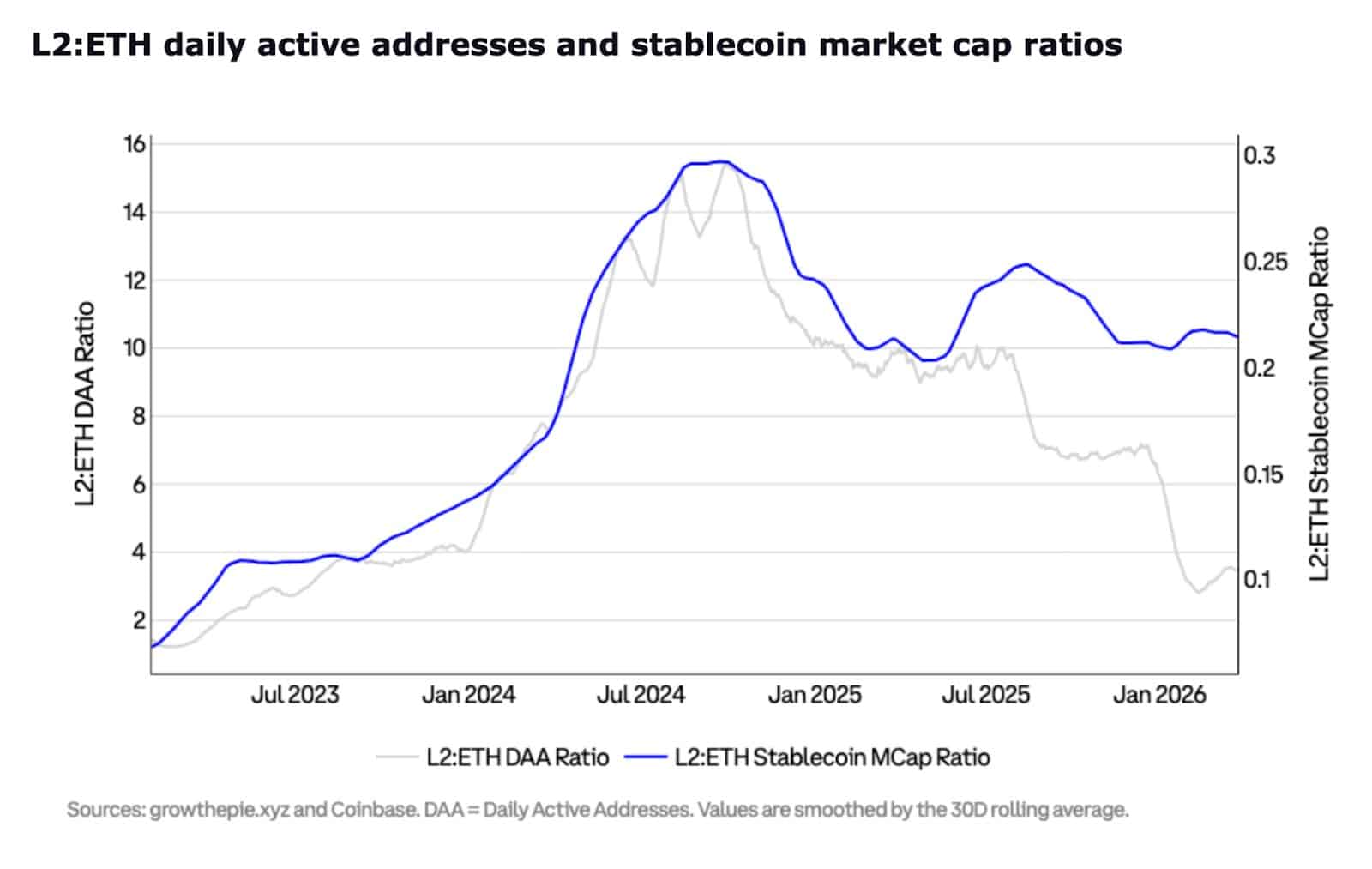
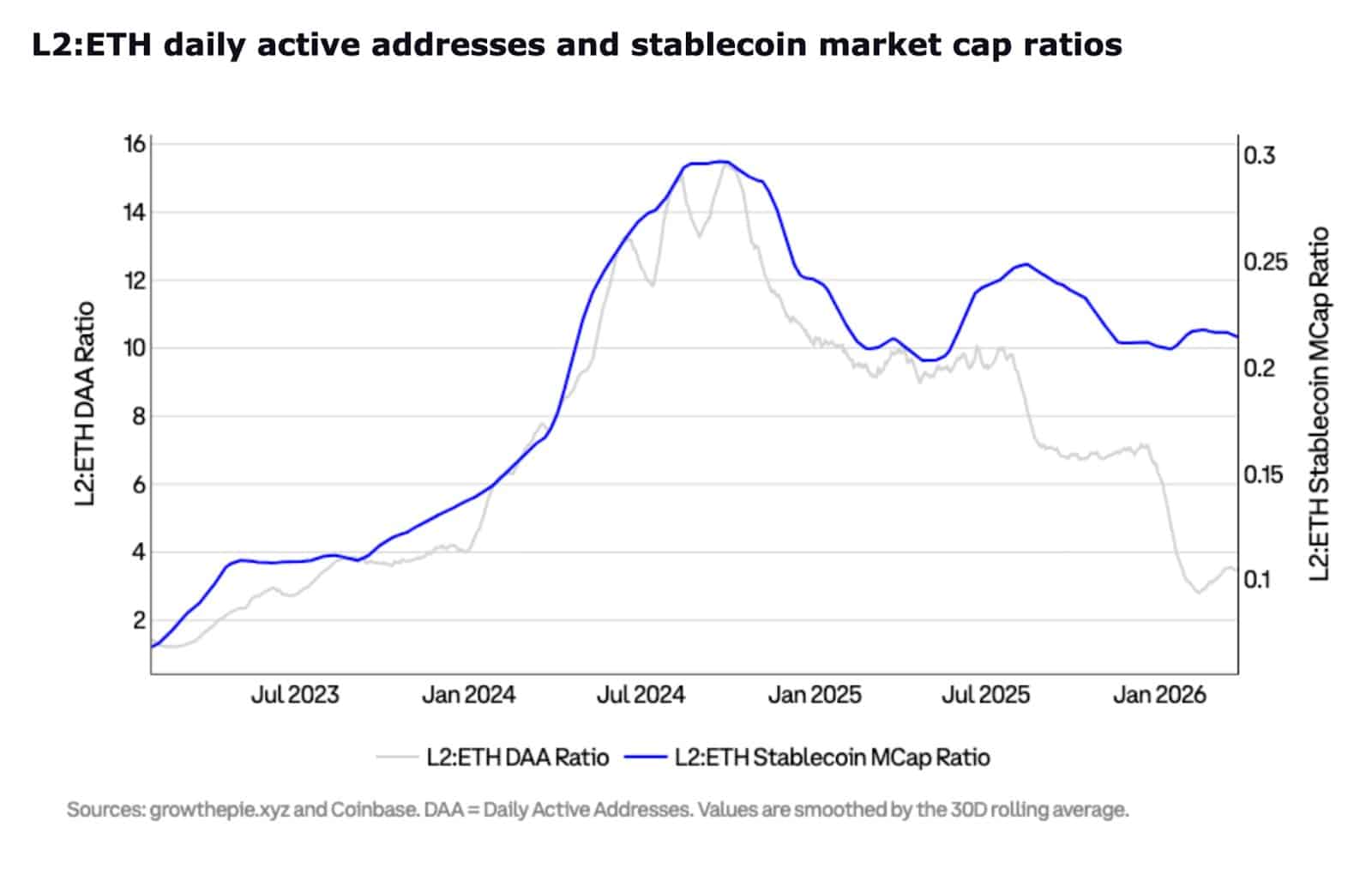
Этот сдвиг становится более очевидным, поскольку пользовательская активность и ликвидность перестают двигаться согласованно across слоями. Соотношение ежедневных активных адресов (DAA) L2-to-ETH выросло с примерно 2 в начале 2023 года до более чем 15 к середине 2024 года, что показывает, что пользователи быстро перешли на L2 для более дешевых транзакций.
Однако этот рост был недолгим, так как соотношение упало до примерно 10–11 к 2026 году, что показывает замедление пользовательской активности. Это снижение свидетельствует о том, что использование L2 ослабевает, а не расширяется.
Источник: X
Капитал демонстрирует иную тенденцию: соотношение стейблкоинов L2-to-ETH достигло пика около 0,30, прежде чем стабилизироваться на уровне около 0,20–0,22, что означает, что ликвидность удерживается лучше, чем пользовательская активность.
Этот дисбаланс implies, что стоимость остается там, где безопасность и гибкость являются наиболее сильными. В результате Ethereum остается основным слоем для ликвидности, даже несмотря на распространение активности across L2.
Роль Ethereum как расчетного уровня
Тенденция further поддерживается изменениями в регулировании, которые влияют на потоки капитала. Чтобы проиллюстрировать предпочтение регулируемых активов, Ethereum получил примерно $9,6 млрд, или 58% рынка RWA в $16,5 млрд, благодаря институтам, ищущим соответствующие требованиям системы и надежные расчеты.
По мере роста этого спроса капитал остается на базовом уровне, поскольку высокоценные транзакции требуют strong безопасности и окончательности. Это объясняет, почему ликвидность остается стабильной, даже несмотря на распространение пользовательской активности across более дешевыми сетями L2.
Потоки ETF поддерживают эту тенденцию: спотовые продукты ETH привлекли $9,9 млрд притоков средств в течение 2025 года, а активы под управлением (AUM) превысили $12 млрд к 2026 году. Этот steady рост показывает растущее институциональное доверие.
Эта модель indicates, что Ethereum укрепляет свои позиции в качестве основного уровня для расчетов крупномасштабной стоимости.
В целом, если этот капитал продолжит накапливаться, Ethereum сможет укрепить свою роль, позволяя ETH расти в стоимости по мере того, как больше активности оседает на L1. Однако, если пользователи останутся на L2, а капитал будет пассивным, рост может не превратиться в более сильные ценовые показатели.
Итоговое резюме
В Ethereum капитал сконцентрирован на L1 с $163,3 млрд в стейблкоинах и 58% долей RWA, в то время как активность L2 ослабевает.
ETH теперь relies на активном использовании капитала, поскольку потоки L1 поддерживают силу, в то время как пассивная ликвидность может ограничить рост цен.
QКакую долю рынка RWA занимает Ethereum и как это влияет на его позиции?
AEthereum занимает 58% рынка RWA стоимостью $16,5 млрд, что укрепляет его позиции как основного слоя для урегулирования и безопасности, привлекательного для институциональных инвесторов.
QКакая динамика наблюдается в соотношении активных пользователей L2 к L1 в Ethereum?
AСоотношение ежедневных активных пользователей (DAU) L2 к L1 упало до 1,12 к февралю 2026 года, что свидетельствует о замедлении роста пользовательской активности на L2 и фрагментации роста.
QПочему ликвидность остается сконцентрированной на базовом слое Ethereum, несмотря на распространение активности на L2?
AЛиквидность концентрируется на L1 из-за требований к безопасности и окончательности расчетов для высокоценных транзакций, что подтверждается объемом стейблкоинов в $163,3 млрд на мейннете.
QКак изменения в регулировании повлияли на приток капитала в Ethereum?
AИзменения в регулировании способствовали притоку капитала, поскольку институции ищут соответствующие требованиям системы, что принесло Ethereum $9,6 млрд в сегменте RWA.
QКаковы перспективы цены ETH в свете текущих тенденций концентрации капитала и активности пользователей?
AЕсли капитал продолжит концентрироваться на L1 и активность будет оседать там, цена ETH может вырасти. Однако, если пользователи останутся на L2, а ликвидность будет пассивной, это может не привести к значительному росту цены.
Manyu - это мемтокен на Ethereum, который приносит децентрализованную культурную и развлекательную ценность через вирусное влияние в соцсетях и вовлечённость сообщества.
Ordinals/Runes по-прежнему стимулируют доходы от комиссий за блоки и активность разработчиков, рассматриваются как отправная точка «нативной эмиссии активов» в сети.
Добро пожаловать в Сообщество HTX. Здесь вы сможете быть в курсе последних новостей о развитии платформы и получить доступ к профессиональной аналитической информации о рынке. Мнения пользователей о цене на ETH (ETH) представлены ниже.