Dogecoin's 2025 Review: DOGE's Path to Politicization and Commercialization

marsbitОпубликовано 2025-12-25Обновлено 2025-12-25

Введение

In 2025, Dogecoin (DOGE) found itself at the center of political controversy and corporate adoption, yet its price declined significantly throughout the year. Elon Musk’s U.S. Department of Government Efficiency (DOGE) briefly boosted the meme coin’s value by associating it with federal policy, but legal challenges and operational missteps caused the initiative to fade. Despite growing institutional interest—including corporate treasuries, investment funds, and ETF launches—DOGE failed to reach new all-time highs. By December, it had erased all yearly gains, falling roughly 65% over 12 months. Major developments included the launch of several DOGE-focused ETFs and the creation of "House of Doge" by the Dogecoin Foundation to promote commercial adoption. Multiple public companies pivoted to hold DOGE in their treasuries, and one even acquired a European football club to promote the brand. However, these efforts did not translate into sustained price appreciation. The community has since shifted focus toward utility and real-world adoption, rather than speculation, looking ahead to 2026 for potential growth.

Dogecoin found itself at the center of a controversial political storm while simultaneously being embraced by traditional institutions.

In 2025, Dogecoin hovered between political controversy and corporate interest, with its price experiencing significant declines.

Elon Musk's Department of Government Efficiency tied this meme coin to American politics, briefly driving up the price, but legal challenges and policy missteps soon caused the initiative to fade from view.

Publicly traded companies, fund managers, and ETF issuers embraced DOGE, but strong corporate momentum failed to push it to new all-time highs, leading the community to focus on utility growth in 2026 rather than speculation.

It started as a joke, but this year, Dogecoin was adopted by institutions, heavily purchased by public companies, and its name was used for a controversial U.S. government project led by billionaire Elon Musk.

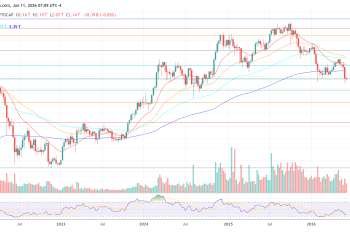
Despite this, the original meme coin did not reach new all-time highs, disappointing its hardcore fan base. As of December 15, DOGE had erased all gains made in 2025, falling approximately 65% over 12 months.

Thus, Dogecoin had an awkward year; it gradually moved away from its grassroots spirit without achieving the financial returns many had envisioned. However, Dogecoin builders believe the project is poised for a breakout in 2026.

Here is a review of Dogecoin in 2025.

In late 2024, the Trump administration positioned Musk as the public face of the newly created Department of Government Efficiency (DOGE), although his formal authority within the agency later became a point of controversy.

The department's goal was to cut government spending as much as possible. This year, the madness continued, and Dogecoin somehow became the center of it all.

Minutes after President Trump's inauguration, the department led by Musk was hit with a lawsuit from the public interest law firm National Security Counselors. The 30-page complaint alleged that the DOGE was illegally operating as a federal advisory committee because it violated the Federal Advisory Committee Act regarding hiring, disclosure, and other matters.

The next day, the Dogecoin logo appeared on the Department of Government Efficiency's website. The meme coin surged 14%, with its market cap rising to $58 billion. The logo was later removed, the token fell, and the website became a page tracking all the government spending cuts the DOGE allegedly made.

According to Bloomberg, Musk even considered using a public blockchain for the agency but ruled out directly using Dogecoin. This blockchain-based implementation ultimately did not materialize.

Controversy did not stop after the department became operational. The DOGE mistakenly laid off about 2,000 healthcare workers, pushed for cuts in foreign aid—which critics argued would harm global health—and was found to have exaggerated its claimed savings.

Alex Hoffman, ecosystem lead for the Dogecoin application layer DogeOS, told Decrypt that when he said he was working on DOGE-related projects, his family thought he had joined Musk's government agency.

In reality, he was helping build products for Dogecoin. This is just one example of how, driven by Musk, Dogecoin became so politicized this year that the public associated the two.

“Hoffman explained: ‘Do you know what the Dogecoin community believes DOGE stands for? Do Only Good Every Day. As a community, we have great power to be like DOGE: Do Only Good Every Day. Of course, Elon appropriated it. That's okay, you know. But the community is very focused on doing positive things.’”

The Department of Government Efficiency eventually faded from public view, and Musk was sidelined from the U.S. government. That was before Musk criticized his once-best friend—President Trump—for appearing in the Epstein files.

Dogecoin Goes Corporate

This year, digital asset treasuries dominated the narrative, while ETFs for a handful of altcoins and meme coins frequently made headlines. Dogecoin was involved in both trends.

In January, REX Shares applied to create a Dogecoin ETF, with analysts initially predicting approval by April, but that did not happen.

Two months later, the Dogecoin Foundation established the House of Doge, aiming to promote Dogecoin adoption through corporate partnerships. It allocated 10 million DOGE, then worth about $1.83 million, for these plans.

By June, a publicly traded former cannabis company, after rebranding as Dogecoin Cash, made a Dogecoin treasury play by forming a new subsidiary, Dogecoin Treasury Inc. The company did not clarify its plans when contacted by Decrypt, but its telehealth platform began accepting Dogecoin as payment a few months later.

In early July, Bitcoin treasury company Thumzup pivoted to Dogecoin to diversify its treasury assets and subsequently acquired a Dogecoin mining company. That same month, Bitcoin mining company Bit Origin acquired $10 million worth of Dogecoin to create a meme coin treasury. Since these acquisitions, Dogecoin's price has only fallen.

In September, a new treasury company, CleanCore Solutions, emerged and hired Elon Musk's personal lawyer, Alex Spiro, as its board chairman.

Due to its association with the Dogecoin Foundation and the House of Doge, CleanCore Solutions was touted as the first “official” DOGE treasury. As of December 15, CleanCore held 733.1 million DOGE, worth approximately $90 million.

That same month, the first Dogecoin ETF began trading in the U.S. and “shattered” analyst expectations in early trading. In November, Grayscale's ETF debuted with a slow start, followed shortly by Bitwise's fund.

“To me, all of this is positive for DOGE on a macro level,” Hoffman said. “What I've learned is that the DOGE community craves recognition and also utility. Anything that happens around this reinforces the idea that [Dogecoin] is worthy of and is gaining recognition.”

Similarly, the House of Doge went public on the Nasdaq in October through a reverse merger with college-themed online gaming business Brag House Holdings.

Subsequently, the corporate arm of the Dogecoin Foundation acquired a majority stake in the European football club U.S. Triestina Calcio 1918, placing the Dogecoin brand on its jerseys and pitch.

Despite the seemingly constant stream of positive news, Dogecoin failed to reach new all-time highs. In fact, it was the only top-ten cryptocurrency by market cap that did not hit a new high during the recent crypto bull run. Was it all for nothing?

“Dogecoin remains firmly on a growth trajectory centered on utility rather than speculation,” Dogecoin Foundation director Timothy Stebbing told Decrypt. “In past years, Dogecoin led the speculative asset camp, but now it is finding its footing as a utility currency, and as you would expect, this puts it on a different growth path than those cryptocurrencies chasing the ‘always up’ fairy tale.”


Связанные с этим вопросы

QWhat was the main reason for Dogecoin's price decline in 2025 despite increased corporate interest?

ADespite being embraced by public companies, treasury managers, and ETF issuers, Dogecoin's price declined because the strong corporate momentum failed to push it to new all-time highs. It ended the year down approximately 65% over 12 months, erasing all its gains for 2025.

QHow did Elon Musk's Department of Government Efficiency (DOGE) controversy impact the Dogecoin cryptocurrency?

AElon Musk's government department briefly used the Dogecoin logo on its website, which caused a 14% price surge. However, the logo was quickly removed, and the initiative faded from public view due to legal challenges and policy missteps, ultimately contributing to the token's volatility and decline.

QWhat major corporate and institutional developments involved Dogecoin in 2025?

AKey developments included the formation of House of Doge by the Dogecoin Foundation, the launch of the first U.S. Dogecoin ETF, several public companies creating Dogecoin treasuries (like CleanCore Solutions holding 733.1M DOGE), and the acquisition of a European football club to promote Dogecoin branding.

QWhy did the Dogecoin community shift its focus from speculation to utility in 2026?

AThe community shifted its focus because, despite widespread corporate adoption and institutional interest, Dogecoin failed to achieve new price highs. Builders and leaders believe the project is now positioned for growth based on practical utility rather than speculative trading.

QWhat legal challenge was faced by Elon Musk's Department of Government Efficiency (DOGE) in 2025?

AThe department faced a lawsuit from the public interest law firm National Security Counselors, alleging it operated illegally as a federal advisory committee by violating the Federal Advisory Committee Act regarding hiring, disclosure, and other matters.

Похожее

OpenAI Post-Training Engineer Weng Jiayi Proposes a New Paradigm Hypothesis for Agentic AI

OpenAI engineer Weng Jiayi's "Heuristic Learning" experiments propose a new paradigm for Agentic AI, suggesting that intelligent agents can improve not just by training neural networks, but also by autonomously writing and refining code based on environmental feedback. In the experiment, a coding agent (powered by Codex) was tasked with developing and maintaining a programmatic strategy for the Atari game Breakout. Starting from a basic prompt, the agent iteratively wrote code, ran the game, analyzed logs and video replays to identify failures, and then modified the code. Through this engineering loop of "code-run-debug-update," it evolved a pure Python heuristic strategy that achieved a perfect score of 864 in Breakout and performed competitively with deep reinforcement learning (RL) algorithms in MuJoCo control tasks like Ant and HalfCheetah. This approach, termed Heuristic Learning (HL), contrasts with Deep RL. In HL, experience is captured in readable, modifiable code, tests, logs, and configurations—a software system—rather than being encoded solely into opaque neural network weights. This offers potential advantages in explainability, auditability for safety-critical applications, easier integration of regression tests to combat catastrophic forgetting, and more efficient sample use in early learning stages, as demonstrated in broader tests on 57 Atari games. However, the blog acknowledges clear limitations. Programmatic strategies struggle with tasks requiring long-horizon planning or complex perception (e.g., Montezuma's Revenge), areas where neural networks excel. The future vision is a hybrid architecture: specialized neural networks for fast perception (System 1), HL systems for rules, safety, and local recovery (also System 1), and LLM agents providing high-level feedback and learning from the HL system's data (System 2). The core proposition is that in the era of capable coding agents, a significant portion of an AI's learned experience could be maintained as an auditable, evolving software system.

marsbit29 мин. назад

OpenAI Post-Training Engineer Weng Jiayi Proposes a New Paradigm Hypothesis for Agentic AI

marsbit29 мин. назад

Your Claude Will Dream Tonight, Don't Disturb It

This article explores the recent phenomenon of AI companies increasingly using anthropomorphic language—like "thinking," "memory," "hallucination," and now "dreaming"—to describe machine learning processes. Focusing on Anthropic's newly announced "Dreaming" feature for its Claude Agent platform, the piece explains that this function is essentially an automated, offline batch processing of an agent's operational logs. It analyzes past task sessions to identify patterns, optimize future actions, and consolidate learnings into a persistent memory system, akin to a form of reinforcement learning and self-correction. The article draws parallels to similar features in other AI agent systems like Hermes Agent and OpenClaw, which also implement mechanisms for reviewing historical data, extracting reusable "skills," and strengthening long-term memory. It notes a key difference from human dreaming: these AI "dreams" still consume computational resources and user tokens. Further context is provided by discussing the technical challenges of managing AI "memory" or context, highlighting the computational expense of large context windows and innovations like Subquadratic's new model claiming drastically longer contexts. The core critique argues that this strategic use of human-centric vocabulary does more than market products; it subtly reshapes user perception. By framing algorithms with terms associated with consciousness, companies blur the line between tool and autonomous entity. This linguistic shift can influence user expectations, tolerance for errors, and even perceptions of responsibility when systems fail, potentially diverting scrutiny from the companies and engineers behind the technology. The article concludes by speculating that terms like "daydreaming" for predictive task simulation might be next, continuing this trend of embedding the idea of an "inner life" into computational processes.

marsbit31 мин. назад

Your Claude Will Dream Tonight, Don't Disturb It

marsbit31 мин. назад

Торговля

Спот
Фьючерсы

Популярные статьи

Как купить S

Добро пожаловать на HTX.com! Мы сделали приобретение Sonic (S) простым и удобным. Следуйте нашему пошаговому руководству и отправляйтесь в свое крипто-путешествие.Шаг 1: Создайте аккаунт на HTXИспользуйте свой адрес электронной почты или номер телефона, чтобы зарегистрироваться и бесплатно создать аккаунт на HTX. Пройдите удобную регистрацию и откройте для себя весь функционал.Создать аккаунтШаг 2: Перейдите в Купить криптовалюту и выберите свой способ оплатыКредитная/Дебетовая Карта: Используйте свою карту Visa или Mastercard для мгновенной покупки Sonic (S).Баланс: Используйте средства с баланса вашего аккаунта HTX для простой торговли.Третьи Лица: Мы добавили популярные способы оплаты, такие как Google Pay и Apple Pay, для повышения удобства.P2P: Торгуйте напрямую с другими пользователями на HTX.Внебиржевая Торговля (OTC): Мы предлагаем индивидуальные услуги и конкурентоспособные обменные курсы для трейдеров.Шаг 3: Хранение Sonic (S)После приобретения вами Sonic (S) храните их в своем аккаунте на HTX. В качестве альтернативы вы можете отправить их куда-либо с помощью перевода в блокчейне или использовать для торговли с другими криптовалютами.Шаг 4: Торговля Sonic (S)С легкостью торгуйте Sonic (S) на спотовом рынке HTX. Просто зайдите в свой аккаунт, выберите торговую пару, совершайте сделки и следите за ними в режиме реального времени. Мы предлагаем удобный интерфейс как для начинающих, так и для опытных трейдеров.

1.3k просмотров всегоОпубликовано 2025.01.15Обновлено 2025.03.21

Как купить S

Sonic: Обновления под руководством Андре Кронье – новая звезда Layer-1 на фоне спада рынка

Он решает проблемы масштабируемости, совместимости между блокчейнами и стимулов для разработчиков с помощью технологических инноваций.

2.2k просмотров всегоОпубликовано 2025.04.09Обновлено 2025.04.09

Sonic: Обновления под руководством Андре Кронье – новая звезда Layer-1 на фоне спада рынка

HTX Learn: Пройдите обучение по "Sonic" и разделите 1000 USDT

HTX Learn — ваш проводник в мир перспективных проектов, и мы запускаем специальное мероприятие "Учитесь и Зарабатывайте", посвящённое этим проектам. Наше новое направление .

1.8k просмотров всегоОпубликовано 2025.04.10Обновлено 2025.04.10

HTX Learn: Пройдите обучение по "Sonic" и разделите 1000 USDT

Обсуждения

Добро пожаловать в Сообщество HTX. Здесь вы сможете быть в курсе последних новостей о развитии платформы и получить доступ к профессиональной аналитической информации о рынке. Мнения пользователей о цене на S (S) представлены ниже.

活动图片