Автор: BruceBlue, бывший GP Bing Ventures
Как таинственный исследователь Serenity заработал более 225% прибыли за 2 года?
Использование теории узких мест в цепочках поставок (Checkpoint Theory) для поиска физических переключателей, незаменимых в эпоху ИИ.
Использование мышления обратного проектирования цепочки поставок снизу вверх (Bottom-Up) для поиска узких мест (Choke Points).
Перед любыми инвестиционными предположениями он проводит жаркие дебаты с различными моделями ИИ, находя потенциальные уязвимости и ограничения, подобные лучшим инвестиционным комитетам.
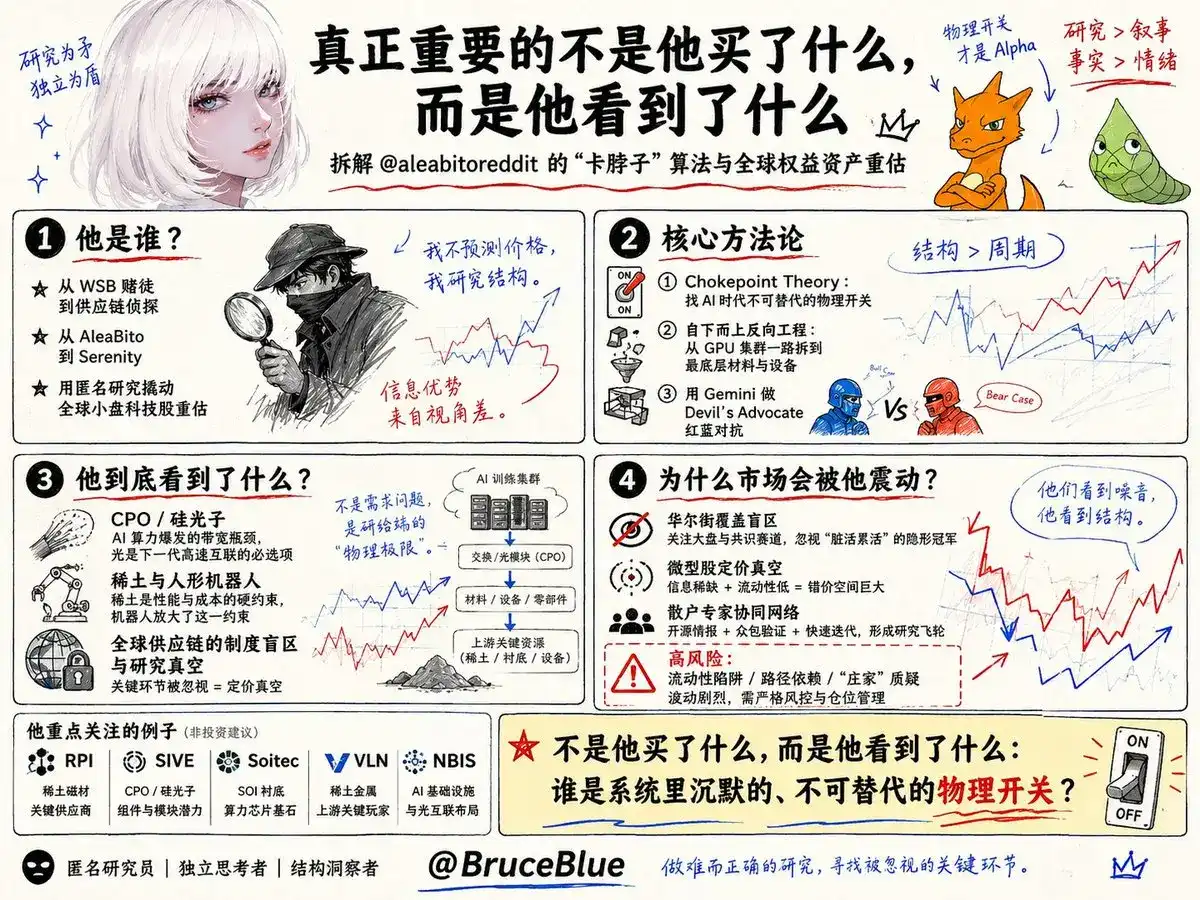
Предисловие
За последние несколько месяцев, если вы следите за рынком инфраструктуры ИИ, вам трудно было избежать имени: Serenity@aleabitoreddit
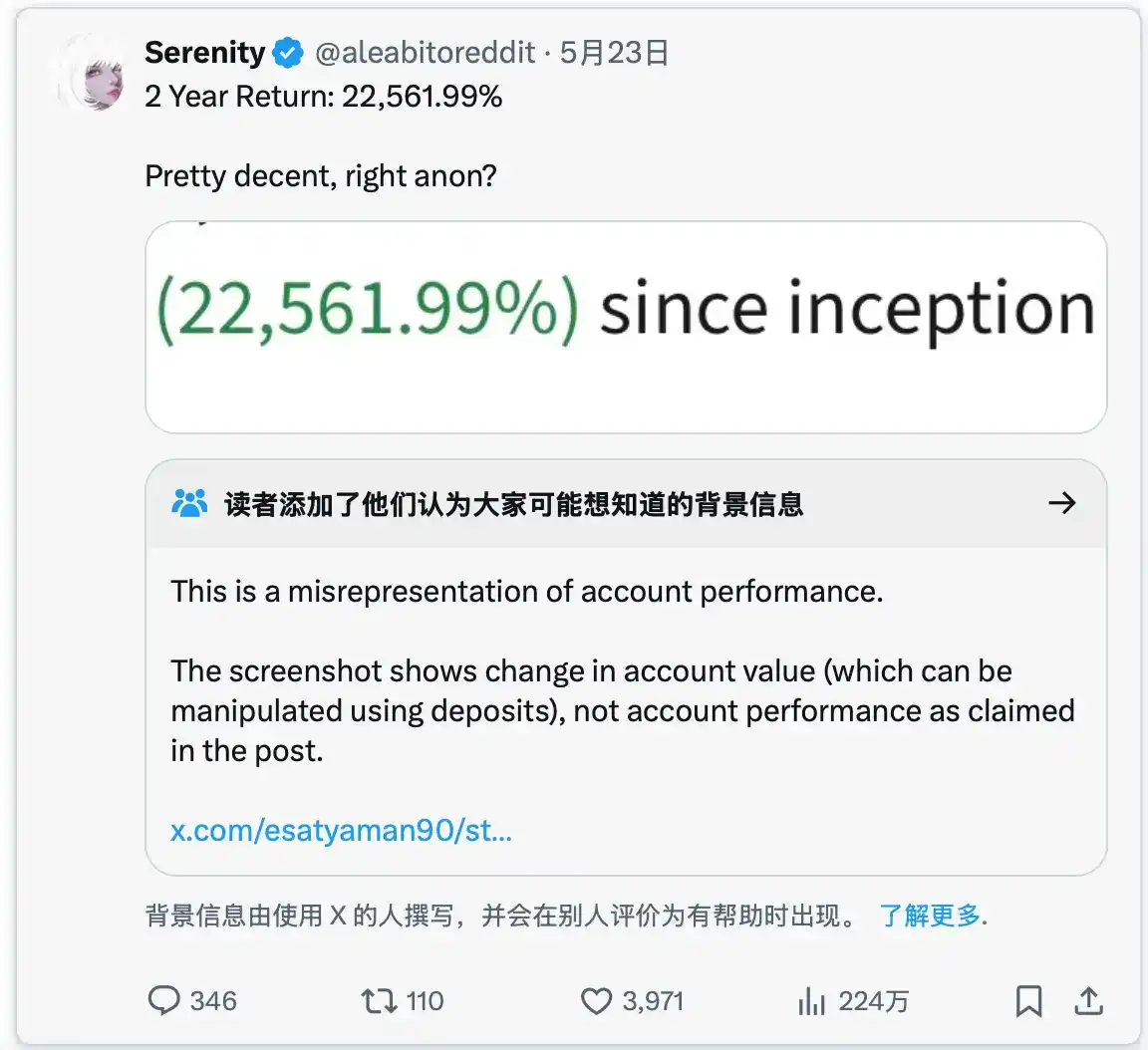
Бывший трейдер, которого навсегда заблокировали на Reddit WallStreetBets (WSB), сменил платформу, использовал аватарку в стиле аниме и собрал более 300 тысяч подписчиков менее чем за год. Его твит мог поднять акции из индекса FTSE 250 почти на 90% за два дня, его исследования цитировали Bloomberg и Reuters, а хедж-фонды даже копировали его сделки.
Рынок восхищается его доходностью в 22,561.99% за последние два года или сомневается в его непроверенном прошлом: "бывший исследователь ИИ", "автор статьи в Nature", "член фонда RISC-V", утверждая, что в 2018 году отказался от предложения работы руководителем команды ИИ в Nvidia, когда её акции стоили около $6.
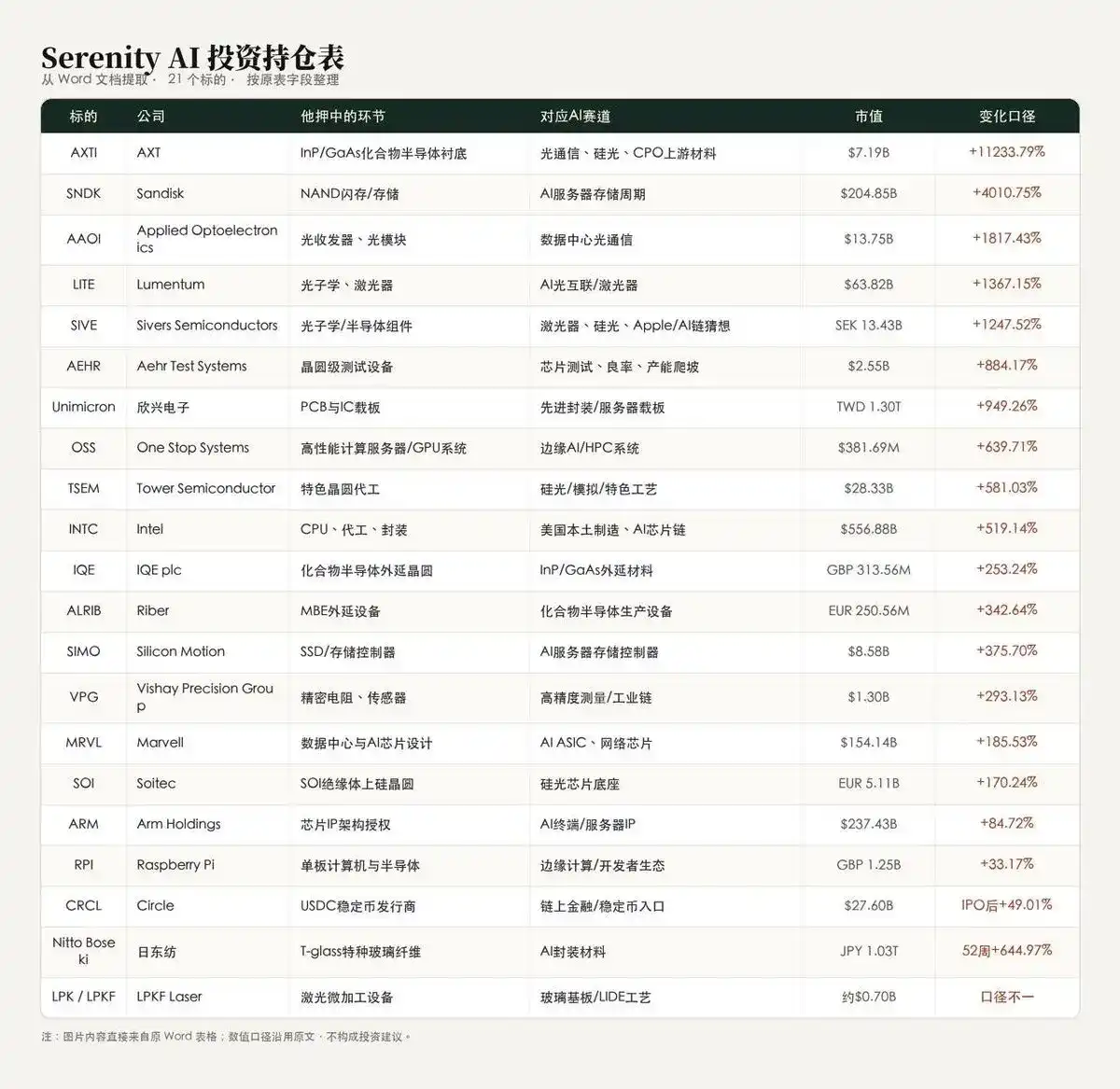
Список позиций Serenity в ИИ
Но важны не эти впечатляющие цифры и не то, публиковался ли он действительно в Nature.
Важно то, что он предоставил парадигму наблюдения за эпохой ИИ через призму обратного проектирования и совершил агрессивный арбитраж на информационной асимметрии в институциональной слепоте Уолл-стрит.
Ядро этой парадигмы он называет Теорией Узких Мест (Chokepoint Theory).
От игрока WSB до детектива цепочек поставок: трансформация личности
Сначала контекст. Его история началась в начале 2022 года на знаменитом форуме частных инвесторов Reddit r/wallstreetbets (WSB).
Тогда его аккаунт назывался AleaBito, с яркими чертами инвестора WSB, увлекался высоким плечом, высоким риском и крайне развлекательными опционами и IPO. Он совершил одностороннюю опционную сделку "YOLO" на $175,000 на IPO eToro ($ETOR), основываясь на пародийной логике, что график похож на "жирную часть голубого тунца (Торо)". В сделке с Hims & Hers Health ($HIMS) он распределил позицию в $100,000, основываясь на паттерне "формы качка (Gym Bro Formation)". Кроме того, он точно предсказал рост акций Super Micro Computer ($SMCI) выше $120, когда они были на минимуме, основываясь на развитии жидкостного охлаждения.
┌────────────────────────────────────────────────────────────────────────┐
│ Эволюционный путь @aleabitoreddit / Serenity
├────────────────────────────────────────────────────────────────────────┤
│ Этап на Reddit (до 2022): AleaBito
│ Стиль: сочетание глубокого финансового анализа и высокоразвлекательного повествования "инвестора WSB", предпочтение высокорисковым "YOLO"
│ Результаты: $ETOR (Торо), $HIMS (качок), $SMCI (прогноз роста выше $120 на дне)
│
│ Этап на X (2022 - настоящее время): Serenity
│ Стиль: фокус на аппаратном обеспечении центров обработки данных ИИ, кремниевой фотонике, передовой упаковке, обратное проектирование цепочки поставок "снизу вверх"
│ Результаты: $RPI, $SIVE, Soitec, $VLN, $NBIS
└────────────────────────────────────────────────────────────────────────┘
Переломный момент наступил в начале 2022 года. Он опубликовал на WSB глубокий отчёт о производителе подложек из сложных полупроводников, AXT Inc ($AXTI). Тогда рыночная капитализация $AXTI составляла всего $200 млн, акции около $12. Из-за профессионализма отчёта, который не вписывался в спекулятивную атмосферу форума, модераторы навсегда заблокировали аккаунт по обвинению в "намеренном манипулировании мнением" и "pump and dump".
После этого $AXTI взлетел до $70 на волне роста спроса на подложки для сложных полупроводников и фотоники, обеспечив прибыль более 1000% и став его "боевым крещением". Этот инцидент напрямую привёл к его переходу на платформу X и после смены имени на "Serenity" к полной концентрации на "узких местах" в ключевом полупроводниковом оборудовании и прецизионных цепочках поставок.
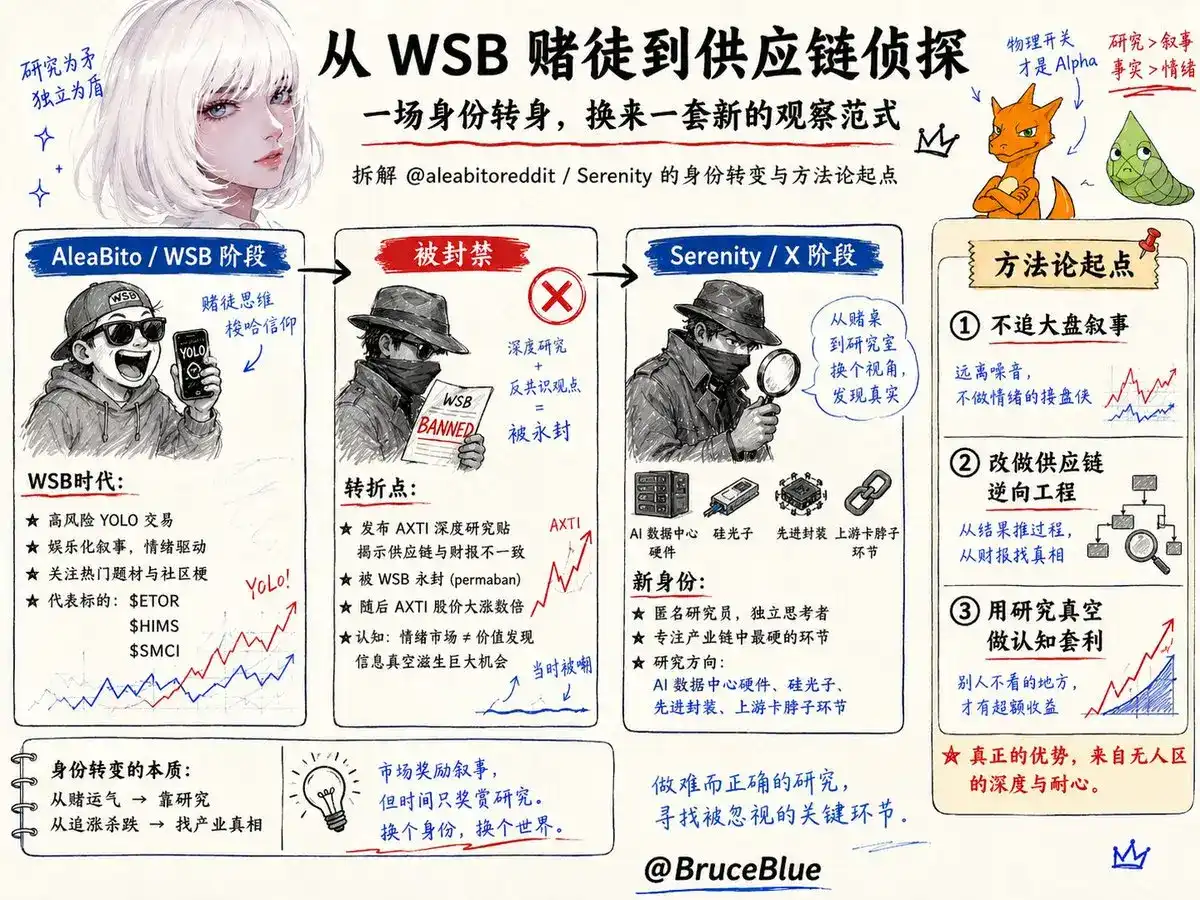
Ключевая структура: поиск "Ормузского пролива" в эпоху ИИ
Подавляющее большинство институциональных аналитиков Уолл-стрит смотрят на ИИ сверху вниз (Top-Down). Они следят за Nvidia, Microsoft, Google, вычисляют ориентиры капитальных затрат в триллионы, ведут ожесточённую математическую игру вокруг выручки следующего квартала.
У Serenity взгляд снизу вверх (Bottom-Up). Он использует модель обратного проектирования цепочки поставок.
Он берёт за физическую точку отсчёта GPU-кластеры суперкомпьютеров Nvidia H100, B200 и, разбирая их слой за слоем, доходит до сверхминиатюрных компонентов или сырья на физическом уровне, которые нельзя заменить и которые монополизированы одной или несколькими компаниями. Эти узкоспециализированные области тихо работают вне прожекторов рынка с триллионной капитализацией, но любой сбой поставок грозит физическим параличом всей нижестоящей индустрии ИИ.
Он называет эти узлы "узкими местами" (Choke Points), сравнивая их с Ормузским проливом, контролирующим глобальные потоки нефти, или незаметным, но незаменимым листом периллы в дорогом токийском кайсэки.
- Интеграция физической и географической координатных карт
Serenity построил точную глобальную карту физических и геополитических "узких мест" полупроводниковой индустрии. Эта карта охватывает акции США, Тайваня, Европы и Японии, интегрируя географические координаты производственных цехов каждой нишевой компании, барьеры технологических патентов, геополитические риски и экспортный контроль разных стран. При новых геополитических конфликтах, экспортных запретах или публикации отчётов он может быстро определить конкретный физический узел на карте цепочки поставок и использовать свои концентрированные позиции для высокоопределённых направленных ставок.
- Аверсивное тестирование аргументов с помощью ИИ
Перед публикацией любого инвестиционного предположения у Serenity есть уникальный процесс "красно-синих" аргументов. Он вводит черновик исследования в разные большие языковые модели, приказывая ИИ играть роль крайне требовательного "адвоката дьявола" (Devil's Advocate), специально находя уязвимости в его инвестиционной логике, технические физические ограничения, угрозы альтернатив и потенциальные ошибки в оценке. Только пройдя через многоуровневый технический и логический допрос от ИИ, он публикует отчёт.
Физические барьеры в кремниевой фотонике и совместно упакованной оптике (CPO)
В карте цепочек поставок Serenity физическая эволюция инфраструктуры вычислительной мощности ИИ в центрах обработки данных — его ключевая инвестиционная тема.
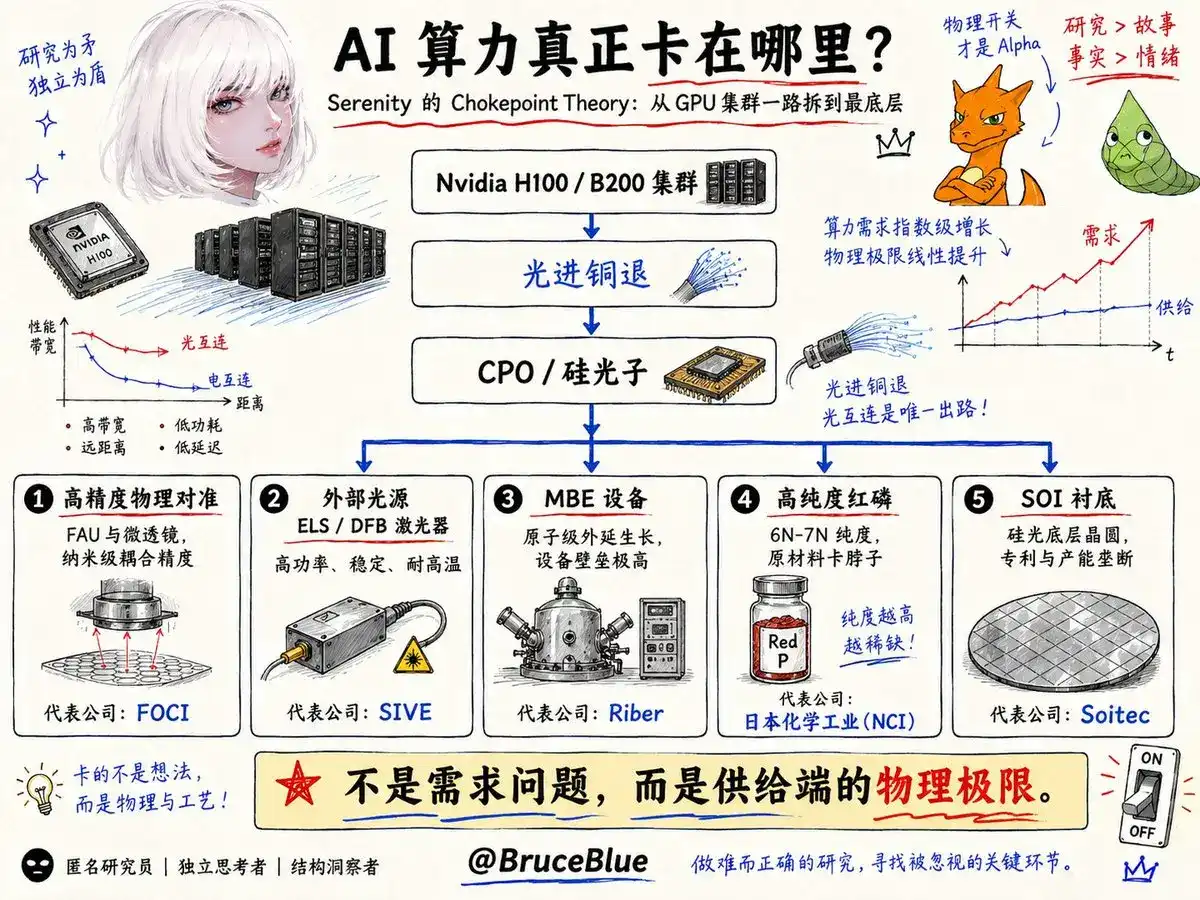
С экспоненциальным ростом параметров больших языковых моделей, соединение кластеров из десятков, сотен тысяч или даже миллионов GPU становится физическим узким местом для масштабирования вычислительной мощности. При экстремально высоких скоростях передачи данных традиционные медные соединения сталкиваются с непреодолимыми физическими ограничениями: высокое затухание высокочастотных электрических сигналов в меди, неконтролируемые электромагнитные помехи, а также высокое энергопотребление и проблемы с охлаждением.
Чтобы пробить эту "медную стену", процесс перехода от электрических сигналов к оптическим для передачи данных с высокой пропускной способностью и низкой задержкой, "оптика вместо меди", стал неизбежным путём в строительстве инфраструктуры ИИ. Передний край этого физического перехода — это архитектура "совместно упакованной оптики" (Co-Packaged Optics, CPO), продвигаемая такими гигантами, как TSMC и Nvidia.
Основная идея CPO — интеграция чипов оптико-электрического преобразования и ключевых вычислительных чипов непосредственно на одну подложку многокристального корпуса, сокращая расстояние передачи электрических сигналов внутри корпуса до миллиметров. В этой революционной архитектуре Serenity выделил пять основных "узких мест" — технологических физических барьеров:
Диаграмма обратного проектирования CPO (совместно упакованной оптики) от Serenity:
Кластеры Nvidia H100/B200 (потребность в соединении десятков тысяч карт)
│
▼
Оптика вместо меди (преодоление физических пределов меди: затухание, энергопотребление, тепло)
│
▼
┌────────────────────────────────────────────────────────────────────────┐
│ Пять физических барьеров кремниевой фотоники и CPO (узкие места)
│
│ 1. Высокоточное физическое выравнивание: блок массива волокон (FAU) и микролинзы
│ → $FOCI (Frontier Optical, Тайвань): незаменимое физическое узкое место
│
│ 2. Внешний источник света (ELS) и высокомощные DFB-лазеры непрерывного действия (CW)
│ → $SIVE (Sivers, Швеция): крайне редкий физический актив для 1.6T LRO/CPO
│
│ 3. Барьеры в оборудовании для молекулярно-лучевой эпитаксии (MBE)
│ → $ALRIB (Riber, Франция): глобальный монополист, держит "за горло" производителей эпитаксиальных пластин
│
│ 4. Высокочистое сырьё: красный фосфор (чистота 6N-7N, т.е. 99.9999%+)
│ → NCI (Nippon Chemical Industrial, Япония): монополия нескольких японских химических гигантов
│
│ 5. Базовая пластина: подложка кремний на изоляторе (SOI)
│ → Soitec (Франция): патент Smart-Cut, абсолютный глобальный монополист по технологиям и производству
└────────────────────────────────────────────────────────────────────────┘
- Барьер высокоточной физической юстировки
Поскольку размеры оптических волноводов внутри кремниевого фотонного чипа обычно составляют субмикронный уровень, требуется нанометровое физическое выравнивание между внешним оптическим волокном и волноводом. Любое малейшее смещение приводит к значительным "потерям оптического соединения". Serenity первым в англоязычном мире систематически связал тайваньскую компанию Frontier Optical (FOCI, 3363.TW), которая пользуется большим вниманием у местных инвесторов, с глобальной эволюцией технологии CPO.
- Барьер внешнего источника света (ELS) и высокомощных DFB-лазеров непрерывного действия
Кремний, как полупроводник с непрямой запрещённой зоной, не может эффективно излучать свет при электрической инжекции. Архитектура CPO должна полагаться на независимый внешний источник света, обеспечивающий высокомощный лазер непрерывного действия. Этот лазер должен поддерживать одномодовый режим работы в условиях высоких температур и давления в центре обработки данных, требования к технологии крайне высоки. Шведская компания Sivers Semiconductors ($SIVE), котирующаяся в Стокгольме, благодаря наличию соответствующей технологии стала крайне редким физическим активом в цепочке поставок внешних источников света для CPO.
- Барьер оборудования для молекулярно-лучевой эпитаксии (MBE)
В производстве эпитаксиальных пластин для сложных полупроводников, таких как высокомощные лазеры, ключевым физическим процессом является молекулярно-лучевая эпитаксия (MBE), позволяющая выращивать ультратонкие кристаллические плёнки с атомарной точностью. Serenity определил абсолютного монополиста в оборудовании MBE: французскую компанию Riber ($ALRIB).
- Барьер высокочистого красного фосфора
Производство сложных полупроводников (например, подложек из фосфида индия) требует экстремально высокой чистоты сырья. Serenity провёл обратное проектирование до самого базового химического элемента: высокочистого красного фосфора (чистота 99.9999%+). Производственные мощности почти полностью монополизированы несколькими японскими гигантами, такими как Nippon Chemical Industrial (NCI). Любое нарушение поставок остановит всю нижестоящую цепочку.
- Барьер подложки кремний на изоляторе (SOI)
Базовая пластина для кремниевого фотонного чипа требует использования пластин SOI. Французская компания Soitec благодаря своему эксклюзивному патенту Smart-Cut обладает абсолютной глобальной монополией на технологии и производство пластин SOI для кремниевой фотоники, даже японский гигант Shin-Etsu Chemical должен платить ей роялти за лицензию.
Антропоморфные роботы и геополитическая игра с "физическими переключателями" редкоземельных ресурсов
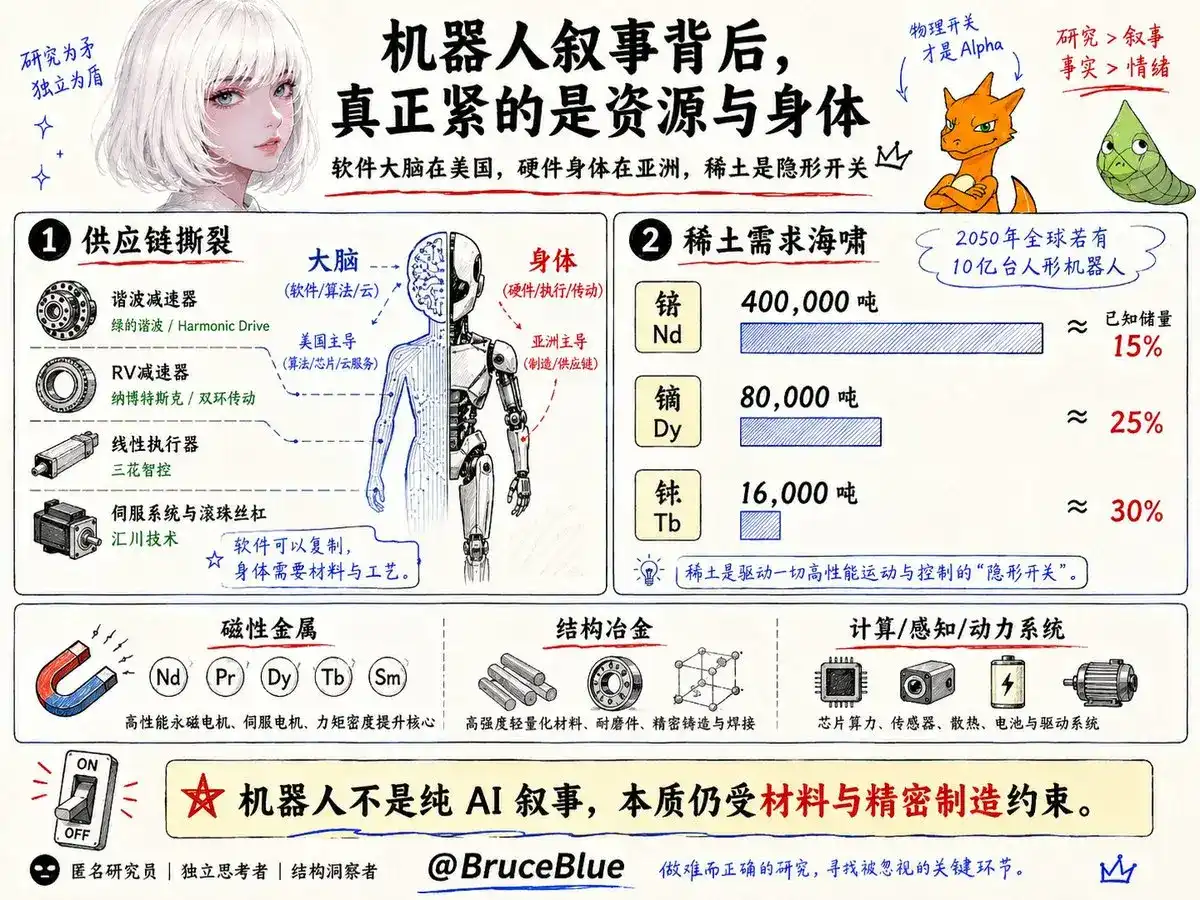
В 2026 году Serenity расширил свою карту "узких мест" до геополитической игры в области антропоморфных роботов (Humanoid Robots) и редкоземельных элементов (Rare Earth Elements).
- Разрыв цепочки поставок между программным "мозгом" и аппаратным "телом"
Обсуждения Tesla Optimus в основном сосредоточены на алгоритмах ИИ и больших моделях, но игнорируют смертельный физический факт: США проигрывают гонку в производстве аппаратного обеспечения и материалов для антропоморфных роботов.
"Мозг" антропоморфного робота остаётся в США, но компоненты "тела", отвечающие за движение (суставы, актюаторы, редукторы и т.д.), почти полностью контролируются азиатскими производителями:
- Гармоничные редукторы: Leader Harmonious Drive (Китай), Harmonic Drive (Япония)
- RV-редукторы: Nabtesco (Япония), Shuanghuan Driveline (Китай)
- Линейные актюаторы: Sanhua Intelligent Controls (Китай)
- Сервосистемы и шарико-винтовые пары: Inovance Technology (Китай)
Чтобы снизить затраты, американские компании-робототехники уже подписали долгосрочные контракты с этими китайскими и японскими гигантами. Эта высокая зависимость означает, что любые геополитические трения приведут к физической остановке аппаратной цепочки поставок.
- "Цунами спроса" на редкоземельные элементы и модель Morgan Stanley
Serenity ссылается на прогнозную модель спроса Morgan Stanley для количественного анализа: если к 2050 году мировой парк антропоморфных роботов достигнет 1 миллиарда единиц, их потребление ключевых редкоземельных ресурсов вызовет катастрофическое "цунами спроса":
- Неодим (Nd): совокупное потребление около 400,000 тонн (15% от мировых известных запасов)
- Диспрозий (Dy): совокупное потребление около 80,000 тонн (25% от мировых известных запасов)
- Тербий (Tb): совокупное потребление около 16,000 тонн (30% от мировых известных запасов)
Это физически необходимые элементы для поддержания работы постоянных магнитов в двигателях без размагничивания при высоких температурах. Serenity подчёркивает, что западному капиталу для обеспечения безопасности цепочек поставок необходимо направить десятки миллиардов долларов на восстановление локальной экосистемы рафинирования редкоземельных элементов.
На основе этого он выделил три материальные сферы, которые необходимо внимательно отслеживать:
- Магнитные металлы: лёгкие редкоземельные (неодим, празеодим), тяжёлые редкоземельные (диспрозий, тербий), специальные магниты (самарий, кобальт).
- Конструкционная металлургия: материалы для прецизионных шестерён (титан, ванадий, молибден), добавки для высокопрочной стали (ниобий, хром, никель, марганец), антифрикционные элементы (церий, лантан).
- Вычислительные, сенсорные и силовые системы: передовые полупроводники (галлий, германий), батареи и проводка (потребление на один робот: 2 кг лития, 3 кг графита, 6.5 кг меди).
Примеры ключевых активов и оценка фактических результатов
Благодаря острому восприятию технологических барьеров и переломных моментов коммерциализации, Serenity успешно выявил и определил переоценку стоимости множества классических малокапитализированных технологических акций на разных глобальных рынках.
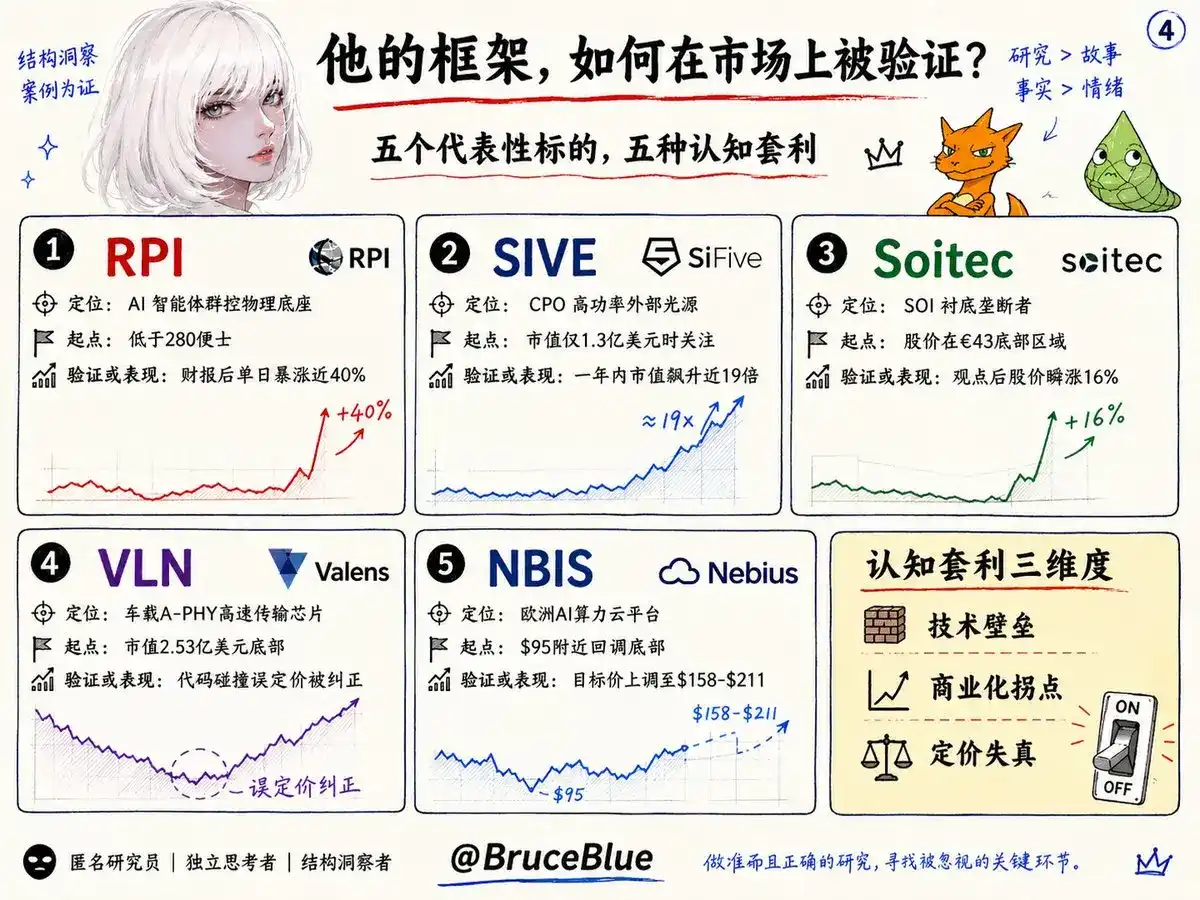
┌────────────────────────────────────────────────────────────────────────┐
│ Ключевые объекты инвестиций Serenity и проверка фактических результатов
├────────────────────────────────────────────────────────────────────────┤
│ $RPI (Raspberry Pi) | LSE, Великобритания
│ Позиционирование: физическая база для группового управления ИИ-агентами
│ Начальная точка: цена ниже 280 пенсов (цена IPO)
│ Подтверждение: отчёт за март 2026 года показал сильный рост прибыли, продажи чипов выросли на 47%, подтвердив логику его роли как базы для ИИ
│ Результат: в день отчёта акции выросли почти на 40%, отскок от дна более 60%
│
│ $SIVE (Sivers) | Стокгольм, Швеция
│ Позиционирование: ключевой поставщик высокомощных DFB-лазеров внешнего источника света для кремниевой фотоники CPO
│ Начальная точка: рыночная капитализация всего $130 млн на момент рекомендации
│ Подтверждение: стратегическое партнёрство с Jabil, получение $6.6 млн поддержки по американскому CHIPS Act
│ Результат: рыночная капитализация выросла почти в 19 раз в течение года после рекомендации (сейчас более $2.3 млрд)
│
│ Soitec | Париж, Франция
│ Позиционирование: глобальный патентный и производственный абсолютный монополист на ключевые подложки SOI для кремниевой фотоники
│ Начальная точка: цена акций в области дна €43
│ Подтверждение: включён TSMC и Nvidia в список эксклюзивных материалов категории 1
│ Результат: в день публикации его точки зрения цена акций на европейском рынке мгновенно взлетела на 16%
│
│ $VLN (Valens) | NYSE, США
│ Позиционирование: чипы высокоскоростной передачи данных A-PHY для автомобилей
│ Начальная точка: дно с рыночной капитализацией $253 млн (на момент рекомендации: денежные средства $93.5 млн, нулевой долг, прогноз маржи около 60-62%)
│ Подтверждение: указал на ошибку оценки из-за столкновения тикеров в сканерах
│ Результат: указав на "баг" столкновения тикеров, направил рынок на "разминирование" и переоценку этого актива
│
│ $NBIS (Nebius Group) | NASDAQ, США
│ Позиционирование: крупнейший в Европе провайдер облачных услуг на базе кластеров ИИ GPU/Rubin
│ Начальная точка: область дна коррекции около $95
│ Подтверждение: чистые денежные средства $3.7 млрд (конец 2025), неисполненные контракты приближаются к $50 млрд
│ Результат: вернулся на траекторию быстрого роста, целевые цены аналитиков повышены до $158-$211
└────────────────────────────────────────────────────────────────────────┘
Глубокий анализ: три измерения арбитража знаний
- Raspberry Pi $RPI: модель относительной стоимостной игры
Когда рынок рассматривал Raspberry Pi как производителя образовательных компонентов в состоянии спада, Serenity уловил радикальные изменения в экосистеме разработчиков ИИ: множество стартапов скупают Raspberry Pi в качестве физически изолированной базы для развёртывания "систем группового управления ИИ-агентами". Если покупать Mac Mini от Apple, эта волна накопления незаметна на фоне капитализации Apple в $3.7 трлн; но для Raspberry Pi с капитализацией всего £500 млн — это трансформационный импульс.
- Valens Semiconductor $VLN: арбитраж на информационной асимметрии из-за столкновения тикеров
У $VLN чистые денежные средства $93.5 млн, нулевой долг, прогноз маржи около 60-62%, контракт на предустановку в Mercedes, но рыночная капитализация всего $253 млн. Serenity обнаружил физический баг: глобальные сканеры для количественного отбора акций имеют "ошибку столкновения торговых кодов", путая данные $VLN с данными канадской энергетической акции $VLO, что приводит к серьёзному искажению ключевых показателей. Он точно указал на расхождения, направив капитал на "разминирование" и переоценку.
- Nebius Group $NBIS: поимка глубокого дна при механической панике
Как ведущий европейский провайдер специализированных облачных услуг для ИИ, $NBIS из-за сложных механических операций хеджирования с конвертируемыми облигациями на раннем этапе столкнулся с алгоритмическим давлением продаж, и цена упала до $95. Serenity указал, что это "механическая паника, не связанная с фундаментальными факторами". По цене $95 рынок дал этой компании с прогнозом выручки на 2026 год в $3-3.4 млрд (рост почти в 6 раз), имеющей миллиарды чистых денежных средств, абсурдно высокую скидку.
Координация частного капитала и потенциальные структурные риски
- Сеть координации экспертных частных инвесторов
В рамках Serenity частные инвесторы больше не являются просто "лохами", предоставляющими ликвидность или слепо следующими за трендом, они переформированы в "сеть координации экспертных частных инвесторов". Традиционный WSB полагается на краткосрочный гамма-сквиз опционов или эмоциональные мемы для роста. В отличие от этого, Serenity через свои полностью бесплатные, технически сложные анализы провёл глубокую "интеллектуальную фильтрацию" своих последователей.
Такая высокопрофессиональная координация капитала позволяет им быстро объединять усилия на множестве крайне неликвидных, удалённых микрокапитализированных рынках, которые не охватываются крупными банками Уолл-стрит, и доминировать в ценообразовании ключевых активов.
- Институциональные слепые зоны и арбитраж на информационной асимметрии
Аналитики крупных институтов связаны внутренним комплаенсом, минимальными порогами капитализации (например, не охватывают акции ниже $1 млрд) и региональным разделением труда (аналитики по США не пишут исследования по Швеции или Тайваню). Это создаёт огромные пробелы в исследованиях глобальных цепочек поставок. Serenity, как полностью анонимный независимый исследователь, игнорирует барьеры капитализации и региона, напрямую направляя глобальный капитал быков на насильственное заполнение этих вакуумов.
- Структурные риски и потенциальные дилеммы игры
Однако слепое следование этой стратегии сопряжено с трудноизбежными смертельными рисками:
- Истощение ликвидности и риск давки (Liquidity Traps): дневной объём торгов микрокапитализированных акций крайне низок. При синхронном входе частных инвесторов цена мгновенно взлетает; если технология не соответствует ожиданиям, узкие выходные каналы приведут к резкой давке.
- Поляризация общественного мнения и обвинения в "организованной игре": опытные медведи резко критикуют это, по сути, как "pump and dump с высокоинтеллектуальной академической оболочкой". Его игровые характеристики, использующие огромную медийную мощь для привлечения частных инвесторов в качестве подъёмной силы, держат его в тени потенциальных обвинений в нарушении правил.
- "Смертельное минное поле" зависимости от единственного физико-технологического пути: все ключевые позиции Serenity построены на предположениях, что "CPO — единственный путь физической эволюции" и "антропоморфные роботы достигнут взрывного роста до миллиарда единиц". Это крупная ставка. Если Nvidia обнаружит непреодолимые инженерные тупики в CPO и переключится на передовые тонкоплёночные медные кабели, или если Запад не сможет восстановить цепочку разделения редкоземельных элементов, вся его империя цепочек поставок, построенная на кремниевой фотонике, SOI, оборудовании MBE и тяжёлых редкоземельных элементах, будет физически разрушена в мгновение ока.
В заключение: использование глубины гика для атаки на широту финансов
Следить за Serenity нужно не для получения кода быстрого обогащения, а для получения аналитической структуры, ломающей консенсус.
В эту эпоху информационной перегрузки самая большая ошибка частных инвесторов — соревноваться с институтами в скорости получения информации или торговать макроэкономическими данными, которые уже полностью учтены в цене. Serenity показал другую возможность: использовать обратное проектирование для деконструкции системы, использовать ИИ в роли "адвоката дьявола" для проверки своей логики, искать те тихие шестерёнки, которые действительно управляют работой системы.
Вам не нужно становиться следующим Serenity. Вам не нужно покупать ни одну из акций, которые покупает он.
Но вы должны научиться задавать вопрос, как он:
В этой системе кто является тем тихим, незаменимым физическим переключателем?
Если вы можете ответить на этот вопрос, вы уже имеете на один угол зрения больше, чем 99% участников рынка. Остальное — просто ждать, пока рынок догонит ваше понимание.
Отказ от ответственности:
Данная статья не является инвестиционной рекомендацией.
Вся информация о личности Serenity является его собственными заявлениями и не подтверждена третьими лицами.
Его исторические результаты не гарантируют будущих показателей.
Перед принятием любого инвестиционного решения проводите независимое исследование.
NFA. DYOR.