Пока что цикл 2026 года остается медвежьим рынком.
Примечательно, что одним из четких сигналов является снижение рыночной капитализации стейблкоинов вместе с ценами на криптовалюты. В первом квартале USDT упал на 1,6%, что показывает, что деньги уходили из криптовалют, а не оставались в стороне, как это было бы на бычьем рынке, где инвесторы держат "сухой порох" для следующего рискованного шага.
Результат? Общая капитализация крипторынка упала на 20,8% за тот же период, что подтверждает медвежий тренд.
Инвесторы не покупали на падениях. Вместо этого они выходили из рынка. TOTAL2 (капитализация за вычетом BTC) упал на 19,17%, что означает, что капитал не перетекал и в альткоины, что лишь усугубляет медвежью картину.
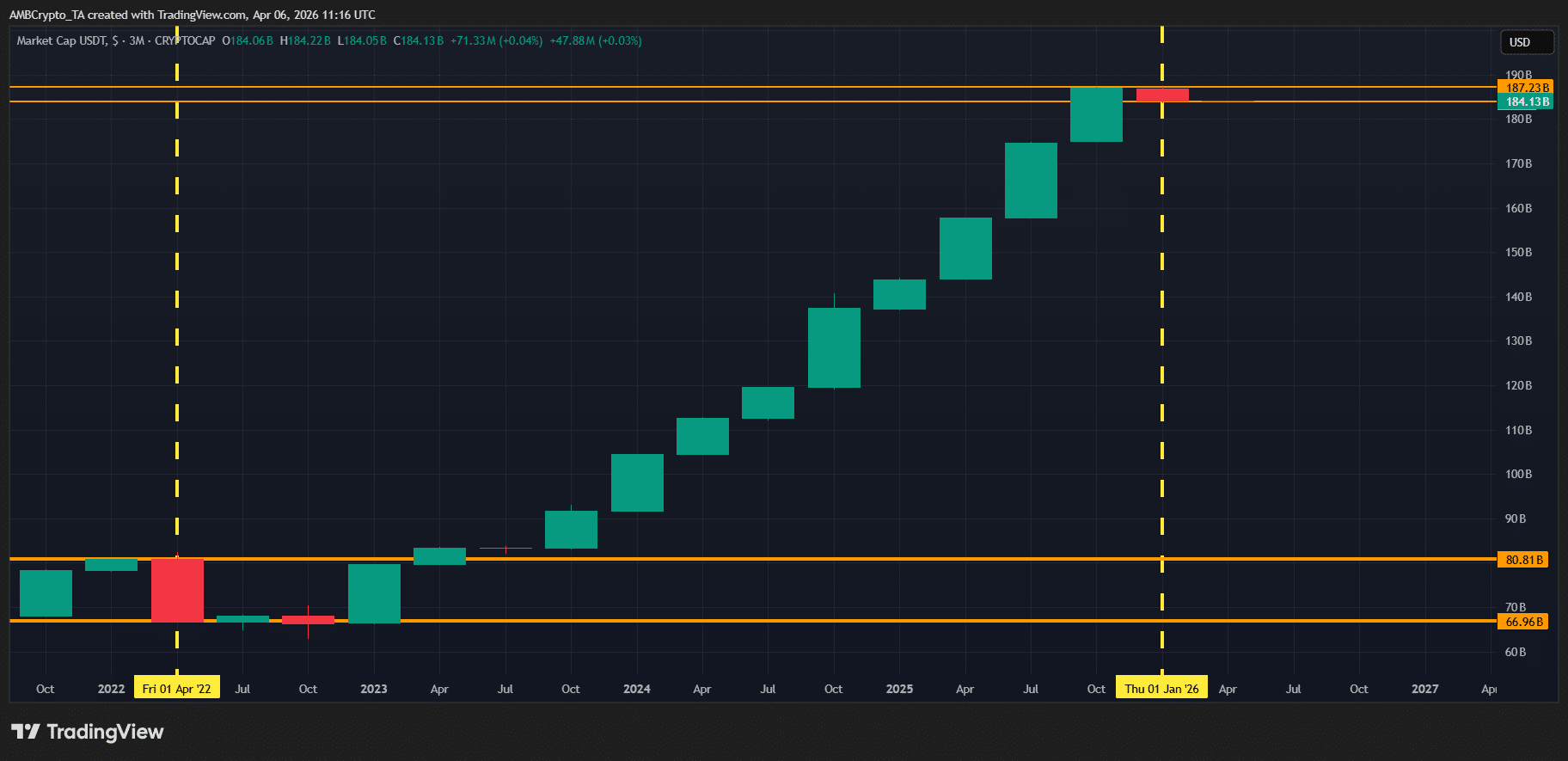
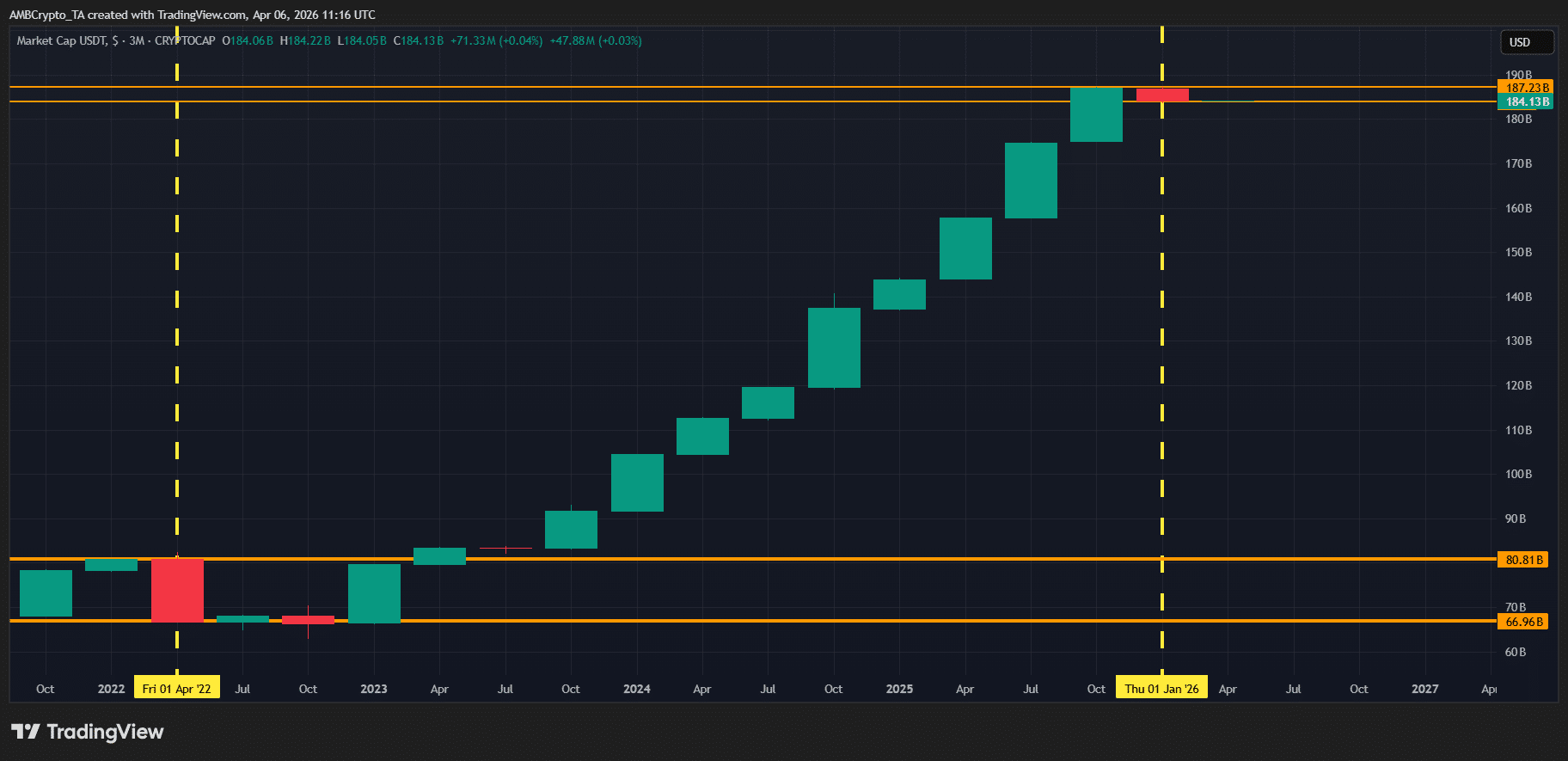
По сути, стейблкоины сыграли центральную роль в определении тренда крипторынка в первом квартале.
По данным AMBCrypto, именно здесь становится актуальным недавний отчет 10x Research.
В нем подчеркивается, что эмиссия USDT в сети Ethereum [ETH] недавно опередила Tron [TRX], с почти 2.6%-ным месячным скачком объема на ETH. Это сокращает разрыв с TRX, который теперь всего на 1% выше, что сигнализирует о начале притока ликвидности в сети с большой капитализацией, что согласуется с общим ростом рыночной капитализации криптовалют на 1.6% к настоящему моменту в апреле.
С технической точки зрения, это сочетание растущей рыночной капитализации и притока стейблкоинов является значимым.
Когда стейблкоины возвращаются в крупные сети, это suggests that investors are redeploying capital. Такого рода потоки часто формируют базу для ценовой поддержки, и мы уже видим это в действии.
ETH вырос на 1.87% от своего открытия на уровне $2.1 тыс., подтверждая, что эта конфигурация набирает обороты.
Естественно, возникает вопрос: с возвращением в игру стейблкоинов, может ли этот импульс закладывать основу для более широкого ралли во втором квартале, потенциально разворачивая медвежий тренд первого квартала?
Потоки стейблкоинов достигают крупных сетей, рынок присматривается к потенциальной основе для ралли
Помимо функции хеджирования или моста, стейблкоины часто выступают ранним сигналом рыночной активности.
Ярким примером является недавняя активность вокруг Solana [SOL].
Circle выпустила $3.25 миллиарда USDC на Solana всего за 7 дней, что стало крупнейшей недельной эмиссией в 2026 году. Этот внезапный приток ликвидности в сеть закономерно raises questions about investor intent and market positioning.
Но на этом все не заканчивается.
Согласно Artemis Terminal, месячные изменения предложения стейблкоинов в сети Ethereum достигли ошеломляющих $10.3 миллиарда, что является крупнейшим показателем среди всех сетей L1. Это "скоординированное" увеличение предложения стейблкоинов в крупных сетях suggests that investors are actively redeploying capital.
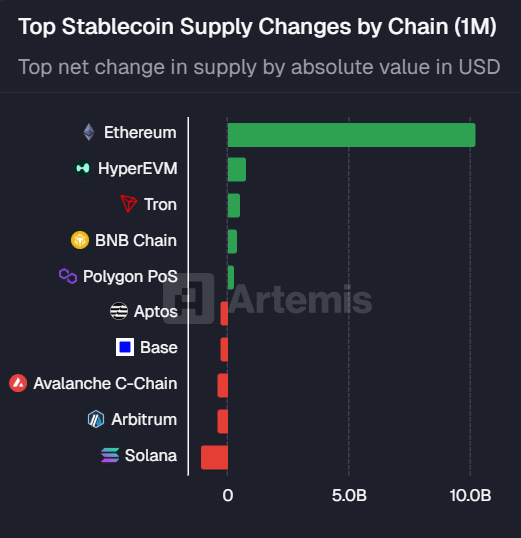
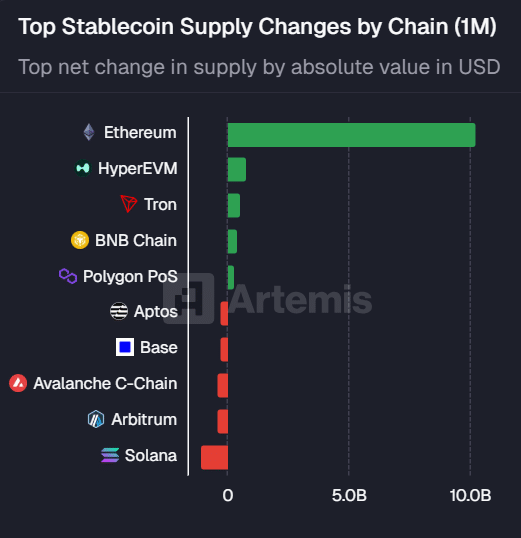
Следовательно, ключевой вопрос теперь звучит так: Обладают ли эти эмитенты информацией о возможностях или рисках, которые широкая рынок еще не учел?
Согласно отчету 10x Research, относительная недооцененность Ethereum, по-видимому, является движущей силой большей части этого притока.
С технической точки зрения, Ethereum упал на 57% с своего пика в августе 2025 года, что делает его относительно дешевым, особенно по сравнению с Bitcoin, который за тот же период упал примерно на 42%.
Это особенно значимо, учитывая, что доминирование BTC продолжает встречать сопротивление around 60%.
Добавляет momentum интеграция Уолл-стрит в DeFi, которая приносит на рынок институциональный капитал.
В совокупности эти факторы suggest that Ethereum и другие высококапитализированные L1, возможно, готовятся к раннему импульсу во втором квартале, при этом потоки стейблкоинов выступают в роли опережающего индикатора того, куда может двинуться капитал дальше.
Итоговое резюме
- Растущая эмиссия USDT в сети ETH и крупный выпуск USDC на SOL указывают на то, что капитал перераспределяется.
- При падении ETH на 57%, давлении на доминирование BTC и выходе Уолл-стрит на рынок DeFi, приток стейблкоинов может выступать в роли опережающего индикатора для импульса во втором квартале.







