Market Analysis

Delivers insights into price action, technical indicators, market forecasts, and future trends. Data-driven analysis helps investors understand market dynamics and identify potential opportunities for informed decision-making.

Senior Analyst Dialogue: What Powell's Departure and Warsh's Appointment Mean for Crypto?

The podcast episode "Powell Is Out, Warsh Is In: What It Means for Crypto" features an analysis by Noelle Acheson on the macro-economic landscape and its implications for crypto. Key discussion points include: * **Equity-Bond Divergence:** Acheson highlights a significant and growing disconnect between stock and bond markets. While bond yields rise globally, signaling tighter financial conditions, equities are driven by AI-related hype and speculation, reminiscent of the 1999 dot-com bubble. * **'Bliss Trade' and Systemic Fragility:** The discussion explores the concept of a structural, cross-party government expectation to provide fiscal support ("Bliss Trade"), which underpins risk asset valuations and carries its own systemic vulnerabilities. * **Inflation Outlook:** Acheson argues that inflation is not meaningfully declining, citing core CPI stagnation and attributing the trend to de-globalization, tariffs, and geopolitical tensions like the Strait of Hormuz crisis. * **Powell's Legacy:** Powell's tenure receives mixed marks. While his defense of Fed independence is noted, he is also criticized for overseeing the "de-banking" of crypto firms in 2023 and initially misjudging inflation. * **Outlook for Warsh:** Expectations for the incoming Fed Chair, Kevin Warsh, are measured. While he may aim to reduce Fed balance sheet size and forward guidance, market realities and the FOMC will likely constrain his ability to enact significant policy shifts, particularly rate cuts. * **Crypto as a Macro Asset:** Bitcoin's role is framed as a hedge against currency debasement, benefiting from expectations of monetary stimulus. However, its maturation as a macro asset means it now competes with other high-volatility investments like AI stocks, potentially limiting near-term price catalysts. * **Market Structure & Tokenization:** The potential Clarity Act is seen as more beneficial for assets like Ethereum than Bitcoin, which already has relative regulatory clarity. Concerns are raised about "innovation exemptions" for tokenization if they enable third-party derivatives that encourage pure speculation over capital formation. In conclusion, the analysis suggests crypto markets lack a near-term positive catalyst and are caught between competing macro narratives, with significant underlying fragilities in traditional markets.

marsbit05/22 09:29

Senior Analyst Dialogue: What Powell's Departure and Warsh's Appointment Mean for Crypto?

marsbit05/22 09:29

Wall Street Giants Vie for GPU Futures, Crypto Market Already in Early Skirmish

Wall Street giants CME and ICE are racing to launch GPU futures, marking a pivotal shift as computing power transforms from a critical IT resource into a tradable financial asset. In mid-May, both exchanges announced plans for futures contracts tied to GPU compute pricing indices, aiming to establish a benchmark and provide hedging tools for the volatile, trillion-dollar AI compute market. ICE partnered with data provider Ornn for a broad index covering enterprise and consumer GPUs, while CME teamed with Silicon Data to focus on an H100 leasing index with cash settlement. This push for financialization addresses a key industry pain point: the lack of risk management tools in a market dominated by a few cloud providers, where prices are opaque and highly unstable. Proponents argue futures will help large cloud operators and AI labs lock in costs and manage investment risk. However, challenges remain, including the intangible nature of compute, high market concentration, and the potential for leveraged speculation to exacerbate price swings and resource inequality. Notably, the crypto market has moved faster. Platforms like Architect Financial have already launched perpetual contracts tied to compute indices, leveraging DeFi's agility to create a parallel, global market. As Wall Street awaits regulatory approval, the race to define and control the pricing of "21st-century oil" is accelerating both in traditional and decentralized finance.

marsbit05/22 07:42

Wall Street Giants Vie for GPU Futures, Crypto Market Already in Early Skirmish

marsbit05/22 07:42

BIT Research: After U.S.-China Summit, Markets Begin Repricing "Long-Term Competition"

The market is undergoing a macro repricing driven by geopolitics and policy expectations. Initial interpretations of the recent U.S.-China summit as a signal of eased tensions triggered a risk-on rally, boosting tech stocks and Bitcoin while weakening the dollar. However, as details emerged, this optimism faded due to a lack of concrete progress on tariffs, AI export controls, or key geopolitical issues like Taiwan and Iran. Inflation concerns have resurfaced, renewing selling pressure on bonds and precious metals. Longer-term, the summit underscored ongoing strategic competition: a marginal decline in dollar dominance, a push for diversified global reserve assets, AI and semiconductor supply chain restructuring, and intensified rivalry in frontier tech like low-earth orbit satellites. Bitcoin's price action mirrored high-beta tech stocks more than a structural hedge, highlighting its continued sensitivity to risk appetite and liquidity over traditional safe-haven characteristics. While the meeting yielded modest outcomes like a U.S. agricultural purchase pledge and continued dialogue mechanisms, it primarily reflects "managed competition." Structural tensions remain unresolved in areas like tech and geopolitics, affirming trends toward strategic decoupling and prolonged geopolitical risk. The key for markets is the broader repricing of global liquidity, real yields, and this enduring competitive landscape.

marsbit05/22 03:22

BIT Research: After U.S.-China Summit, Markets Begin Repricing "Long-Term Competition"

marsbit05/22 03:22

Who is Selling, Who is Holding, Who is Still Buying? The Divergence of U.S. Old Money's Crypto ETF Holdings

"American Institutional Crypto ETF Holdings Show Divergence in Q1 2026. Amidst a quarter of market pullback, major institutional 13F filings reveal distinct strategies towards crypto ETFs. Key sell-offs/trimming: Harvard Management cut its iShares Bitcoin Trust (IBIT) holdings by ~43% and fully exited its iShares Ethereum Trust (ETHA) position, reallocating some funds toward AI/tech stocks. Goldman Sachs reduced its overall crypto ETF exposure, notably clearing its XRP and Solana ETF holdings while adding to selected crypto-related equities like Circle and Galaxy Digital. Hedge funds Millennium Management and Capula Management also significantly reduced or fully exited major Bitcoin and Ethereum ETF positions. Holders maintaining positions: Brown University kept its IBIT stake unchanged, demonstrating a long-term allocation approach. Dartmouth College maintained its core Bitcoin ETF holding while shifting some Ethereum exposure to a staking ETF and initiating a position in a Bitwise Solana Staking ETF. Strategic buyers increasing exposure: Sovereign wealth fund Mubadala increased its IBIT holdings by ~16%. JPMorgan significantly boosted its IBIT stake by 174%, while Wells Fargo raised its Ethereum ETF allocations. Market maker Jane Street rebalanced, cutting Bitcoin ETF holdings but adding ~$82 million in Ethereum ETF exposure. The filings indicate institutions are actively sorting crypto assets by perceived risk and liquidity, with Bitcoin often treated as a 'core' holding, Ethereum facing mixed treatment, and altcoins like Solana and XRP being the first to be cut or used for tactical 'elastic' allocations by some. It's crucial to note that 13F data is a lagging snapshot (as of March 31) and doesn't reveal entry costs or potential off-balance-sheet hedging strategies."

marsbit05/22 02:59

Who is Selling, Who is Holding, Who is Still Buying? The Divergence of U.S. Old Money's Crypto ETF Holdings

marsbit05/22 02:59

SpaceX and OpenAI Are Rushing to Go Public. Is Wall Street Ready?

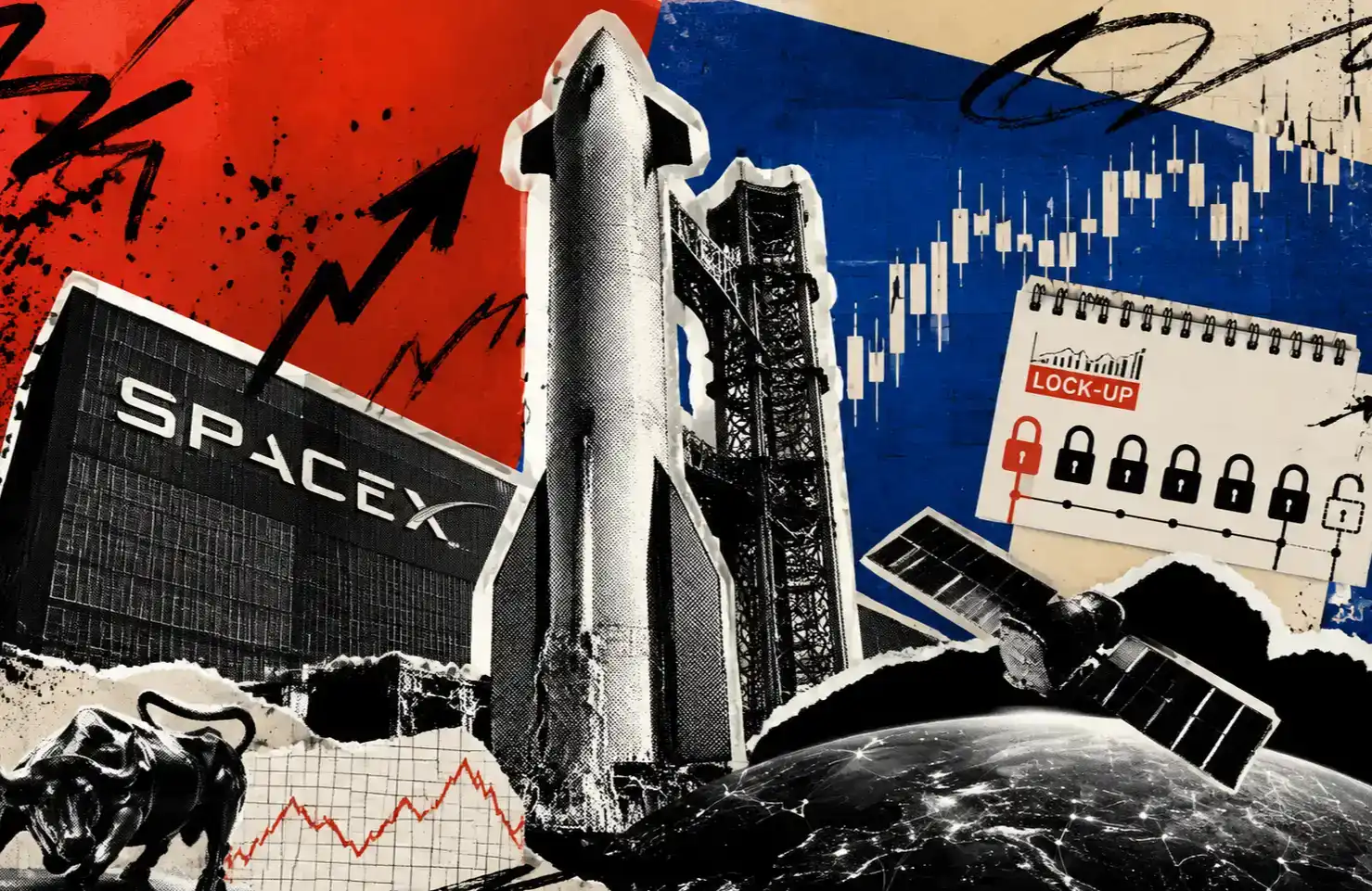
SpaceX and OpenAI Rush to IPO: Is Wall Street Ready? SpaceX and OpenAI, led by former partners turned rivals Elon Musk and Sam Altman, are on a collision course to go public, igniting a potential Wall Street showdown. SpaceX filed for an IPO targeting a staggering $1.75-$2 trillion valuation. Its financials are starkly divided: while the Starlink (Connectivity) segment is profitable, these earnings are being consumed by massive losses in its core Aerospace business (rocket/Starship development) and the newly integrated AI business, formerly xAI. The entire IPO narrative hinges on investors betting that Starlink can fund Musk's long-term vision of orbital AI data centers, lunar infrastructure, and Mars colonization. OpenAI, following its legal victory over Musk, is reportedly preparing a secret IPO filing with a target to list by September. Its move is framed as a necessary "lifeline." Despite high revenue, OpenAI is burning cash at an alarming rate. Facing intense competition from rivals like Anthropic (which is nearing profitability) and pressure to sustain enormous compute costs, the IPO is seen as a critical step to secure public market funding for survival. Both companies present investors with a high-stakes gamble on future value versus present-day financial realities. SpaceX's valuation is a bet on unproven, capital-intensive space-based infrastructure. OpenAI's hinges on AI becoming a foundational platform, despite current monetization challenges and heavy losses. Their IPOs test whether Wall Street will pay a historic premium for these grand, long-term narratives or demand more conventional proof of near-term profitability, potentially setting the stage for a significant market reckoning.

marsbit05/22 01:40

SpaceX and OpenAI Are Rushing to Go Public. Is Wall Street Ready?

marsbit05/22 01:40

活动图片