Market Analysis

Delivers insights into price action, technical indicators, market forecasts, and future trends. Data-driven analysis helps investors understand market dynamics and identify potential opportunities for informed decision-making.

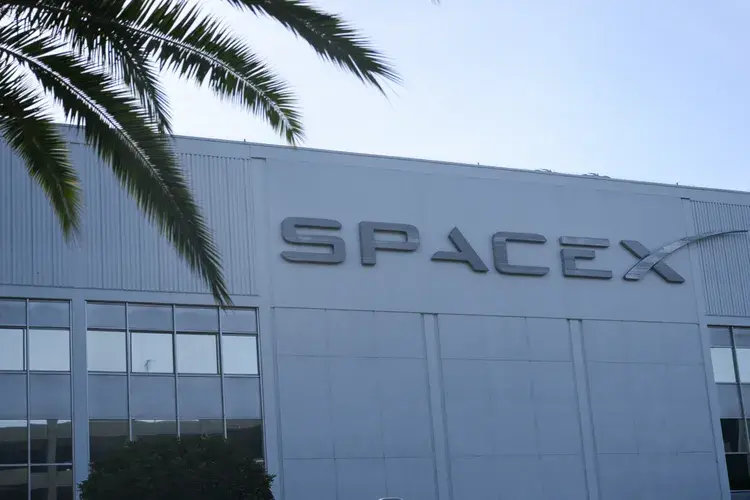
SpaceX IPO Rush: A Capital Feast That Could Reshape the Landscape of AI and Crypto

SpaceX's potential IPO is emerging as a pivotal event that could reshape the landscape for both AI and Crypto markets. Far more than a traditional aerospace offering, SpaceX represents the core of Musk's future-tech ecosystem, with its Starlink satellite network positioning it as a global digital infrastructure company. This shift could redefine the foundational layers of the internet, communication, and data flow. Historically, major tech capital market movements, like AI booms or Bitcoin ETF approvals, have profoundly influenced crypto cycles. The SpaceX IPO could trigger a similar "super-narrative" fusion, boosting investor sentiment toward future digital infrastructure. This is particularly relevant for Crypto, which aims to build decentralized versions of such global systems. Key crypto sectors likely to benefit include: * **DePIN (Decentralized Physical Infrastructure Networks):** Projects like Render, Filecoin, and Helium, which incentivize real-world infrastructure for compute, storage, and connectivity. * **AI Crypto:** Platforms such as Bittensor and Fetch.ai, which leverage blockchain for decentralized AI computation, data markets, and agent economies. * **On-chain Payments & SocialFi:** Ecosystems like Solana and Ton, which could gain traction if Musk's X platform integrates digital payments and stablecoins. Ultimately, the IPO symbolizes a broader capital re-evaluation of core digital-age assets—networks, AI, data, and decentralized systems—aligning closely with crypto's long-term vision. It may act as a catalyst, redirecting global tech investment flows toward the crypto space as the next chapter in digital infrastructure unfolds.

marsbit05/20 13:35

SpaceX IPO Rush: A Capital Feast That Could Reshape the Landscape of AI and Crypto

marsbit05/20 13:35

Why Are the Most Believers in AGI Buying NVIDIA Put Options?

The article analyzes the significant, market-moving 13F filing for Q1 2026 by Situational Awareness LP (SALP), a fund managed by former OpenAI researcher Leopold Aschenbrenner. While Aschenbrenner is a prominent believer in the accelerated arrival of AGI and has built the fund as a focused bet on AI infrastructure, the filing revealed large new put option positions (totaling billions in notional value) on key AI/semiconductor names like Nvidia, SMH ETF, Broadcom, and AMD. The article argues this is not a bearish turn on AI but a sophisticated hedging strategy. Given the macro backdrop in late March (rising oil prices, inflation concerns, higher-for-longer interest rates), the fund is managing volatility in its high-beta, high-valuation portfolio of AI infrastructure plays (like Bloom Energy, CoreWeave, Core Scientific). The puts act as "insurance" against a potential systemic pullback in the AI trade. Simultaneously, SALP maintained or added to core long positions in companies tied to power, data centers, compute, and storage—the "bottlenecks" expected to capture AI capital spending. It trimmed or exited some Q1 winners (e.g., Lumentum) and reduced leverage (e.g., selling CoreWeave calls), suggesting a rotation from crowded, high-momentum trades towards assets with clearer long-term fundamental pathways. The key takeaway is an evolution in the AI investment theme: from a broad, linear rally to a more discerning, "show-me-the-money" phase. The focus shifts from simply buying the AI narrative to identifying companies that can convert capex into tangible revenue, while actively managing portfolio risk in a volatile macro environment. The strategy reflects a move from unilateral bullishness to "offense with defense."

marsbit05/20 12:23

Why Are the Most Believers in AGI Buying NVIDIA Put Options?

marsbit05/20 12:23

AI Saved a Group of New Energy Investors

The article "AI Saves a Group of New Energy Investors" details a remarkable turnaround in the green energy investment sector, driven by its convergence with artificial intelligence infrastructure. After a prolonged downturn marked by valuation slumps and funding cold spells since 2022, the sector has experienced a dramatic resurgence in 2026. This shift is attributed to new policies, particularly the "AI-Energy Synergy" national strategy, which mandates green power and energy storage systems for new large-scale computing centers. This redefines green electricity and storage from traditional manufacturing into core, indispensable assets for AI's operational backbone, creating a new narrative where "computing power equals electricity, and green power equals assets." This paradigm change is reflected in surging market performance. Power stocks like Datang Power have seen massive gains, and green energy ETFs have recorded significant capital inflows. The IPO market is also active, with companies like Sige New Energy listing successfully. Investment and financing have accelerated sharply, with major expansion projects and large-scale IPOs like China Resources New Energy's record-breaking offering. Notably, some top projects have seen valuations rebound by approximately 60%. The article highlights that the previous industry trough became a prime investment window. With AI-driven demand predicted to create massive power shortfalls (e.g., a projected 55GW gap for data centers), sectors like energy storage, grid upgrades, and green power are seeing explosive growth. Investors are now prioritizing areas like power management, large-scale storage, virtual power plants, and supporting technologies like liquid cooling—the "pick-and-shovel" plays of the AI infrastructure boom. Examples like KKR's highly successful investment in cooling company CoolIT Systems underscore the lucrative opportunities. In conclusion, the integration with AI has sparked a fundamental revaluation of new energy assets. For investors who endured the sector's低谷, a harvest season has arrived, with the broader investment upswing seemingly just beginning.

marsbit05/20 11:53

AI Saved a Group of New Energy Investors

marsbit05/20 11:53

Warsh's First Conundrum: Rate Cuts, Inflation, and a Fractured Fed

Walsh's First Dilemma: Rate Cuts, Inflation, and a Divided Fed Kevin Warsh officially assumed the Fed Chairmanship on May 15th, inheriting a central bank deeply divided over inflation. Contrary to market expectations of a dovish stance due to his appointment by President Trump, Warsh's historical record shows early and consistent hawkish concerns about inflation. The Fed he leads is fractured, with three FOMC members recently dissenting against even hinting at future rate cuts. The immediate challenge is surging inflation. While the Iran-related oil shock is a temporary factor, core CPI and services inflation are accelerating, showing signs of becoming entrenched—echoing the Fed's 2022 "transitory" misstep. Warsh faces the task of building consensus within a committee where several members believe policy may not be restrictive enough, especially if the neutral interest rate (r-star) is higher than currently estimated. Politically, Warsh is caught between Trump's desire for rate cuts and the economic reality of persistent price pressures. Any move perceived as bowing to political pressure could undermine Fed independence. Market implications are significant. Long-term Treasury yields (e.g., 30-year at 5.19%) could rise further, especially if the June FOMC statement hints at possible tightening. Tech stocks face continued valuation pressure from higher rates. The key variable is progress in Iran negotiations; a breakthrough before the June meeting could temporarily ease oil-driven inflation, but stubborn services inflation would remain. All eyes are on Warsh's first post-FOMC press conference on June 17th. His wording on inflation and policy will reveal how much the market has mispriced his stance and the Fed's likely path forward.

marsbit05/20 10:01

Warsh's First Conundrum: Rate Cuts, Inflation, and a Fractured Fed

marsbit05/20 10:01

NVIDIA Earnings Countdown: Beating Expectations Is a Near Certainty, but Wall Street Is Most Concerned About These Five Questions

NVIDIA Earnings Countdown: Beating Expectations is a Given, but Wall Street Cares Most About These Five Issues The upcoming NVIDIA Q1 earnings report is expected to easily surpass the consensus revenue estimate of ~$78.7B. However, Wall Street's focus has shifted from the numbers themselves to five key strategic questions. **1. Shareholder Returns: Will "Frugality" Change?** Despite being the S&P 500's largest company, NVIDIA's shareholder returns (dividends + buybacks) averaged only 47% of its free cash flow from 2022-2025, far below the 80% peer average and its own historical norm. Its 0.02% dividend yield also lags the peer average of 0.89%. This low cash return, partly due to investments in AI ecosystem partners, is cited as a core reason for NVIDIA's valuation discount compared to other "Magnificent 7" stocks. Increasing returns could attract long-term income funds and be a catalyst. **2. Vera Rubin: The Next-Gen Chip Timeline** Analysts expect the next-generation Vera Rubin (R200) platform to ramp in the second half of 2026, following the current Blackwell series. It will use TSMC's 3nm process and share Blackwell Ultra's "Oberon" rack architecture, suggesting a smooth transition with limited gross margin impact. The market also awaits any update on NVIDIA's $1 trillion cumulative revenue forecast for 2025-2027. **3. Gross Margin: Can the 75% Level Hold?** Gross margin, a key valuation support, is expected to stabilize in the near term due to the shared architecture between Blackwell and Vera Rubin. The consensus sees it fluctuating between 74-75%. The main long-term pressure is the rising cost contribution of HBM memory. **4. AI Accelerator Market Forecast Update** The report anticipates the total AI accelerator market will reach ~$1.17 trillion by 2030, with NVIDIA maintaining a 68-70% share. The focus is on whether NVIDIA will update its forecast to include new growth drivers: LPU racks, its Vera CPU, and the Vera Rubin Ultra platform. **5. Competition: Are Threats from Google TPU/CPU Overstated?** The analysis disputes narratives that the rise of "Agentic AI" elevates CPU importance over GPU, threatening NVIDIA. It notes NVIDIA's own "Vera CPU" is competitive, and current Blackwell/TPU clusters already use a 1:2 CPU-to-GPU ratio, contrary to the "more CPUs needed" story. NVIDIA's dominance in AI accelerators is seen as secure. **Valuation Discount:** NVIDIA trades at a significant discount to Mag-7 peers: ~50% based on CY26/27 P/E (26x/19x vs. 49x/42x avg.) and over 66% based on EV/FCF. Bank of America maintains a "Buy" rating with a $320 price target.

marsbit05/20 03:03

NVIDIA Earnings Countdown: Beating Expectations Is a Near Certainty, but Wall Street Is Most Concerned About These Five Questions

marsbit05/20 03:03

Why is HYPE Still Surging? Has It Topped Out?

The article analyzes the reasons behind the continued surge of the HYPE token, despite the current market conditions. The primary drivers identified are: 1. **ETF Inflows and a New Buyback Mechanism:** The launch of two ETFs (THYP by 21Shares and BHYP by Bitwise) has opened a channel for traditional capital. Crucially, Bitwise announced it will allocate 10% of BHYP's management fee income to acquire and stake HYPE, creating a potential source of recurring buy pressure linked to the ETF's growth. 2. **USDC Integration and New Revenue Stream:** The return of USDC to Hyperliquid, facilitated by Coinbase and Circle, is significant. It establishes a protocol revenue-sharing model from USDC reserve yields. Community estimates suggest this could generate substantial daily income (approx. $440k), which could be used for HYPE buybacks, decoupling token demand from just trading fees and linking it to the platform's stablecoin deposits. 3. **Expansion into New Markets:** Hyperliquid is broadening beyond being just a Perp DEX. Its HIP-4 feature launches it into the prediction market space, already showing high volume. This requires HYPE staking for market creation, directly increasing token utility and staking demand. Furthermore, the platform's Real-World Asset (RWA) trading has seen Open Interest hit a new high of $2.6B, indicating growth in trading traditional assets like stocks and commodities. 4. **Regulatory Tailwinds for RWA:** Potential SEC exemptions for tokenized stock trading could further accelerate Hyperliquid's RWA business, turning a niche into a major battleground for on-chain trading. In summary, the market is re-rating HYPE as Hyperliquid evolves from a single-purpose DEX into a comprehensive on-chain trading system with multiple growing revenue streams (trading fees, reserve yields, prediction markets) and expanding asset classes (crypto, RWAs). However, the article notes that despite the strong long-term fundamentals, short-term price action is currently volatile due to a large-scale showdown between whale long and short positions exceeding $60 million.

marsbit05/20 01:42

Why is HYPE Still Surging? Has It Topped Out?

marsbit05/20 01:42

活动图片