Cardano Or Solana? Expert’s Top Pick After ADA, SOL Dip 10%

bitcoinistОпубликовано 2026-06-03Обновлено 2026-06-03

Введение

The broader crypto market pulled back as Bitcoin briefly fell below $67,000, causing Solana (SOL) and Cardano (ADA) to each drop 10% weekly. Market expert Anders Bylund compared the two networks, ultimately favoring Solana. He frames Solana as a network built for speed and low transaction costs, though its history includes outages and technical issues, with stability improving recently. Cardano is described as taking a methodical, research-first approach focused on correctness and formal verification, which may slow development. In terms of practical usage, Bylund highlights Solana's significant lead, noting its decentralized exchanges handle over 400 times the volume of Cardano's. While acknowledging Cardano's dedicated community, he argues Solana's clear activity metrics make it the stronger pick for investors, who will be judged on real-world adoption rather than research elegance. The report adds a risk warning, stating both assets are volatile and would likely fall 50-70% if Bitcoin dropped 30%. At the time of writing, ADA traded at $0.21 (down 92% from its all-time high) and SOL at $76 (down 73% from its peak).

The broader crypto market pulled back as Bitcoin (BTC) briefly slipped below the $67,000 level on Tuesday, and that weakness quickly spread to other major chains. In the weekly timeframe, Solana (SOL) and Cardano (ADA) each recorded a 10% retrace.

Against that backdrop, market expert Anders Bylund of The Motley Fool published a fresh comparison of the two networks—followed by a clear call on which one he believes is the better pick at this stage.

Solana’s Quick History

Bylund frames Solana as a network built for speed first. In his account, Solana’s ledger is designed to handle a large number of transactions per second and to finalize them under sub-second deadlines.

He also notes that the user experience on Solana has been shaped by very low costs, with transaction fees coming out in fractions of a cent. But speed can come with complications, and Solana’s history includes them.

The report points out that the network has gone down more than once, with outages that reportedly lasted as long as 19 hours. Bylund also references headline-grabbing problems from earlier years, including ledger congestion in 2022 and a data-cleaning error in 2023.

Since then, the narrative has improved. Solana has stabilized, and the expert notes that the network hasn’t reported an incident since January 2024. Even so, he argues that “we’re more reliable now” is not as persuasive as a track record of consistent reliability over the long term.

Key Contrasts Between Solana And Cardano

Cardano, in contrast, represents a different philosophy. Bylund says every upgrade on Cardano goes through academic peer review, and the platform’s Haskell-based codebase is designed for formal verification. The result, in his description, is a chain that tends to break less often, but also one that may not ship new features as rapidly.

Solana’s supporters emphasize that speed is what attracts users. Cardano’s advocates argue that correctness and verification matter more, especially for long-term trust.

The comparison then shifts from ideology to activity—what these networks are actually doing in practice. Here, Bylund says Solana shows clearer signs of real-world usage. He highlights that Solana-based decentralized exchange (DEX) platforms have more than 400 times the DEX volume of Cardano.

Cardano also has activity, but Bylund portrays it as less visible in on-chain metrics. He describes the Cardano community as loyal and engaged, but suggests that loyalty doesn’t show up in the same measurable way as Solana’s usage does.

Risks Could Deepen If Bitcoin Falls

From there, Bylund’s decision is direct: Solana is the stronger pick right now. He acknowledges that no crypto bet is guaranteed, but he says the usage lead is difficult to ignore.

In his view, Cardano’s research-first approach is intellectually appealing, but investors will be judged—two years from now—less by the “elegance of the research process” and more by whether people are actually building and using the network in real applications.

The report also includes a reality check on risk. Neither Solana nor Cardano, Bylund says, should be viewed as a “calm ride.” If Bitcoin drops 30%, he argues that these altcoins can be expected to fall by roughly 50% to 70%.

The daily chart shows ADA’s drop on Tuesday, mirroring the broader crypto market’s retrace. Source: ADAUSDT on TradingView.com

At the time of writing, Cardano’s native token, ADA, was trading at $0.21, while SOL was trading at $76. Over the past 24 hours, both assets recorded losses of a little over 5%. However, the longer-term view shows that ADA is currently 92% below its all-time high, whereas SOL is 73% below its peak.

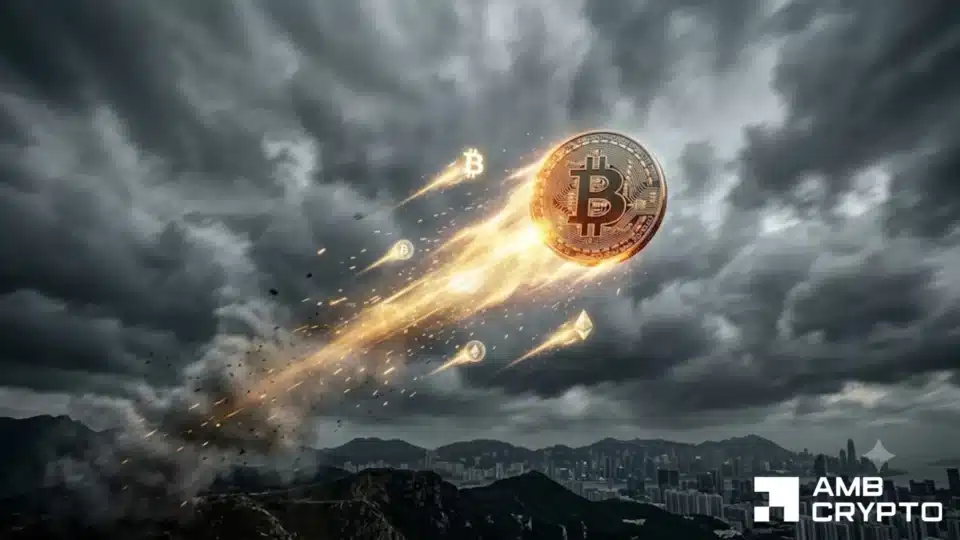
Featured image created with OpenArt; chart from TradingView.com

Связанные с этим вопросы

QWhat is the expert's top pick between Cardano and Solana after both assets dipped 10%?

AThe expert's top pick is Solana, as he believes it is the stronger pick currently due to its clearer signs of real-world usage and lead in on-chain activity.

QAccording to the expert, what are the key philosophical differences between Solana and Cardano in their development approaches?

ASolana is built for speed and low transaction costs first, while Cardano prioritizes academic peer review, formal verification, and correctness, which may result in slower feature deployment but potentially greater reliability.

QWhat on-chain metric does the expert cite to demonstrate Solana's advantage over Cardano in terms of real-world usage?

AThe expert highlights that Solana-based decentralized exchange (DEX) platforms have more than 400 times the DEX volume of Cardano's platforms.

QWhat does the expert say about the potential downside risk for Solana and Cardano if Bitcoin's price falls significantly?

AThe expert warns that neither is a 'calm ride.' If Bitcoin drops 30%, he argues these altcoins could be expected to fall by roughly 50% to 70%.

QHow far are ADA and SOL currently trading below their respective all-time highs, as mentioned in the article?

AAt the time of writing, ADA is trading 92% below its all-time high, while SOL is 73% below its peak.

Похожее

CPU, Quietly Returning to the Center of the AI Computing Power Stage

Over the past three years, AI computing power narratives have been dominated by GPUs. However, starting in 2026, this story began to shift. While training large models remains GPU-intensive, the rapid growth of inference and AI agent workloads, which require high levels of task orchestration, concurrency, and data flow management, has highlighted a renewed critical role for CPUs. These are tasks GPUs are not designed to handle. Intel's recent launch of the Xeon 6+ processor, built on its Intel 18A process and featuring up to 288 efficiency cores (E-cores), exemplifies this strategic pivot. It is positioned not as a mere companion to GPUs but as the essential "control plane" for AI infrastructure, optimized for high-density, energy-efficient, and high-throughput workloads characteristic of AI agents and inference. This "CPU resurgence" is not about CPUs outperforming GPUs in raw computation. It reflects a systemic bottleneck: as AI scales from training single models to deploying countless intelligent agents, the demand for coordination and data handling surges. Major cloud providers are also developing their own high-density ARM-based server CPUs for similar workloads. However, Intel's success with this strategy faces significant challenges. Competition includes NVIDIA's integrated CPU-GPU solutions, the expanding adoption of cloud vendors' in-house ARM CPUs, and the crucial market test of Intel's 18A manufacturing process against rivals like TSMC's N2. In conclusion, CPUs are indeed reclaiming a central, though redefined, role in AI compute—managing the complex orchestration that enables massive-scale AI deployment. While the trend is clear, which company will ultimately lead this CPU resurgence remains an open question to be decided in the data centers of 2027 and beyond.

marsbit7 мин. назад

CPU, Quietly Returning to the Center of the AI Computing Power Stage

marsbit7 мин. назад

After Collaborating with 35+ DeFi Projects, Pink Brains Discovers the New 2026 KOL Marketing Rules

After collaborating with over 35 leading DeFi projects on marketing over three years, Pink Brains identifies a key shift for effective marketing in 2026: prioritizing the user journey over traditional campaign tactics. The most effective marketing mirrors how users actually behave—starting with discovery on social platforms like X (formerly Twitter), followed by data-driven verification on sites like DefiLlama, and finally, participation with small test funds. Success hinges on genuine, verifiable mechanisms, not just marketing hype. Current user interest centers on several key themes: new DeFi trends (RWA, perps, crypto x AI), meaningful airdrops requiring real contributions, real yield from protocol revenue, and tokens with value capture mechanisms directly tied to product usage. Case studies like Hyperliquid's HYPE (with its aggressive buyback program) and Venice's VVV (linking demand to AI compute) exemplify how strong tokenomics foster user retention. New trading venues like prediction markets, collectibles platforms, and GambleFi are also gaining traction, driven by verifiable activity. The article outlines common mistakes in DeFi KOL marketing, such as using creators unfamiliar with the product, generic messaging, or relying on a few top-tier KOLs. Instead, effective strategies align with different KOL types—educators, content creators, airdrop hunters, and niche experts—for various stages of the user journey. Ultimately, long-term user retention depends on a combination of a genuinely useful product, responsive support, community-aligned tokenomics, and strategic community building. The core takeaway is that sustainable growth stems from products whose value is validated by data and real-world utility, not just promotional efforts.

marsbit26 мин. назад

After Collaborating with 35+ DeFi Projects, Pink Brains Discovers the New 2026 KOL Marketing Rules

marsbit26 мин. назад

Торговля

Спот
Фьючерсы

Популярные статьи

Как купить S

Добро пожаловать на HTX.com! Мы сделали приобретение Sonic (S) простым и удобным. Следуйте нашему пошаговому руководству и отправляйтесь в свое крипто-путешествие.Шаг 1: Создайте аккаунт на HTXИспользуйте свой адрес электронной почты или номер телефона, чтобы зарегистрироваться и бесплатно создать аккаунт на HTX. Пройдите удобную регистрацию и откройте для себя весь функционал.Создать аккаунтШаг 2: Перейдите в Купить криптовалюту и выберите свой способ оплатыКредитная/Дебетовая Карта: Используйте свою карту Visa или Mastercard для мгновенной покупки Sonic (S).Баланс: Используйте средства с баланса вашего аккаунта HTX для простой торговли.Третьи Лица: Мы добавили популярные способы оплаты, такие как Google Pay и Apple Pay, для повышения удобства.P2P: Торгуйте напрямую с другими пользователями на HTX.Внебиржевая Торговля (OTC): Мы предлагаем индивидуальные услуги и конкурентоспособные обменные курсы для трейдеров.Шаг 3: Хранение Sonic (S)После приобретения вами Sonic (S) храните их в своем аккаунте на HTX. В качестве альтернативы вы можете отправить их куда-либо с помощью перевода в блокчейне или использовать для торговли с другими криптовалютами.Шаг 4: Торговля Sonic (S)С легкостью торгуйте Sonic (S) на спотовом рынке HTX. Просто зайдите в свой аккаунт, выберите торговую пару, совершайте сделки и следите за ними в режиме реального времени. Мы предлагаем удобный интерфейс как для начинающих, так и для опытных трейдеров.

1.4k просмотров всегоОпубликовано 2025.01.15Обновлено 2026.06.02

Как купить S

Sonic: Обновления под руководством Андре Кронье – новая звезда Layer-1 на фоне спада рынка

Он решает проблемы масштабируемости, совместимости между блокчейнами и стимулов для разработчиков с помощью технологических инноваций.

2.3k просмотров всегоОпубликовано 2025.04.09Обновлено 2025.04.09

Sonic: Обновления под руководством Андре Кронье – новая звезда Layer-1 на фоне спада рынка

HTX Learn: Пройдите обучение по "Sonic" и разделите 1000 USDT

HTX Learn — ваш проводник в мир перспективных проектов, и мы запускаем специальное мероприятие "Учитесь и Зарабатывайте", посвящённое этим проектам. Наше новое направление .

1.8k просмотров всегоОпубликовано 2025.04.10Обновлено 2025.04.10

HTX Learn: Пройдите обучение по "Sonic" и разделите 1000 USDT

Обсуждения

Добро пожаловать в Сообщество HTX. Здесь вы сможете быть в курсе последних новостей о развитии платформы и получить доступ к профессиональной аналитической информации о рынке. Мнения пользователей о цене на S (S) представлены ниже.

活动图片