Canopy Introduces ‘Progressive Autonomy’: A New Framework That Makes Launching a Blockchain Easy

TheNewsCryptoОпубликовано 2025-12-15Обновлено 2025-12-15

Введение

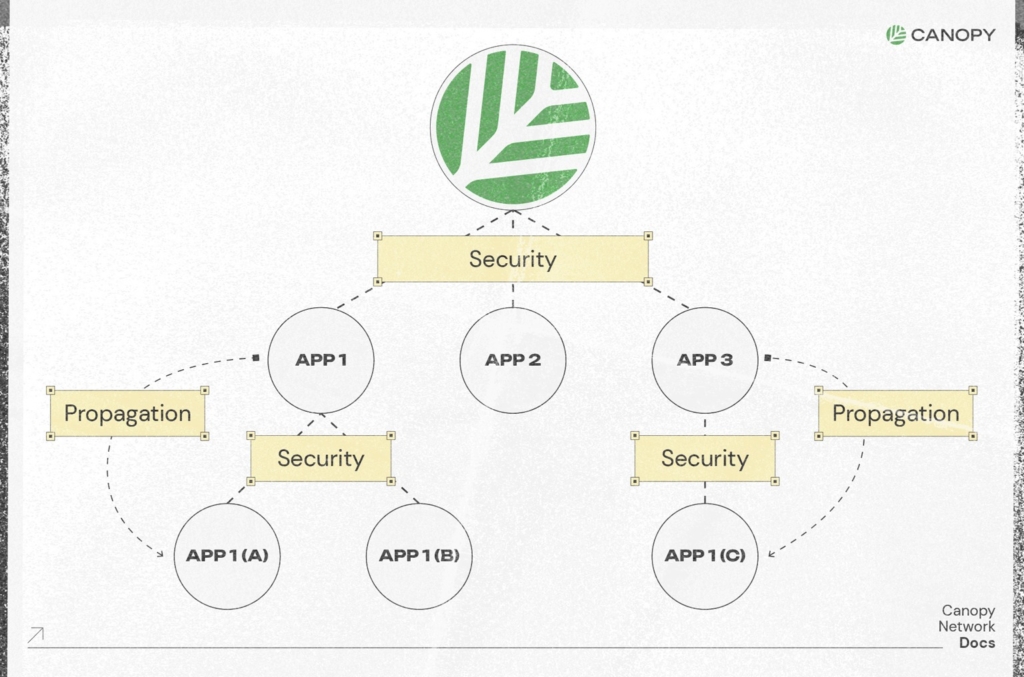
Canopy has introduced "Progressive Autonomy," a new framework designed to simplify blockchain deployment while preserving long-term sovereignty and value capture. This model allows developers to launch a sub-chain secured by Canopy’s validator network, customize it as it grows, and eventually graduate to a fully independent Layer 1 (L1) without rewriting core infrastructure or assembling a costly security budget. The framework addresses the limitations of both L2 rollups, which often sacrifice decentralization and value retention, and traditional L1s, which require significant time, capital, and engineering effort. With shared restaked security from a network of professional validators, projects can launch quickly without relying on token inflation or external security markets. Canopy’s VM-less architecture also supports development in any language and allows execution environment customization. When ready, projects can transition to a sovereign L1, retaining their history, state, and economics while gaining full control over governance and performance. The Betanet is already live with support from leading validators, and mainnet launch is planned for 2026.

Florida, USA, [15 December 2025] Canopy, the company building a next-gen Layer 1 (L1) framework with the simplicity of a Layer 2 (L2), introduces Progressive Autonomy, a new deployment model built to make launching a blockchain dramatically easier while preserving full long-term sovereignty and value capture. The framework provides developers with a complete lifecycle: teams can launch as a sub-chain secured by Canopy’s validator network, customize their chain as it matures, and graduate to an independent L1 without rewriting core infrastructure or assembling a costly security budget.

Progressive Autonomy debuts at a time when the limitations of both L2 rollups and traditional L1 development increasingly constrain teams. Rollups have made deployment simple, but at the cost of centralized sequencers, governance-only tokens, fragmentation, and ecosystems that struggle to retain value.

Sovereign L1s remain the only architecture that consistently captures long-term economics, but building one typically requires over a year of engineering, substantial upfront capital, and custom consensus development. Overall, this clunky and expensive process forces builders to make early trade-offs: either prioritize ease and sacrifice ownership, or pursue sovereignty at prohibitive cost.

Adam Liposky, CEO of Canopy, said:

“Teams were forced into a false choice between simplicity and sovereignty, so we built Canopy to remove that trade off. Sovereignty should mean developers control their network economics and capture value on their own rails. Progressive Autonomy lets teams launch fast, retain long term ownership of their chain, and build toward a future of hundreds of specialized sovereign sub chains owned by the communities behind them.”

The Progressive Autonomy model eliminates the compromises, ensuring that all chains launched on Canopy inherit shared restaked security from a growing network of professional validators, including more than 20 top-tier operators who already joined the platform’s Betanet. This gives new chains protection from day one, without relying on token inflation or external security markets.

Validator sharing removes the need for early-stage projects to assemble and incentivize their own validator sets. This reduces both the time it takes to launch and the operational complexity that’s associated with the process. Canopy’s VM-less architecture enables developers to build in any language and tailor their execution environment as their application scales, without touching consensus or modifying the underlying network.

When a project is ready, it can detach from Canopy’s shared security and transition into a full sovereign L1, carrying its history, state, community, and economics with it. The upgrade path preserves continuity for users and developers while granting teams complete control over governance, performance, and value capture. Canopy positions this as a structural shift for the industry. Rather than choosing between an L1 or an L2 at the start, teams can now naturally evolve from incubation to independence as their needs grow.

Andrew Nguyen, Co-Founder and CTO of Canopy, said:

“Progressive Autonomy allows developers to focus entirely on building useful, high-performing applications instead of wrestling with infrastructure. Our goal was to take the security and operational burdens away from the traditional L1 creation and make them completely invisible. When sovereignty becomes accessible, the entire ecosystem will expand and benefit mutually.”

Canopy’s Betanet is already live and supported by leading validators including PierTwo, Stakely, Rhino, Lavender Five, Nodes.Guru, Kingnode, Easy2Stake, and others, signalling early momentum for the shared security approach. The full mainnet launch is planned for 2026, following more than 18 months of development across the core protocol and supporting infrastructure.

About Canopy Network

Canopy makes launching a sovereign blockchain as simple as spinning up an app. Teams can deploy in days, own their network economics, and connect across chains without bridges or wrapped assets. Powered by NestBFT and layerless mesh security, Canopy provides shared protection and built in atomic swaps for every chain on the network. Developers get predictable costs, fast deployment templates, and interoperability from day one.
Website | Twitter/X | Discord | Github

Похожее

Crypto is dead, Perps are forever

The crypto industry is shifting from a focus on creating native assets (like altcoins and protocol tokens) to becoming a "global asset pipeline." Native cryptocurrencies, except for Bitcoin, are seen as failing in their value storage and utility promises, with demand driven largely by speculation. Attention and liquidity are now moving toward real-world assets (RWAs) like U.S. stocks, bonds, gold, and oil traded on-chain via perpetual contracts (Perps). Stablecoins like USDT and USDC set the precedent, proving blockchain's core strength is efficient global settlement and transfer, not inventing new monetary systems. Meanwhile, assets like Ethereum and many DeFi tokens struggle as their narratives weaken against tangible traditional assets and the rapid real-world progress of AI. Perpetual contracts have emerged as a pivotal innovation. They simplify trading by offering pure price exposure to any asset, bypassing complexities of ownership, custody, and traditional market hours. Projects like Hyperliquid gained traction by combining CEX-like efficiency with on-chain transparency, capitalizing on post-FTX distrust, macroeconomic volatility, and the surge in demand for 24/7 stock trading. In conclusion, while the era of speculative native "crypto assets" may be over, perpetual contracts persist as the industry's most potent financial instrument—transforming all assets into globally accessible, constantly tradable instruments centered on price speculation.

marsbit3 мин. назад

Crypto is dead, Perps are forever

marsbit3 мин. назад

Tencent, Alibaba, ByteDance in a Battle for the Skill Store

Skill is becoming a key concept in the AI field, essentially serving as a structured "instruction manual" for AI Agents that specifies tool calls, decision logic, and output standards. This allows Agents to execute predefined tasks. As the number of Skills grows, distribution platforms have emerged. Major tech companies are swiftly entering this space. In March, Tencent, Alibaba, and ByteDance launched Skill stores within their respective Agent platforms. Subsequently, players like Zhipu AI, Meituan, and Xiaohongshu joined the fray. This competition for the "Skill store" is fundamentally a battle for the AI-era user entry point; whoever controls distribution controls the users. While ByteDance's Coze has experimented with paid Skills, most platforms offer them for free. The real value lies not in the stores themselves but in using them to attract and retain users within an ecosystem, driving revenue from services like cloud computing, model calls, or advertising. The landscape features three main player types: 1) **Internet giants** (e.g., Alibaba, ByteDance, Tencent, Meituan), leveraging Skills to drive traffic and monetize through their broader ecosystems (cloud services, transactions, ads). 2) **Large model companies** (e.g., Zhipu AI, Moonshot AI), using Skill stores to increase user engagement and monetize model API calls. 3) **Content platforms** (e.g., Xiaohongshu), treating Skills as a new content format to generate traffic and ad revenue. However, transforming Skill stores into a sustainable business faces significant hurdles. Key challenges include: the **difficulty in pricing Skills** due to inconsistent outputs across different models and contexts; **lack of cost transparency** (varying token consumption); **security risks** like Skill poisoning; and the **absence of standardized protocols** for development and evaluation. Unlike standardized mobile apps, Skills are often personalized workflows resistant to uniformity, which hinders the establishment of a reliable review and monetization system akin to the App Store. While there is genuine user demand for paid Skills—particularly in enterprise (e.g., contract review) and certain personal productivity scenarios—current platforms offer developers limited and unpredictable distribution. The future of Skill stores depends on overcoming these standardization, evaluation, and safety challenges to make acquiring a Skill as straightforward as downloading an app. For now, the stores function more as display shelves than robust marketplaces.

marsbit3 мин. назад

Tencent, Alibaba, ByteDance in a Battle for the Skill Store

marsbit3 мин. назад

The Crypto Scene Is Dead, Perpetual Swaps Are Eternal

The crypto industry is undergoing a fundamental shift. The era defined by minting novel, native digital assets (altcoins) is fading. These assets, lacking real-world cash flows or clear value, are losing relevance as attention and capital flow elsewhere. Two powerful external forces are reshaping the space. First, traditional assets like U.S. stocks, bonds, gold, and oil are being tokenized and traded on-chain. Second, the explosive growth of AI, with its tangible products, has overshadowed crypto's once-dominant "future narrative." This marks a critical pivot: crypto is transitioning from being a "factory for new assets" to becoming a "global conduit for existing assets." Its validated utility is not complex financial reinvention but efficient global settlement, transfer, and trading—the original promise of blockchain. Stablecoins like USDT and USDC exemplify this, offering faster dollar movement rather than replacing it. Consequently, native ecosystems like Ethereum face profound challenges. While still crucial infrastructure, ETH struggles to capture value as users interact with Layer 2s or trade traditional assets without needing to hold it. DeFi's grand narrative of rebuilding finance has narrowed to core needs like cheap transfers and deep liquidity. The true breakout innovation is the perpetual contract (Perp). It brilliantly bypasses the complexities of direct asset ownership (custody, compliance, dividends) by creating pure price exposure. Users can speculate on the price movement of *any* asset—NVIDIA, gold, oil—24/7, globally, and with leverage. This "price casino" model, while risky and ethically fraught, delivers unmatched liquidity and accessibility. Projects like Hyperliquid succeeded not by inventing new mechanics but by perfecting the timing and execution of this model. Key drivers included making on-chain Perps feel like centralized exchanges, post-FTX trust migration towards transparency, and rising demand to trade macro assets and equities round-the-clock. In conclusion, the crypto world's most enduring successes are the dollar (via stablecoins), Bitcoin, and trading. Its new frontier is not creating alternative assets but providing a seamless, perpetual trading layer—a new API—for the world's existing financial system. The age of native altcoins is over; the age of perpetual synthetic exposure has begun.

Odaily星球日报12 мин. назад

The Crypto Scene Is Dead, Perpetual Swaps Are Eternal

Odaily星球日报12 мин. назад

After Marvell's 32% Surge, the Chinese Chip Family Behind It Emerges

The stock price of Marvell Technology surged 32.5% on June 2nd, driven by NVIDIA CEO Jensen Huang highlighting its custom ASICs and optical interconnects as core to AI data center architecture. This event brought attention to the Chinese semiconductor family behind Marvell: the Dai siblings. The story centers on three siblings, all UC Berkeley graduates, whose three-decade entrepreneurial journey aligns with major semiconductor industry shifts. In 1995, youngest sister Dai Wei Li co-founded Marvell with her husband Sehat Sutardja and his brother, focusing on storage controllers. Eldest brother Dai Wei Min founded EDA company Ultima, later sold to Cadence, and later founded VeriSilicon (芯原) in China, becoming a leading semiconductor IP provider. Second brother Dai Wei Jin co-founded EDA firm Silicon Perspective (sold to Cadence) and GPU IP company Vivante, later acquired by VeriSilicon. The combined "Dai-Sutardja" family network extends beyond Marvell. Their ventures and investments form a comprehensive ecosystem for the post-Moore's Law, chiplet era. Key holdings include: Dream Big Semiconductor (AI SuperNICs, acquired by Arm), Alphawave (high-speed SerDes IP, acquired by Qualcomm), and Silicon Box (a chiplet advanced packaging foundry). VeriSilicon itself thrives on the AI ASIC and IP boom in China. Collectively, the family's AI infrastructure-related portfolio is estimated at over $22 billion. Their strategy represents a distinct path: building critical components for open standards and key manufacturing capacity in the chiplet era, rather than pursuing standalone AI chip dominance. While this path may not create the next NVIDIA, it has enabled repeated successful exits and sustained influence within the global semiconductor industry.

marsbit1 ч. назад

After Marvell's 32% Surge, the Chinese Chip Family Behind It Emerges

marsbit1 ч. назад

Торговля

Спот
Фьючерсы

Популярные статьи

Как купить ATWO

Добро пожаловать на HTX.com! Мы сделали приобретение Arena Two (ATWO) простым и удобным. Следуйте нашему пошаговому руководству и отправляйтесь в свое крипто-путешествие.Шаг 1: Создайте аккаунт на HTXИспользуйте свой адрес электронной почты или номер телефона, чтобы зарегистрироваться и бесплатно создать аккаунт на HTX. Пройдите удобную регистрацию и откройте для себя весь функционал.Создать аккаунтШаг 2: Перейдите в Купить криптовалюту и выберите свой способ оплатыКредитная/Дебетовая Карта: Используйте свою карту Visa или Mastercard для мгновенной покупки Arena Two (ATWO).Баланс: Используйте средства с баланса вашего аккаунта HTX для простой торговли.Третьи Лица: Мы добавили популярные способы оплаты, такие как Google Pay и Apple Pay, для повышения удобства.P2P: Торгуйте напрямую с другими пользователями на HTX.Внебиржевая Торговля (OTC): Мы предлагаем индивидуальные услуги и конкурентоспособные обменные курсы для трейдеров.Шаг 3: Хранение Arena Two (ATWO)После приобретения вами Arena Two (ATWO) храните их в своем аккаунте на HTX. В качестве альтернативы вы можете отправить их куда-либо с помощью перевода в блокчейне или использовать для торговли с другими криптовалютами.Шаг 4: Торговля Arena Two (ATWO)С легкостью торгуйте Arena Two (ATWO) на спотовом рынке HTX. Просто зайдите в свой аккаунт, выберите торговую пару, совершайте сделки и следите за ними в режиме реального времени. Мы предлагаем удобный интерфейс как для начинающих, так и для опытных трейдеров.

168 просмотров всегоОпубликовано 2026.05.18Обновлено 2026.06.02

Как купить ATWO

Что такое ZEST

I. Введение в проект1. Что такое Zest Protocol?Zest Protocol — это кредитный протокол, основанный на Bitcoin, построенный на Stacks Layer 2, который позволяет пользователям зарабатывать доход с помощью BTC или занимать активы, закладывая BTC. Умные контракты протокола написаны на языке Clarity, полностью работают в цепочке и являются открытым исходным кодом, с дизайном, вдохновленным Aave v3. Zest в настоящее время является крупнейшим DeFi-протоколом на Stacks, с более чем 800 BTC, внесенными в депозит, и пиковым TVL, превышающим 100 миллионов долларов. В мае 2026 года протокол дополнительно представил Bitcoin Collateral Vaults, расширив кредитные возможности с Stacks на основную сеть Bitcoin. Это позволяет пользователям занимать стейблкоины, не перемещая BTC с сети Bitcoin, что обеспечивает кредитование с самоуправлением.2. Как работает Zest Protocol?Zest Protocol состоит из двух рынков. Рынок Stacks построен на Aave v3, позволяя пользователям вносить такие активы, как sBTC, STX и USDC, чтобы зарабатывать доход или брать кредиты с избыточным обеспечением. Максимальное LTV по умолчанию составляет 50% (70% для sBTC). Рынок Bitcoin работает через недавно запущенные Bitcoin Collateral Vaults. Пользователи занимают стейблкоины, блокируя BTC в самоуправляемых хранилищах на цепочке Bitcoin. Обеспечение остается на основной сети Bitcoin на протяжении всего процесса, и пользователи сохраняют право собственности, если позиция не ликвидирована.3. Кто основал Zest Protocol?Tycho Onnasch (Соучредитель): Выпускник Оксфордского университета. Участвовал в исследованиях и грантах для Фонда открытого интернета Stacks. Бывший менеджер в Trust Machines и основатель Deedmob. Профиль LinkedIn: https://www.linkedin.com/in/tychokoonnasch/.Fernando Foy (Соучредитель): Ранее работал в IT-консалтинге в Objectif Emploi. Профиль LinkedIn: https://www.linkedin.com/in/fernando-foy/.Emil E. (Соучредитель): Имеет степень магистра физики из Университета Уорика. Бывший инженерный партнер в Trust Machines, Full-Stack разработчик для проектов Web3 и дата-ученый в HSBC. Профиль LinkedIn: https://www.linkedin.com/in/emil-e-49771a145/.Детали финансирования: В мае 2024 года Zest Protocol объявил о завершении раунда начального финансирования в размере 3,5 миллиона долларов, возглавляемого Тимом Дрейпером, с участием Binance Labs, Flow Traders, Trust Machines и других.4. Токеномика $ZEST$ZEST — это нативный токен Zest Protocol с фиксированным общим предложением в 1 миллиард токенов и без инфляционного механизма.Сообщество (27,83%): Используется для аирдропов и стимулов для пользователей;Развитие экосистемы (24,82%): Используется для ликвидности, партнерств, маркетинга, листинга на биржах и т. д.;Инвесторы (22,35%): Поддержка инвестиционных сторон, которые поддержали раннее развитие Zest Protocol;Команда (25%): Выделено для основных участников.График вестинга: Токены команды и инвесторов подлежат 1-летнему периоду блокировки, за которым следует 3 года линейного разблокирования.5. Хронология ключевых этапов2022: Официальное основание Zest Protocol.Март 2024: Завершен аудит безопасности и запущен рынок кредитования Stacks на основной сети.В феврале 2026 года запускается Stacks Market V2, вводящий группы риска.В мае 2026 года были представлены Bitcoin Collateral Vaults, и теперь доступен рабочий прототип основной сети. Это позволяет пользователям использовать самоуправляемый BTC на Bitcoin L1 в качестве обеспечения для займа стейблкоинов на EVM-цепочках, заканчивая мосты, обертки и стороннее хранение. Этот запуск разделен на два этапа. Этап 1: Использует заранее подписанные транзакции для ограничения движения BTC; Этап 2: Использует BitVM для проверки. II. Информация о токенеНазвание токена: ZEST (Zest Protocol)III. Связанные ссылкиВебсайт: https://www.zestprotocol.com/Эксплореры: https://bscscan.com/token/0x5506599c722389a60580b5213ea1da60d64754a1Твиттер: https://twitter.com/ZestProtocolПримечание: Введение в проект основано на материалах, опубликованных или предоставленных официальной командой проекта, и предназначено только для справки и не является инвестиционным советом. HTX не несет ответственности за любые прямые или косвенные убытки, возникшие в результате.

190 просмотров всегоОпубликовано 2026.05.19Обновлено 2026.06.02

Что такое ZEST

Как купить ZEST

Добро пожаловать на HTX.com! Мы сделали приобретение Zest Protocol (ZEST) простым и удобным. Следуйте нашему пошаговому руководству и отправляйтесь в свое крипто-путешествие.Шаг 1: Создайте аккаунт на HTXИспользуйте свой адрес электронной почты или номер телефона, чтобы зарегистрироваться и бесплатно создать аккаунт на HTX. Пройдите удобную регистрацию и откройте для себя весь функционал.Создать аккаунтШаг 2: Перейдите в Купить криптовалюту и выберите свой способ оплатыКредитная/Дебетовая Карта: Используйте свою карту Visa или Mastercard для мгновенной покупки Zest Protocol (ZEST).Баланс: Используйте средства с баланса вашего аккаунта HTX для простой торговли.Третьи Лица: Мы добавили популярные способы оплаты, такие как Google Pay и Apple Pay, для повышения удобства.P2P: Торгуйте напрямую с другими пользователями на HTX.Внебиржевая Торговля (OTC): Мы предлагаем индивидуальные услуги и конкурентоспособные обменные курсы для трейдеров.Шаг 3: Хранение Zest Protocol (ZEST)После приобретения вами Zest Protocol (ZEST) храните их в своем аккаунте на HTX. В качестве альтернативы вы можете отправить их куда-либо с помощью перевода в блокчейне или использовать для торговли с другими криптовалютами.Шаг 4: Торговля Zest Protocol (ZEST)С легкостью торгуйте Zest Protocol (ZEST) на спотовом рынке HTX. Просто зайдите в свой аккаунт, выберите торговую пару, совершайте сделки и следите за ними в режиме реального времени. Мы предлагаем удобный интерфейс как для начинающих, так и для опытных трейдеров.

190 просмотров всегоОпубликовано 2026.05.19Обновлено 2026.06.02

Как купить ZEST

Обсуждения

Добро пожаловать в Сообщество HTX. Здесь вы сможете быть в курсе последних новостей о развитии платформы и получить доступ к профессиональной аналитической информации о рынке. Мнения пользователей о цене на A (A) представлены ниже.

活动图片