Bitcoin Mining Companies Accelerate Departure from the Mining Era, MARA Massively Sells Coins to Dive into AI

marsbitОпубликовано 2026-03-27Обновлено 2026-03-27

Введение

Bitcoin mining company Marathon Digital (MARA) is accelerating its pivot away from cryptocurrency mining, selling a significant portion of its bitcoin holdings to fund a strategic expansion into AI and high-performance computing (HPC). Between March 4 and March 25, MARA sold 15,133 BTC for approximately $1.1 billion. The proceeds are intended to strengthen its balance sheet and provide flexibility for its new strategic focus on digital energy and AI/HPC infrastructure. This move reflects growing financial pressure within the mining sector, where profitability has sharply declined due to low hash prices and high operational costs. The company's CEO, Fred Thiel, had previously signaled this shift, stating the goal that 50% of revenue should eventually come from non-Bitcoin mining operations. MARA is repurposing its existing infrastructure—land, power resources, and data centers—originally built for mining to serve AI cloud clients. This transition is part of a broader industry trend, with major miners like Bitdeer and Core Scientific also moving into AI. Analysts note that mining industry valuations are diverging: companies with AI/HPC contracts trade at significantly higher revenue multiples than pure-play miners. With rising transformation costs, selling bitcoin reserves has become a necessary step for miners to survive increasing competition and fund their entry into the AI infrastructure race.

Author: Nancy, PANews

Nowadays, it has become commonplace for mining companies to abandon cryptocurrencies and turn to AI.

Recently, the leading listed mining company MARA has been selling Bitcoin on a large scale. This signal of cashing out indicates that transitioning to AI is no longer a precautionary backup option but a critical necessity for survival.

Massively Selling of Coins to Cash Out $1.1 Billion, MARA Expands AI Business

On March 26, MARA disclosed that it had sold a total of 15,133 Bitcoins between March 4 and March 25, generating approximately $1.1 billion in revenue. These funds will be used to strengthen the balance sheet and provide greater strategic flexibility for expansion into the digital energy and AI/HPC sectors.

Earlier this month, MARA had already given the market heads-up by adjusting its treasury strategy from "only selling the current year's mining output" to "being able to sell accumulated Bitcoins on the balance sheet." This sell-off caused MARA to drop from the second-largest company in terms of Bitcoin holdings among listed mining companies, just after Strategy, to the third position. Currently, MARA still holds nearly 38,700 Bitcoins, with its holdings falling back to the level of December 2024.
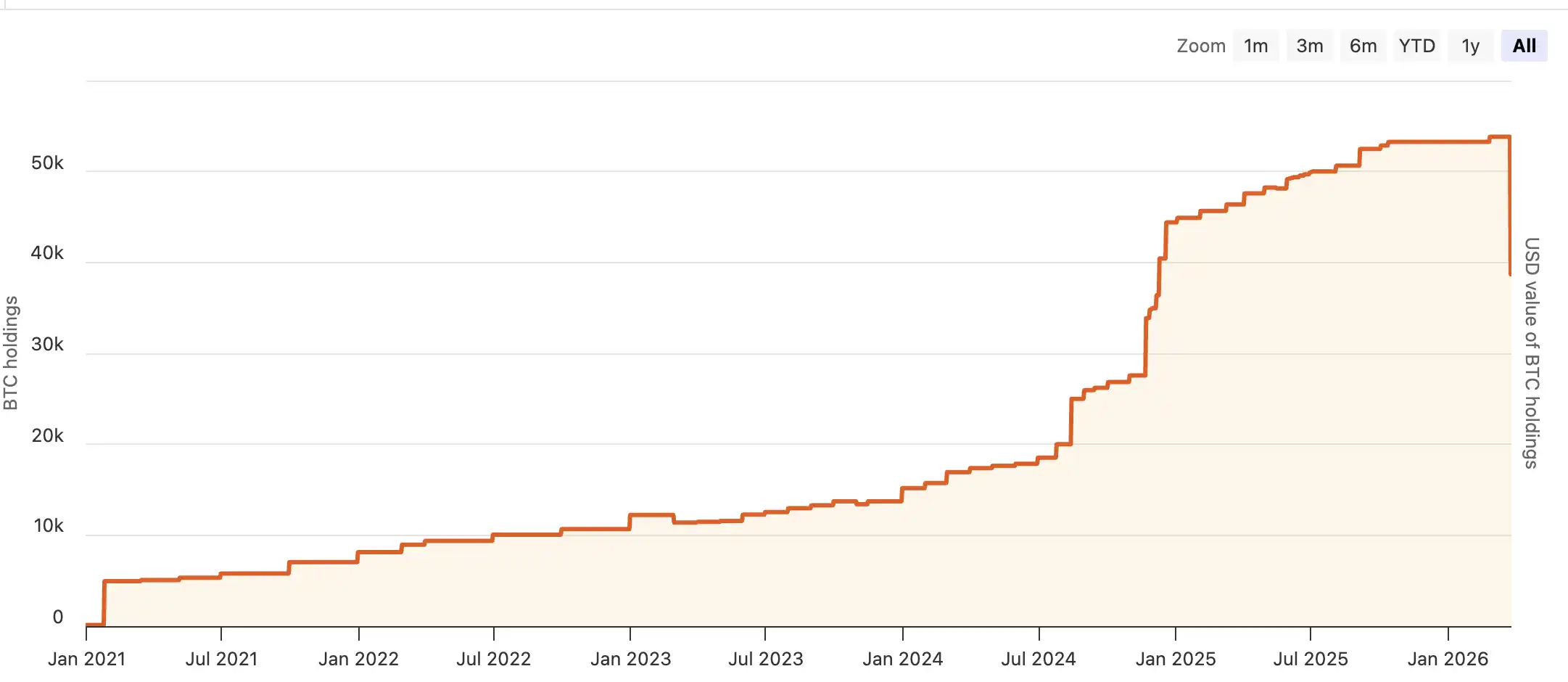
Although MARA emphasized that it does not intend to liquidate most of its Bitcoin holdings, the scale of the sell-off reflects the increasing cash pressure on mining companies, a pressure stemming from the continued downturn in Bitcoin mining operations.

According to the latest report from CoinShares, Bitcoin miners are facing severe profitability challenges, with the hash price dropping to approximately $28-30/PH/s/day in Q1 2026, hitting a new low post-halving. Meanwhile, the weighted average cash cost in Q4 2025 reached about $80,000 per coin, with roughly 15-20% of global mining machines operating at a loss. VanEck recently disclosed that the total miner balance (excluding wallets attributed to Satoshi Nakamoto) is about 684,000 BTC, a year-on-year decrease of approximately 0.5%. During the same period, about 164,000 new BTC were mined, meaning that over the past year, miners have effectively sold off all newly produced supply.
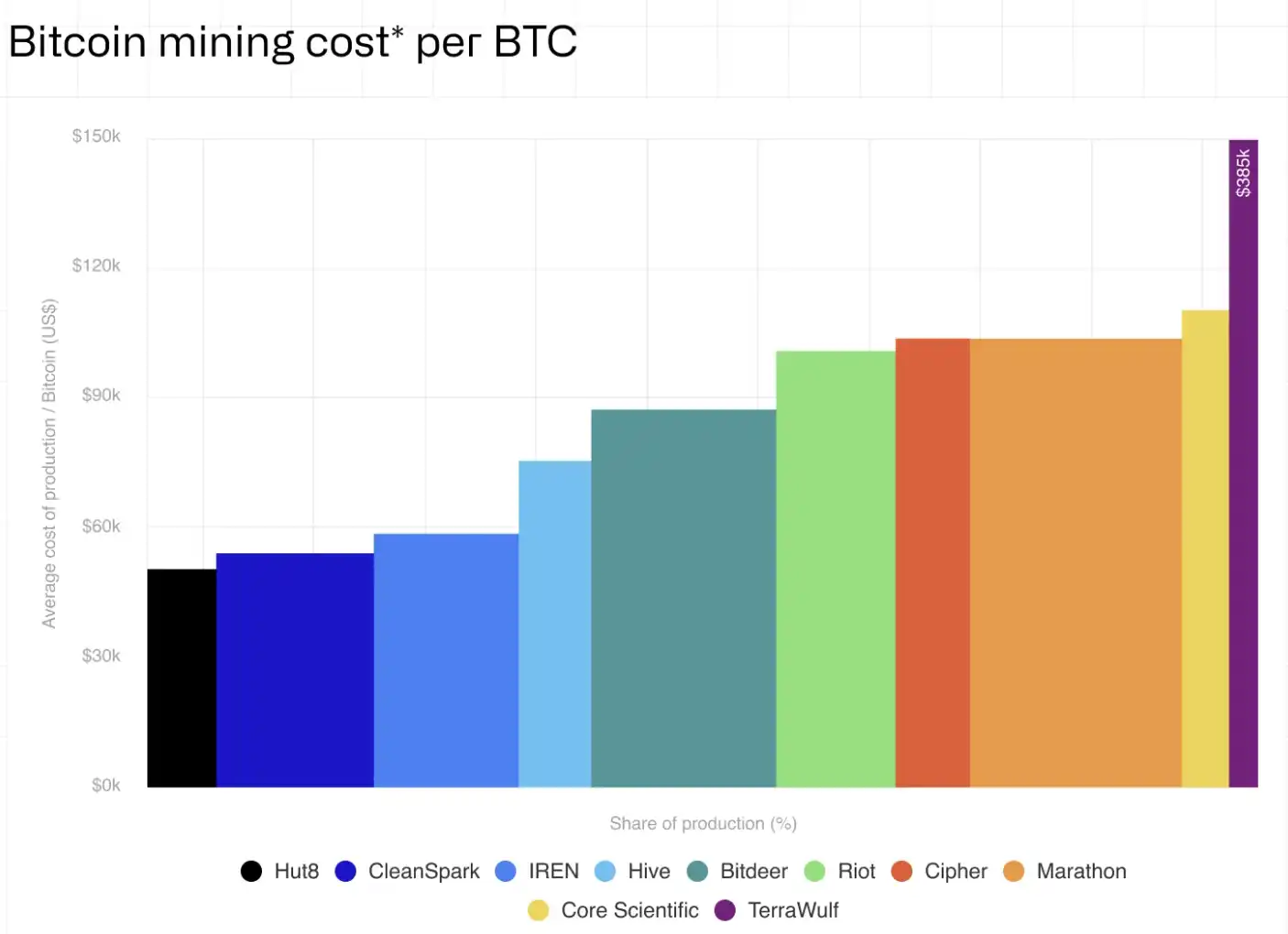
These data provide an intuitive sense of how unprofitable the mining business has become. Moreover, MARA's early expansion relied on S19 series miners, and these older machines have severely compressed profit margins. However, the company has been gradually upgrading to more efficient models over the past two years.

AI Transition Becomes a Necessity for Mining Companies

Faced with mining pressure, MARA is accelerating its AI布局 (layout).

Just this February, MARA announced a collaboration with Starwood Digital Ventures, a subsidiary of Starwood Capital Group, to convert and expand part of its U.S. sites originally used for Bitcoin mining into data centers catering to enterprise cloud and artificial intelligence clients. Starwood is one of the most representative real estate investment institutions in the U.S. and has been heavily betting on digital infrastructure in recent years, building one of the world's top private data center portfolios.

In fact, MARA CEO Fred Thiel proposed as early as 2024 that successful Bitcoin miners would integrate AI components in the long term, leveraging low-cost energy to provide services for AI data centers. He expressed hope that 50% of the company's revenue would come from non-Bitcoin mining businesses within the next four years.

That year, MARA also began its transition to AI infrastructure, utilizing the power resources and data center sites accumulated from Bitcoin mining to pivot towards high-performance computing (HPC) and AI data centers.

In January of this year, Fred Thiel stated in an interview that data centers and Bitcoin mining farms are competing for the same scarce resource: reliable electricity and its supporting infrastructure, with land, power, and operational control determining who can scale up. He recently warned that the industry is becoming increasingly brutal, and only mining companies with access to low-cost, reliable energy or those adopting new business models can survive. Bitcoin mining companies must control power resources; otherwise, they risk being eliminated before the next halving. By 2028, mining companies will face three paths: becoming power producers, being acquired by power producers, or partnering with them.

Now, major mining companies including MARA, Bitdeer, and Core Scientific are advancing AI infrastructure businesses and significantly selling off Bitcoin reserves to support this transition.

According to Coinshares, listed mining companies have collectively secured over $70 billion in AI/HPC contracts, and by the end of 2026, up to 70% of the revenue for listed mining firms could come from AI. Simultaneously, a clear divergence in valuations has emerged: mining companies with HPC contracts have an EV/NTM revenue multiple of 12.3x, while pure mining companies stand at 5.9x. The industry has bifurcated into infrastructure companies and mining companies, with vastly different prospects.

The AI transition has become a necessity for mining companies, but the high costs of transformation and hardware expansion make this new arms race expensive, forcing mining companies to liquidate their assets to alleviate short-term pressure.


Связанные с этим вопросы

QWhy did Marathon Digital Holdings (MARA) sell a significant amount of Bitcoin recently?

AMarathon Digital Holdings sold 15,133 Bitcoin to raise approximately $1.1 billion. The funds are intended to strengthen its balance sheet and provide greater strategic flexibility for expanding into the digital energy and AI/HPC (High-Performance Computing) sectors.

QWhat is the current state of profitability for Bitcoin miners according to the article?

ABitcoin miners are facing severe profitability challenges. The hash price dropped to approximately $28-30/PH/s/day in Q1 2026, a post-halving low. The weighted average cash cost in Q4 2025 was about $80,000 per Bitcoin, with an estimated 15-20% of global mining machines operating at a loss.

QWhat strategic shift did MARA's CEO predict for the company's future revenue?

AMARA's CEO, Fred Thiel, stated that he hopes 50% of the company's revenue will come from non-Bitcoin mining businesses within the next four years, with a focus on leveraging its infrastructure for AI and high-performance computing data centers.

QHow are mining companies' valuations being affected by the trend toward AI transformation?

AMining companies are experiencing a valuation divide. Those with HPC (High-Performance Computing) contracts have an enterprise value to next-twelve-month (NTM) revenue multiple of 12.3x, while pure mining companies have a multiple of 5.9x. The industry is bifurcating into infrastructure companies and mining companies with different prospects.

QWhat did the article identify as the critical resource that both data centers and bitcoin mining operations are competing for?

ABoth data centers and bitcoin mining operations are competing for the same critical resource: reliable electricity and its supporting infrastructure. Control over land, power, and operational control determines which companies can scale effectively.

Похожее

The Cost of an 11.5% Annualized Return: Will MicroStrategy's STRC Face a Moment of Reckoning?

This article analyzes the potential risks associated with MicroStrategy's (MSTR) use of structured financial products like STRC to leverage its BTC exposure. While these tools have enabled impressive returns (e.g., 11.5% annualized) and fueled significant capital inflows ($13.5B outstanding), they also create substantial annual dividend obligations (~$400M). The author argues that this structure, while effective in a bull market, could become a liability if BTC price stagnates or declines. The core risk is a potential negative feedback loop: the growing dividend burden from continued STRC issuance may eventually outweigh the benefits of increased BTC holdings. To meet these obligations, MicroStrategy might need to use new issuance proceeds for dividends instead of buying more BTC, which could disappoint equity investors. If the market capitalization (mNAV) falls below the value of its BTC holdings, the company could be forced to sell BTC instead of issuing new shares, potentially triggering a panic. The author estimates a potential inflection point in 6 months, where annual dividend costs reach $3-4B. At that stage, CEO Michael Saylor might face a difficult choice: sell BTC to meet obligations or sacrifice the credibility of the preferred shares by halting dividends. The article concludes that this financial engineering, while powerful, could ultimately "backfire" on MicroStrategy if market conditions turn.

marsbit16 мин. назад

The Cost of an 11.5% Annualized Return: Will MicroStrategy's STRC Face a Moment of Reckoning?

marsbit16 мин. назад

Торговля

Спот
Фьючерсы

Популярные статьи

Тест по Bitcoin Биткоина

HTX Learn: Изучите Bitcoin halving и Заработаете Токены USDT

3.0k просмотров всегоОпубликовано 2024.04.16Обновлено 2024.04.16

Тест по Bitcoin  Биткоина

Что такое $BITCOIN

ЦИФРОВОЕ ЗОЛОТО ($BITCOIN): Комплексный анализ Введение в ЦИФРОВОЕ ЗОЛОТО ($BITCOIN) ЦИФРОВОЕ ЗОЛОТО ($BITCOIN) — это проект на основе блокчейна, работающий в сети Solana, который стремится объединить характеристики традиционных драгоценных металлов с инновациями децентрализованных технологий. Хотя он носит имя Биткойн, часто называемого “цифровым золотом” из-за его восприятия как средства хранения ценности, ЦИФРОВОЕ ЗОЛОТО является отдельным токеном, предназначенным для создания уникальной экосистемы в ландшафте Web3. Его цель — позиционировать себя как жизнеспособный альтернативный цифровой актив, хотя детали его применения и функциональности все еще развиваются. Что такое ЦИФРОВОЕ ЗОЛОТО ($BITCOIN)? ЦИФРОВОЕ ЗОЛОТО ($BITCOIN) — это токен криптовалюты, специально разработанный для использования в блокчейне Solana. В отличие от Биткойна, который выполняет широко признанную роль хранения ценности, этот токен, похоже, сосредоточен на более широких приложениях и характеристиках. Примечательные аспекты включают: Инфраструктура блокчейна: Токен построен на блокчейне Solana, известном своей способностью обрабатывать высокоскоростные и недорогие транзакции. Динамика предложения: ЦИФРОВОЕ ЗОЛОТО имеет максимальное предложение, ограниченное 100 квадриллионами токенов (100P $BITCOIN), хотя детали о его обращающемся предложении в настоящее время не раскрыты. Утилита: Хотя точные функциональные возможности не описаны, есть указания на то, что токен может быть использован для различных приложений, потенциально связанных с децентрализованными приложениями (dApps) или стратегиями токенизации активов. Кто создатель ЦИФРОВОГО ЗОЛОТА ($BITCOIN)? На данный момент личность создателей и команды разработчиков, стоящих за ЦИФРОВЫМ ЗОЛОТОМ ($BITCOIN), остается неизвестной. Эта ситуация типична для многих инновационных проектов в области блокчейна, особенно тех, которые связаны с децентрализованными финансами и феноменом мем-криптовалют. Хотя такая анонимность может способствовать культуре, ориентированной на сообщество, она усиливает опасения по поводу управления и ответственности. Кто инвесторы ЦИФРОВОГО ЗОЛОТА ($BITCOIN)? Доступная информация указывает на то, что у ЦИФРОВОГО ЗОЛОТА ($BITCOIN) нет известных институциональных спонсоров или значительных венчурных капиталовложений. Проект, похоже, функционирует по модели пирингового взаимодействия, сосредоточенной на поддержке и принятии сообществом, а не на традиционных путях финансирования. Его активность и ликвидность в основном сосредоточены на децентрализованных биржах (DEX), таких как PumpSwap, а не на устоявшихся централизованных торговых платформах, что еще больше подчеркивает его подход, ориентированный на grassroots. Как работает ЦИФРОВОЕ ЗОЛОТО ($BITCOIN) Операционные механизмы ЦИФРОВОГО ЗОЛОТА ($BITCOIN) можно подробно описать на основе его дизайна блокчейна и характеристик сети: Механизм консенсуса: Используя уникальный механизм доказательства истории (PoH) Solana в сочетании с моделью доказательства доли (PoS), проект обеспечивает эффективную валидацию транзакций, что способствует высокой производительности сети. Токеномика: Хотя конкретные дефляционные механизмы не были подробно описаны, большое максимальное предложение токенов подразумевает, что оно может быть предназначено для микротранзакций или нишевых случаев использования, которые еще предстоит определить. Интероперабельность: Существует потенциал для интеграции с более широкой экосистемой Solana, включая различные платформы децентрализованных финансов (DeFi). Однако детали относительно конкретных интеграций остаются неуточненными. Хронология ключевых событий Вот хронология, которая подчеркивает значимые вехи, касающиеся ЦИФРОВОГО ЗОЛОТА ($BITCOIN): 2023: Первоначальное развертывание токена происходит в блокчейне Solana, отмеченное его адресом контракта. 2024: ЦИФРОВОЕ ЗОЛОТО приобретает видимость, когда оно становится доступным для торговли на децентрализованных биржах, таких как PumpSwap, позволяя пользователям обменивать его на SOL. 2025: Проект наблюдает спорадическую торговую активность и потенциальный интерес к инициативам, возглавляемым сообществом, хотя на данный момент не зафиксировано никаких значительных партнерств или технических достижений. Критический анализ Сильные стороны Масштабируемость: Основная инфраструктура Solana поддерживает высокие объемы транзакций, что может повысить полезность $BITCOIN в различных сценариях транзакций. Доступность: Потенциально низкая цена торговли за токен может привлечь розничных инвесторов, способствуя более широкому участию благодаря возможностям дробного владения. Риски Отсутствие прозрачности: Отсутствие публично известных спонсоров, разработчиков или процесса аудита может вызвать скептицизм относительно устойчивости и надежности проекта. Волатильность рынка: Торговая активность сильно зависит от спекулятивного поведения, что может привести к значительной волатильности цен и неопределенности для инвесторов. Заключение ЦИФРОВОЕ ЗОЛОТО ($BITCOIN) является интригующим, но неоднозначным проектом в быстро развивающейся экосистеме Solana. Хотя он пытается использовать нарратив “цифрового золота”, его отход от установленной роли Биткойна как средства хранения ценности подчеркивает необходимость более четкого различения его предполагаемой утилиты и структуры управления. Будущее принятие и усвоение, вероятно, будут зависеть от решения текущей непрозрачности и более четкого определения его операционных и экономических стратегий. Примечание: Этот отчет охватывает синтезированную информацию, доступную на октябрь 2023 года, и с тех пор могут произойти события.

99 просмотров всегоОпубликовано 2025.05.13Обновлено 2025.05.13

Что такое $BITCOIN

Fractal Bitcoin: масштабирование Биткоина с помощью рекурсивной системы

Fractal Bitcoin — масштабное Layer-1-решнение, созданное на базе кода Биткоина, позволяющего достигать бесконечного масштабирования с помощью рекурсивного подхода.

2.2k просмотров всегоОпубликовано 2025.06.30Обновлено 2025.06.30

Fractal Bitcoin: масштабирование Биткоина с помощью рекурсивной системы

Обсуждения

Добро пожаловать в Сообщество HTX. Здесь вы сможете быть в курсе последних новостей о развитии платформы и получить доступ к профессиональной аналитической информации о рынке. Мнения пользователей о цене на BTC (BTC) представлены ниже.

活动图片