Автор: David Christopher
Оригинальное название: Hyperliquid & The Year Perps Caught Fire
Компиляция и редактирование: BitpushNews
Ажиотаж вокруг бирж перпетуальных контрактов (перпетуалов) бушевал весь 2025 год, и Hyperliquid оказался в авангарде. С усилением конкуренции, сможет ли он сохранить лидерство?

Оглядываясь на рост криптоиндустрии в 2025 году, Hyperliquid невозможно обойти вниманием.
Биржа завершила 2024 год эпическим аирдропом и впечатляющими показателями цены, привлекши внимание множества пользователей крипто-твиттера к своему продукту.
А к концу 2025 года она полностью преобразилась — став платформой, ломающей стереотипы, заняв четвертое место в экосистеме по доходам с общим объемом доходов, превышающим 650 миллионов долларов, и в какой-то момент захватив 70% объема торгов перпетуальными контрактами.
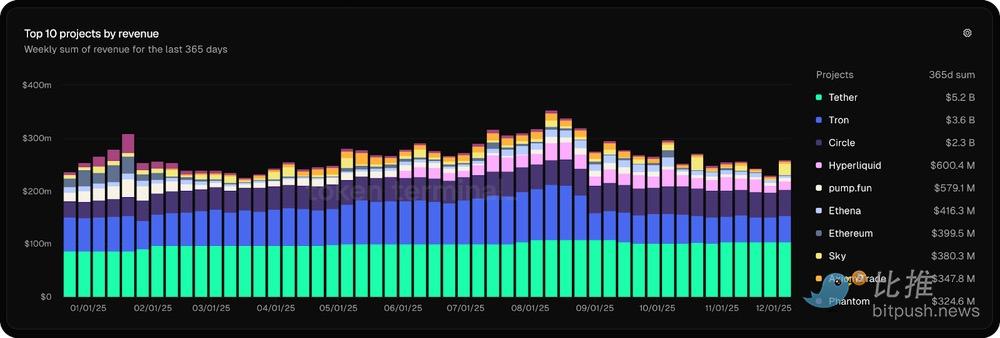
(Источник данных: Token Terminal)
Если вы не следили за каждым шагом Hyperliquid, этот прорывной успех может показаться возникшим из ниоткуда. Но его путь к завоеванию рынка стал результатом тщательного планирования, нетрадиционных стратегий роста и заслуженного внешнего признания.
Вот полный обзор пути Hyperliquid в 2025 году (и почему настоящее испытание ждет его в 2026):
Первый квартал 2025 года: Преимущество крипто-нативности
Год быстрого роста Hyperliquid начался с яркого напоминания о том, что значит «быть действительно в тренде индустрии».
Когда токен TRUMP был запущен в январе, Hyperliquid почти мгновенно листиннул перпетуальные контракты на него, обогнав другие биржи и начав свою победную серию в качестве «предпочтительного места для торговли пред-релизными токенами».
Конечно, его способность быстро действовать частично объясняется отсутствием «корпоративных ограничений», которые защищают пользователей и компании на крупных биржах.
Но ключевым фактором была его твердая «осведомленность» — поскольку его команда тесно связана с ончейн-динамикой, она могла обнаруживать возможности и осознавать преимущества, которое дает листинг этих токенов первым. Это укрепило репутацию Hyperliquid как предпочтительного места для торговли новыми активами до того, как существующие гиганты успеют среагировать.
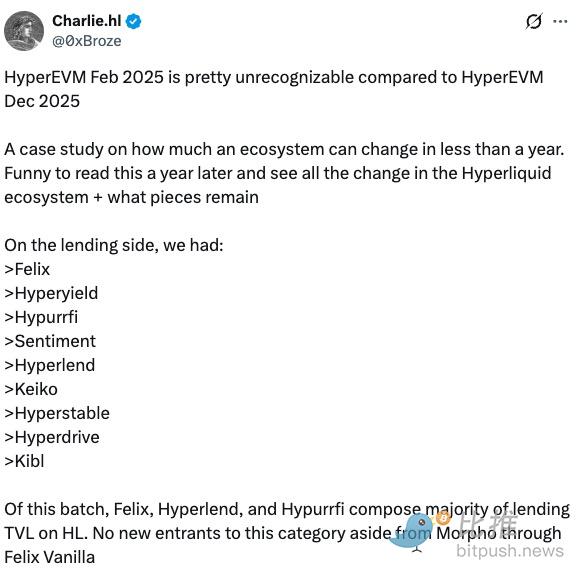
В феврале был выпущен HyperEVM — универсальный слой смарт-контрактов, построенный поверх HyperCore (движка биржи Hyperliquid). Хотя ему потребовалось некоторое время, чтобы закрепиться, его успех не был основан на программах стимулирования «сверху вниз». Это означало, что когда он набрал обороты во втором квартале, у него уже была сформирована основная пользовательская база, которая оставалась там не ради «фарминга» наград, а потому что верила в видение сети и хотела использовать ее уникальные функции (например, совместимость с HyperCore), а не просто извлекать стимулы.
Второй квартал 2025 года: Полномасштабный взрыв
Внимание рынка пришло быстрее, чем ожидало большинство. Помимо того, что токен HYPE вырос почти в 4 раза с минимумов апреля, к маю Hyperliquid захватил 70% всего объема торгов ончейн-перпетуалами — ошеломляющая цифра для платформы без поддержки венчурных капиталистов (VC) и без токеновых стимулов.
Пик цены токена HYPE, взрывной рост активности на HyperCore и развитие экосистемы HyperEVM — все это способствовало распространению истории Hyperliquid.
По мере оживления рынка, плавный пользовательский опыт (UX) Hyperliquid и глубокая ликвидность привлекли огромный поток ордеров, а общий объем торгов вырос до 1,5 триллиона долларов.
Как упоминалось ранее, HyperEVM также вышел на нужный путь: его общая заблокированная стоимость (TVL) выросла с 350 миллионов долларов в апреле до 1,8 миллиарда долларов к середине июня благодаря запуску проектов (таких как Kinetiq, Felix и Liminal) и изучению пользователями новых возможностей заработка — все это при постоянном сжигании токена HYPE на заднем плане.
В условиях быстрого роста Hyperliquid, казалось, был повсюду.
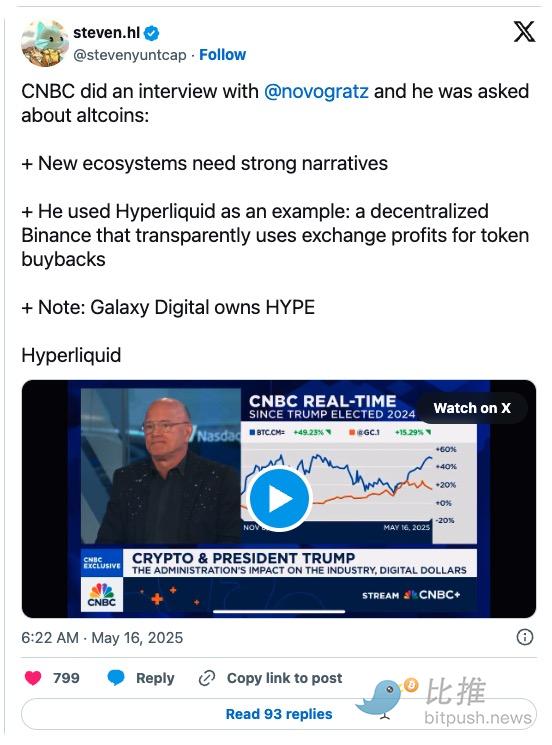
О нем говорили на национальном телевидении, писали в Bloomberg, он был в центре политических дискуссий CFTC. Эту биржу стало невозможно игнорировать.
Третий квартал 2025 года: Пик импульса и начало фрагментации
В начале третьего квартала появился сигнал о том, что инфраструктура Hyperliquid становится незаменимой за пределами его собственной экосистемы.
Кошелек Phantom обошел платформы перпетуальных контрактов на Solana, выбрав интеграцию с Hyperliquid через коды сборщиков (builder codes). Коды сборщиков — это механизм Hyperliquid, позволяющий внешним платформам зарабатывать комиссии, направляя сделки в HyperCore.
Rabby последовал его примеру. Затем MetaMask.
Множество мобильных торговых приложений запустились через коды сборщиков.
В общей сложности, благодаря этим интеграциям, «партнеры» заработали почти 50 миллионов долларов комиссий, направив 158 миллиардов долларов объема торгов.
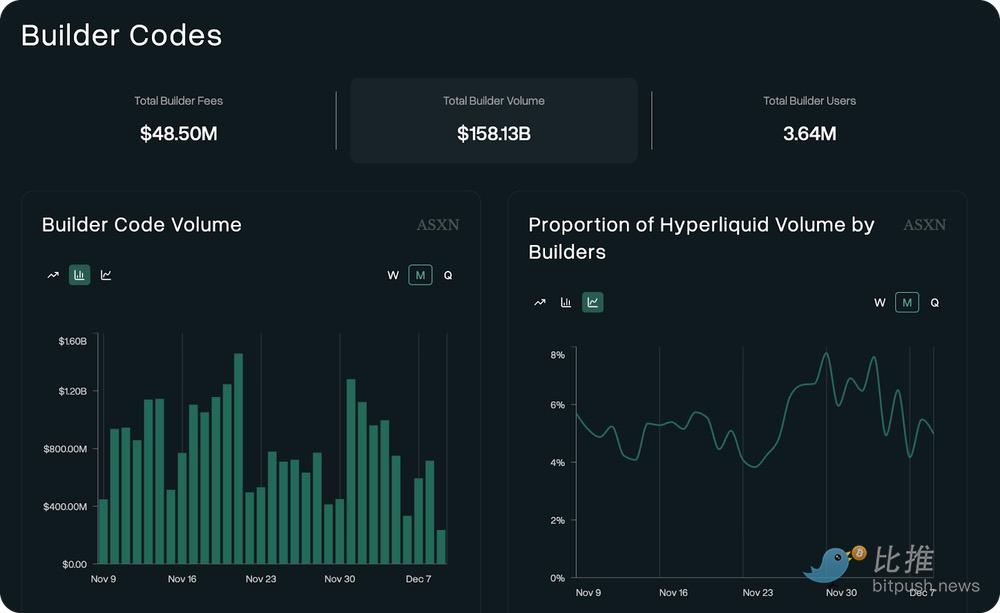
(Источник данных: Hyperscreener)
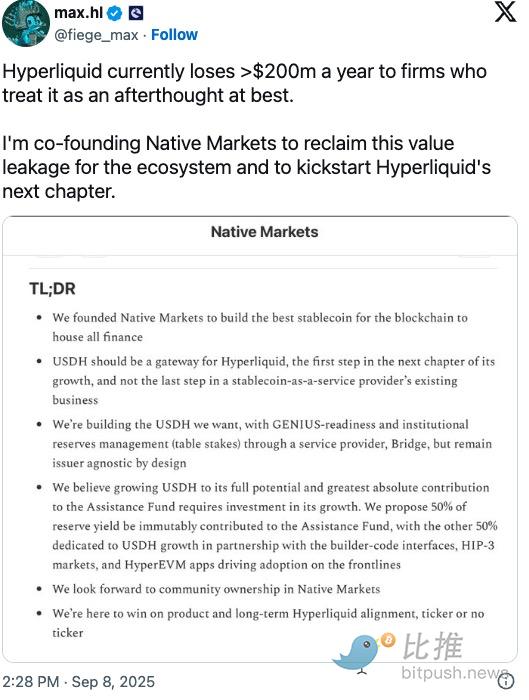
Затем, в сентябре, разгорелась торговая война за USDH — что показало, насколько ценным и известным стал Hyperliquid.
Проблема была проста: Hyperliquid держал около 8% предложения Circle USDC в своем мосту, ежегодно «упуская» около 100 миллионов долларов доходов прямому конкуренту (Coinbase), в то время как собственная экосистема Hyperliquid не могла вернуть эти доходы. Выпуск нативного стейблкоина мог решить эту проблему, потенциально вернув около 200 миллионов долларов годового дохода обратно в Hyperliquid.
Было предложено выпустить стейблкоин, и в торгах участвовали тяжеловесы.
Ethena предложила обязательство по росту в 75 миллионов долларов и институциональное партнерство. Paxos предложил интеграцию с PayPal и Venmo, даже заставив PayPal упомянуть Hyperliquid в твиттере.
Но в конечном итоге победителем торгов стала Native Markets — команда под руководством уважаемого контрибьютора HYPE Макса Фиеге (Max Fiege), бывшего операционного директора Uniswap Labs MC Lader и исследователя Paradigm Аниша Агнихотри (Anish Agnihotri).
Почему меньшая по размеру и менее капитализированная команда смогла победить этих гигантов? Потому что они были более предпочтительны, больше соответствовали духу Hyperliquid: самофинансируемы, разделяют цели и готовы строить что-то по-настоящему органичное — так же, как и сам Hyperliquid.
Эффект домино вышел за пределы самого Hyperliquid. MegaETH вскоре объявил о своих планах по нативному стейблкоину. Sui последовал его примеру в ноябре.
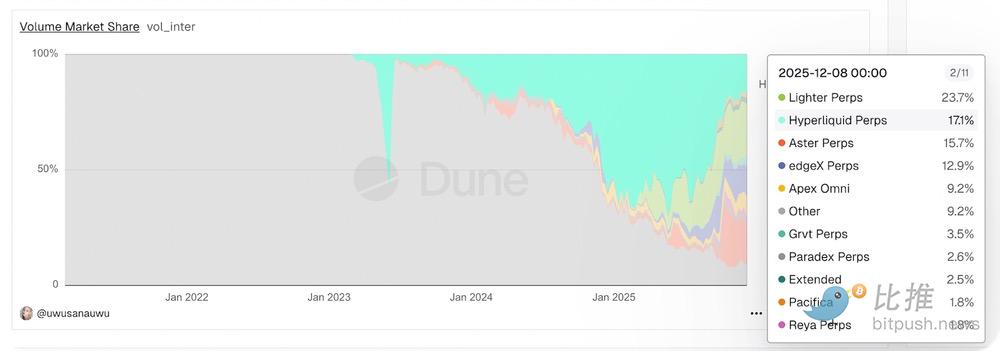
Однако USDH также ознаменовал пик цены токена HYPE в середине сентября — и момент, когда начала проявляться конкуренция. Aster (поддерживаемая CZ биржа на основе BNB Chain) и Lighter (платформа перпетуальных контрактов на Ethereum L2) запустились с агрессивными кампаниями аирдропов. Объемы торгов продолжали распыляться, доля рынка Hyperliquid разделилась и на момент написания статьи составляет лишь 17,1%.
(Источник данных: @uwusanauwu | Dune)
Четвертый квартал 2025 года: Зрелость и трудности роста
В октябре долгожданный HIP-3 был запущен, открыв разрешение на листинг без разрешений (permissionless listing) на HyperCore, что способствовало расширению и децентрализации биржи.
Любой, кто застейкал 500 тысяч HYPE, теперь может развернуть собственные рынки, например:
-
Акционные перпетуальные контракты от Trade.xyz от Unit и Felix Protocol
-
Рынки перпетуальных контрактов с использованием приносящих доход collateral (таких как sUSDE) от протоколов вроде Ethena
-
Рынки, предлагающие синтетическую экспозицию в непубличные компании, такие как SpaceX или Anthropic, через платформы вроде Ventuals
Однако, несмотря на запуск HIP-3, цена токена HYPE упала почти на 50% с пиков сентября.
Почему? Помимо рыночной конъюнктуры и конкуренции, выделяются два момента.
Во-первых, в этом квартале Hyperliquid столкнулся с первым за более чем два года событием ADL (автоматического декредитования). Во время рыночного обвала 10 октября чрезмерно закредитованные позиции истощали маржу быстрее, чем двигатель ликвидаций и HLP (Поставщик ликвидности Hyperliquid) могли поглотить. Протокол вызвал более 40 автоматических декредитований за 12 минут, принудительно сокращая самые прибыльные позиции для перебалансировки бухгалтерской книги. Хотя некоторые утверждали, что затронутые позиции все равно были закрыты «в плюсе», другие спорили, что механизм ликвидировал больше, чем было необходимо для покрытия плохих долгов. Да, система сохранила платежеспособность без внешнего вмешательства капитала, но Hyperliquid, как и весь рынок, возможно, потребуется время, чтобы оправиться от этого события.
Во-вторых, в ноябре начались разблокировки командных токенов. Хотя общий объем разблокировки был ниже ожиданий, этот график вестинга, возможно, также способствовал слабой производительности HYPE. Объем продаж был небольшим — только 23% ушло на OTC-сделки, а 40% было рестейкнуто — но темпы будущих разблокировок все еще неясны. Моя интерпретация такова, что основная команда, возможно, все еще определяет график, чтобы балансировать между справедливостью для контрибьюторов и здоровьем экосистемы. Но для протокола, известного прозрачностью и «честностью», такая неопределенность может вызывать不安 на рынке.
Первая разблокировка Hyperliquid выпустила 1,75 миллиона HYPE после окончания периода блокировки, но скорость будущих командных разблокировок еще не полностью раскрыта.
Испытательный полигон для перпетуальных контрактов
Несмотря на охлаждение рынка и торговой активности, пытаясь понять причины слабой производительности Hype, мы не должны упускать из виду, что экосистема перпетуальных контрактов претерпела глубокую эволюцию вместе с развитием самого Hyperliquid.
Lighter и Aster — всего лишь два примера ончейн-конкуренции. Хотя их объемы торгов могут быть завышены из-за охоты за аирдропами, они действительно предоставляют реальную альтернативу.
В офчейн-сфере, продукт перпетуальных контрактов Coinbase скоро столкнется с конкуренцией со стороны Robinhood в этой области. По мере того как перпетуальные контракты продолжают выходить в мейнстрим, появится больше конкурентов.
Другими словами, Hyperliquid находится в фазе испытаний, которая продлится до 2026 года.
Вопрос не в том, действительно ли он добился выдающихся успехов в 2025 году — он добился. Вопрос в том, сможет ли биржа, по мере того как пространство становится переполненным, доказать, что ее путь роста через интеграции, такие как коды сборщиков, и децентрализованные модели, подобные HIP-3, все еще сохраняет преимущество.
То, что привело их к сегодняшнему дню, — это создание лучшего продукта и лучшей экосистемы без использования ярлыков. То, что позволит им оставаться впереди, — это сделать это снова.
Twitter:https://twitter.com/BitpushNewsCN
Группа общения比推 TG:https://t.me/BitPushCommunity
Подписка比推 TG: https://t.me/bitpush





















