Apple Sends Siri Staff to AI 'Cram School', Jensen Huang's Bold Prediction Begins to Materialize

marsbitОпубликовано 2026-04-16Обновлено 2026-04-16

Введение

Apple is reportedly sending nearly 200 engineers from its Siri team to a multi-week AI programming "boot camp" to retrain them in AI-assisted coding, just two months before its major WWDC event. This unusual move reflects Apple's urgent effort to modernize Siri’s development process amid industry-wide shifts toward AI-powered tools like Claude Code and OpenAI’s Codex. The restructured Siri team now consists of only about 60 core developers, with another 60 assigned to test Siri’s performance and safety. The reshuffle follows internal delays in launching a new AI-powered Siri, originally planned for early 2025. Under new leadership—software chief Craig Federighi and hardware veteran Mike Rockwell—Apple is pushing to integrate Google’s Gemini model to power a more conversational, multi-step capable Siri. The situation underscores a broader trend: engineers who don’t adapt to AI tools risk being sidelined, as companies like Meta and NVIDIA emphasize AI-augmented productivity. While Apple’s retraining approach is relatively supportive compared to outright layoffs, it highlights how rapidly AI is reshaping tech roles—making traditional skills less relevant and accelerating a new industrial standard for software development.

Imagine this: you're a senior software engineer at one of the world's top three tech companies by market cap, with a handsome salary and an impressive resume. Just as the company is about to launch its most important AI product in a decade, your boss suddenly hands you a notice with a smile—

Pack your things, you're going to 'cram school'.

According to a report by The Information, with less than two months to go until WWDC in June, Apple made a telling decision: nearly 200 programmers from the massive Siri team were bundled off to a several-week-long 'AI Programming Bootcamp' for retraining.

In the core business lines of tech giants, changing leadership on the eve of a launch is rare; sending people 'for training' at the last minute is unheard of. Behind this lies not just the struggle of the new Siri's difficult birth, but a genuine, large-scale reshuffle.

Those Who Can Use AI Stay, Those Who Can't Go for Remedial Lessons

The report mentions that besides sending nearly 200 people to bootcamp to learn how to code with AI, the once bloated core Siri development team was restructured and retained only about 60 members.

Another 60 people were singled out to form an evaluation group, specifically tasked with 'finding faults' in Siri: testing its performance in handling user commands and whether it meets Apple's extremely stringent security standards.

Such an organizational adjustment, happening during the final sprint before a launch, inevitably raises a question. Why send frontline soldiers back to bootcamp at this critical juncture, just two months from WWDC?

The answer might be that over the past year, AI coding assistants like Anthropic's Claude Code and OpenAI's Codex have completely rewritten the underlying logic of the software engineering industry. The experience these engineers once prided themselves on is becoming visibly obsolete.

Experienced developers, empowered by AI, are seeing an exponential explosion in code output.

Other departments within Apple have already felt this shift. Software engineering teams quickly embraced AI tools, even securing a massive budget specifically for Claude Code. The Siri team, clearly, was a step behind.

The pressure from AI is spreading across Silicon Valley.

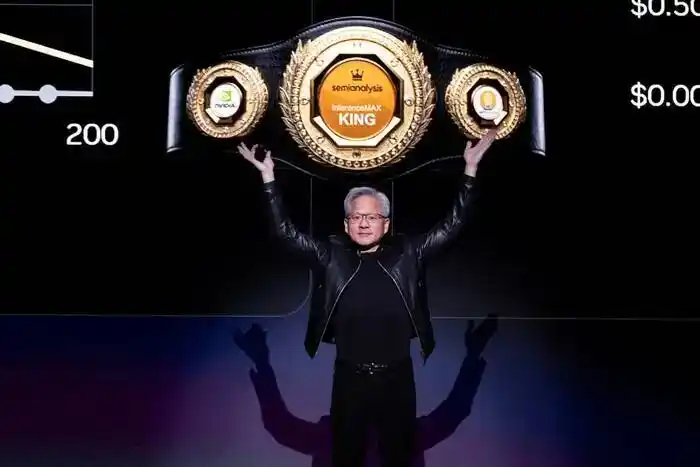
Meta's CTO Bosworth publicly stated that the cost of the AI tokens used by his best engineers is equivalent to their salaries, but their productivity has increased 5 to 10 times. Nvidia's CEO Jensen Huang offered a more specific, bold take: he would be 'deeply worried' if a $500,000-a-year engineer wasn't using at least $250,000 worth of tokens.

To this end, an internal dashboard called 'Claudeonomics' even emerged at Meta, tracking the AI usage of all 85,000+ employees and awarding titles like 'Token Legend' and 'Cache Wizard' to the top 250 consumers.

In 30 days, Meta's total token consumption exceeded 60 trillion.

There's no harm without comparison. While the practice of quantifying AI usage into KPIs for ranking and competition is debatable, the cost of being a step behind is clear for all to see. Learning to code with AI and keeping pace with modern software development is now the only option.

The New Story of AI Siri

If you're an Apple ecosystem user, you've probably cursed at Siri at some point in the past few years. In fact, Apple had planned to release a new Siri in early 2025, but it was subsequently delayed in an internally embarrassing setback.

To solve this problem彻底, Apple conducted a series of drastic power reshuffles over the past year. The most critical step was剥离 the Siri team from former AI chief John Giannandrea and placing it directly under the command of the decisive software engineering SVP, Craig Federighi.

Not only that, Apple also dispatched Mike Rockwell, a core figure behind the Vision Pro, to directly lead Siri product development under Federighi. Giannandrea, who announced his retirement last December, will also formally end his advisory tenure at Apple this week.

The old guard departs, a new king ascends. Apple has finally下定决心, applying the iron-fisted standards used for its top-tier software and hardware to remake Siri for the AI era. However, even Apple cannot conjure up a large language model capable of rivaling ChatGPT, Claude, or Gemini in a short time.

With the 2025 release plan already delayed, to have a sufficiently impressive revamp ready for WWDC this June, Apple had to seek cooperation with its competitor, Google.

According to leaks, the new Siri will be powered by Google's AI model, Gemini. With Gemini integrated, the new Siri will no longer be a simple command executor for setting alarms or checking the weather, but will become a truly capable conversational AI assistant.

Furthermore, it's revealed that the new Siri will not only be able to answer complex logical questions directly, but is even designed to provide 'emotional support' to users and can directly help you complete complex, multi-step, cross-application tasks like 'booking a complete trip'.

Of course, cooperation doesn't mean Apple has abandoned its principles. The two sides are still engaged in difficult negotiations, with the core dispute being: Apple wants Google to provide the servers hosting the new Siri's operation, but must ensure it all complies with Apple's strict privacy and data security standards.

When we step back from Apple's rumors and re-examine the event of 'Siri programmers being sent back to programming school' with its dark humor, a real chill runs down the spine.

Even programmers at the world's top tech companies earning million-dollar salaries can be marginalized and sent for retraining for not mastering AI-assisted programming. So what about ordinary knowledge workers?

AI isn't directly replacing programmers, but programmers who master AI are ruthlessly replacing those who don't. Tools like Claude Code and Codex are turning the craft of coding, once full of 'artisan spirit', into an industrial standard that can be mass-produced on an assembly line.

It's worth noting that this logic isn't flawless. On the 'Claudeonomics' leaderboard created by Meta employees themselves, there have already been instances of employees letting AI agents run tasks for hours on end just to inflate the token numbers.

Tokens are the traces of tool usage, productivity is the result of tool usage, and the two are not always equal. But even so, in an industry where everyone is using AI to amplify output, choosing not to use it is actively diminishing your own value.

The plight of the Siri team is an extremely vivid metaphor: seniority accumulated in the past, the halo of a big tech company, even the coding skills you were once proud of, can all become worthless assets overnight.

At June's WWDC, we might witness the rebirth of a new Siri from the ashes. But behind that发布会 are hundreds of engineers frantically cramming in bootcamp, and a new workplace order where value is being re-weighed and measured by AI.

But think about it from another angle, the Siri team is actually quite lucky.

After all, in this era of using AI for efficiency and cost-cutting, discovering that employees can't keep up but still being willing to spend money and time to send you for 'remedial lessons' and retraining—looking around, perhaps only a company like Apple would do that.

This article is from the WeChat public account "APPSO", author: Discovering Tomorrow's Products

Связанные с этим вопросы

QWhat significant decision did Apple make regarding the Siri team just two months before WWDC?

AApple sent nearly 200 programmers from the Siri team to a several-week-long 'AI programming training camp' for retraining.

QAccording to the article, what is the core AI model that will power the new Siri?

AThe new Siri will be powered by Google's AI model, Gemini.

QWhat new capabilities is the revamped Siri expected to have?

AThe new Siri is expected to be a truly conversational intelligent assistant capable of answering complex logical questions, providing 'emotional support,' and performing complex, multi-step cross-application tasks like booking a complete trip.

QWhat 'extremely vivid metaphor' does the article use to describe the impact of AI on the workforce, based on the Siri team's situation?

AThe situation is described as an extremely vivid metaphor that past seniority, the halo of a big company, and even one's proud coding abilities can become invalid assets overnight in the face of AI advancement.

QHow does the article contrast Apple's approach to upskilling its employees with the broader industry trend?

AThe article states that in an era of using AI for cost reduction and efficiency, Apple is somewhat unique for choosing to spend money and time to send employees for 'remedial classes' and retraining instead of directly laying them off and replacing them.

Похожее

From Parallel Finance to Mainstream Finance: The On-Chain Securities Era Ushers in a Historic Window

From Parallel Finance to Mainstream: The Dawn of On-Chain Securities For over a decade, the crypto industry has operated as a parallel financial system with its own currencies, markets, and assets—from Bitcoin and ICOs to DeFi, NFTs, and memecoins. Despite building a robust internal ecosystem, a wall has separated it from the traditional financial world. That barrier is now crumbling. The industry's first act was one of internal evolution: ICOs streamlined fundraising, DeFi recreated financial services on-chain, and layer-2 networks competed for scalability—all within the crypto bubble. While innovative, this cycle remained closed, with capital and users circulating internally, leading to volatile boom-bust cycles. Even Bitcoin ETFs, while attracting Wall Street capital, merely provided a channel to buy crypto assets without bridging the systems. The next, larger narrative is Real-World Assets (RWA) moving on-chain. This involves tokenizing stocks, bonds, funds, and future cash flows. Blockchain can compress the complex traditional processes of trading, settlement, clearing, and custody into a seamless, automated network operating in seconds. This shift is creating a new financial gateway: the native crypto securities broker. This entity will combine functions of an exchange, broker, bank, and custodian into a unified global financial operating system. Consequently, the next major battleground won't be the "public chain wars" focused on speed and cost, but the competition to build the financial infrastructure capable of hosting high-quality, liquid real-world assets. Access to global equities, index funds, or stakes in companies like SpaceX could erase the boundary between crypto and traditional finance, unlocking a market orders of magnitude larger than crypto's current valuation. In summary, after years of creating a separate financial world, crypto's next decade will be defined by its integration into the existing global financial system, marking the true beginning of its largest growth story.

marsbit15 мин. назад

From Parallel Finance to Mainstream Finance: The On-Chain Securities Era Ushers in a Historic Window

marsbit15 мин. назад

Wang Chuan: When the Neighbor Old Wang Made 30x on Memory Stocks, How to Avoid Anxiety (Part Six) - The Trap of Commoditized Goods

Wang Chuan: When the Neighbor Lao Wang Made 30x on Storage Stocks, How to Stay Anxiety-Free (Part 6) - The Trap of Commoditized Goods. This essay uses historical and current examples to analyze the cyclical and high-risk nature of the data storage industry. It begins with the 1990s rise and dramatic fall of Iomega, whose stock soared over 160x in 18 months before collapsing 97% from its peak, illustrating the fleeting success of storage "meme stocks." The core problem is that storage products, like DRAM and flash memory, are highly commoditized. This leads to extreme volatility: prices have plummeted over 80% multiple times, and company stocks often crash 95% or go bankrupt. The industry's dynamic is defined by "elastic demand facing heavy-asset, long-cycle, rigid supply." When demand spikes and supply is fixed, prices skyrocket, as seen recently with AI-driven demand for High Bandwidth Memory (HBM). Companies like Sandisk and Micron have reported massive revenue and gross margin jumps (e.g., Sandisk's gross margin rising from 22.5% to 78.3%) despite minimal increases in production volume. However, these high margins are self-defeating. They incentivize massive new capacity investments (hundreds of billions planned from 2026), with supply expected to surge by late 2027. Once new supply meets demand, prices and profits will crash, potentially leading to a scenario where "selling more results in earning less." The article debunks the safety of long-term supply agreements, comparing them to fragile non-aggression pacts easily broken when market conditions shift. It warns that when an industry is highly profitable but trades at low P/E ratios, the risk is greatest, as plummeting prices quickly erase those earnings. Multiple asymmetric risks loom, including economic recession, reduced AI spending, faster-than-expected capacity expansion (especially from Chinese firms), and technological innovations that reduce memory requirements. In conclusion, the storage sector is a cyclical trap where periods of euphoric profits are often precursors to devastating downturns, luring unprepared investors into a "wealth incinerator."

marsbit24 мин. назад

Wang Chuan: When the Neighbor Old Wang Made 30x on Memory Stocks, How to Avoid Anxiety (Part Six) - The Trap of Commoditized Goods

marsbit24 мин. назад

Wang Chuan: When the neighbor Lao Wang earned thirty times from investing in memory storage stocks, how can you still avoid anxiety (6) - The trap of homogeneous products

The article, "Wang Chuan: How to Remain Unanxious After Neighbor Lao Wang's Thirty-Fold Gain on Storage Stocks (Part 6) - The Trap of Commoditized Goods," analyzes the cyclical and perilous nature of the data storage industry through historical and current case studies. It begins with the example of Iomega, whose Zip drives led to a stock surge of over 160x in the mid-1990s before collapsing over 97% from its peak due to competition from cheaper CD-R technology. This pattern is characteristic of storage, where products like DRAM are highly commoditized, leading to extreme price volatility. The sector has seen prices crash over 80% multiple times, with companies often facing bankruptcy. The core dynamic is "elastic demand facing heavy-asset, long-cycle, rigid supply." High prices attract new capacity, but the long lead time means supply eventually overshoots, causing sharp price corrections. The current AI-driven boom, exemplified by surging demand for High-Bandwidth Memory (HBM), has led to skyrocketing prices and profit margins for companies like SanDisk and Micron, despite relatively flat production volumes. However, the author warns this high-margin environment is self-defeating. The high profits are already triggering massive new capacity investments (hundreds of billions starting 2026), with supply expected to ramp up by late 2027. When supply catches up, total revenue and profits may fall even as more units are sold. Long-term supply agreements offer little protection, as buyers can find ways to renegotiate if market prices drop, similar to fragile political treaties. Key risks include economic downturns, cuts in AI spending, faster-than-expected capacity expansion (especially from Chinese firms), and innovations in chip/algorithm design that reduce memory needs. A critical trap is that at the cycle's peak, storage stocks often appear cheap with low P/E ratios, luring value investors just before an impending downturn where profits evaporate. The conclusion cautions that for commoditized goods like storage, high margins inevitably destroy themselves, and the current asymmetry favors downside risk over further upside. The neighbor's dream of easy wealth from storage stocks is portrayed as a precarious illusion.

链捕手42 мин. назад

Wang Chuan: When the neighbor Lao Wang earned thirty times from investing in memory storage stocks, how can you still avoid anxiety (6) - The trap of homogeneous products

链捕手42 мин. назад

AI PCs Are Here, Going Toe-to-Toe with 120B Models Locally! NVIDIA Redefines the "Personal AI Computer" Foundation with RTX Spark

NVIDIA has redefined the "AI PC" standard with the launch of the RTX Spark super chip at GTC 2026. Boasting 1 petaflop (1000 TOPS) of AI performance, it dwarfs the 45-50 TOPS NPUs in current AI PCs. The SoC features a Blackwell GPU, a 20-core Arm CPU co-designed with MediaTek, and crucially, up to 128GB of unified memory shared between CPU and GPU. This architectural shift enables local execution of 120-billion-parameter large language models with million-token context windows, a massive leap from the 9B-40B models typical on current consumer hardware. Beyond AI, use cases include 12K video editing and high-fps ray-traced gaming. Key to enterprise adoption is a security collaboration with Microsoft. Windows security is upgraded, and NVIDIA's OpenShell sandbox runtime is integrated to safely contain AI agent actions. Major software support comes from Adobe, which announced a deep,底层-level rewrite of Photoshop and Premiere to leverage the unified memory for up to 2x performance gains. Six OEMs, including Dell, HP, Lenovo, and Microsoft Surface, will release RTX Spark-based轻薄本 and compact desktops this fall. However, questions remain about real-world performance,功耗, thermal management in laptops, pricing, and the actual impact of the OpenShell sandbox. The RTX Spark represents a fundamental power shift in the PC industry, moving from an x86 CPU-centric model to a GPU-centric SoC platform, but its ultimate success hinges on the upcoming product rollouts and ecosystem validation.

marsbit55 мин. назад

AI PCs Are Here, Going Toe-to-Toe with 120B Models Locally! NVIDIA Redefines the "Personal AI Computer" Foundation with RTX Spark

marsbit55 мин. назад

Торговля

Спот
Фьючерсы

Популярные статьи

Как купить S

Добро пожаловать на HTX.com! Мы сделали приобретение Sonic (S) простым и удобным. Следуйте нашему пошаговому руководству и отправляйтесь в свое крипто-путешествие.Шаг 1: Создайте аккаунт на HTXИспользуйте свой адрес электронной почты или номер телефона, чтобы зарегистрироваться и бесплатно создать аккаунт на HTX. Пройдите удобную регистрацию и откройте для себя весь функционал.Создать аккаунтШаг 2: Перейдите в Купить криптовалюту и выберите свой способ оплатыКредитная/Дебетовая Карта: Используйте свою карту Visa или Mastercard для мгновенной покупки Sonic (S).Баланс: Используйте средства с баланса вашего аккаунта HTX для простой торговли.Третьи Лица: Мы добавили популярные способы оплаты, такие как Google Pay и Apple Pay, для повышения удобства.P2P: Торгуйте напрямую с другими пользователями на HTX.Внебиржевая Торговля (OTC): Мы предлагаем индивидуальные услуги и конкурентоспособные обменные курсы для трейдеров.Шаг 3: Хранение Sonic (S)После приобретения вами Sonic (S) храните их в своем аккаунте на HTX. В качестве альтернативы вы можете отправить их куда-либо с помощью перевода в блокчейне или использовать для торговли с другими криптовалютами.Шаг 4: Торговля Sonic (S)С легкостью торгуйте Sonic (S) на спотовом рынке HTX. Просто зайдите в свой аккаунт, выберите торговую пару, совершайте сделки и следите за ними в режиме реального времени. Мы предлагаем удобный интерфейс как для начинающих, так и для опытных трейдеров.

1.4k просмотров всегоОпубликовано 2025.01.15Обновлено 2025.03.21

Как купить S

Sonic: Обновления под руководством Андре Кронье – новая звезда Layer-1 на фоне спада рынка

Он решает проблемы масштабируемости, совместимости между блокчейнами и стимулов для разработчиков с помощью технологических инноваций.

2.3k просмотров всегоОпубликовано 2025.04.09Обновлено 2025.04.09

Sonic: Обновления под руководством Андре Кронье – новая звезда Layer-1 на фоне спада рынка

HTX Learn: Пройдите обучение по "Sonic" и разделите 1000 USDT

HTX Learn — ваш проводник в мир перспективных проектов, и мы запускаем специальное мероприятие "Учитесь и Зарабатывайте", посвящённое этим проектам. Наше новое направление .

1.8k просмотров всегоОпубликовано 2025.04.10Обновлено 2025.04.10

HTX Learn: Пройдите обучение по "Sonic" и разделите 1000 USDT

Обсуждения

Добро пожаловать в Сообщество HTX. Здесь вы сможете быть в курсе последних новостей о развитии платформы и получить доступ к профессиональной аналитической информации о рынке. Мнения пользователей о цене на S (S) представлены ниже.

活动图片