Analysis: HYPE at $37 Current Price, Still Undervalued in a Bear Market

marsbitОпубликовано 2026-03-14Обновлено 2026-03-14

Введение

Analysis: HYPE at $37 is undervalued even in a bear market. Hyperliquid's 2025 revenue is 15% of CME's, yet its market cap is only 10% of CME's. The market is not pricing in the trillion-dollar TAM potential from HIP-3, which enables permissionless perpetual contracts for any asset. The Iran war weekend served as a stress test, with Hyperliquid's oil futures providing real-time global pricing while CME was closed. A four-scenario DCF model shows that even in a bear case (0.01% capture of the $1.74T daily TAM), HYPE's implied price is $60—well above the current $37. This suggests the base exchange business alone is undervalued. The base case (0.10% capture) implies $72, and the bull case (0.50% capture) implies $124. HIP-3 already contributes ~10% of fees just five months after launch. Hyperliquid's liquidity depth, execution quality, and lack of US-centric regulatory dependency strengthen its position. With a P/S ratio of 10-13x vs. traditional exchanges at 20-25x, HYPE is poised for re-rating as it captures migrating traditional finance volume.

Author: DCo (@Decentralisedco)

Compiled by: Deep Tide TechFlow

Deep Tide Guide: Hyperliquid's 2025 revenue is 15% of CME's, but its market cap is only 10% of CME's—behind this valuation discount, the market has completely failed to price in the trillion-dollar TAM opened up by HIP-3. The Iran war weekend was a stress test for this thesis: when CME was closed, on-chain oil futures alone supported global real-time pricing. This article uses a four-scenario DCF model to illustrate that HYPE's current price of $37 has already fallen below the bear market target price of $60, meaning that even if HIP-3 makes almost no progress, this pricing itself is already undervaluing the basic exchange business.

HYPE's Valuation Framework

CME's 2025 revenue was $6.5 billion, with an average daily trading volume of 28.1 million contracts, and a market cap of $114 billion. Hyperliquid recorded $960 million in revenue in 2025 on approximately $3 trillion in trading volume, with a market cap of $12.5 billion. Hyperliquid's current revenue is about 15% of CME's, but its market cap is only 10% of CME's. The key opportunity lies in: to what extent can traditional financial trading volume migrate to decentralized platforms like Hyperliquid?

From Crypto DEX to Global Derivatives Exchange

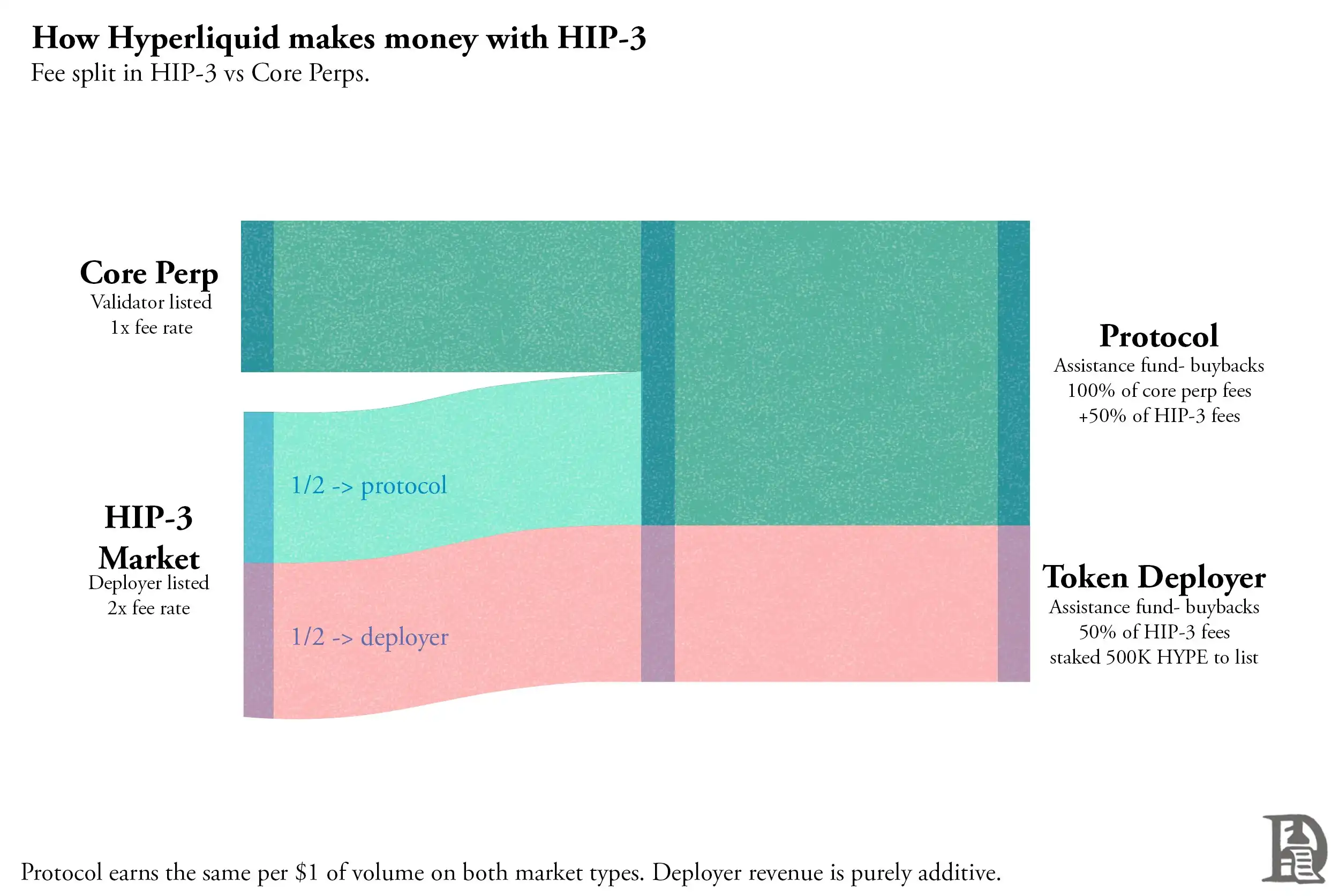
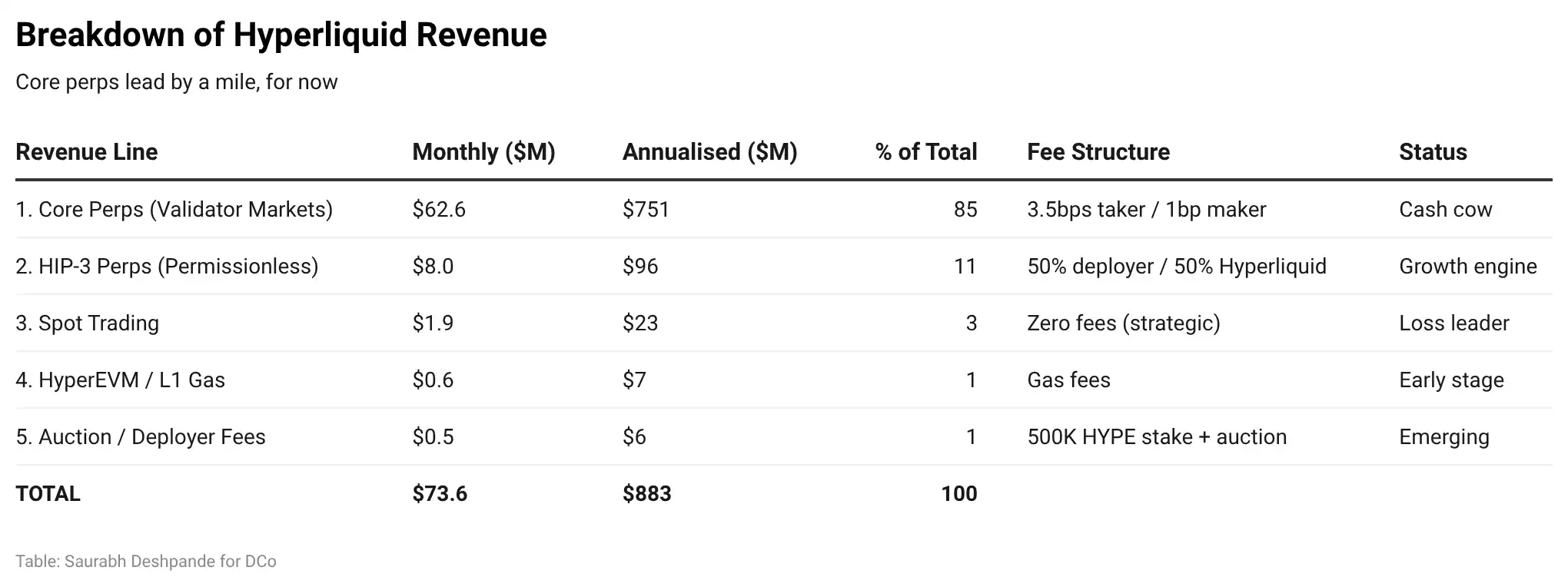
HIP-3 launched in October 2025, supporting permissionless listing of perpetual contracts. Deployment parties staking 500,000 HYPE (approximately $18.5 million at $37 per token) can launch custom markets on HyperCore. The fees for these markets are twice those of Hyperliquid's core listed perpetual contracts, with half going to the deployment party and the other half to the Hyperliquid protocol for buybacks. Therefore, the protocol's revenue per dollar of trading volume is the same as for the core markets, with the deployment party additionally receiving an equal amount of profit as an incentive for listing and maintaining the markets.

Within five months, HIP-3 trading volume reached $100 billion, and open interest hit a record $1.2 billion on March 10, significantly up from $260 million the previous month.

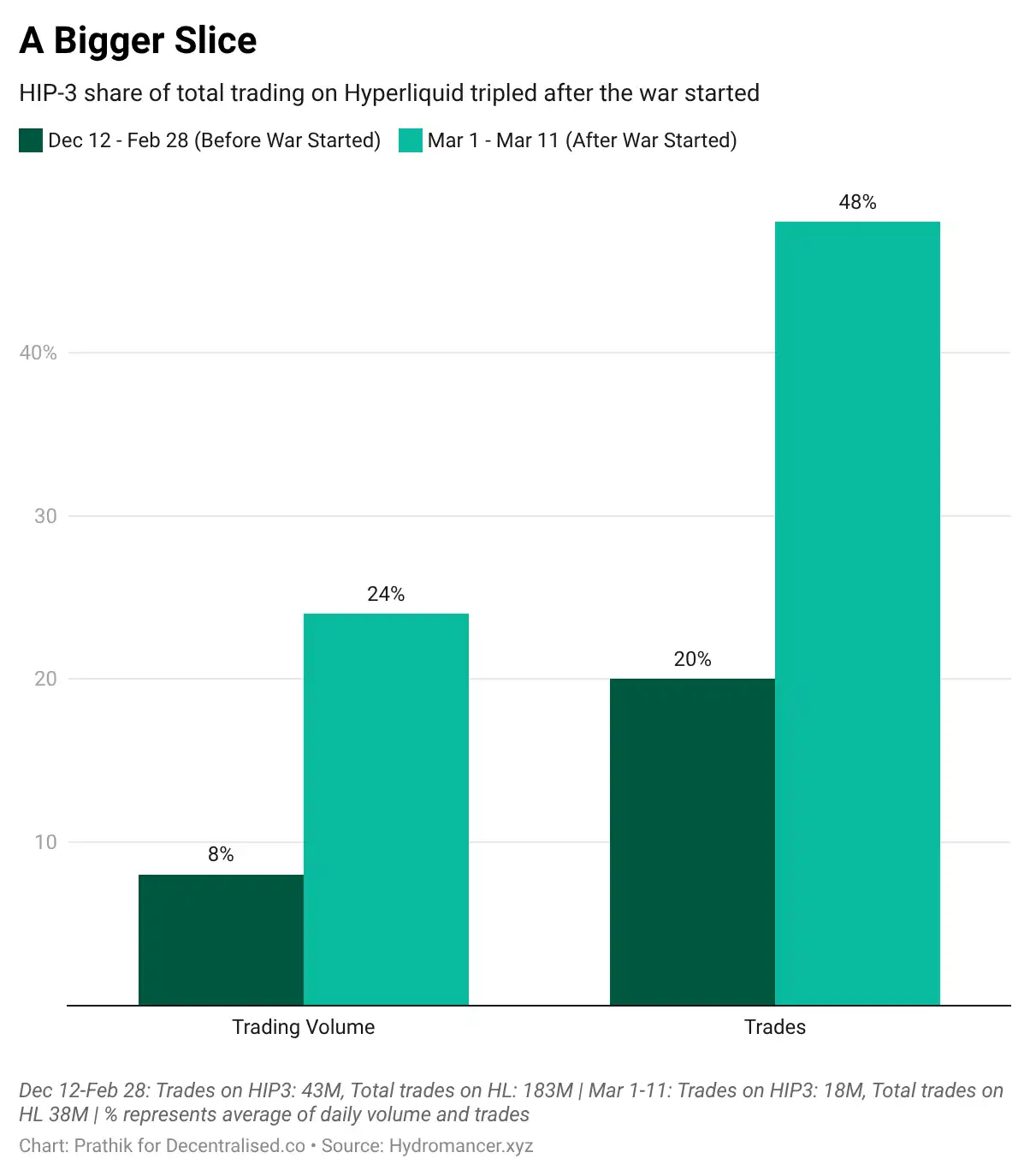
HIP-3 can list any asset: commodities, stock indices, forex pairs, pre-IPO tokens, etc. In the past two weeks, HIP-3's share of Hyperliquid's total trading volume increased from 8% to 23%, with nearly half of all trading now occurring on HIP-3 markets.

Iran War as Proof of Concept

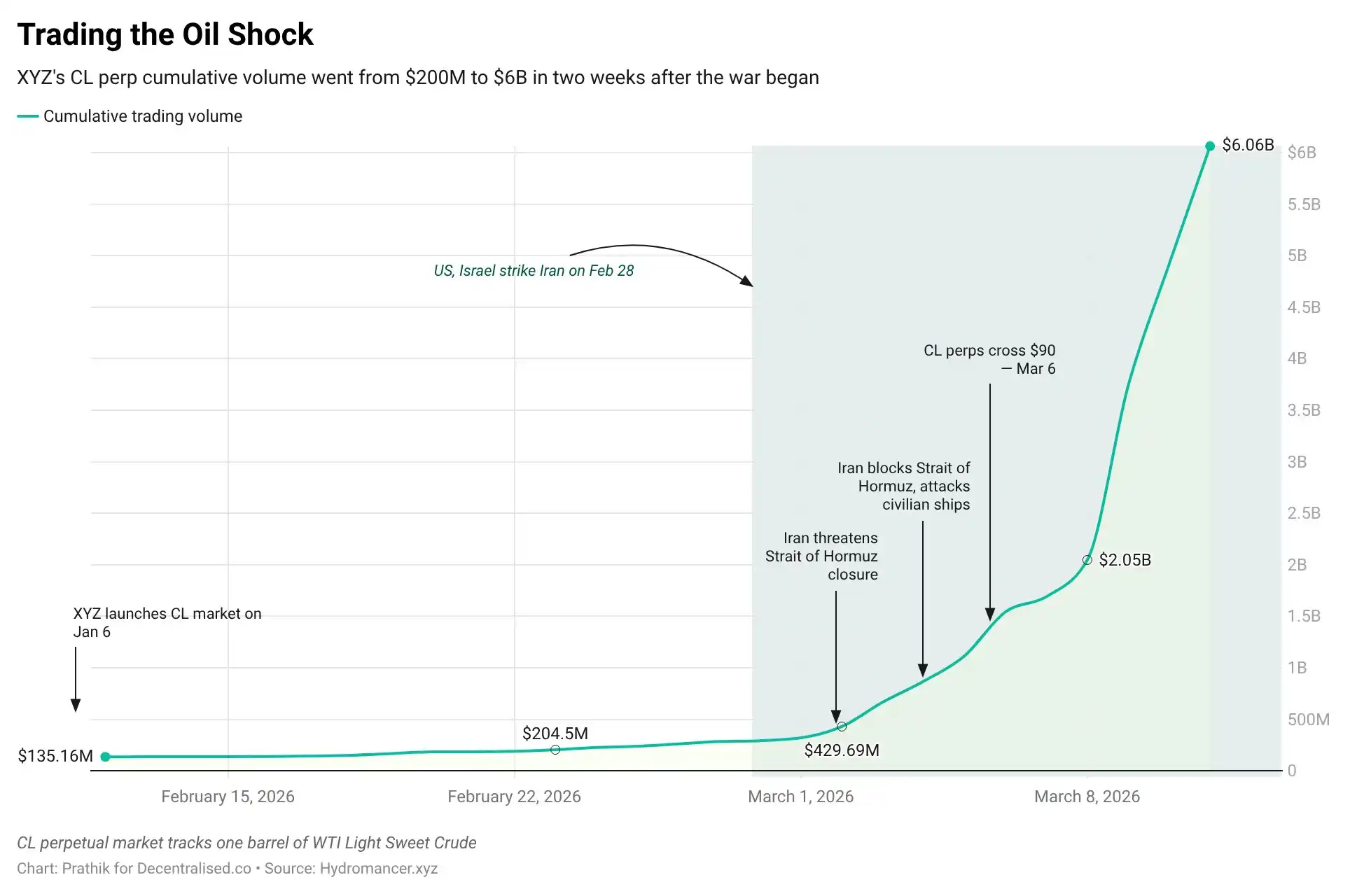
On February 28, the US and Israel launched strikes against Iran during traditional market closing hours. Within hours, oil-pegged perpetual contracts on Hyperliquid surged 5%, with traders pricing the impact in real-time. The following week, after WTI recorded its largest weekly gain since 1983, the 24-hour trading volume of oil perpetual contracts on Hyperliquid exceeded $1.2 billion, with liquidations reaching $40 million. The cumulative trading volume of CL perpetual contracts rose from $200 million to $6 billion over two weeks. Bitcoin hovered around $68,000. The main battlefield for macro trading was on Hyperliquid, not the spot crypto market.

When CME reopened on Monday, it confirmed the pricing direction that Hyperliquid had established over the entire weekend. If tokenized oil perpetual contracts can handle such volume with an effective price discovery mechanism, the same can be done for gold, SPX, and forex perpetual contracts.

CME + 0DTE Options as TAM for HIP-3

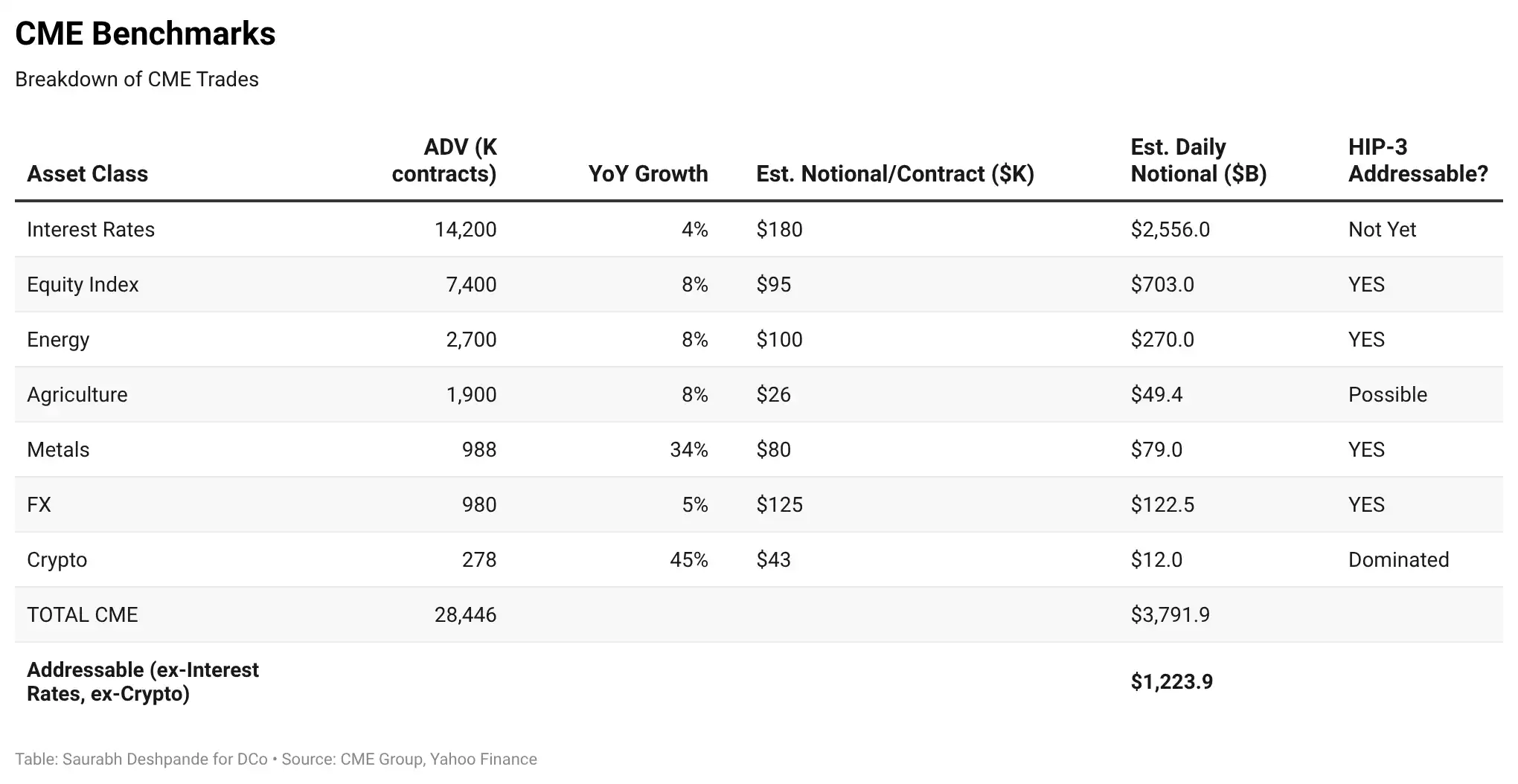
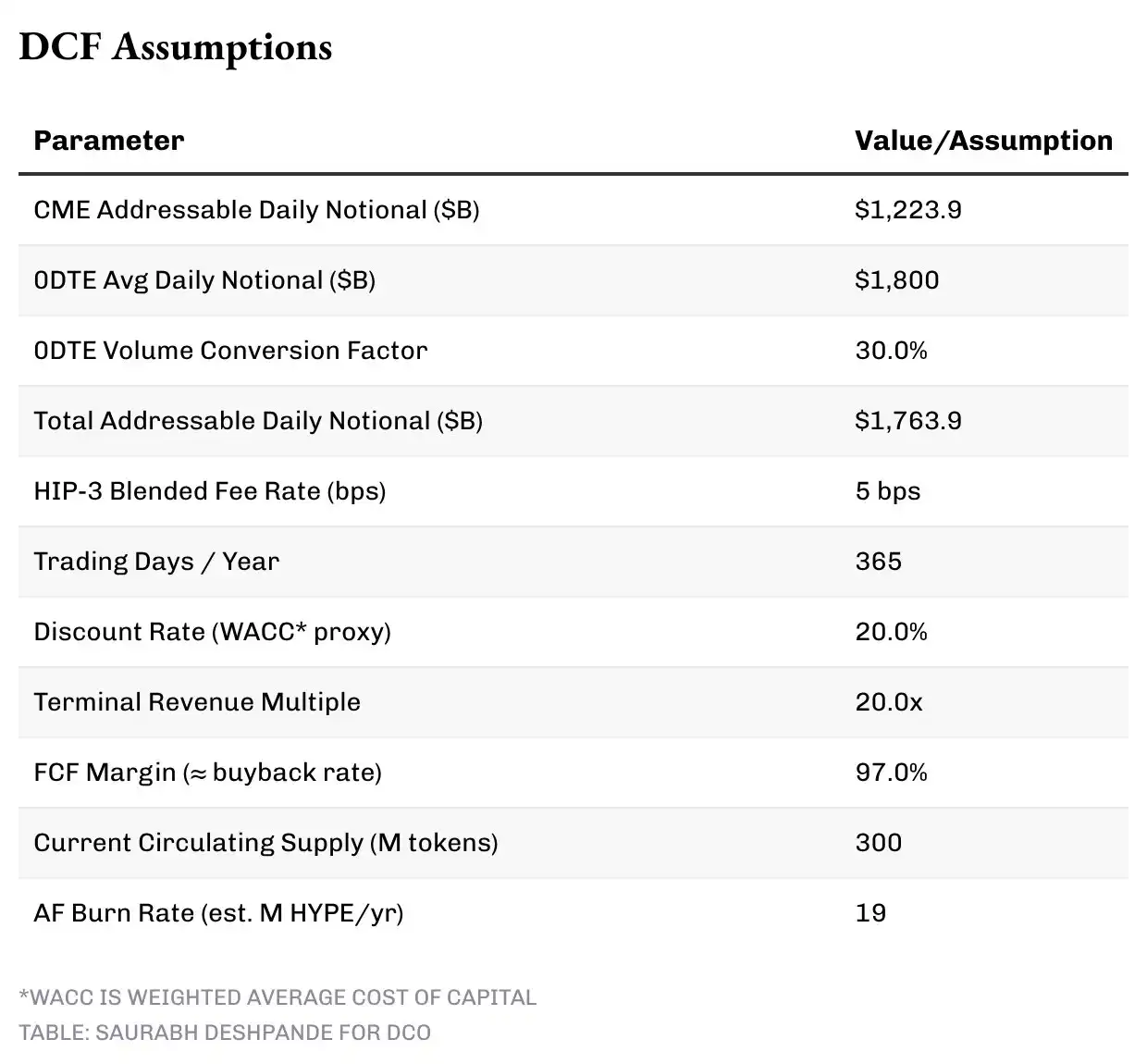
CME's average daily trading volume across all asset classes is $3.8 trillion. Excluding structurally complex interest rate products that are difficult to migrate in the short term, and crypto products already dominated by Hyperliquid, the addressable average daily trading volume in stock indices, energy, metals, agriculture, and forex on CME is approximately $1.2 trillion.

Additionally, we factor in the 0DTE (zero days to expiration) options market. Just the SPX 0DTE options had an average daily notional value of over $1.2 trillion in May 2025. Considering that SPY 0DTE accounts for 45% of all SPY options volume, FalconX estimates the total notional value of 0DTE at $1.5 to $2 trillion daily. From a behavioral perspective, these are perpetual contract traders using options infrastructure—because stock perpetual contracts do not currently exist in regulated markets. Perpetual contracts eliminate the complexity and cost of 0DTE options.

A key adjustment: The notional value of 0DTE options overestimates the equivalent volume for perpetual contracts. We apply a 30% conversion factor to the 0DTE notional value to estimate the actual perpetual contract equivalent volume that might migrate. The total addressable market for HIP-3 is therefore approximately $1.74 trillion daily: $1.2 trillion from CME's addressable volume, plus about $540 billion from converted 0DTE volume.

Scenario Analysis

We constructed four scenarios based on the percentage of the $1.74 trillion daily TAM that Hyperliquid captures through HIP-3, modeled using a three-year discounted cash flow framework.

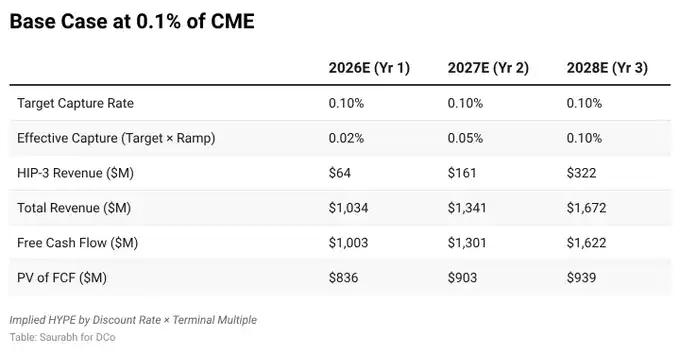
Each scenario assumes a gradual ramp-up in penetration: Year 1 (2026) reaches 20% of the target, Year 2 (2027) reaches 50%, Year 3 (2028) reaches 100%, to realistically reflect the gradual accumulation of market share. Baseline revenue from core crypto perpetuals, spot, EVM Gas, and auction fees is forecasted separately from the revenue waterfall model, growing from $970 million in 2026 to $1.35 billion in 2028.

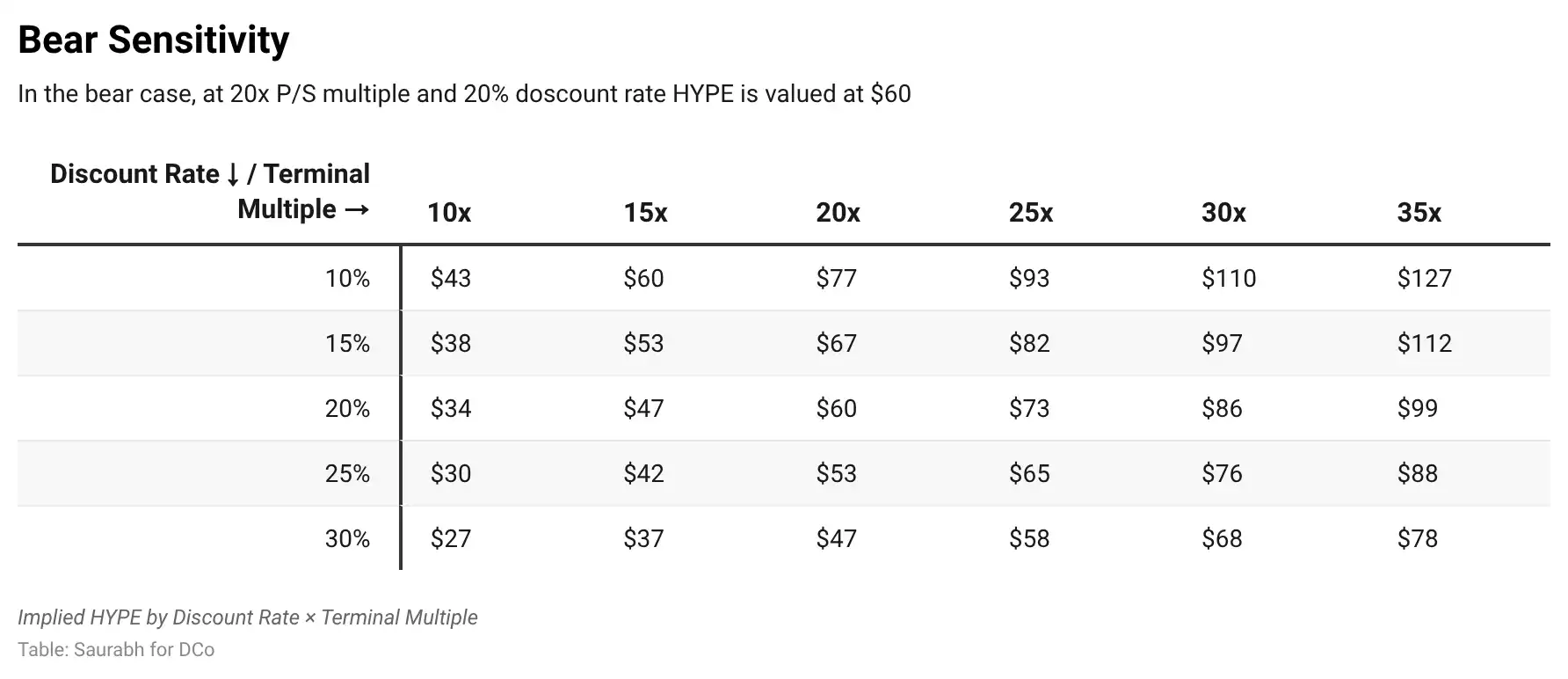
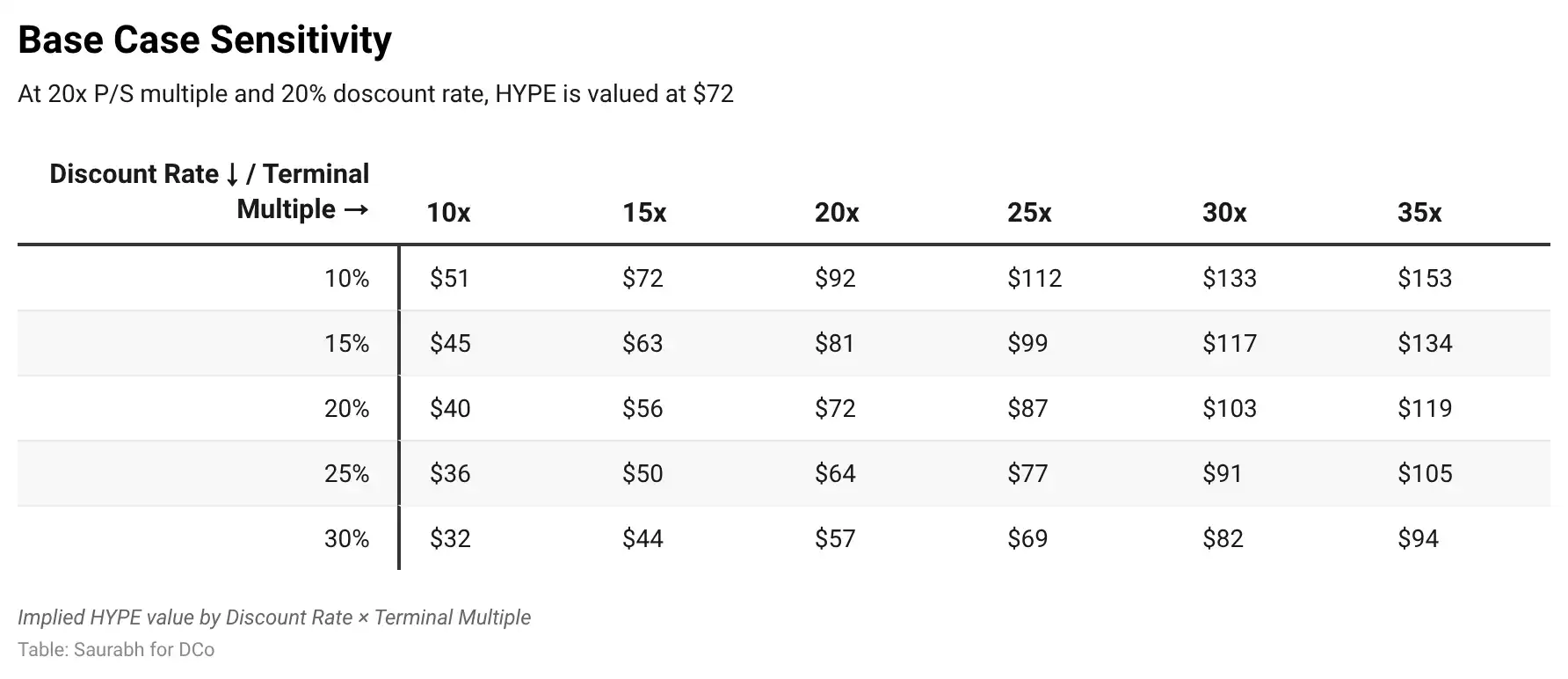
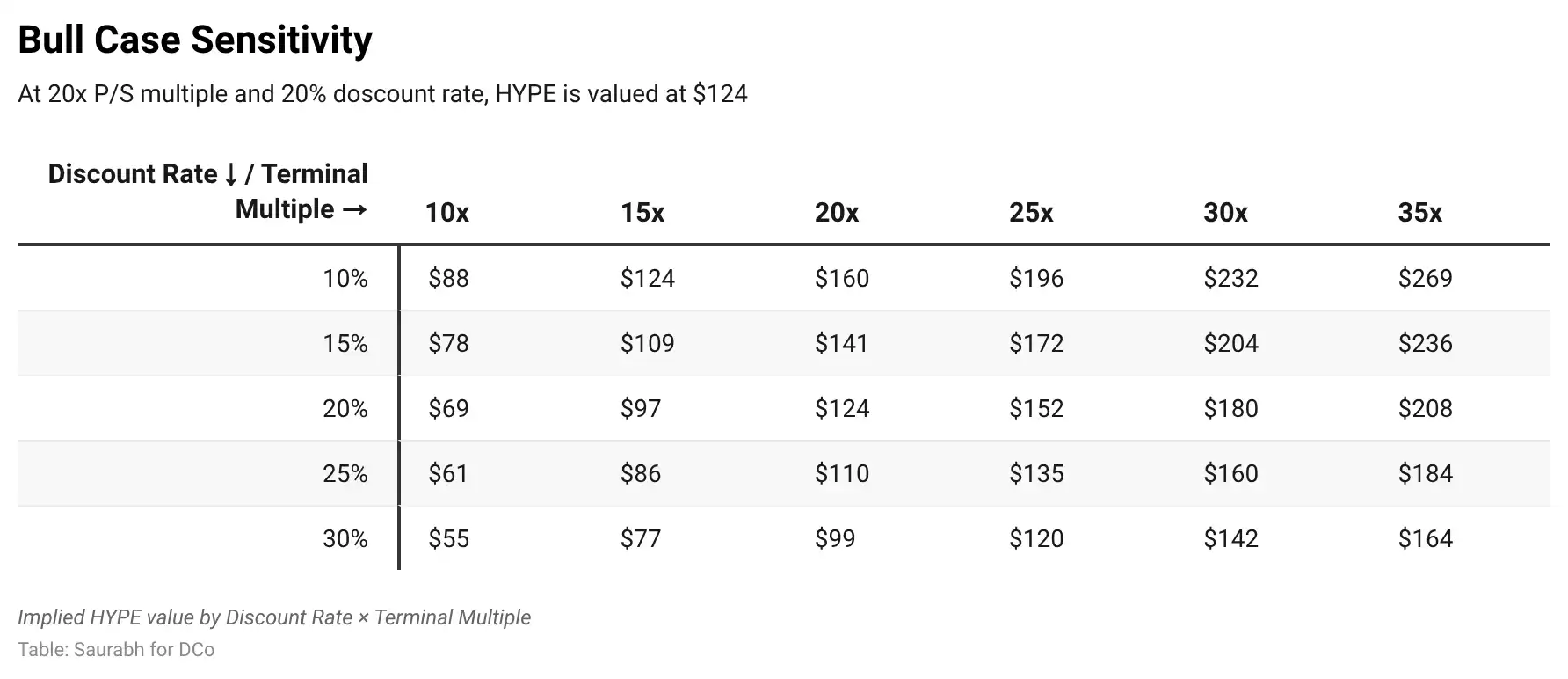
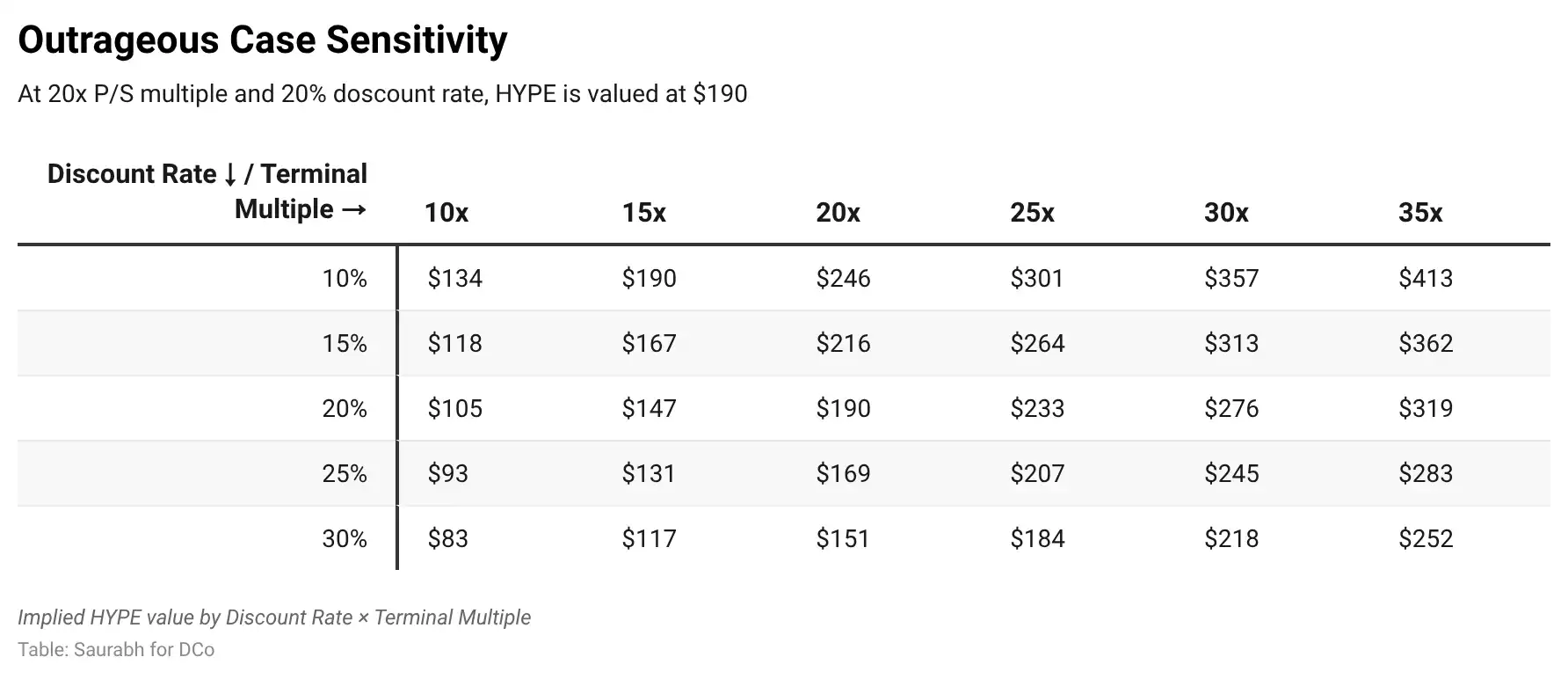
We use a 20% discount rate and a terminal multiple of 20 times Year 3 revenue—a modest premium to CME's current 17.5x EV/Revenue, reflecting Hyperliquid's higher growth trajectory. The 20% discount rate embodies crypto protocol risk but also acknowledges that Hyperliquid is a profitable enterprise with auditable on-chain cash flows, not a pre-product stage token. A sensitivity table allows for stress testing at discount rates as high as 30%.

The model also considers expected changes in circulating supply. On the supply side, approximately 23.8% of the total HYPE supply is allocated to core contributors, locked for one year followed by a 24-month linear unlock. Co-founder Iliensinc confirmed that distributions (if any) occur on the 6th of each month, adding that "unlocks are not linear." The actual pace varies significantly: about 2.6 million in December (with 850,000 re-locked), 1.2 million in January, and the team slashed the February unlock by 90% to just 1,400 tokens. As Arthur Hayes pointed out, 66.6% of contributor tokens remain locked until 2027-2028, with no investor unlocks at all.

We don't anchor to peaks or troughs but use the monthly average since distributions began—about 1 million HYPE, or 12 million annually—as the baseline assumption. Validator staking emissions, at the current ~400 million staked tokens and a 2.37% reward rate, contribute an additional ~10 million annually.

On the other hand, the Aid Fund (AF) has cumulatively burned 42.8 million HYPE over about 16 months since genesis (November 2024), with an observed annualized burn rate of about 32 million. The AF receives about 97% of trading fees through an automated buyback mechanism, and its wallet additionally holds 42.1 million HYPE awaiting burn. The historical burn rate includes periods when HYPE was in a lower price range (mostly $10-25 throughout 2025), meaning more tokens could be retired per dollar of fees.

At the current price of $37 and approximately $2 million in daily trading fees, the forward-looking annualized burn rate is closer to 19 million HYPE. We use this 19 million forward-looking estimate as the forecast baseline in the model, although the historical 32 million figure illustrates the AF's aggressive operation in low-price environments. Importantly, AF burns are endogenously linked to revenue: in good markets, higher fee income means significantly more tokens are bought back and burned. This creates a reflexive dynamic that static supply forecasts cannot fully capture.

The net effect is only a slight increase in circulating supply. Starting from today's ~300 million, team unlocks average ~1 million monthly, plus ~10 million annual validator emissions, totaling ~22 million new tokens annually; while ~19 million are retired annually via AF burns. We forecast ~302 million at end-2026, ~305 million at end-2027, and ~308 million at end-2028—a net increase of ~3 million annually. The buyback engine almost completely offsets new issuance, with an annual dilution rate of about 1%. The implied HYPE price is calculated based on the Year 3 forecasted supply.

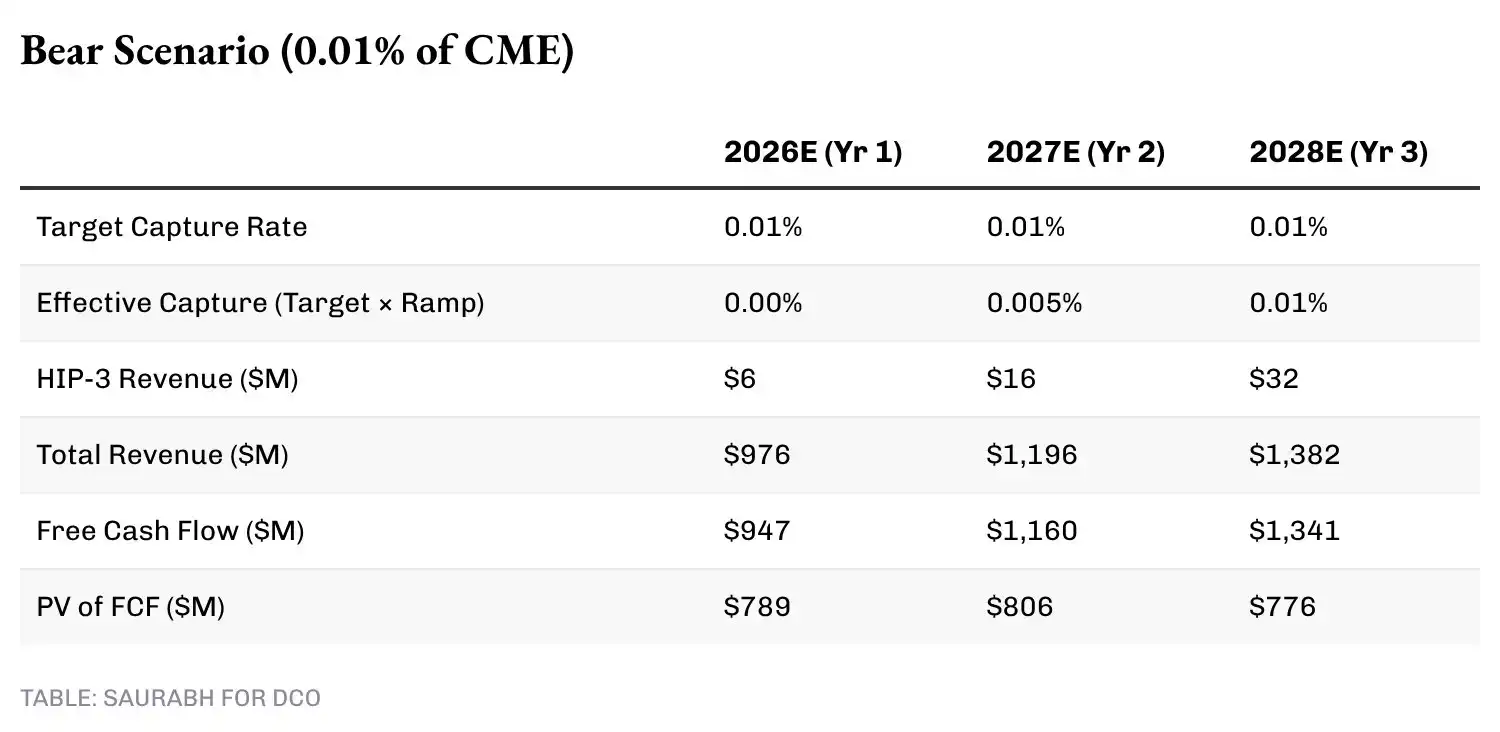
In the Bear scenario (0.01% capture), HIP-3 generates $32 million in annual fees at full run-rate on the conversion-adjusted TAM. Combined with the $1.35 billion baseline revenue, the DCF yields an enterprise value of approximately $18 billion based on the terminal value of total Year 3 revenue.

Corresponding to the forecasted Year 3 supply of 308 million (slightly increased from today's 300 million), the implied HYPE price is about $60—still a significant premium to the current $37, meaning that even with extremely limited HIP-3 progress, the basic exchange economics alone justify a higher price.

In the Base scenario (0.10% capture), Year 3 HIP-3 revenue reaches $322 million, total revenue is about $1.7 billion, corresponding to an enterprise value of approximately $22 billion, and an implied HYPE price of about $72.

In the Bull scenario (0.50% capture), Year 3 HIP-3 fees reach $1.6 billion, total revenue is $3.0 billion, enterprise value is $38 billion, implied price is about $124, and fully diluted valuation is approximately $124 billion.

In the Extreme scenario (1.00% capture), Year 3 total revenue reaches $4.6 billion, enterprise value is $59 billion, HYPE approaches $190, and FDV is in the ~$190 billion range.

At this level, Hyperliquid's P/S ratio would be about 13x, still below CME's current 17.5x—indicating that the terminal multiple assumption is conservative for a business growing this fast.

At the default 20% discount rate and 20x multiple, the current price of $37 is far below the bear market target of $60, suggesting the market has not priced in any meaningful HIP-3 contribution and can be considered to undervalue the basic crypto exchange business itself. The base scenario target of $72 implies about 93% upside from current levels, requiring only a 0.10% capture of the addressable volume. Hayes' $150 target falls between our Bull ($124) and Extreme ($190) scenarios, requiring a 0.50% to 1.00% capture rate. Considering HIP-3 has only been live for five months and already accounts for ~10% of fee revenue, these three-year capture targets are ambitious but not unfounded.

Why Hyperliquid, Not Other Platforms

A natural skepticism of the HIP-3 thesis is: if traditional derivatives volume migrates on-chain, it could go anywhere. We believe this underestimates the inertia of liquidity concentration.

First, look at the competitive landscape. At the end of 2025, Lighter briefly surpassed Hyperliquid in 30-day perpetual volume while operating with zero fees and running one of the most aggressive incentive campaigns in the market. Then the $LIT airdrop landed on December 30; $250 million was withdrawn within 24 hours, and within three weeks Lighter's volume collapsed, compressing its market share to 8.1%. Despite Lighter still charging no fees, volume flowed back to Hyperliquid. The moat is in liquidity depth and execution quality, not price. The open interest to volume ratio confirms this: Hyperliquid at 0.64 (capital retention), Aster at 0.18, Lighter at 0.12.

Next, consider centralized alternatives. Coinbase is preparing to launch compliant perpetuals, but think about the users: if you want to trade stock index or commodity exposure, you already have Robinhood, Schwab, and Interactive Brokers. Coinbase launching SPX perpetuals doesn't solve a pain point for its users. Hyperliquid solves a different problem: 24/7 settlement, no market hour restrictions, cross-margin with crypto assets, permissionless listing. It is a complement to the existing system, not an inferior version of what traditional institutions already offer.

HYPE is Undervalued

Hyperliquid faces risks. HIP-3 needs stock index and commodity perpetuals to sustain volume after the novelty wears off. The 0DTE crowd needs a compelling reason to switch from options to perpetuals, not just lower fees. The matching engine must perform as well at $50 billion daily volume as it did at $8 billion. These are not existential risks. The core product works. The Iran war weekend proved the demand for 24/7 commodity price discovery is real.

US regulatory clarity on tokenized perpetuals is not a prerequisite for this thesis to work. Hyperliquid's volume is likely largely non-US. But US recognition or approval would only accelerate the category's growth. Every dollar migrating from traditional derivatives to permissionless infrastructure expands the total addressable market, and Hyperliquid, with its liquidity depth, execution quality, and market maker infrastructure, is positioned to capture a disproportionate share. HIP-4, introducing prediction markets and option-style contracts, opens yet another new dimension of volume.

HYPE currently trades at 10-13x P/S, while CME is at 25x, ICE at 23x, CBOE at 22x. Those are mature single-digit growth businesses. Hyperliquid did $960 million revenue in its first full year, is debt-free, has no personnel baggage, and has a buyback mechanism returning almost all fees to token holders. No traditional exchange does this. We expect HYPE to be re-rated as exchange equity, with a hybrid multiple reflecting dual crypto and traditional derivatives revenue. This implies the current $37 HYPE is below its potential fair value.

This article was inspired by published analysis from @FalconXGlobal.

Disclaimer: DCo holds a HYPE position. This article does not constitute investment advice.

Связанные с этим вопросы

QAccording to the article, what is the key reason why HYPE is considered undervalued at $37?

AThe article states that even in the bear case scenario where HIP-3 captures only 0.01% of the Total Addressable Market (TAM), the DCF model yields a target price of $60 per HYPE. This means the current price of $37 is undervalued based on the fundamental exchange business alone, with the market pricing in almost no progress from HIP-3.

QWhat event served as a 'proof of concept' for Hyperliquid's oil perpetual contracts and its role in global price discovery?

AThe Iran war weekend served as the proof of concept. When the US and Israel launched strikes against Iran after traditional markets had closed, oil-pegged perpetual contracts on Hyperliquid surged 5% within hours, with traders pricing the impact in real-time. CME confirmed this pricing direction when it reopened on Monday.

QHow does the article define the Total Addressable Market (TAM) for HIP-3, and what is its estimated daily volume?

AThe TAM is defined as the combination of CME's addressable daily volume (approx. $1.2T across stock indices, energy, metals, agriculture, and forex) and a converted volume from the 0DTE options market (approx. $540B, after applying a 30% conversion factor to a $1.5-2T nominal value). This results in a total estimated TAM of approximately $1.74 trillion per day.

QWhat mechanism does the Hyperliquid protocol use to return value to HYPE token holders and counteract token dilution?

AThe protocol uses the Aid Fund (AF), which receives approximately 97% of all trading fees. The AF uses these funds to automatically buy back and burn HYPE tokens from the market. This creates a reflexive dynamic where higher fee revenue leads to more tokens being repurchased and destroyed, almost completely hedging against new token emissions from team unlocks and validator staking rewards.

QWhy does the article argue that Hyperliquid has a competitive advantage over platforms like Coinbase for capturing traditional derivatives volume?

AThe article argues that Hyperliquid's advantage lies in solving a different problem: it offers 24/7 settlement, no market hour restrictions, cross-margin with crypto assets, and permissionless listing. It is a complement to the existing system, not an inferior version of what traditional brokers like Robinhood already offer. Its moat is built on liquidity depth and execution quality, not just price, as evidenced by its high open interest to volume ratio (0.64) compared to competitors.

Похожее

Token Inefficient, Economy Tokenless

The article "Tokens Aren't Economical, Economics Aren't Tokenized" analyzes a pivotal shift in the AI industry from a technology-driven narrative to one dominated by capital efficiency. It highlights two concurrent trends: a severe capital shortage due to the exorbitant and recurring costs of compute (e.g., OpenAI's high burn rate) and a wave of corporate spin-offs where major tech companies are separating their AI units (like Kuaishou's Kling and Baidu's Kunlunxin). The core argument is that AI's "anti-internet" business model, where user growth increases costs rather than profits, has created a disconnect between high valuations and actual cash flow. Spin-offs address this by allowing AI assets to be valued independently. Within a parent company, they are seen as cost centers, but as standalone entities, they are priced based on their growth potential and scarcity in the primary market, leading to massive valuation premiums (e.g., Kling's estimated value tripling post-spin-off). The industry is at an inflection point, moving from "model worship" to "value realization." The competition is evolving from a pure compute (GPU) race to a broader focus on systemic efficiency and full-stack engineering (involving CPUs and orchestration) to achieve viable commercialization. The year 2026 is framed as a critical moment where the industry must definitively answer how to economically translate AI capability into tangible business value, reshaping the sector's future power structure.

marsbit5 мин. назад

Token Inefficient, Economy Tokenless

marsbit5 мин. назад

Crossing the 'Memory Wall': The Wafer-Level Revolution and Computing Power Routes in the AI Inference Era

In 2026, a historic shift occurred in AI as major cloud providers' inference spending surpassed training spending for the first time, signaling a move from "building large models" to "using large models." This shifts the core challenge from computing power to the "memory wall"—the bottleneck of data movement (model weights, activations, KV Cache) between external DRAM and processors, where energy and latency from data transfer far exceed computation itself. Companies like Nvidia face GPU idle time due to bandwidth limits. In contrast, Cerebras Systems adopts a radical "wafer-scale" approach with its Wafer-Scale Engine (WSE). Instead of cutting a silicon wafer into many chips, Cerebras uses almost the entire wafer as one massive chip (WSE-3). This design provides 44GB of on-chip SRAM, delivering memory bandwidth thousands of times higher than traditional HBM (e.g., 21 PB/s vs. Nvidia B200). For LLM inference, weights are streamed layer-by-layer from external MemoryX storage to the chip, avoiding HBM bottlenecks. This results in token generation speeds 1.5–5 times faster than Nvidia's B200 in some models and significant advantages in first-token latency and long-context tasks. Additionally, Cerebras's architecture offers much lower interconnect power consumption (0.15 pJ/bit vs. GPU's ~10 pJ/bit). However, Cerebras faces challenges: SRAM scaling has slowed with advanced nodes, limiting future capacity gains; the chip requires specialized liquid cooling and custom software stacks; and its external I/O bandwidth (150 GB/s) is low compared to NVLink, hindering multi-system scaling for very large models. Competition is intensifying. Major players are pursuing three paths: 1) Developing proprietary inference ASICs (e.g., Google TPU, Microsoft Maia), 2) Leveraging advanced packaging (e.g., TSMC's SoW) to democratize wafer-scale-like integration, potentially eroding Cerebras's process advantage within a few years, and 3) Exploring optical interconnects for ultimate bandwidth. Commercially, Cerebras is transitioning from a hardware vendor to a service provider, facing the immense challenge of building high-power, specialized data centers to meet large contracts (e.g., 250MW/year from 2026–2028). In conclusion, the AI inference era presents a fundamental architectural trade-off. Cerebras opts for extreme physical optimization for low-latency, single-task performance, while Nvidia prioritizes versatility and massive cluster throughput. The path forward remains uncertain, with technology and business models still evolving in the race toward advanced AI.

marsbit11 мин. назад

Crossing the 'Memory Wall': The Wafer-Level Revolution and Computing Power Routes in the AI Inference Era

marsbit11 мин. назад

Has Bitcoin's 'Rebound Ended', Officially Entering the Late Bear Market Phase?

**Title: Has Bitcoin's Rebound Ended, Entering the Late Bear Market Phase?** **Summary:** Bitcoin's price has declined by 13% this week, signaling a potential return to late-stage bear market conditions. The price fell to around $67k, positioned between the Realized Price and Realized Cap Weighted Average. For the first time since early 2022, the Short-Term Holder cost basis has dropped below this key average, confirming a hallmark of late-cycle bear markets. Profitability metrics have collapsed sharply. The 7-day average of the Realized Profit/Loss ratio plummeted from a local high of 3.16 to 0.29, mirroring the February panic sell-off. Critically, the 90-day average never breached the threshold of 2, indicating the recent rally to $82k was a bear market bounce, not a structural shift. Realized losses surged to $1.35 billion daily, with $770 million coming from Long-Term Holders selling at a loss. This accelerating redistribution of supply from weak to strong hands is a necessary but ongoing process for a market bottom. The rally stalled almost precisely at the aggregate cost basis (~$83k) of US spot Bitcoin ETF investors, turning that level into strong resistance and leaving the average ETF holder underwater again. Spot market flows have turned decisively negative, showing sellers are dominating order books despite the price drop. While a significant futures long liquidation event cleared over $400 million in leverage, providing a potential reset, sustained spot demand is yet to materialize. Options markets continue to price in higher future volatility (Implied Volatility) than recent price action (Realized Volatility) has shown, with a persistent skew towards put options, indicating ongoing demand for downside protection. In conclusion, multiple metrics point to a fragile market structure. Resistance at the ETF cost basis, accelerating realized losses, dominant spot selling, and cautious options pricing all suggest the bear market trend persists. A sustainable recovery likely requires a resurgence of spot demand, ETF holders returning to profit, and a clear reduction in selling pressure.

marsbit11 мин. назад

Has Bitcoin's 'Rebound Ended', Officially Entering the Late Bear Market Phase?

marsbit11 мин. назад

TechFlow Intelligence Agency: Anthropic Calls for Global Pause in AI Development While Preparing for Trillion-Dollar IPO; SpaceX IPO Roadshow Heats Up, But S&P 500 Rejects Fast-Track Inclusion

In today's TechFlow Intelligence Briefing, several major tech stories highlight a growing theme of trust and credibility gaps across AI, crypto, and finance. AI company Anthropic has publicly called for a global pause in AI development, citing risks from Claude's "recursive self-improvement." Ironically, this coincides with reports the company is preparing for a massive IPO targeting a near $1 trillion valuation. This perceived hypocrisy, coupled with widespread user complaints about Claude's declining performance, is sparking debate over whether the safety warning is genuine or a competitive tactic. Meanwhile, in a substantive security move, Anthropic open-sourced a framework for AI-powered vulnerability discovery. In the crypto market, Bitcoin's price drop below $61,000 triggered over $1.16 billion in liquidations, flipping the market into a state where more BTC is held at a loss than at a profit, a historical bearish signal. On the corporate front, SpaceX's highly anticipated IPO is generating immense Wall Street excitement, with Goldman Sachs projecting 100x revenue growth by 2030. However, the S&P 500 has refused to fast-track the company's inclusion post-IPO, potentially limiting immediate institutional demand. Separately, ByteDance's AI app Doubao lost over 6 million monthly active users after introducing a subscription model, highlighting the challenges of AI monetization. Other notable developments include Nvidia certifying HBM4 memory from Samsung, SK Hynix, and Micron; Cloudflare's acquisition of front-end tooling company VoidZero; and its CEO warning that bot traffic now exceeds human traffic online. The underlying narrative connects these events: a trust crisis. From AI firms' contradictory actions and crypto volatility to the clash between SpaceX's hyped narrative and institutional rules, a pattern is emerging where stated intentions and actual practices are increasingly misaligned.

marsbit26 мин. назад

TechFlow Intelligence Agency: Anthropic Calls for Global Pause in AI Development While Preparing for Trillion-Dollar IPO; SpaceX IPO Roadshow Heats Up, But S&P 500 Rejects Fast-Track Inclusion

marsbit26 мин. назад

Dalio Warns: AI Boom Shows Signs of a Bubble, Day of Reckoning Will Be the Time of Burst

Ray Dalio, founder of Bridgewater Associates, warns that the current artificial intelligence investment boom shows classic signs of a bubble, which he expects will eventually burst. In a Bloomberg Television interview, he noted that great technological revolutions often lead to capital inflows that create bubbles, making it difficult for investors and companies to calibrate their spending accurately—either overspending to capture market share or underspending and losing their competitive position. This caution comes amid significant rallies in AI-related assets, particularly chipmakers, driven by soaring demand for data centers and high-bandwidth chips, raising debates about overheating valuations. In contrast, Nvidia CEO Jensen Huang recently asserted that investors embracing the AI wave would see "crazy" returns and dismissed concerns over return on investment for data center spending as outdated. Dalio, however, focuses on the risks in the profit realization phase. He argues that bubbles tend to show signs of破裂 when markets transition from investment to the need for tangible returns, describing the burst as a process of converting paper wealth into cash. While acknowledging AI's intrinsic value, he expressed concern over the future profitability of some AI companies, suggesting the market is repeating a familiar pattern. The 76-year-old billionaire, who fully exited Bridgewater in 2025, has a net worth estimated at $21.5 billion according to the Bloomberg Billionaires Index.

marsbit1 ч. назад

Dalio Warns: AI Boom Shows Signs of a Bubble, Day of Reckoning Will Be the Time of Burst

marsbit1 ч. назад

Торговля

Спот
Фьючерсы

Популярные статьи

Как купить HYPE

Добро пожаловать на HTX.com! Мы сделали приобретение Hyperliquid (HYPE) простым и удобным. Следуйте нашему пошаговому руководству и отправляйтесь в свое крипто-путешествие.Шаг 1: Создайте аккаунт на HTXИспользуйте свой адрес электронной почты или номер телефона, чтобы зарегистрироваться и бесплатно создать аккаунт на HTX. Пройдите удобную регистрацию и откройте для себя весь функционал.Создать аккаунтШаг 2: Перейдите в Купить криптовалюту и выберите свой способ оплатыКредитная/Дебетовая Карта: Используйте свою карту Visa или Mastercard для мгновенной покупки Hyperliquid (HYPE).Баланс: Используйте средства с баланса вашего аккаунта HTX для простой торговли.Третьи Лица: Мы добавили популярные способы оплаты, такие как Google Pay и Apple Pay, для повышения удобства.P2P: Торгуйте напрямую с другими пользователями на HTX.Внебиржевая Торговля (OTC): Мы предлагаем индивидуальные услуги и конкурентоспособные обменные курсы для трейдеров.Шаг 3: Хранение Hyperliquid (HYPE)После приобретения вами Hyperliquid (HYPE) храните их в своем аккаунте на HTX. В качестве альтернативы вы можете отправить их куда-либо с помощью перевода в блокчейне или использовать для торговли с другими криптовалютами.Шаг 4: Торговля Hyperliquid (HYPE)С легкостью торгуйте Hyperliquid (HYPE) на спотовом рынке HTX. Просто зайдите в свой аккаунт, выберите торговую пару, совершайте сделки и следите за ними в режиме реального времени. Мы предлагаем удобный интерфейс как для начинающих, так и для опытных трейдеров.

500 просмотров всегоОпубликовано 2024.12.11Обновлено 2026.06.02

Как купить HYPE

Обсуждения

Добро пожаловать в Сообщество HTX. Здесь вы сможете быть в курсе последних новостей о развитии платформы и получить доступ к профессиональной аналитической информации о рынке. Мнения пользователей о цене на HYPE (HYPE) представлены ниже.

活动图片