Amid Global Easing Expectations, ETH Has Entered the Value "Sweet Spot"

marsbitОпубликовано 2025-12-12Обновлено 2025-12-12

Введение

In a market still recovering from the October 11 crash, Ethereum (ETH) is positioned as a strong value opportunity amid growing global monetary easing expectations. The article highlights three key factors supporting this outlook: 1. **Wall Street’s deepening integration with crypto**: U.S. regulatory and financial leaders, including SEC officials, are endorsing tokenization and blockchain adoption. A capital network linking U.S. Treasury bonds, stablecoins (like USDT and USDC), real-world assets (RWA), and Ethereum is strengthening. ETH dominates RWA total value locked (TVL), accounting for 64.5% of the crypto total. 2. **ETH’s value capture mechanism**: The Fusaka upgrade introduced EIP-7918, tying blob transaction fees to L1 base fees, ensuring L2 activity consistently contributes to ETH burning. Blob fees now represent 98% of ETH burned, potentially returning ETH to a deflationary model as L2 adoption grows. 3. **Technical strength**: ETH’s leverage ratio has dropped to a historical low of 4%, indicating reduced speculative risk. Exchange reserves are at record lows, and the ETH/BTC ratio has shown resilience, suggesting a potential short squeeze. With anticipated monetary easing in both the U.S. and China, ETH is entering an attractive accumulation zone.

Author: Trend Research

Since the market crash on October 11, the entire crypto market has been sluggish, with market makers and investors suffering heavy losses. The recovery of capital and sentiment will take time.

However, the crypto market is never short of new fluctuations and opportunities, and we remain optimistic about the future market.

This is because the trend of mainstream crypto assets integrating with traditional finance to form new business models has not changed; instead, it has been building a moat rapidly during this period of market downturn.

1. Wall Street Consensus Strengthens

On December 3, U.S. SEC Chairman Paul Atkins stated in an exclusive interview with FOX at the New York Stock Exchange: "In the coming years, the entire U.S. financial market may migrate onto the blockchain."

Atkins mentioned:

  1. The core advantage of tokenization is that if assets exist on the blockchain, the ownership structure and asset attributes will be highly transparent. Currently, publicly listed companies often do not know exactly who their shareholders are, where they are located, or where the shares are held.
  2. Tokenization also has the potential to achieve "T+0" settlement, replacing the current "T+1" trading settlement cycle. In principle, the delivery-versus-payment (DVP)/receive-versus-payment (RVP) mechanism on-chain can reduce market risks and enhance transparency. The time gap between clearing, settlement, and fund delivery is currently a source of systemic risk.
  3. He believes tokenization is an inevitable trend in financial services, and mainstream banks and brokerages are already moving toward tokenization. The world may not even need 10 years... perhaps it will become a reality in just a few years. We are embracing new technologies to ensure the U.S. remains at the forefront in areas like cryptocurrency.

In reality, Wall Street and Washington have already established a deep capital network for crypto, forming a new narrative chain: U.S. political and economic elites → U.S. bonds (Treasury bonds) → stablecoins / crypto treasury companies → Ethereum + RWA + L2
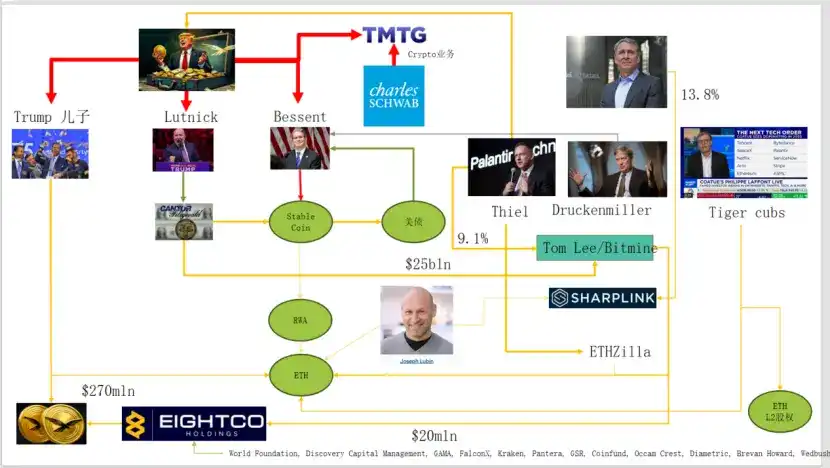
This chart shows the intricate connections between the Trump family, traditional bond market makers, the Treasury Department, tech companies, and crypto companies, with the green elliptical links forming the backbone:

(1) Stable Coin (USDT, USDC, dollar assets behind WLD, etc.)

The majority of reserve assets are short-term U.S. bonds + bank deposits, held through brokers like Cantor.

(2) U.S. Bonds (U.S. Treasuries)

Issued and managed by the Treasury / Bessent side.

Used by Palantir, Druckenmiller, Tiger Cubs, etc., as low-risk interest rate base holdings.

Also the yield assets pursued by stablecoins / treasury companies.

(3) RWA

From U.S. bonds, mortgages, accounts receivable to housing finance.

Tokenized through Ethereum L1 / L2 protocols.

(4) ETH & ETH L2 Equity

Ethereum is the main chain hosting RWA, stablecoins, DeFi, and AI-DeFi.

L2 equity / Token represents the right to claim future transaction volume and fee cash flows.

This chain expresses:

U.S. dollar credit → U.S. bonds → stablecoin reserves → various crypto treasury / RWA protocols → ultimately settled on ETH / L2.

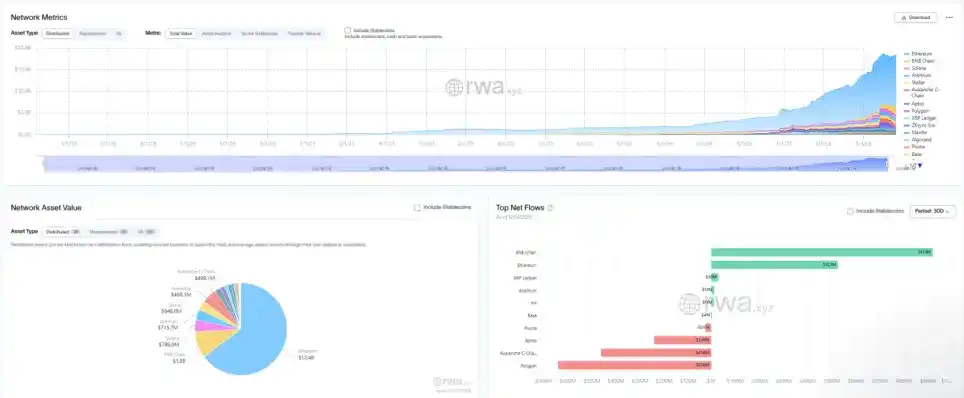
In terms of RWA TVL, compared to other public chains affected by the October 11 decline, ETH is the only public chain that quickly recovered from the drop and rose. Its current TVL is $12.4 billion, accounting for 64.5% of the total crypto market.
2. Ethereum Explores Value Capture

The recent Ethereum Fusaka upgrade did not cause much stir in the market, but from the perspective of network structure and economic model evolution, it is a "milestone event." Fusaka is not just about scaling through EIPs like PeerDAS; it attempts to address the issue of insufficient value capture on the L1 mainnet caused by L2 development.
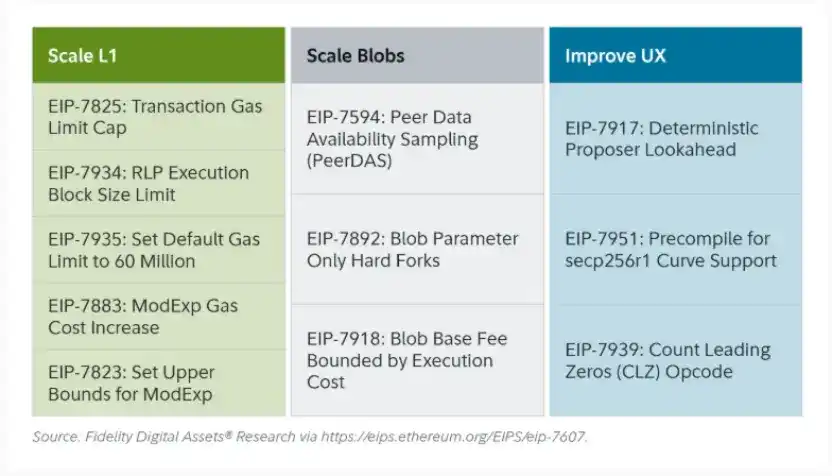
Through EIP-7918, ETH introduces a "dynamic floor price" for blob base fees, tying its lower limit to the L1 execution layer base fee, requiring blobs to pay DA fees at a unit price of at least approximately 1/16 of the L1 base fee. This means Rollups can no longer occupy blob bandwidth at near-zero cost in the long term; the corresponding fees will be burned and returned to ETH holders.
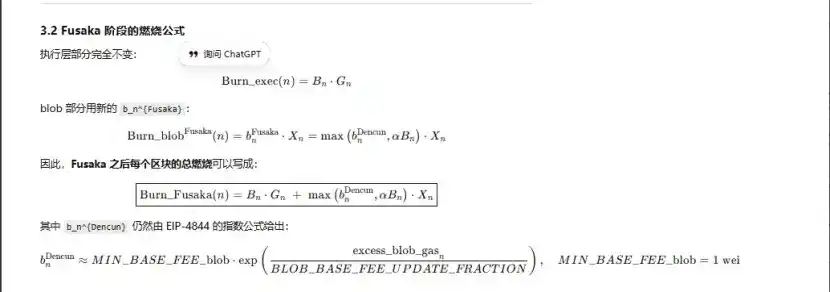
There have been three upgrades related to "burning" in Ethereum:

(1) London (single dimension): Only burned the execution layer; ETH began to experience structural burning due to L1 usage.

(2) Dencun (dual dimension + independent blob market): Burned execution layer + blob; L2 data written to blobs also burned ETH, but the blob portion was almost 0 during low demand.

(3) Fusaka (dual dimension + blob bound to L1): To use L2 (blob), one must pay at least a fixed proportion of the L1 base fee, which is burned. L2 activity is more stably mapped to ETH burning.
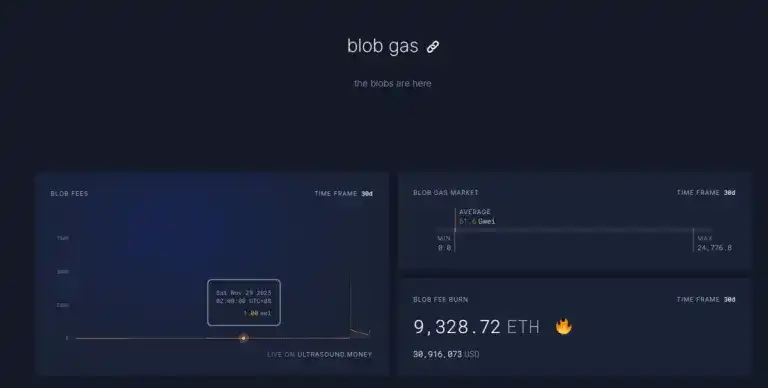
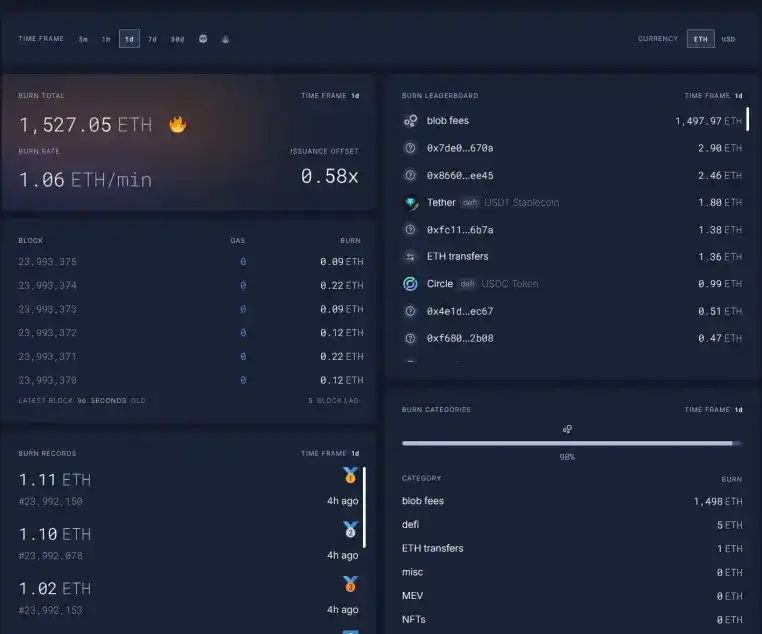
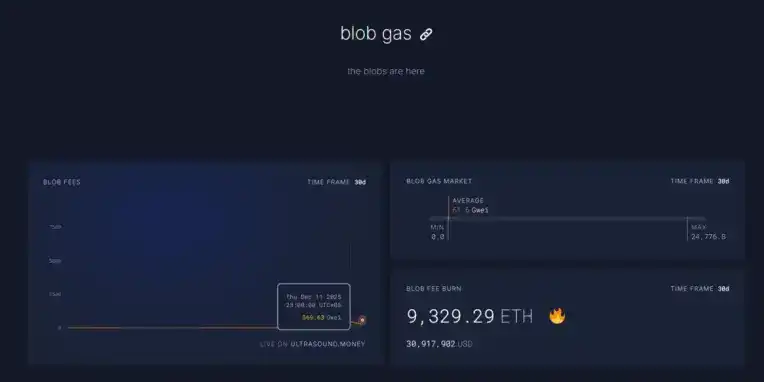
As of December 11, 23:00, the 1-hour blob fees have reached 569.63 billion times the pre-Fusaka upgrade level, burning 1,527 ETH in one day. Blob fees now account for the highest proportion of burning, up to 98%. As ETH L2 becomes more active, this upgrade is expected to bring ETH back into deflation.

3. Ethereum Technical Strength Improves

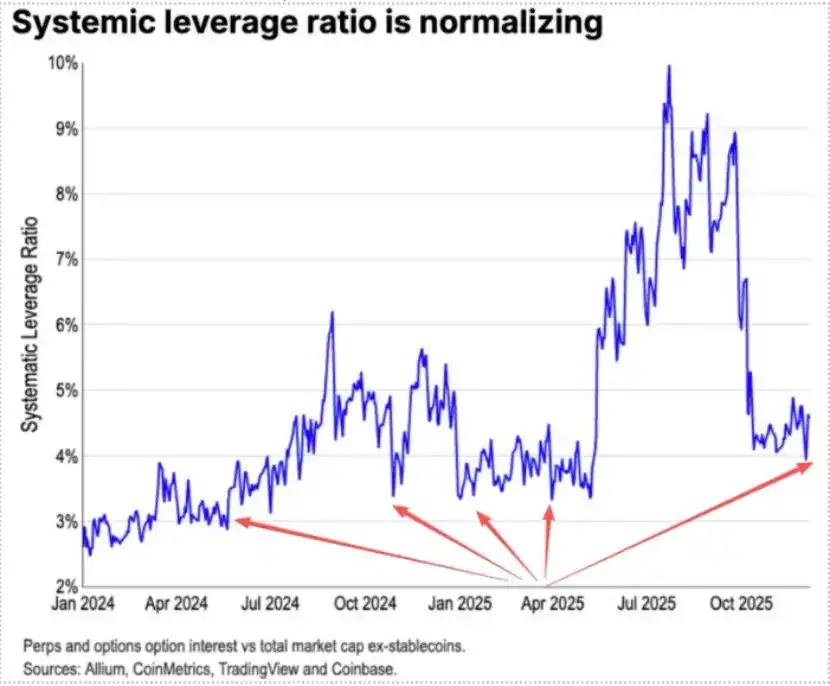
During the October 11 decline, ETH's futures leverage was thoroughly cleared, eventually affecting the spot leverage. At the same time, many with weak conviction in ETH led to numerous early OG investors reducing their holdings. According to Coinbase data, speculative leverage in the crypto space has dropped to a historically low region of 4%.
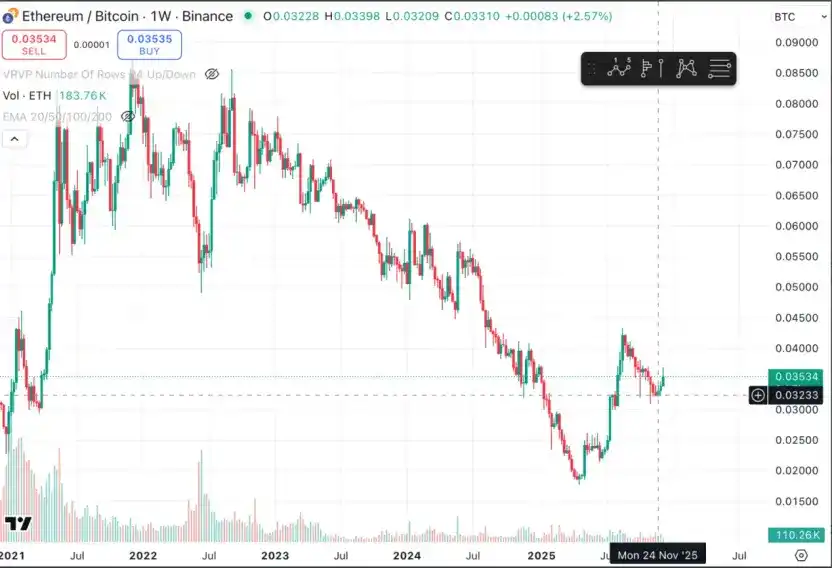
In the past, a significant portion of ETH short positions came from traditional Long BTC/Short ETH paired trades, which generally did very well during bear markets. However, this time something unexpected happened. The ETH/BTC ratio has maintained a sideways resistance trend since November.
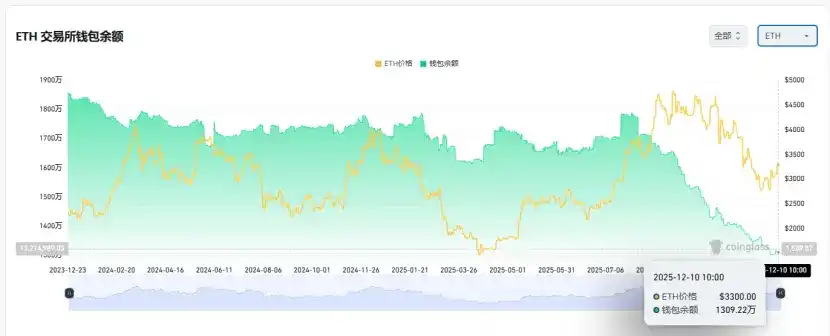
ETH's current exchange balance is 13 million coins, about 10% of the total supply, which is at a historical low. As the Long BTC/Short ETH pairing has failed since November, during extreme market panic, a "short squeeze" opportunity may gradually emerge.
As we approach the turn of 2025–2026, both the U.S. and China have signaled friendly monetary and fiscal policies:

The U.S. is expected to pursue tax cuts, interest rate reductions, and relaxed crypto regulations, while China will adopt appropriate easing measures and financial stability (suppressing volatility).

Amid the relatively loose expectations from both the U.S. and China, and scenarios suppressing downward asset volatility, ETH remains in a favorable buying "sweet spot" during extreme panic, while capital and sentiment have not fully recovered.


Связанные с этим вопросы

QWhat are the core advantages of asset tokenization on the blockchain according to SEC Chairman Paul Atkins?

AThe core advantages include: 1) High transparency in ownership structure and asset attributes, as opposed to traditional systems where companies often don't know their shareholders' details. 2) The potential to achieve 'T+0' settlement, replacing the current 'T+1' cycle, which can reduce market risk and increase transparency through on-chain Delivery vs. Payment (DVP)/Receive vs. Payment (RVP) mechanisms. 3) It is considered an inevitable trend in financial services, with mainstream banks and brokerages already moving in this direction.

QWhat is the new narrative chain described as being built by Wall Street and Washington for deeper crypto integration?

AThe new narrative chain is: U.S. political and economic elites → U.S. Treasury bonds → Stablecoins / Crypto treasury companies → Ethereum + RWA (Real World Assets) + Layer 2 solutions (L2). This chain represents the flow of dollar credit into crypto, ultimately settling on Ethereum ecosystem.

QHow did the Fusaka upgrade change Ethereum's economic model regarding Layer 2 value capture?

AThe Fusaka upgrade introduced EIP-7918, which established a 'dynamic floor price' for blob base fees. It binds the minimum blob fee to the L1 execution layer base fee, requiring Rollups to pay for data availability (DA) at a rate of at least approximately 1/16th of the L1 base fee. This means Rollups can no longer use blob space at near-zero cost long-term, and the fees are burned, thereby returning value to ETH holders.

QWhat was the significant change in the contribution of blob fees to ETH burning after the Fusaka upgrade?

AAfter the Fusaka upgrade, blob fees became the highest contributing component to ETH burning, accounting for 98% of the total. At one point, the hourly blob fee reached 5696.3 billion times the pre-upgrade level, burning 1,527 ETH in a single day.

QWhy is ETH considered to be in a good 'buying zone' or 'value batters box' according to the article's technical analysis?

AETH is considered to be in a good 'buying zone' because: 1) Leverage in the futures market was thoroughly cleared out during the 10/11 crash, even affecting spot market leverage. 2) The ETH/BTC ratio has shown resistance and held steady since November, causing the popular Long BTC/Short ETH pair trade to fail. 3) ETH exchange reserves are at a historical low of 13 million, about 10% of the total supply. 4) Expectations of friendly monetary and fiscal policies from both the U.S. (rate cuts, tax cuts, relaxed crypto regulation) and China (appropriate easing, financial stability) are creating a macro environment that suppresses downward volatility, making it a favorable time to accumulate.

Похожее

a16z: AI's 'Amnesia', Can Continuous Learning Cure It?

The article "a16z: AI's 'Amnesia' – Can Continual Learning Cure It?" explores the limitations of current large language models (LLMs), which, like the protagonist in the film *Memento*, are trapped in a perpetual present—unable to form new memories after training. While methods like in-context learning (ICL), retrieval-augmented generation (RAG), and external scaffolding (e.g., chat history, prompts) provide temporary solutions, they fail to enable true internalization of new knowledge. The authors argue that compression—the core of learning during training—is halted at deployment, preventing models from generalizing, discovering novel solutions (e.g., mathematical proofs), or handling adversarial scenarios. The piece introduces *continual learning* as a critical research direction to address this, categorizing approaches into three paths: 1. **Context**: Scaling external memory via longer context windows, multi-agent systems, and smarter retrieval. 2. **Modules**: Using pluggable adapters or external memory layers for specialization without full retraining. 3. **Weights**: Enabling parameter updates through sparse training, test-time training, meta-learning, distillation, and reinforcement learning from feedback. Challenges include catastrophic forgetting, safety risks, and auditability, but overcoming these could unlock models that learn iteratively from experience. The conclusion emphasizes that while context-based methods are effective, true breakthroughs require models to compress new information into weights post-deployment, moving from mere retrieval to genuine learning.

marsbit2 ч. назад

a16z: AI's 'Amnesia', Can Continuous Learning Cure It?

marsbit2 ч. назад

Can a Hair Dryer Earn $34,000? Deciphering the Reflexivity Paradox in Prediction Markets

An individual manipulated a weather sensor at Paris Charles de Gaulle Airport with a portable heat source, causing a Polymarket weather market to settle at 22°C and earning $34,000. This incident highlights a fundamental issue in prediction markets: when a market aims to reflect reality, it also incentivizes participants to influence that reality. Prediction markets operate on two layers: platform rules (what outcome counts as a win) and data sources (what actually happened). While most focus on rules, the real vulnerability lies in the data source. If reality is recorded through a specific source, influencing that source directly affects market settlement. The article categorizes markets by their vulnerability: 1. **Single-point physical data sources** (e.g., weather stations): Easily manipulated through physical interference. 2. **Insider information markets** (e.g., MrBeast video details): Insiders like team members use non-public information to trade. Kalshi fined a剪辑师 $20,000 for insider trading. 3. **Actor-manipulated markets** (e.g., Andrew Tate’s tweet counts): The subject of the market can control the outcome. Evidence suggests Tate’sociated accounts coordinated to profit. 4. **Individual-action markets** (e.g., WNBA disruptions): A single person can execute an event to profit from their pre-placed bets. Kalshi and Polymarket handle these issues differently. Kalshi enforces strict KYC, publicly penalizes insider trading, and reports to regulators. Polymarket, with its anonymous wallet-based system, has historically been more permissive, arguing that insider information improves market accuracy. However, it cooperated with authorities in the "Van Dyke case," where a user traded on classified government information. The core paradox is reflexivity: prediction markets are designed to discover truth, but their financial incentives can distort reality. The more valuable a prediction becomes, the more likely participants are to influence the event itself. The market ceases to be a mirror of reality and instead shapes it.

marsbit3 ч. назад

Can a Hair Dryer Earn $34,000? Deciphering the Reflexivity Paradox in Prediction Markets

marsbit3 ч. назад

Торговля

Спот
Фьючерсы

Популярные статьи

Manyu: восходящая мем-звезда на Ethereum, готовая открыть новую эру культуры Shiba

Manyu - это мемтокен на Ethereum, который приносит децентрализованную культурную и развлекательную ценность через вирусное влияние в соцсетях и вовлечённость сообщества.

1.9k просмотров всегоОпубликовано 2025.11.27Обновлено 2025.11.27

Manyu: восходящая мем-звезда на Ethereum, готовая открыть новую эру культуры Shiba

Обсуждения

Добро пожаловать в Сообщество HTX. Здесь вы сможете быть в курсе последних новостей о развитии платформы и получить доступ к профессиональной аналитической информации о рынке. Мнения пользователей о цене на ETH (ETH) представлены ниже.

活动图片