Автор: Клод, Shenchao TechFlow
Введение Shenchao: Отчетный сезон технологических гигантов в первом квартале 2026 года выявил новое явление: пока AI помогает компаниям замораживать найм и сокращать рабочие места, собственное потребление токенов и амортизация GPU подрывают маржинальность. Маржа подписочного бизнеса Shopify сдерживается затратами на LLM, в годовом прогнозе прибыльности Roblox около четверти снижения напрямую связано с дополнительными инвестициями в AI. Совокупные капитальные расходы на AI у Amazon, Meta, Microsoft и Google в 2026 году достигнут 7250 миллиардов долларов, увеличившись на 77% в годовом исчислении. Две стороны AI-дивидендов — экономия на рабочей силе и потребление вычислительных мощностей — впервые встретились в одном отчете, и последняя явно оказалась больше.
Отчетный сезон за первый квартал ставит заплатку на простой нарратив о «замене AI рабочей силы».
Ряд технологических компаний, демонстрируя успехи в замораживании найма и ускорении итераций продуктов, вынуждены объяснять инвесторам более сложную проблему: стремительный рост амортизации AI-чипов и непредсказуемое потребление токенов теперь съедают деньги, сэкономленные на сокращениях.
Президент Shopify Харли Финкельштейн на телеконференции по результатам 5 мая 2026 года заявил, что AI теперь выполняет более 50% работы по написанию кода в компании и помогла Shopify выпустить более 300 продуктов и функций при неизменной численности сотрудников. Однако на той же встрече руководство компании также признало, что маржинальность подписочных решений частично нивелируется затратами на большие языковые модели (LLM), и эта динамика сохранится.
Shopify: Черная дыра затрат на LLM за маржой в 80%
Маржинальность подписочных решений Shopify в первом квартале составила 80%, что соответствует показателю прошлого года, но цена сохранения этой цифры меняется.
Согласно документу 10-Q, поданному Shopify в SEC, стоимость подписочных решений в первом квартале 2026 года выросла на 20% в годовом исчислении, достигнув 148 миллионов долларов, по сравнению со 123 миллионами долларов годом ранее. Отдельная статья «затраты на облако и инфраструктуру (включая использование AI)» увеличилась на 22 миллиона долларов, что является основным драйвером роста затрат. Финансовый директор Shopify Джефф Хоффмейстер на телеконференции заявил, что эффект масштаба и улучшение эффективности поддержки «частично компенсируются ростом затрат на LLM, в основном из-за использования продавцами Sidekick, и ожидается, что эта динамика сохранится».
Sidekick — это AI-ассистент, встроенный в платформу Shopify. В этом квартале количество магазинов, еженедельно использующих его, выросло на 385% в годовом исчислении. Продавцы использовали Sidekick для создания более 12 000 кастомных приложений за квартал, рост более чем на 200% в квартальном исчислении, почти половина Shopify Flows сгенерирована AI. Трафик в магазины, стимулированный AI, вырос в 8 раз в годовом исчислении, а заказы, пришедшие через AI-поиск, — почти в 13 раз.
Но этот взрывной рост использования означает экспоненциальный рост вызовов AI-инференса. Каждое взаимодействие продавца с Sidekick, каждая автоматически сгенерированная рекомендация функции Pulse соответствуют оплачиваемому счету за токены поставщику моделей.
Shopify отдельно объясняет инвесторам счет за «внутренний AI» и «внешний AI»: внутреннее использование AI для написания кода и сдерживания затрат на персонал — это победа в «игре по затратам», а предоставление продавцам AI-продуктов — стратегический выбор, который «глубоко привязывает затраты на инфраструктуру к использованию продавцами». Финкельштейн на телеконференции резюмировал эту логику как «AI — это структурное преимущество, а не просто затраты».
Roblox: Четверть снижения прогноза по маржинальности — прямо от AI
Финансовый директор Roblox Навин Чопра на телеконференции по результатам первого квартала 2026 года 30 апреля прямо раскрыл, что около четверти снижения годового прогноза по маржинальности по сравнению с предыдущими ориентирами связано с дополнительными инвестициями в AI и корректировкой DevEx (доли разработчиков) для пользователей 18+ в США.
В настоящее время Roblox запускает более 400 AI-моделей на собственных и облачных GPU, обрабатывая 1,5 миллиона вызовов инференса в секунду, покрывая такие сценарии, как рекомендации по открытию, безопасность коммуникаций, рекомендации на рынке, генерация 3D и т.д.
Руководство компании пытается разделить затраты на инференс с помощью корректировок бизнес-модели. Соучредитель и генеральный директор Roblox Дэвид Басзуки на телеконференции заявил, что предстоящий проект компании «Roblox Reality», технология, способная работать с моделями реалистичного видео в 2K в реальном времени при 60 Гц, не будет предоставляться бесплатно. «Это будет использовать облачные вычисления. У нас будет какая-то форма подписки или платный механизм, поэтому мы считаем, что сможем компенсировать затраты на стороне инференса в реальном времени», — пояснил Басзуки.
Чопра добавил, что ориентир компании по капитальным затратам на 2026 год остается неизменным, в основном за счет развертывания GPU в собственных центрах обработки данных для удовлетворения потребностей в инференсе в течение года, при этом некоторые задачи обучения по-прежнему выполняются в облаке. Ранее Roblox раскрыла, что к концу 2025 года, перенеся часть нагрузки AI-инференса со стороннего облака в собственные центры обработки данных, уже достигла 10-кратного повышения эффективности в определенных рабочих нагрузках, таких как проверка безопасности и обнаружение контента.
Однако годовой прогноз Roblox на этот квартал включает множественные факторы давления: вышеупомянутые дополнительные AI-инвестиции, снижение левериджа постоянных затрат из-за ожидаемого сокращения объема бронирований, а также повышение ставки DevEx для создателей контента для взрослых 18+ до 37,8%, что в конечном итоге привело к переоценке рынком годовой маржинальности компании.
Отраслевая книга учета: 7250 млрд долларов капитальных затрат против 27 млрд долларов экономии на зарплатах
Микро-примеры Shopify и Roblox находятся в контексте большего макроструктурного дисбаланса.
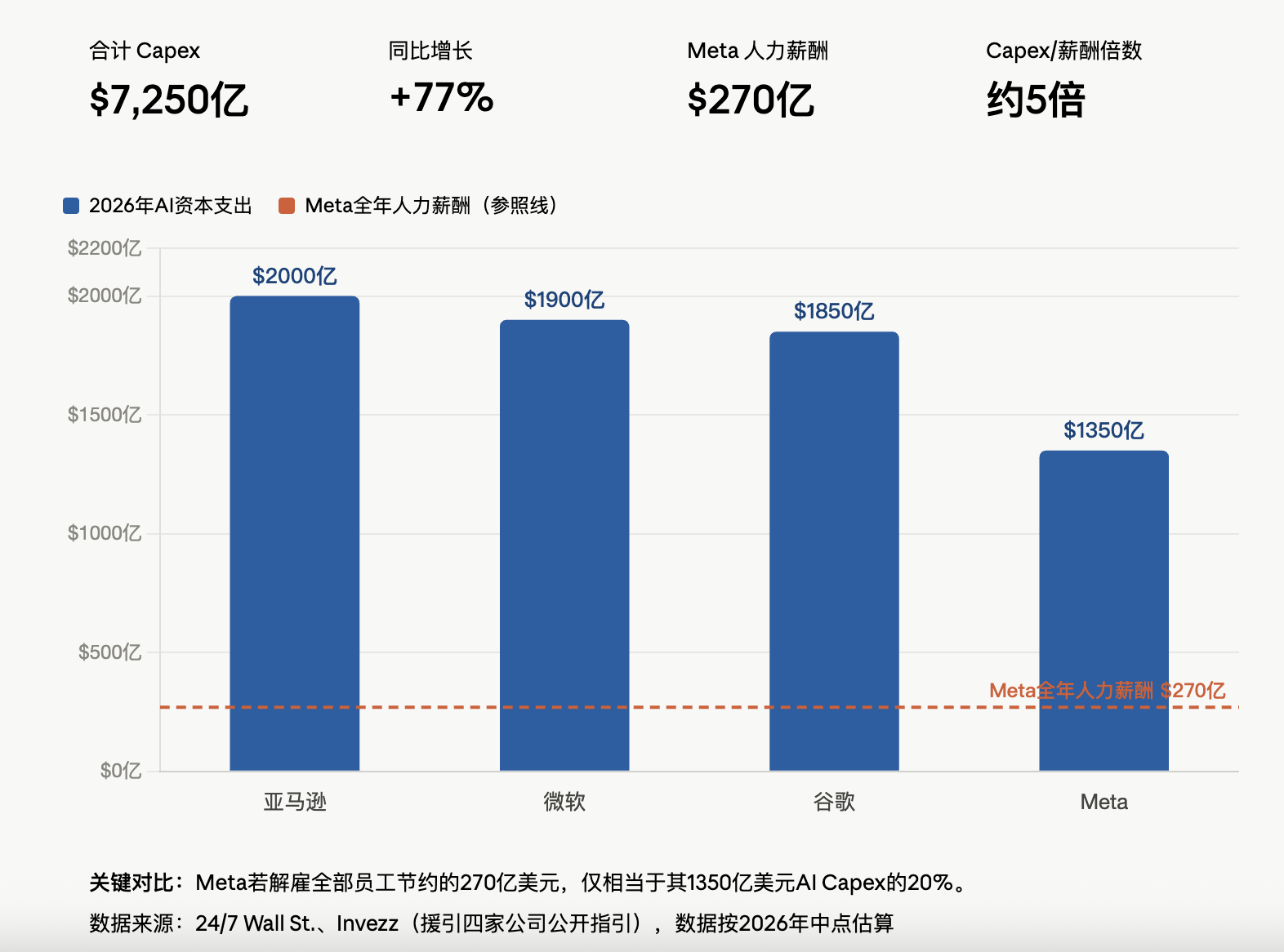
Согласно данным, процитированным 24/7 Wall St., совокупные капитальные затраты на AI компаний Amazon, Meta, Microsoft и Google в 2026 году достигнут 7250 миллиардов долларов, что на 77% больше, чем годом ранее. Годовой ориентир по капитальным затратам Meta составляет от 1250 до 1450 миллиардов долларов, что означает ежедневные расходы на строительство центров обработки данных в размере 3,7 миллиарда долларов; капитальные затраты Microsoft в 2026 календарном году составят 1900 миллиардов долларов, Amazon обещает 2000 миллиардов.
Этот расчет выглядит очень несбалансированным по сравнению с расходами на персонал. Общая сумма вознаграждения персонала Meta, включая все зарплаты, льготы и опционы на акции, составляет около 270 миллиардов долларов. Даже если Meta уволит всех сотрудников завтра, сэкономленные средства составят менее одной пятой ее инфраструктурных расходов в 2026 году.
Аналитик Wedbush Securities Дэн Айвс в отчете от 25 апреля подсчитал, что предстоящее сокращение 8000 сотрудников в Meta может ежегодно высвобождать около 2,4 миллиарда долларов операционных расходов, что компенсирует лишь около 12% дополнительного давления от амортизации в 2026 году. Другими словами, финансовое давление от каждого доллара, потраченного на AI-вычисления, требует экономии почти десяти долларов на затратах на рабочую силу для полного хеджирования.
Финансовый директор Meta Сьюзан Ли на телеконференции по результатам четвертого квартала 2025 года позиционировала сокращение персонала в Meta как «создание более эффективной операционной модели, которая поможет компенсировать масштабные инвестиции, которые мы осуществляем». Эта формулировка прямо определяет сокращения как финансовый инструмент для покрытия AI-капитальных затрат, а не как побочный продукт повышения производительности.
Победа поставщиков моделей, дилемма прикладного уровня
Основными бенефициарами этой бухгалтерской игры являются поставщики базовых моделей и вычислительных мощностей. Маржинальность Microsoft Cloud сохранилась на уровне 69% под давлением расширения AI-инфраструктуры, маржинальность OpenAI, по внешним оценкам, составляет около 50%, Anthropic — около 60%. Nvidia в 2026 финансовом году продолжает демонстрировать маржинальность около 70%.
А компании на прикладном уровне, особенно SaaS-игроки, которые как потребляют AI, так и упаковывают AI-возможности в подписочные продукты, сталкиваются с новой финансовой структурой: доходы сильно зависят от интенсивности использования AI, но кривая затрат определяется ценообразованием поставщиков моделей выше по цепочке, и каждое обновление модели может принести новое потребление токенов.
Танай Джайпурия в своем анализе маржинальности AI отмечает, что хотя стоимость инференса для одной модели снижается на 80–90% в год, цены на передовые модели остаются стабильными или даже растут. Если компании прикладного уровня настаивают на использовании самой мощной модели для каждого запроса, их себестоимость проданных товаров (COGS) фактически управляется ценовой политикой поставщиков моделей.
Решение Shopify заключается в позиционировании AI-продуктов как стратегического входа, глубоко связывающего трафик с продавцами, что делает рост затрат на инференс показателем «глубины интеграции с платформой»; решение Roblox — выделение премиальных AI-возможностей из бесплатного уровня, принудительно требуя от пользователей платить за затраты на инференс. За обеими подходами стоит одно и то же понимание: покрывать счета за AI-вычисления исключительно за счет экономии на сокращениях просто не сходится математически.