AI Bubble Concerns Reignite, Oracle Plunges 16%, US Stocks Mixed, Gold and Oil Under Pressure, Bitcoin Drops Over 2%

华尔街日报Опубликовано 2025-12-11Обновлено 2025-12-11

Введение

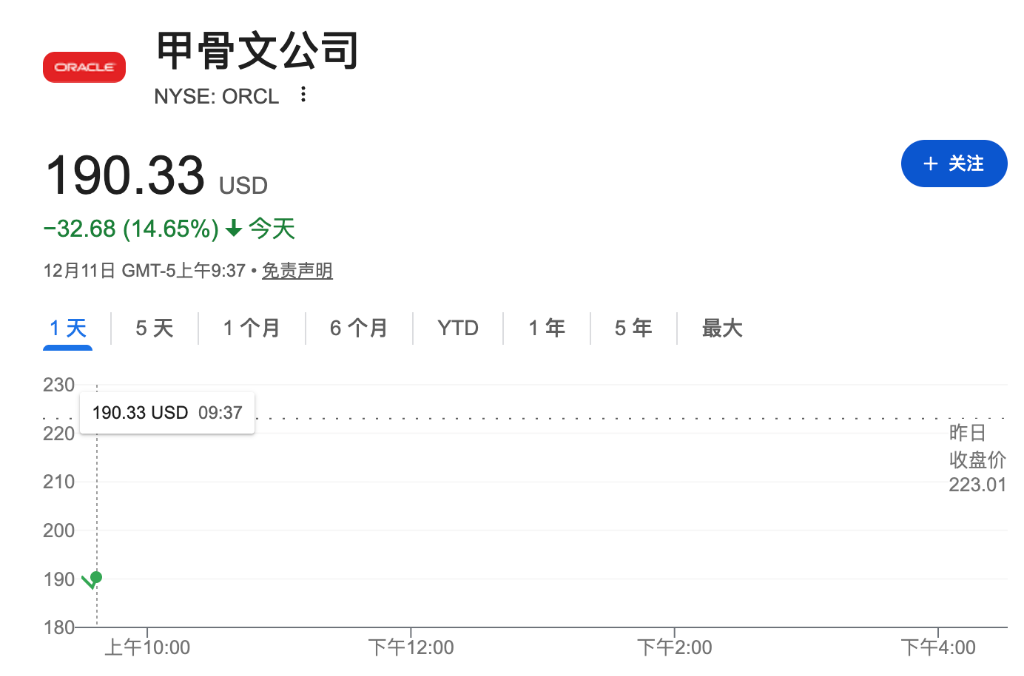
Concerns about an AI investment bubble resurfaced, triggering a broad sell-off in risk assets. Oracle's stock plummeted 16% after reporting disappointing quarterly results, with both revenue and cloud business income missing analyst expectations. The company also reported negative free cash flow and announced significantly higher-than-expected capital expenditures, largely debt-funded, for AI infrastructure. This development dampened market sentiment, particularly towards tech and AI-related stocks. Major U.S. indices were mixed, with the Nasdaq falling 0.6%. Global markets reacted similarly, with Asian and European shares mostly lower. The negative risk sentiment flowed into other asset classes. Bitcoin fell over 2%, briefly dropping below $90,000, while gold and crude oil prices also declined. In contrast, silver and copper posted gains. Analysts noted that Oracle's performance has intensified scrutiny on AI-driven spending strategies, especially those financed through debt. The market's reaction highlights growing investor caution regarding the sustainability of AI investments, marking a shift from previous excitement around capital expenditure increases in the sector.

Due to market concerns over Oracle Corporation's plans to heavily invest in artificial intelligence infrastructure, leading to a broad sell-off of risk assets, US stocks declined.

On December 11, US stocks were mixed, European stocks varied, Asian stocks gave up early gains, with most markets moving lower. US Treasury prices rose, and the US dollar saw a slight rebound. Commodities were mixed, with silver and copper rising, while gold and crude oil fell. Cryptocurrencies were under pressure, with Bitcoin briefly falling below $90,000.

Panmure Liberum strategist Susana Cruz said:

"Market caution regarding AI-related spending has significantly increased, contrasting sharply with the situation in mid-2025, when any hint of increased capital expenditure would trigger market excitement. Oracle Corporation has been the weakest link in this chain of events, primarily because a large portion of its investments are debt-financed."

Core market movements are as follows:

  • The S&P 500 opened 25.38 points lower, down 0.37%, at 6,861.30 points; the Dow Jones Industrial Average opened 25.15 points higher, up 0.05%, at 48,082.90 points; the Nasdaq Composite opened 144.94 points lower, down 0.61%, at 23,509.22 points.
  • Germany's DAX 30 index opened down 0.10%, the UK's FTSE 100 opened down 0.10%, France's CAC 40 opened up 0.21%,
    The Euro Stoxx 50 index opened down 0.03%.
  • Japan's Nikkei 225 index closed down 0.9% at 50,148.82 points, Japan's TOPIX index closed down 0.9%, South Korea's KOSPI closed down 0.66% at 4,107.77 points.
  • The 10-year US Treasury yield fell 1 basis point to 4.14%.
  • The US Dollar Index was largely flat, the euro rose 0.2% against the dollar to $1.1715.
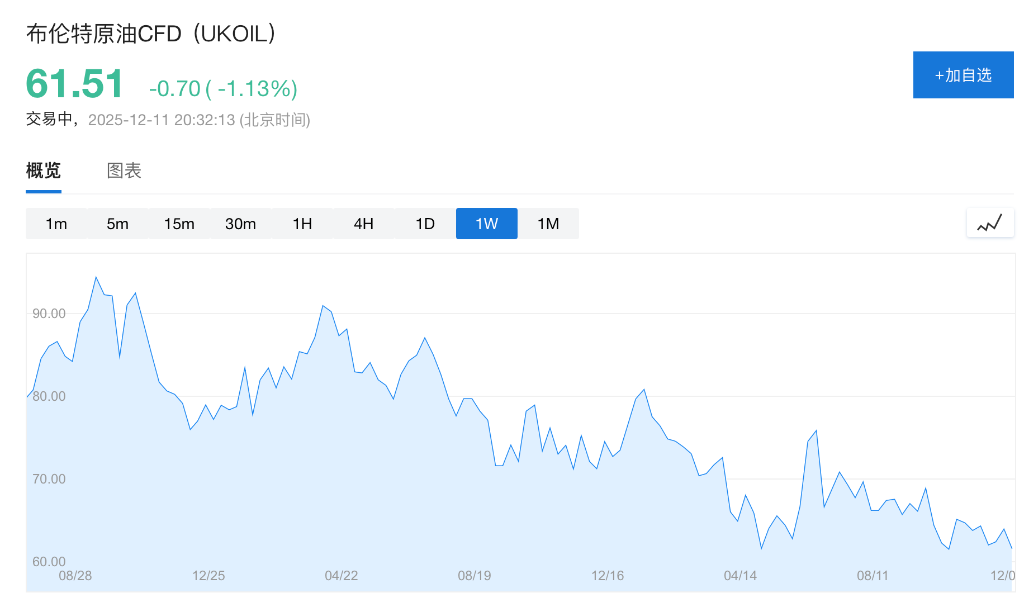
  • Spot gold fell 0.3% to $4,215.05 per ounce, spot silver extended gains to 1%, now at $62.541 per ounce, London copper futures rose over 0.5% to $11,618 per ton, Brent crude fell 0.7% to $61.51 per barrel.
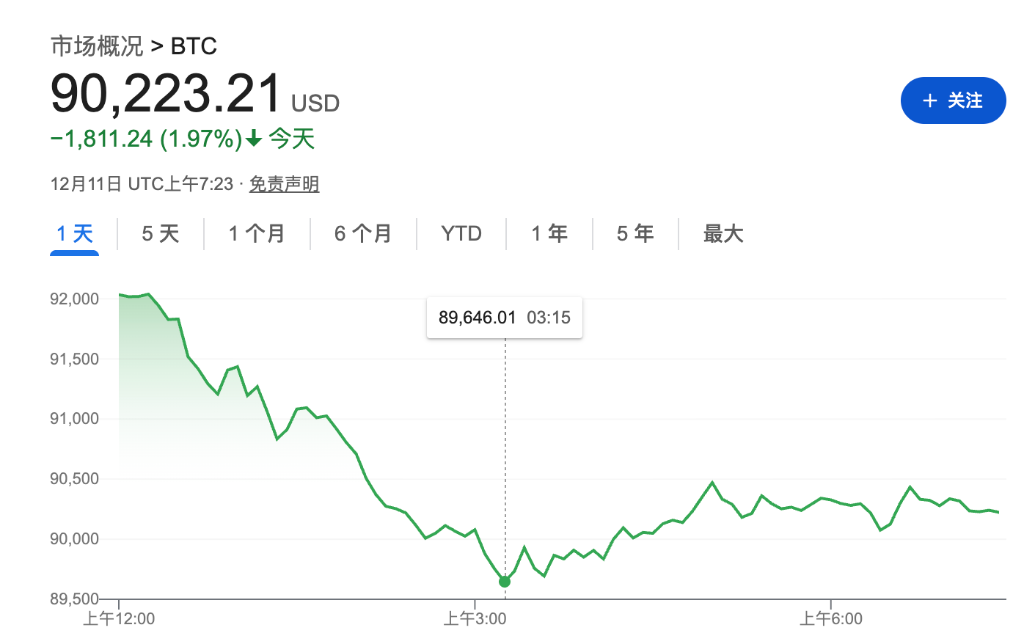
  • Bitcoin fell 2.3% to $90,224.89, Ethereum fell 4.1% to $3,204.4.

Oracle's weaker-than-expected earnings report ignited market concerns about an AI bubble, leading to a decline in tech stocks. Earlier, the optimistic market sentiment reversed after overnight gains. On one hand, positive factors such as the Fed's interest rate cut, the initiation of a $40 billion monthly Treasury purchase program (seen by the market as "stealth QE"), and dovish remarks had been fully digested. On the other hand, Oracle's sharp post-market decline due to missed revenue expectations, and the performance pressure it exposed as a key AI player, sparked worries about the return on investment in the AI sector.

According to Wall Street News, the market had expected a "hawkish rate cut" from the Fed, but the actual results showed no additional dissenters, no higher dot plot, and the anticipated strong stance from Chairman Powell did not materialize. Wall Street analysts expect the actual rate cuts next year could exceed the 25 basis points indicated by the dot plot. Leadership changes and policy uncertainty are potential drivers of market volatility in 2026.

Oracle's stock plunged 16% after hours. According to Wall Street News, the company reported its Q2 FY2026 results after the market closed on Wednesday, with both revenue and cloud business income falling short of analyst expectations. Quarterly free cash flow (FCF) was -$10 billion, and annual capital expenditures are expected to be approximately $15 billion higher than previously anticipated.

Emarketer analyst Jacob Bourne stated, Against the backdrop of ongoing uncertainty in AI spending prospects, Oracle is facing increasing scrutiny due to its debt-driven data center expansion and customer concentration risks. This revenue miss is likely to heighten concerns among already cautious investors regarding its OpenAI partnership and aggressive AI spending strategy.

Alberto Torchio, portfolio manager at Kairos Partners, said:

"Oracle's impact even surpassed the Fed's. That says it all, because we've consistently seen highly concentrated markets, with the AI theme leading the way. This doesn't mean AI is obsolete or in a bubble, but we need to look at this issue from a broader perspective."
As risk assets like global stocks fell broadly, macro risk-off sentiment dominated the market, causing oil prices to give up early gains. Previously, concerns over oil supply risks and escalating geopolitical conflicts, triggered by the US seizure of a sanctioned Venezuelan oil tanker, had pushed oil prices higher.

According to Wall Street News, the crude oil market is experiencing an unprecedented surplus. However, Brent oil prices remain stable between $61-66, primarily because the market finds it difficult to judge whether crude oil from sanctioned countries like Russia and Iran (accounting for 15% of global supply) should be counted as effective supply. Analysis suggests that sanctions make market direction unpredictable, and once floating storage moves onshore, oil prices could fall sharply.
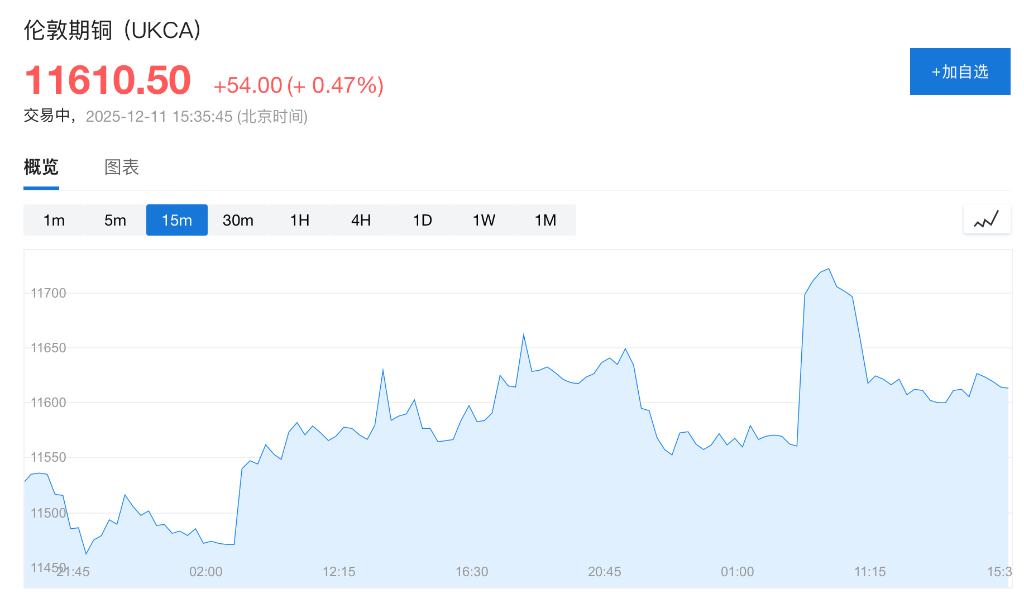
London copper futures pared some gains, now up nearly 0.5% to $11,610.5 per ton. Earlier, buoyed by the Fed's rate cut, London copper approached record highs. So far this year, copper prices have accumulated gains of over 30%. Besides liquidity expectations, a series of mine shutdowns, concerns about overseas supply shortages, and traders rushing to buy in the US market ahead of potential tariffs have all provided upward momentum for copper prices.
Oracle's disappointing earnings report dealt a blow to market sentiment, causing Bitcoin to fall sharply, once breaking below the $90,000 mark. Tony Sycamore, market analyst at IG in Sydney, said: "The cryptocurrency space really needs to see stronger evidence that the sell-off on October 10th has completely ended, but currently, such evidence does not seem to exist."

Standard Chartered significantly lowered its year-end 2025 Bitcoin forecast from $200,000 to $100,000. Geoff Kendrick, head of global digital assets research at Standard Chartered, said: "We believe the buying activity by Bitcoin digital asset fund companies may have concluded. Therefore, we now believe that future Bitcoin price increases will essentially be driven by just one factor—ETF purchases."

Связанные с этим вопросы

QWhat was the main reason for the decline in Oracle's stock price and the broader market's risk-off sentiment?

AOracle's stock price plummeted 16% after its Q2 FY2026 earnings report showed both revenue and cloud business income fell short of analyst expectations. The company also reported negative free cash flow of $10 billion and announced significantly higher-than-expected capital expenditures, primarily debt-funded for AI infrastructure. This sparked renewed concerns about an AI bubble and the return on investment in the AI sector, leading to a broad sell-off in risk assets.

QHow did major U.S. stock indices perform at the open on December 11th?

AThe S&P 500 opened down 25.38 points (0.37%) at 6,861.30 points. The Dow Jones Industrial Average opened up 25.15 points (0.05%) at 48,082.90 points. The Nasdaq Composite opened down 144.94 points (0.61%) at 23,509.22 points.

QWhat was the performance of key commodities like gold, oil, and copper?

ASpot gold fell 0.3% to $4,215.05 per ounce. Brent crude oil fell 0.7% to $61.51 per barrel. In contrast, London copper futures rose nearly 0.5% to $11,610.5 per ton, and spot silver gained 1% to $62.541 per ounce.

QWhat happened to Bitcoin's price and what was a key factor behind the sell-off according to analysts?

ABitcoin's price fell 2.3% to $90,224.89, briefly falling below the $90,000 level. Analysts cited the negative market sentiment from Oracle's disappointing earnings as a key factor. An IG market analyst also noted that there was a lack of strong evidence that the sell-off from October 10th had conclusively ended, contributing to the pressure on cryptocurrencies.

QHow did Standard Chartered Bank revise its Bitcoin price forecast and why?

AStandard Chartered Bank significantly lowered its Bitcoin price forecast for the end of 2025 from $200,000 to $100,000. Their global head of digital assets research, Geoff Kendrick, stated that purchasing activity from Bitcoin digital asset fund companies was likely over, and future price appreciation would now be driven solely by ETF purchases.

Похожее

SpaceX IPO Rush: A Capital Feast That Could Reshape the Landscape of AI and Crypto

SpaceX's potential IPO is emerging as a pivotal event that could reshape the landscape for both AI and Crypto markets. Far more than a traditional aerospace offering, SpaceX represents the core of Musk's future-tech ecosystem, with its Starlink satellite network positioning it as a global digital infrastructure company. This shift could redefine the foundational layers of the internet, communication, and data flow. Historically, major tech capital market movements, like AI booms or Bitcoin ETF approvals, have profoundly influenced crypto cycles. The SpaceX IPO could trigger a similar "super-narrative" fusion, boosting investor sentiment toward future digital infrastructure. This is particularly relevant for Crypto, which aims to build decentralized versions of such global systems. Key crypto sectors likely to benefit include: * **DePIN (Decentralized Physical Infrastructure Networks):** Projects like Render, Filecoin, and Helium, which incentivize real-world infrastructure for compute, storage, and connectivity. * **AI Crypto:** Platforms such as Bittensor and Fetch.ai, which leverage blockchain for decentralized AI computation, data markets, and agent economies. * **On-chain Payments & SocialFi:** Ecosystems like Solana and Ton, which could gain traction if Musk's X platform integrates digital payments and stablecoins. Ultimately, the IPO symbolizes a broader capital re-evaluation of core digital-age assets—networks, AI, data, and decentralized systems—aligning closely with crypto's long-term vision. It may act as a catalyst, redirecting global tech investment flows toward the crypto space as the next chapter in digital infrastructure unfolds.

marsbit39 мин. назад

SpaceX IPO Rush: A Capital Feast That Could Reshape the Landscape of AI and Crypto

marsbit39 мин. назад

KUN and Pharos Network Forge Strategic Partnership to Jointly Drive Innovation in RealFi, RWA, and Cross-Border Payment Infrastructure

Hong Kong. Layer 1 infrastructure Pharos Network and licensed digital payment expert KUN have signed a strategic MoU. They will integrate Pharos's institutional blockchain with KUN's licensed global payment rails to drive the tokenization of supply chain credit assets and enable more efficient global settlement on-chain. **Background:** Emerging market SMEs face severe working capital challenges due to slow, costly traditional trade finance, often waiting 30-90 days for payment after delivery. While RWA tokenization is a focus, few projects effectively connect underlying infrastructure to real commerce and licensed payment networks. **Collaboration Focus:** The partnership aims to bridge this gap by bringing supply chain credit and B2B cross-border payments on-chain compliantly. Initial priorities include: * Tokenizing supply chain credit assets to unlock liquidity. * Enabling native on-chain settlement of digital assets. * Exploring enterprise virtual card solutions. * Providing compliant on-chain financial services for verticals like commodities, trade, B2B e-commerce, and Web3. **Executive Quotes:** * Wish Wu, Co-founder & CEO of Pharos Network, highlighted KUN's trusted, licensed payment network as a perfect fit for bringing supply chain assets and cross-border capital flows on-chain accessibly. * Dr. Louis Liu, Founder & CEO of KUN, stated that settlement certainty is RealFi's final hurdle. Bridging KUN's payment rails with Pharos's infrastructure will help convert on-chain assets into real-world liquidity with institutional-grade trust. They will also explore AI-driven optimization for global capital flows. Pharos mainnet is live with over 50 dApps. This partnership strengthens its position as RealFi infrastructure by linking licensed payment systems with on-chain finance.

marsbit39 мин. назад

KUN and Pharos Network Forge Strategic Partnership to Jointly Drive Innovation in RealFi, RWA, and Cross-Border Payment Infrastructure

marsbit39 мин. назад

Deconstructing Anthropic: The Best AI Company May Also Be an Organizational Invention

Anthropic has emerged as one of the most notable AI companies, distinguished by its strategic focus and unique organizational culture. Strategically, Anthropic demonstrated exceptional foresight by prioritizing coding early on, recognizing it as a critical path for model learning, commercial value, and accelerating AGI research. Unlike OpenAI's expansive, multi-front approach, Anthropic maintained rigorous focus on scaling language models and the coding vertical, avoiding distractions like multimodal development. This discipline stemmed partly from resource constraints but also from the conviction of its leadership, particularly co-founder Dario Amodei, who exhibits a strong, independent strategic vision. Organizationally, Anthropic’s culture is its “secret sauce.” It is characterized by a strong, mission-oriented focus on AI safety, high trust, low ego among employees, and a distinct humanistic ethos. This culture has resulted in remarkably low talent attrition and high retention rates. Key practices sustaining this culture include stringent cultural screening in hiring, high-context transparency and writing practices led by leadership, a founding structure of seven co-founders with equal equity to diffuse values, and a deliberate “one team” approach that minimizes internal silos and hierarchy. This culture is both a reaction to the political dynamics its founders experienced at previous companies and a functional necessity for the data-intensive, collaborative “dirty work” required to excel in coding and agentic AI. While OpenAI remains a formidable competitor with greater resources and exploration, Anthropic’s success illustrates how focus, cultural cohesion, and a steadfast mission can be powerful drivers in the AI race.

marsbit1 ч. назад

Deconstructing Anthropic: The Best AI Company May Also Be an Organizational Invention

marsbit1 ч. назад

Why Are the Most Believers in AGI Buying NVIDIA Put Options?

The article analyzes the significant, market-moving 13F filing for Q1 2026 by Situational Awareness LP (SALP), a fund managed by former OpenAI researcher Leopold Aschenbrenner. While Aschenbrenner is a prominent believer in the accelerated arrival of AGI and has built the fund as a focused bet on AI infrastructure, the filing revealed large new put option positions (totaling billions in notional value) on key AI/semiconductor names like Nvidia, SMH ETF, Broadcom, and AMD. The article argues this is not a bearish turn on AI but a sophisticated hedging strategy. Given the macro backdrop in late March (rising oil prices, inflation concerns, higher-for-longer interest rates), the fund is managing volatility in its high-beta, high-valuation portfolio of AI infrastructure plays (like Bloom Energy, CoreWeave, Core Scientific). The puts act as "insurance" against a potential systemic pullback in the AI trade. Simultaneously, SALP maintained or added to core long positions in companies tied to power, data centers, compute, and storage—the "bottlenecks" expected to capture AI capital spending. It trimmed or exited some Q1 winners (e.g., Lumentum) and reduced leverage (e.g., selling CoreWeave calls), suggesting a rotation from crowded, high-momentum trades towards assets with clearer long-term fundamental pathways. The key takeaway is an evolution in the AI investment theme: from a broad, linear rally to a more discerning, "show-me-the-money" phase. The focus shifts from simply buying the AI narrative to identifying companies that can convert capex into tangible revenue, while actively managing portfolio risk in a volatile macro environment. The strategy reflects a move from unilateral bullishness to "offense with defense."

marsbit1 ч. назад

Why Are the Most Believers in AGI Buying NVIDIA Put Options?

marsbit1 ч. назад

Торговля

Спот
Фьючерсы

Популярные статьи

Тест по Bitcoin Биткоина

HTX Learn: Изучите Bitcoin halving и Заработаете Токены USDT

3.0k просмотров всегоОпубликовано 2024.04.16Обновлено 2024.04.16

Тест по Bitcoin  Биткоина

Что такое $BITCOIN

ЦИФРОВОЕ ЗОЛОТО ($BITCOIN): Комплексный анализ Введение в ЦИФРОВОЕ ЗОЛОТО ($BITCOIN) ЦИФРОВОЕ ЗОЛОТО ($BITCOIN) — это проект на основе блокчейна, работающий в сети Solana, который стремится объединить характеристики традиционных драгоценных металлов с инновациями децентрализованных технологий. Хотя он носит имя Биткойн, часто называемого “цифровым золотом” из-за его восприятия как средства хранения ценности, ЦИФРОВОЕ ЗОЛОТО является отдельным токеном, предназначенным для создания уникальной экосистемы в ландшафте Web3. Его цель — позиционировать себя как жизнеспособный альтернативный цифровой актив, хотя детали его применения и функциональности все еще развиваются. Что такое ЦИФРОВОЕ ЗОЛОТО ($BITCOIN)? ЦИФРОВОЕ ЗОЛОТО ($BITCOIN) — это токен криптовалюты, специально разработанный для использования в блокчейне Solana. В отличие от Биткойна, который выполняет широко признанную роль хранения ценности, этот токен, похоже, сосредоточен на более широких приложениях и характеристиках. Примечательные аспекты включают: Инфраструктура блокчейна: Токен построен на блокчейне Solana, известном своей способностью обрабатывать высокоскоростные и недорогие транзакции. Динамика предложения: ЦИФРОВОЕ ЗОЛОТО имеет максимальное предложение, ограниченное 100 квадриллионами токенов (100P $BITCOIN), хотя детали о его обращающемся предложении в настоящее время не раскрыты. Утилита: Хотя точные функциональные возможности не описаны, есть указания на то, что токен может быть использован для различных приложений, потенциально связанных с децентрализованными приложениями (dApps) или стратегиями токенизации активов. Кто создатель ЦИФРОВОГО ЗОЛОТА ($BITCOIN)? На данный момент личность создателей и команды разработчиков, стоящих за ЦИФРОВЫМ ЗОЛОТОМ ($BITCOIN), остается неизвестной. Эта ситуация типична для многих инновационных проектов в области блокчейна, особенно тех, которые связаны с децентрализованными финансами и феноменом мем-криптовалют. Хотя такая анонимность может способствовать культуре, ориентированной на сообщество, она усиливает опасения по поводу управления и ответственности. Кто инвесторы ЦИФРОВОГО ЗОЛОТА ($BITCOIN)? Доступная информация указывает на то, что у ЦИФРОВОГО ЗОЛОТА ($BITCOIN) нет известных институциональных спонсоров или значительных венчурных капиталовложений. Проект, похоже, функционирует по модели пирингового взаимодействия, сосредоточенной на поддержке и принятии сообществом, а не на традиционных путях финансирования. Его активность и ликвидность в основном сосредоточены на децентрализованных биржах (DEX), таких как PumpSwap, а не на устоявшихся централизованных торговых платформах, что еще больше подчеркивает его подход, ориентированный на grassroots. Как работает ЦИФРОВОЕ ЗОЛОТО ($BITCOIN) Операционные механизмы ЦИФРОВОГО ЗОЛОТА ($BITCOIN) можно подробно описать на основе его дизайна блокчейна и характеристик сети: Механизм консенсуса: Используя уникальный механизм доказательства истории (PoH) Solana в сочетании с моделью доказательства доли (PoS), проект обеспечивает эффективную валидацию транзакций, что способствует высокой производительности сети. Токеномика: Хотя конкретные дефляционные механизмы не были подробно описаны, большое максимальное предложение токенов подразумевает, что оно может быть предназначено для микротранзакций или нишевых случаев использования, которые еще предстоит определить. Интероперабельность: Существует потенциал для интеграции с более широкой экосистемой Solana, включая различные платформы децентрализованных финансов (DeFi). Однако детали относительно конкретных интеграций остаются неуточненными. Хронология ключевых событий Вот хронология, которая подчеркивает значимые вехи, касающиеся ЦИФРОВОГО ЗОЛОТА ($BITCOIN): 2023: Первоначальное развертывание токена происходит в блокчейне Solana, отмеченное его адресом контракта. 2024: ЦИФРОВОЕ ЗОЛОТО приобретает видимость, когда оно становится доступным для торговли на децентрализованных биржах, таких как PumpSwap, позволяя пользователям обменивать его на SOL. 2025: Проект наблюдает спорадическую торговую активность и потенциальный интерес к инициативам, возглавляемым сообществом, хотя на данный момент не зафиксировано никаких значительных партнерств или технических достижений. Критический анализ Сильные стороны Масштабируемость: Основная инфраструктура Solana поддерживает высокие объемы транзакций, что может повысить полезность $BITCOIN в различных сценариях транзакций. Доступность: Потенциально низкая цена торговли за токен может привлечь розничных инвесторов, способствуя более широкому участию благодаря возможностям дробного владения. Риски Отсутствие прозрачности: Отсутствие публично известных спонсоров, разработчиков или процесса аудита может вызвать скептицизм относительно устойчивости и надежности проекта. Волатильность рынка: Торговая активность сильно зависит от спекулятивного поведения, что может привести к значительной волатильности цен и неопределенности для инвесторов. Заключение ЦИФРОВОЕ ЗОЛОТО ($BITCOIN) является интригующим, но неоднозначным проектом в быстро развивающейся экосистеме Solana. Хотя он пытается использовать нарратив “цифрового золота”, его отход от установленной роли Биткойна как средства хранения ценности подчеркивает необходимость более четкого различения его предполагаемой утилиты и структуры управления. Будущее принятие и усвоение, вероятно, будут зависеть от решения текущей непрозрачности и более четкого определения его операционных и экономических стратегий. Примечание: Этот отчет охватывает синтезированную информацию, доступную на октябрь 2023 года, и с тех пор могут произойти события.

99 просмотров всегоОпубликовано 2025.05.13Обновлено 2025.05.13

Что такое $BITCOIN

Fractal Bitcoin: масштабирование Биткоина с помощью рекурсивной системы

Fractal Bitcoin — масштабное Layer-1-решнение, созданное на базе кода Биткоина, позволяющего достигать бесконечного масштабирования с помощью рекурсивного подхода.

2.3k просмотров всегоОпубликовано 2025.06.30Обновлено 2025.06.30

Fractal Bitcoin: масштабирование Биткоина с помощью рекурсивной системы

Обсуждения

Добро пожаловать в Сообщество HTX. Здесь вы сможете быть в курсе последних новостей о развитии платформы и получить доступ к профессиональной аналитической информации о рынке. Мнения пользователей о цене на BTC (BTC) представлены ниже.

活动图片