A Hair Dryer Blows Away $34,000 from Polymarket

marsbitОпубликовано 2026-04-23Обновлено 2026-04-23

Введение

A hairdryer was used to manipulate a temperature sensor at Paris Charles de Gaulle Airport (LFPG) on April 6 and 15, 2026, causing short-lived artificial temperature spikes. These false readings were used to exploit a prediction market on Polymarket, where users bet on Paris’s daily maximum temperature. The attacker targeted low-probability high-temperature outcomes, which settled as "Yes" based on the corrupted data, netting a total of $34,000 in profit. The attacker’s a newly created anonymous account funded just two days before the first incident. After the successful manipulations, the funds were quickly moved through mixers and decentralized exchanges to avoid tracing. French meteorological experts and authorities confirmed the anomalies were inconsistent with actual weather conditions and nearby station data, pointing to physical intervention. Legal action was initiated for "disrupting automated data processing systems," which carries severe penalties under French law. Polymarket’s market rules relied solely on a single, publicly accessible sensor and did not account for subsequent data revisions, making the system vulnerable to such physical oracle attacks. In response, Polymarket silently switched its data source to Paris-Le Bourget Airport (LFPB) without public explanation or refunding the exploited funds. The incident highlights the risks of single-point data dependencies in prediction markets and the low-cost, high-reward potential of real-world manipulation.

Author: 0x2333, The BlockBeats

A hair dryer, an unattended weather sensor, and two meticulously calculated operations.

On April 6 and April 15, 2026, a weather probe at the Météo-France station at Paris Charles de Gaulle Airport was heated with a portable heating device, causing the temperature readings to spike abnormally within a short period. The actual temperature at Charles de Gaulle Airport did not experience such fluctuations, but the prediction market betting on "Paris Daily Maximum Temperature" on Polymarket settled as usual. In two operations, a total of $34,000 in rewards was transferred from the platform to an anonymous account opened just two days before the incident.

This was not a typical crypto attack. It did not exploit any smart contract vulnerabilities, nor did it target any decentralized governance processes. The entire attack tool was just a hair dryer.

Temperature Spikes 4°C in 12 Minutes, How Did a Single Probe Deceive the Global Prediction Market?

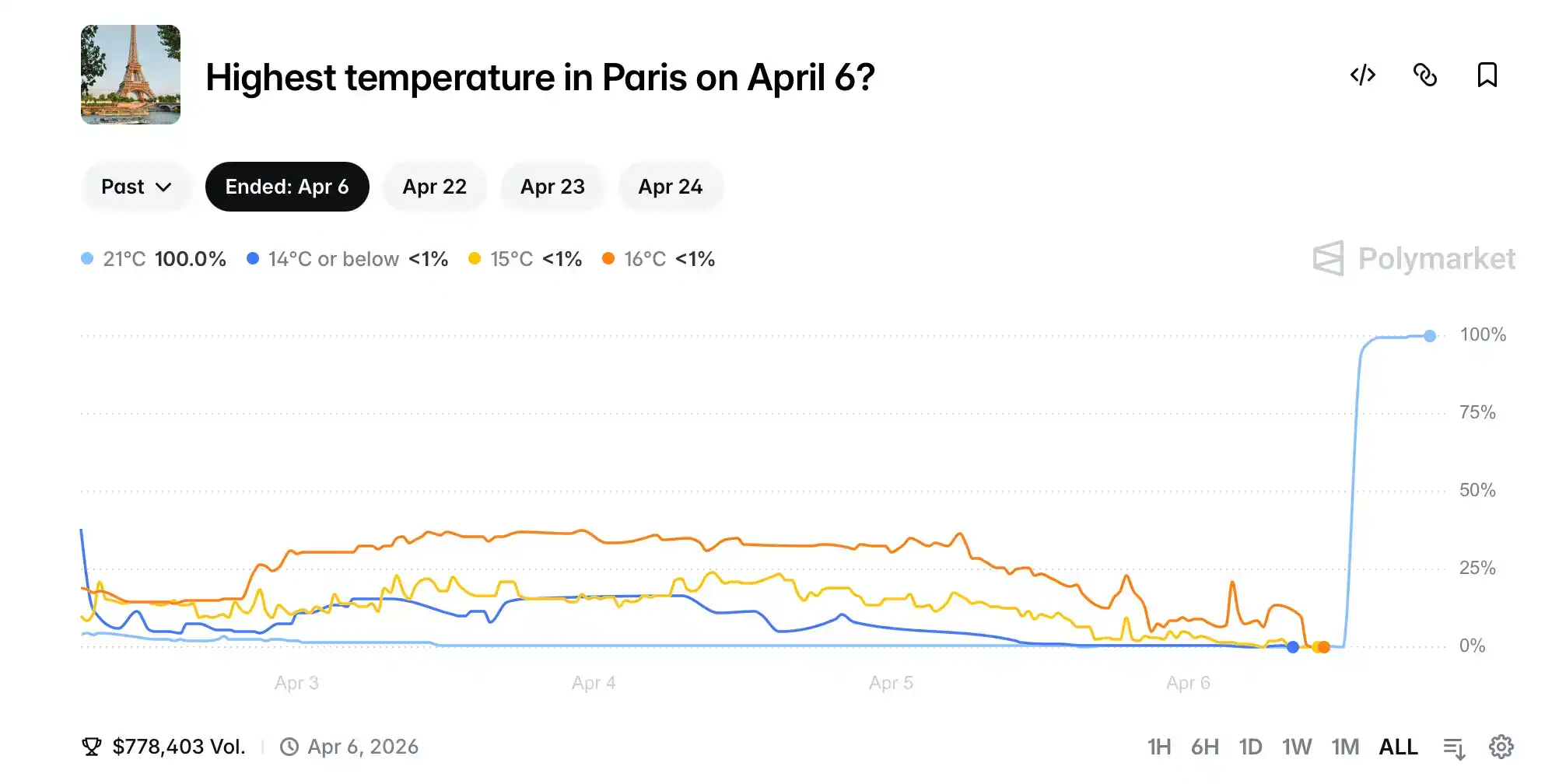
Between 6:30 PM and 6:42 PM on April 6, the temperature reading at the Charles de Gaulle Airport weather station climbed 4°C in 12 minutes, peaking at 22.5°C, before rapidly dropping back within 5 minutes. The actual temperature in Paris that day did not show such drastic fluctuations, and no similar anomalies were recorded at other nearby weather stations.

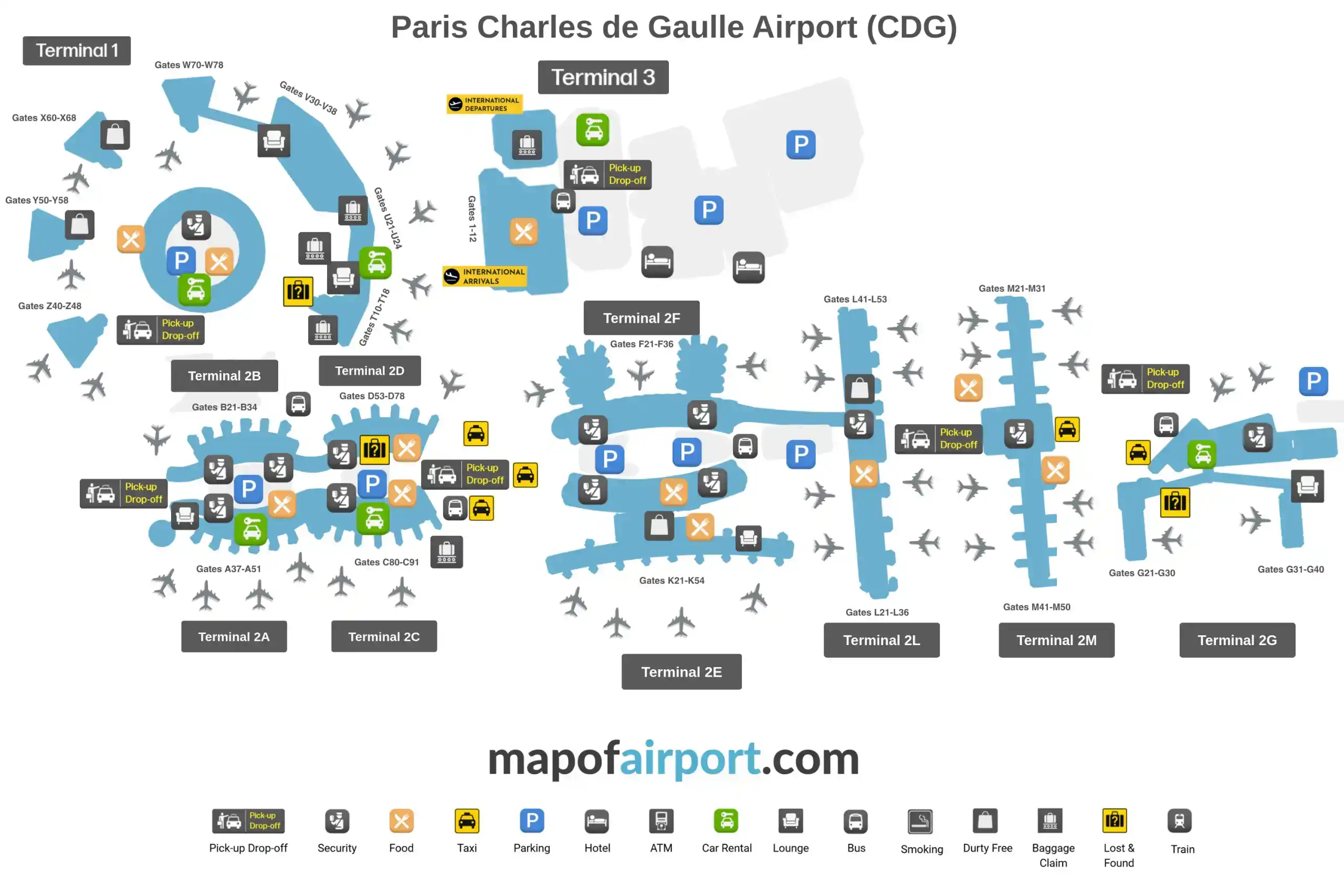
This weather station (code: LFPG) is located at the edge of the Charles de Gaulle Airport runway, near a public area adjacent to a road. Its relatively open physical location made it possible for the suspect to approach the sensor and perform physical intervention.

This brief period of "high temperature"恰好 hit the "21°C" option on Polymarket, a previously almost ignored outcome. After the abnormal data was accepted by the platform as the day's maximum temperature, it settled to Yes. An account behind it took away approximately $14,000.

Nine days later, around 9:30 PM on April 15, almost the exact same script played out again. On a cloudy, windless night, the temperature reading at Charles de Gaulle Airport bizarrely climbed to 22°C. The probability of the "22°C" option on Polymarket soared from 0.1% to 95% in just 30 minutes. A second prize of over $20,000 flowed into the same account.

Paul Marquis, founder of French E-Meteo Service and a meteorologist, provided a technically almost irrefutable judgment: "There was no change in wind direction or relative humidity at the time, and no anomalies were recorded at other surrounding weather stations. Physical intervention is the most reasonable explanation, such as placing a heating device near the sensor probe."

Météo-France subsequently conducted a physical inspection of the sensor, found evidence of tampering, and formally filed a criminal complaint with the Roissy Air Transport Gendarmerie. The charge is "disrupting the operation of an automated data processing system." Under French law, this offense carries a maximum penalty of 7 years imprisonment and a fine of 300,000 euros.

The profile of the involved account is also questionable. It was created on April 4, 2026, just 48 hours before the first operation. The initial funds were only a few dozen dollars, transferred via a cryptocurrency exchange. It almost exclusively participated in the "Paris weather" market, specifically buying extremely low-probability "high temperature" options. After two successful attempts, the funds were quickly transferred through mixers and decentralized exchanges, making on-chain tracking significantly more difficult.

On one side is a common household hair dryer, retailing for less than 30 euros. On the other side is a global climate prediction market with a daily trading volume exceeding $2 million. The extreme asymmetry between the cost of the attack and the potential gain.

The abnormal data was first discovered by local French weather enthusiasts on the Infoclimat forum. The event was subsequently spread to the English-speaking crypto community, followed by reports from French media such as Le Monde, Le Figaro, and BFMTV. Polymarket officials have not issued any public statement on the matter, nor have they revoked the already paid $34,000 reward.

Rule Vulnerability, How Does a Single Sensor Reading Decide Six-Figure Prizes?

The true protagonist of this incident is not the hair dryer, but rather the settlement rules of Polymarket's weather market.

Polymarket's weather markets have grown rapidly in recent years, with the number of active markets now reaching 173, covering temperature, precipitation, hurricanes, tornadoes, earthquakes, volcanoes, and even pandemics. Among them, the "Paris Daily Maximum Temperature" market uses an extremely simple settlement mechanism, locking the data source to the readings from one specific weather station hosted on the Wunderground website.

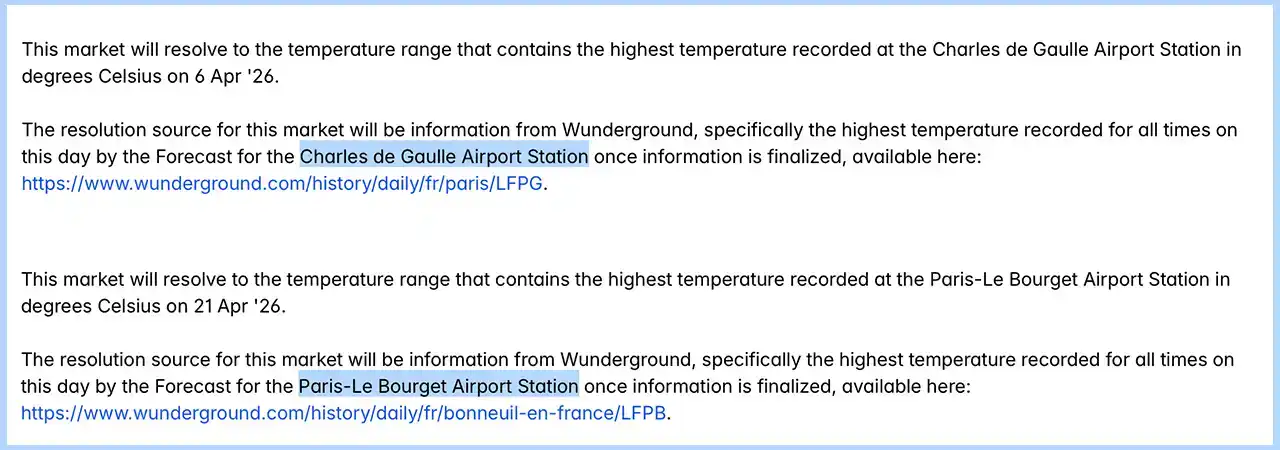
Before this incident, this station was the Charles de Gaulle Airport weather station (code LFPG), with temperature rounded to the nearest whole degree Celsius. Most crucially, the market settles immediately after the data is finalized, and "does not consider any subsequent data revisions."

This last point means that even if Météo-France later discovers data anomalies and revises the historical records, Polymarket will still pay out rewards based on the contaminated original reading. The rules are written clearly and executed without ambiguity.

The vulnerability thus clearly presents itself in three points:

First, a single point of failure. The settlement of the entire six-figure prize pool relies entirely on the reading from one sensor. Polymarket did not design mechanisms for multi-station weighting, redundant comparison, or anomaly熔断. The so-called "data source" is that single metal probe by the runway at Charles de Gaulle Airport.

Second, physical accessibility. The Charles de Gaulle Airport weather station is located near the edge of the runway, adjacent to a public area next to a road, allowing any ordinary person to approach within meters of the probe. This geographical detail lowers the barrier to "physical intervention" from theoretical possibility to an almost zero-cost practical operation.

Third, the rigidity of the settlement mechanism. The invalidity of post-hoc revisions means that once an attack is successful, there is no possibility of "reversal." The rules ensure the certainty of settlement on one hand, but also guarantee that manipulation, once successful, is irreversible.

Fibo Crypto analyst Victor gave this technique a technically elegant name: "Physical Oracle Attack." Unlike previous "Digital Oracle Attacks" that targeted UMA governance votes and relied on large-scale token voting to manipulate oracle results, physical oracle attacks bypass the entire on-chain logic, acting directly on the first mile of the data pipeline—the metal probe in the real world.

On April 17, two days after the incident was exposed, Polymarket quietly completed a rule change, switching the settlement data source for the Paris weather market from Charles de Gaulle Airport (LFPG) to Paris-Le Bourget Airport (LFPB). The switch was not accompanied by any official announcement, public technical explanation, or any response to the two manipulations that had already occurred.

Changing a probe is much easier than publicly admitting a vulnerability. Polymarket's weather market was initially designed as a mirror, reflecting the market's collective judgment about the future. But when the image in the mirror is valuable enough, the odds steep enough, and the probe accessible enough, someone will always walk over with a 30-euro hair dryer and blow their desired result into it.

Связанные с этим вопросы

QWhat was the method used to manipulate the temperature readings at Charles de Gaulle Airport?

AA portable heating device, such as a hairdryer, was used to artificially heat the meteorological sensor, causing a temporary spike in temperature readings.

QHow much money was stolen from Polymarket through this manipulation attacks?

AA total of $34,000 was stolen from the platform across two separate attacks.

QWhat specific vulnerability in Polymarket's system did this attack exploit?

AThe attack exploited a single point of failure in the settlement mechanism, which relied solely on the temperature reading from one specific, physically accessible weather station (LFPG) without any redundancy checks or mechanisms to account for data revisions.

QWhat action did Polymarket take after the attacks were discovered?

APolymarket quietly changed the data source for its Paris weather market from the Charles de Gaulle Airport station (LFPG) to the Paris-Le Bourget Airport station (LFPB) without making any public announcement or addressing the prior manipulations.

QWhat is the term used to describe this type of attack that targets the physical data source?

AThis type of attack is called a 'physical oracle attack,' which manipulates the real-world data source feeding into the prediction market, rather than exploiting a smart contract or governance vulnerability.

Похожее

On-Chain Figures on the Eve of Kickoff: 1.6 Billion Traded Before the World Cup Even Begins

"On-Chain Numbers on the Eve of the World Cup: $1.6 Billion Traded Before Kick-off" Analysis of on-chain markets before the 2026 FIFA World Cup reveals significant crypto integration into football. The most striking figure is the approximately **$1.6 billion** in total trading volume on the single "World Cup Winner" contract on the Polymarket prediction market platform, accumulated before a single match was played. This represents explosive growth for a sector whose annual volume surged from ~$16B in 2024 to ~$64B in 2025. The ecosystem is maturing beyond speculation. Key developments include: 1) **Infrastructure upgrades** like Polymarket's migration to native, regulated USDC stablecoin for settlements; 2) **Reliable data oracles**, such as Chainlink, being used to resolve real-world match outcomes on-chain; and 3) **Official recognition**, with FIFA appointing its first-ever "Prediction Markets" partner. Over 100 contracts now cover everything from the outright winner to individual match results and even non-sporting risks like venue relocation. This evolution marks a fundamental shift. While crypto firms are absent from FIFA's top-tier sponsor list, the technology has deeply penetrated the tournament's financial and predictive infrastructure through regulated stablecoin settlements, decentralized oracles, and new official partnership categories. The regulatory landscape remains complex and varies by jurisdiction, but on-chain markets for the World Cup are already a multi-billion-dollar reality.

marsbit12 мин. назад

On-Chain Figures on the Eve of Kickoff: 1.6 Billion Traded Before the World Cup Even Begins

marsbit12 мин. назад

From SpaceX's IPO to the Future of Crypto: Which Crypto Sectors Will Host the Trillion-Dollar Narrative?

From the SpaceX IPO, which targets a $750 billion raise at a $1.77 trillion valuation, we can extrapolate capital flow trends relevant to crypto. The focus shifts from speculative narratives to foundational infrastructure and real-world asset (RWA) integration. Key crypto sectors poised to benefit include: 1. **AI Infrastructure**: The narrative is moving from consumer-facing AI applications to underlying, scarce resources like compute power and decentralized GPU networks (e.g., TAO, RENDER, AKT, IO). These protocols are positioning as the essential "picks and shovels" providers for the AI economy. 2. **Real-World Assets (RWA)**: Beyond tokenized treasury bonds, RWA's future lies in on-chain equity and pre-IPO assets like SpaceX. This could democratize access to high-growth assets and reshape global capital flows, benefiting infrastructure projects like ONDO, LINK, and Plume that facilitate issuance, data, and liquidity. 3. **Core Financial Infrastructure**: Stablecoins, payment networks, and DePIN (Decentralized Physical Infrastructure Networks) are critical for settling the future on-chain economy. Their role expands from internal trading tools to foundational layers for global finance, AI systems, and real-world asset networks, leading to potential value reassessment. In summary, the next cycle may prioritize long-term infrastructure value—AI compute, asset tokenization networks, and settlement layers—over short-lived application hype, mirroring the broader market's shift towards funding the foundational systems of the future.

marsbit33 мин. назад

From SpaceX's IPO to the Future of Crypto: Which Crypto Sectors Will Host the Trillion-Dollar Narrative?

marsbit33 мин. назад

Tech Stocks Plunge and Bitcoin Slumps, Retail Investors Face Ultimate Test Ahead of SpaceX IPO

Technology stocks suffered their biggest drop in months, and Bitcoin fell below the $60,000 mark, coinciding with the eve of SpaceX's massive IPO plans. The sell-off was triggered by strong U.S. jobs data, dashing hopes for Fed rate cuts and reviving fears of further hikes. High-valuation sectors like AI and semiconductors led the declines, with the Nasdaq plunging over 4%. Cryptocurrencies, sensitive to higher interest rates and a strong dollar, also tumbled sharply. This market stress test raises critical questions about the limits of retail investor capital and its next destination. SpaceX's upcoming IPO, which plans to allocate an unusually high 30% of shares to retail investors, now faces a more uncertain landscape. Analysts warn that to buy SpaceX,散户 may need to sell existing holdings, with Tesla seen as a potential source of funds. The market is saturated with speculative options—from crypto and meme stocks to zero-day options and AI-themed ETFs—all competing for the same pool of retail attention and capital. While SpaceX's listing could inject fresh excitement, it also enters a fiercely competitive environment where investor loyalty is fleeting. The ease of zero-commission trading and lower barriers to margin trading accelerate capital rotation between narratives, making it difficult for any single story, even a historic IPO like SpaceX's, to dominate for long.

华尔街日报1 ч. назад

Tech Stocks Plunge and Bitcoin Slumps, Retail Investors Face Ultimate Test Ahead of SpaceX IPO

华尔街日报1 ч. назад

Торговля

Спот
Фьючерсы

Популярные статьи

Как купить T

Добро пожаловать на HTX.com! Мы сделали приобретение Threshold Network Token (T) простым и удобным. Следуйте нашему пошаговому руководству и отправляйтесь в свое крипто-путешествие.Шаг 1: Создайте аккаунт на HTXИспользуйте свой адрес электронной почты или номер телефона, чтобы зарегистрироваться и бесплатно создать аккаунт на HTX. Пройдите удобную регистрацию и откройте для себя весь функционал.Создать аккаунтШаг 2: Перейдите в Купить криптовалюту и выберите свой способ оплатыКредитная/Дебетовая Карта: Используйте свою карту Visa или Mastercard для мгновенной покупки Threshold Network Token (T).Баланс: Используйте средства с баланса вашего аккаунта HTX для простой торговли.Третьи Лица: Мы добавили популярные способы оплаты, такие как Google Pay и Apple Pay, для повышения удобства.P2P: Торгуйте напрямую с другими пользователями на HTX.Внебиржевая Торговля (OTC): Мы предлагаем индивидуальные услуги и конкурентоспособные обменные курсы для трейдеров.Шаг 3: Хранение Threshold Network Token (T)После приобретения вами Threshold Network Token (T) храните их в своем аккаунте на HTX. В качестве альтернативы вы можете отправить их куда-либо с помощью перевода в блокчейне или использовать для торговли с другими криптовалютами.Шаг 4: Торговля Threshold Network Token (T)С легкостью торгуйте Threshold Network Token (T) на спотовом рынке HTX. Просто зайдите в свой аккаунт, выберите торговую пару, совершайте сделки и следите за ними в режиме реального времени. Мы предлагаем удобный интерфейс как для начинающих, так и для опытных трейдеров.

837 просмотров всегоОпубликовано 2024.03.29Обновлено 2026.06.02

Как купить T

Обсуждения

Добро пожаловать в Сообщество HTX. Здесь вы сможете быть в курсе последних новостей о развитии платформы и получить доступ к профессиональной аналитической информации о рынке. Мнения пользователей о цене на T (T) представлены ниже.

活动图片