Managing a Company Valued at Nearly a Trillion Dollars, Anthropic's CEO Has Only One Direct Report

marsbitОпубликовано 2026-06-12Обновлено 2026-06-12

Введение

Anthropic CEO Dario Amodei has only one direct report, his chief of staff, in a stark departure from the tech industry trend of CEOs managing many direct reports. Company executives instead report to President Daniela Amodei, Dario's sister, who handles daily operations. This structure allows Dario, a researcher by background, to focus his time on long-term strategy, research direction, and cultivating company culture, which he sees as critical as Anthropic grows rapidly and hires from larger tech firms. He spends significant time on company-wide meetings and writing about AI's societal impact. Harvard professor Raffaella Sadun suggests such a narrow span of control is suitable for companies like Anthropic that face novel, high-stakes problems requiring top-level judgment, as it protects the CEO's time as the scarcest resource.

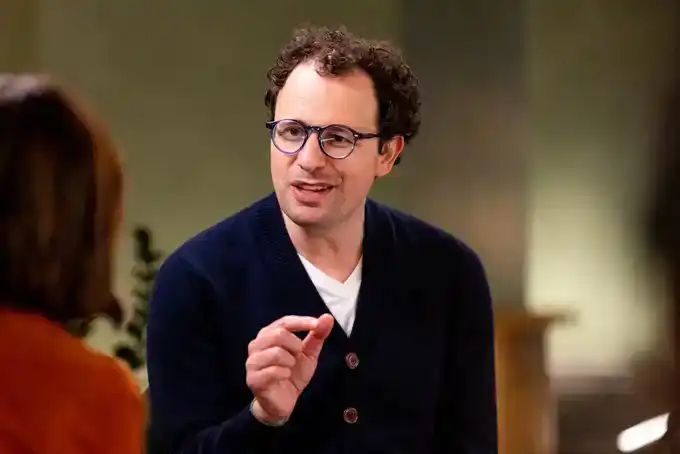
Bloomberg interviewed Anthropic CEO Dario Amodei and uncovered a very interesting detail: as the CEO of a company valued at nearly a trillion dollars, he has only one direct report.

That is his Chief of Staff, Avital Balwit. All other company executives (CFO, CCO, etc.) do not report to him, but instead report to his sister, President Daniela Amodei. Daniela handles the daily operations and is accountable to the board.

Why It's Unusual

The prevailing trend in the tech industry now is "flattening," where CEOs directly manage an increasing number of people. Jensen Huang manages 60 people and holds no one-on-one meetings, with the logic being "if the CEO directly manages 60 people, you can eliminate 7 layers of management." Sam Altman manages about 6.

Dario manages only 1, going completely against this trend.

Why He Does It This Way

Dario's background is as an academic researcher (Ph.D. in biophysics from Princeton, previously a researcher at Google and OpenAI), not a professional manager.

He believes the CEO's greatest value lies in "zooming out" activities: strategic direction, research judgment, organizational culture, and contemplating the impact of AI on human civilization. These tasks require large blocks of uninterrupted time. Daily management ("zooming in") fragments time, preventing deep thinking on big-picture issues. Therefore, he completely separates these two functions, focusing solely on the former and handing the latter entirely to Daniela.

His exact words are: "If you have a bunch of things to deal with tomorrow, it's very hard to focus on the strategic big picture."

Where He Spends His Time

He spends roughly half his time on cultural development. Specifically, he holds a bi-weekly all-hands meeting called the "Dario Vision Quest," where he writes a long memo and speaks for an hour.

His biggest worry is: as the company rapidly expands from a few hundred to 2,500 people, with many new hires coming from large tech companies, if Anthropic's culture isn't proactively instilled, these employees will default to replicating the practices of their former companies, diluting the company culture.

He spends the remaining time on research direction, strategy, and writing long-form public articles. He dedicates significant time to thinking about what AI means for human civilization and outputs his thoughts through these long public articles.

The Logic Behind the Sibling Division of Labor

This arrangement is not arbitrary but based on their complementary backgrounds. Dario comes purely from a research background, having served as VP of Research at OpenAI; Daniela comes from an operational background, having been an early employee at Stripe and leading safety and policy teams at OpenAI, being more adept at managing "people." They each do what they excel at.

Another notable detail: All seven of Anthropic's co-founders are still with the company.

In tech startups, it's common for co-founders to leave over time; having all seven remain is indeed rare. The Amodei siblings point to this as proof of the company's cultural cohesion.

A Harvard Professor's Explanation: What Kind of Company Needs What Kind of Management Span

Harvard Business School professor Raffaella Sadun provides a framework. She compares a company to a problem-solving machine: lower-level employees handle routine problems, while harder, newer problems move up the hierarchy.

If a company mostly faces known types of problems, the CEO can manage many people because those underneath can handle things themselves. The leaders of various divisions at Nvidia know what they need to do, so Jensen Huang can manage 60 people and the operation still runs smoothly.

But if a company constantly faces entirely new, high-risk problems without ready-made answers, the CEO needs a narrower span of control to reserve time for the matters that truly require his judgment. Anthropic is such a case: where are the safety boundaries, should they cooperate with the military, how to choose the technological path for the next-generation model—these are all novel questions.

Her conclusion is: "The manager's time is the scarcest resource."

The essence of organizational structure is to protect this scarce resource.

Full Translation:

Anthropic CEO Dario Amodei Has Only One Direct Report

Bloomberg · June 10, 2026

Key Takeaways

· Anthropic PBC CEO Dario Amodei has only one direct report, Chief of Staff Avital Balwit, which is extremely rare in the tech industry.

· The company's executive team reports to Anthropic President Daniela Amodei, who handles daily operations and is accountable to the board, allowing Dario to focus on strategic thinking and research direction.

· Dario spends a significant amount of time discussing Anthropic's culture with employees. Maintaining the company culture is his and Daniela's top priority amid rapid growth.

Despite Dario Amodei's immense influence at Anthropic PBC, the co-founder and chief executive officer has just one direct subordinate at the artificial intelligence company.

This is uncommon in the tech industry. Many tech leaders today are flattening hierarchies and broadening their spans of control. OpenAI CEO Sam Altman has about six direct reports, while Nvidia CEO Jensen Huang says 60 people report directly to him.

Anthropic is experimenting with a different leadership model: a CEO who leaves almost all his time for strategic thinking, organizational culture, and input on research direction and strategy, rather than managing senior executives. The company's executive team instead reports to Dario's sister, Anthropic President Daniela Amodei, who oversees most daily operations and is accountable to the Anthropic board. The only person Dario directly manages is his chief of staff, Avital Balwit.

"It is incredibly freeing," Dario said in an interview with Emily Chang for Bloomberg's "The Circuit" program. "It allows me to do all the things I should be doing much more easily than I ever did before."

For Dario, a first-time founder and a Princeton Ph.D. in biophysics whose early career was spent in a research lab, that often means spending a lot of time thinking about artificial intelligence and its implications for humanity. He does this via companywide "Vision Quest" meetings—where he reflects on a broad range of topics—and long public essays.

"It's a matter of focus and context in many ways. If you have a bunch of things you have to deal with tomorrow, it's very hard to focus on the strategic big picture," he said. "And so separating these two things can often be very useful so you can do both well."

Before co-founding Anthropic, Dario was a vice president of research at OpenAI, leaving over disagreements with the ChatGPT maker's leadership to start Anthropic in 2021. Prior to that, he was a senior research scientist at Google.

Daniela has more experience managing people at tech startups, having been an early employee at Stripe and also leading safety and policy teams at OpenAI.

Anthropic, valued at close to $1 trillion in its latest funding round, is working toward a public listing ahead of rival OpenAI.

The company brought on veteran tech executives in 2024, including Chief Financial Officer Krishna Rao, and in 2025 hired Chief Commercial Officer Paul Smith to support rapid expansion. They work alongside all seven of Anthropic's co-founders, whom the Amodei siblings have long cited as evidence of a cohesive culture.

Dario estimates he spends "maybe half" his time talking to employees about "Anthropic culture and how culture works," and said maintaining the company's culture is perhaps his and Daniela's "No. 1 priority."

"When you're growing this fast, you hire a lot of people from big tech companies. And if you don't tell them how Anthropic works, they will naturally replicate the only thing they know, which is how their previous companies work," he said.

Harvard Business School economist and management professor Raffaella Sadun says that how many people a CEO directly manages, beyond personal preference or leadership style, also reflects the nature of the organization's work. A company can be thought of as a problem-solving machine, she says, with lower-level staff handling routine matters and tougher issues and exceptions moving up the chain.

That suggests a CEO can have a wider span of control when other leaders in the organization are seasoned experts who can independently handle their areas of responsibility; but when a company faces a steady stream of novel problems and high-stakes decisions that require more senior judgment—like Anthropic—a narrower span might be necessary.

In either case, the organization must be thoughtfully constructed. "The manager's time is the scarcest resource," Sadun said. Ideally, a company's architecture is designed to protect that resource.

Связанные с этим вопросы

QWhat is the unconventional aspect of Dario Amodei's leadership at Anthropic?

AAs the CEO of a company valued at nearly a trillion dollars, Dario Amodei has only one direct report: his chief of staff, Avital Balwit. This contrasts sharply with the broader industry trend of CEOs expanding their span of control.

QWhy does Dario Amodei choose to have only one direct report?

ADario comes from a research background and believes the CEO's primary value lies in 'zoom out' activities like strategic direction, research judgment, organizational culture, and pondering AI's impact on humanity. He delegates all day-to-day 'zoom in' operational management to his sister, President Daniela Amodei, to protect large blocks of uninterrupted thinking time.

QHow does Dario Amodei spend most of his time at Anthropic?

AHe spends roughly half his time on cultural-building activities, primarily through bi-weekly all-hands meetings called 'Dario Vision Quest,' where he presents a long memo. The rest of his time is dedicated to research direction, strategy, and writing long-form public articles on AI's implications for civilization.

QWhat is the rationale behind the division of responsibilities between Dario and Daniela Amodei?

AThe division is based on complementary expertise. Dario's background is purely in research, while Daniela has extensive operational experience from roles at Stripe and OpenAI. This setup allows each to focus on their strengths: Dario on long-term strategy and culture, Daniela on daily operations and people management.

QAccording to Professor Raffaella Sadun, what determines the optimal span of control for a CEO?

AProfessor Sadun explains that a CEO's span of control depends on the nature of the problems the company faces. If a company deals mostly with known problems where leaders can operate independently, a wider span (more direct reports) is feasible. If it constantly faces novel, high-stakes problems requiring senior judgment (like Anthropic), a narrower span is necessary to protect the CEO's time, which is the most scarce resource.

Похожее

NEAR to Airdrop 330,000 Tokens, Betting on TVL Reaching $70 Million

On June 11th, NEAR Protocol launched the Near@3.33 Milestone Incentive Program, targeting users of its Confidential Intents privacy cross-chain execution feature. The program will distribute 333,333 milestone tokens when the Confidential Intents Total Value Locked (TVL) reaches $70 million. Users must have conducted Confidential transactions on near.com and maintain a Confidential balance above $100 in any asset to qualify, with a single wallet capped at 2% of the current airdrop pool. The milestone tokens will be locked upon receipt and cannot be sold or transferred. They can only be converted 1:1 to NEAR tokens once NEAR's Volume Weighted Average Price (VWAP) maintains $3.33 or higher for three consecutive trading days. As of the report, Confidential Intents TVL exceeds $20.69 million, needing roughly a 3x increase to trigger the airdrop. Confidential Intents, launched in February 2026, is NEAR's privacy execution layer designed to prevent MEV, front-running, and strategy leaks by building confidentiality directly into the execution environment. Its TVL has grown from zero to approximately $15 million in about three months. NEAR token price, which surged from around $1 in April to a peak of $3.08, currently trades near $2. The program aims to boost user activity for Confidential Intents, with future incentive rounds planned as community engagement increases.

Foresight News21 мин. назад

NEAR to Airdrop 330,000 Tokens, Betting on TVL Reaching $70 Million

Foresight News21 мин. назад

Crypto Market Makers Are Collectively Seeking Change as Money Becomes Harder to Earn

**Summary: Crypto Market Makers Adapt as Margins Shrink** Leading crypto market maker GSR exemplifies a broader industry shift, moving beyond traditional market-making to become a full-service "Web3 investment bank." Its recent strategic acquisitions—including an SEC-registered broker-dealer, rebranded as GSR Securities—and purchases of token advisory firms aim to create an integrated platform covering token design, fundraising, listing, liquidity provision, and asset management. This includes launching an ETF and investing in tokenization platforms like Libeara, backed by a strategic investment from Standard Chartered's SC Ventures. This transformation is not unique to GSR. Other major players like Keyrock, B2C2, Wintermute, and DWF Labs are also expanding geographically, pursuing regulatory licenses (especially under frameworks like MiCA in the EU), and diversifying into over-the-counter (OTC) trading, asset management, and real-world asset tokenization. The driving force behind this collective pivot is a rapidly changing market. Profits from traditional altcoin market-making are declining due to fewer viable projects, reduced client budgets, increased competition, and smarter, more demanding clients. Simultaneously, regulatory pressures are mounting, making compliance a baseline cost. Extreme market events further expose teams lacking robust risk controls. Consequently, the crypto market-making business model is evolving from one reliant on information asymmetry and volatility to a more institutionalized, regulated, and service-diverse industry. Survival now depends on building systemic capabilities beyond mere liquidity provision.

marsbit26 мин. назад

Crypto Market Makers Are Collectively Seeking Change as Money Becomes Harder to Earn

marsbit26 мин. назад

Market Adjusts Following Google's $84.7 Billion Fundraising, AI Valuations Now Focus on Payback Speed

After Alphabet's announcement of an $84.75 billion equity financing round, market focus for AI investment is shifting from pure growth narratives to capital efficiency and payback periods. The core argument is that AI is being re-priced from a software-like growth story into a heavy-asset infrastructure cycle, requiring massive capital expenditure (CapEx) on chips, data centers, and power grids. While Alphabet's financing itself is not a distress signal—part of it is for administrative purposes like tax obligations on stock compensation—it highlights the enormous capital demands of AI infrastructure. This demand extends beyond tech giants to pure-play AI model companies (like OpenAI, Anthropic), data center REITs, and utilities. Major tech firms are projected to spend heavily on AI data centers in 2026, signaling a broad-based capital cycle the market must absorb. Consequently, valuation logic is changing. Investors are moving away from questions about who has the strongest AI narrative and are now prioritizing clear visibility into orders, stable cash flows, and the cost of capital. This has led to recent pressure on high-multiple AI software and semiconductor stocks, while "picks-and-shovels" hardware, data center, and power assets with firmer near-term demand may see relative support. The key going forward will be monitoring whether rising CapEx guidance across companies is matched by a timely monetization of AI investments into revenue and cash flow. The market's tolerance for high spending depends on demonstrable returns. While the long-term AI thesis remains intact, the valuation framework has fundamentally shifted to emphasize capital discipline and payback speed.

marsbit33 мин. назад

Market Adjusts Following Google's $84.7 Billion Fundraising, AI Valuations Now Focus on Payback Speed

marsbit33 мин. назад

Торговля

Спот
Фьючерсы

Популярные статьи

Как купить S

Добро пожаловать на HTX.com! Мы сделали приобретение Sonic (S) простым и удобным. Следуйте нашему пошаговому руководству и отправляйтесь в свое крипто-путешествие.Шаг 1: Создайте аккаунт на HTXИспользуйте свой адрес электронной почты или номер телефона, чтобы зарегистрироваться и бесплатно создать аккаунт на HTX. Пройдите удобную регистрацию и откройте для себя весь функционал.Создать аккаунтШаг 2: Перейдите в Купить криптовалюту и выберите свой способ оплатыКредитная/Дебетовая Карта: Используйте свою карту Visa или Mastercard для мгновенной покупки Sonic (S).Баланс: Используйте средства с баланса вашего аккаунта HTX для простой торговли.Третьи Лица: Мы добавили популярные способы оплаты, такие как Google Pay и Apple Pay, для повышения удобства.P2P: Торгуйте напрямую с другими пользователями на HTX.Внебиржевая Торговля (OTC): Мы предлагаем индивидуальные услуги и конкурентоспособные обменные курсы для трейдеров.Шаг 3: Хранение Sonic (S)После приобретения вами Sonic (S) храните их в своем аккаунте на HTX. В качестве альтернативы вы можете отправить их куда-либо с помощью перевода в блокчейне или использовать для торговли с другими криптовалютами.Шаг 4: Торговля Sonic (S)С легкостью торгуйте Sonic (S) на спотовом рынке HTX. Просто зайдите в свой аккаунт, выберите торговую пару, совершайте сделки и следите за ними в режиме реального времени. Мы предлагаем удобный интерфейс как для начинающих, так и для опытных трейдеров.

1.4k просмотров всегоОпубликовано 2025.01.15Обновлено 2026.06.02

Как купить S

Sonic: Обновления под руководством Андре Кронье – новая звезда Layer-1 на фоне спада рынка

Он решает проблемы масштабируемости, совместимости между блокчейнами и стимулов для разработчиков с помощью технологических инноваций.

2.3k просмотров всегоОпубликовано 2025.04.09Обновлено 2025.04.09

Sonic: Обновления под руководством Андре Кронье – новая звезда Layer-1 на фоне спада рынка

HTX Learn: Пройдите обучение по "Sonic" и разделите 1000 USDT

HTX Learn — ваш проводник в мир перспективных проектов, и мы запускаем специальное мероприятие "Учитесь и Зарабатывайте", посвящённое этим проектам. Наше новое направление .

1.8k просмотров всегоОпубликовано 2025.04.10Обновлено 2025.04.10

HTX Learn: Пройдите обучение по "Sonic" и разделите 1000 USDT

Обсуждения

Добро пожаловать в Сообщество HTX. Здесь вы сможете быть в курсе последних новостей о развитии платформы и получить доступ к профессиональной аналитической информации о рынке. Мнения пользователей о цене на S (S) представлены ниже.

活动图片