AI Leads Market Trend, Marvell Surges Over 14% in Night Trading, Gold Rises 1%, Aluminum at Four-Year High, Bitcoin Falls Below 70k

华尔街日报Опубликовано 2026-06-02Обновлено 2026-06-02

Введение

Global markets regained ground after a brief dip, driven by renewed buying in AI-related stocks. The MSCI World Index rose 0.1%, with Asian equities reversing early losses and the Nasdaq 100 futures narrowing declines. Marvell soared over 14% in after-hours trading. Meanwhile, Iran's suspension of talks with the US heightened Middle East tensions, impacting commodities. Brent crude hovered near $94 a barrel, while gold rose about 1%. Aluminum prices hit a four-year high above $3,775 per ton on supply concerns, and copper also gained. Bitcoin fell 1.4% to just over $70,000. Investors remain focused on AI-driven gains—evident in the Philadelphia Semiconductor Index's surge—but some warn of stretched valuations. Upcoming US economic data, including Friday's jobs report, will be closely watched for clues on Federal Reserve policy.

Global stock markets recovered after a brief decline, with renewed buying interest in AI-related stocks boosting market risk appetite; at the same time, Iran's announcement of a pause in talks with the United States has reignited tensions in the Middle East, with geopolitical risks continuing to increase their disturbance on markets.

The MSCI World Index rose slightly by 0.1%, staying near its record high, after having fallen as much as 0.2% earlier in the session. Asian stocks rebounded from a drop of up to 1%, climbing 0.3% overall, with South Korea's Kospi—often seen as a bellwether for AI investment—closing up 0.1%, erasing all its losses. Nasdaq 100 index futures narrowed their decline to 0.3%, while Marvell soared over 14% in night trading. European equity futures extended their gains to 0.6%, indicating a return of tech stock buying and a clear improvement in market risk appetite.

In the commodities market, Brent crude oil hovered near $94 per barrel, and the gold price rose about 1% to $4,523 per ounce. Aluminum prices extended gains for a fourth consecutive day, with London Metal Exchange aluminum briefly hitting $3,775 per ton in early trading, its highest level since 2022. Copper prices rose 0.5% to $13,899.50 per ton. Iran's announcement that it was suspending talks, citing Israeli military actions in Lebanon, further heightened market concerns about potential supply disruptions through the Strait of Hormuz.

Hebe Chen, an analyst at Vantage Global Prime, said: "The AI trade isn't over, but after such a stretched rally, it has become hypersensitive to any headline that could potentially reignite the oil-inflation-rates feedback loop—a loop the market took three months to escape."

  • The Nikkei 225 index closed down 0.3% at 66,734.24 points, and the Topix index closed down 0.4% at 3,924.24 points. South Korea's Kospi closed up 0.1%, erasing all its losses.
  • Nasdaq 100 index futures narrowed their decline to 0.3%, while Marvell soared over 14% in night trading. European equity futures extended their gains to 0.6%.
  • Japan's 10-year government bond yield fell after a well-received bond auction, and US Treasury prices also strengthened slightly.
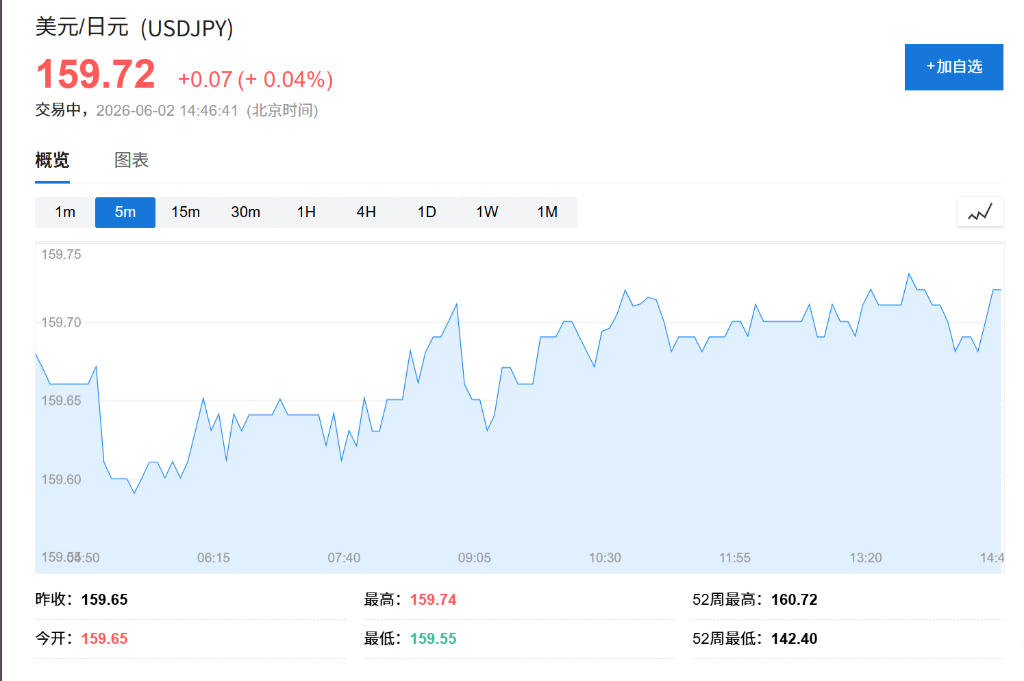
  • The yen held near 159.70 against the US dollar.
  • Gold rose about 1% to $4,523 per ounce.
  • Brent crude oil hovered near $94 per barrel.
  • Aluminum extended gains for a fourth day, with LME aluminum briefly hitting $3,775 per ton, its highest since 2022.
  • Copper rose 0.5% to $13,899.50 per ton.
  • Bitcoin fell 1.4% to $70,386.76.

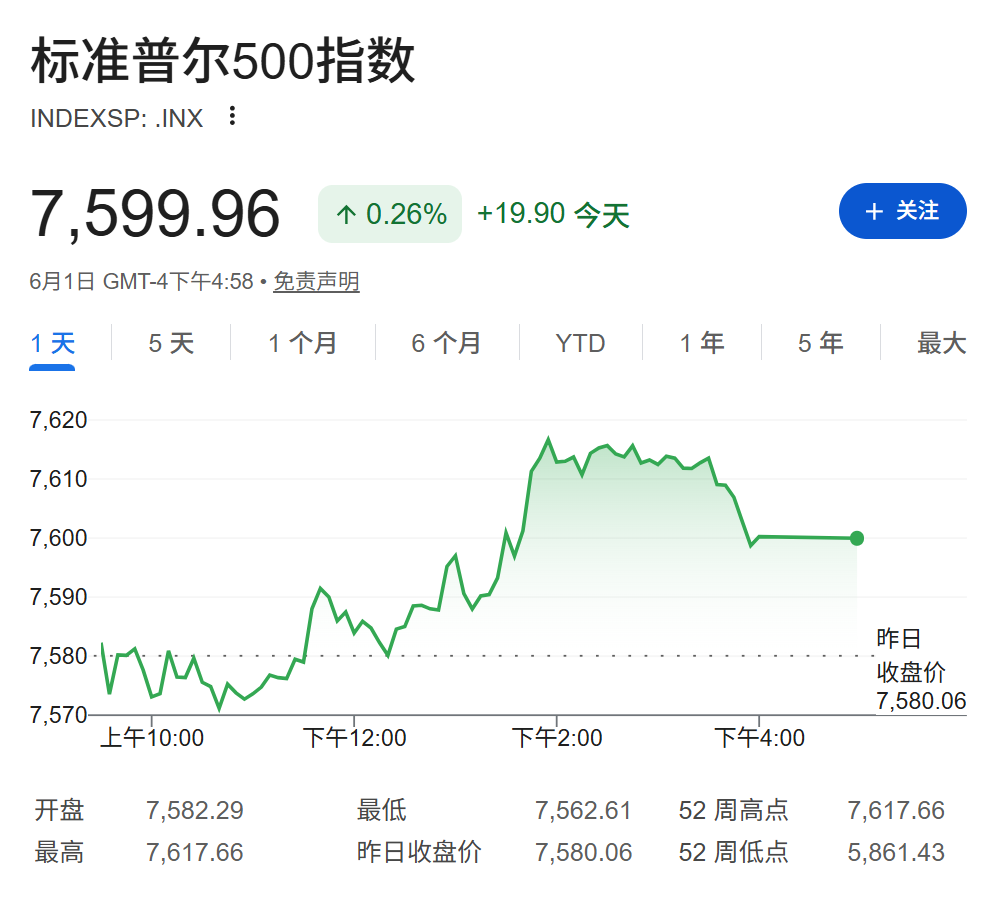
Sustained strong demand for AI-related stocks has been the core engine driving global equity markets to record highs this year, helping to offset market volatility stemming from Middle East tensions. The S&P 500 recorded its eighth consecutive session of gains on Monday, its longest winning streak since May 2025. The Philadelphia Semiconductor Index (SOX) has surged about 70% over the past two months and is on track for its strongest quarterly performance ever; the chip sector, by a wide margin, has been the best-performing sector in the S&P 500 this year.
However, some investors are beginning to be wary of stretched valuations. Vikas Pershad, a portfolio manager at M&G Investments, said in a Bloomberg Television interview: "The magnitude of the move that we've witnessed has exceeded our expectations. The direction is not surprising, but given where we are, we've cut back on our exposure to memory chips."

Bloomberg strategist Garfield Reynolds also flagged risks: Momentum has dominated equity markets over the past year, meaning any sharp, swift pullback in major indices could trigger a sustained downturn; and if substantive negative macro factors emerge, the AI-driven rally faces cooling pressure.

Aluminum prices have risen about 25% year-to-date, with Middle East hostilities a key driver. The region is a major hub for global aluminum smelting, with several smelters forced to close or reduce output due to the conflict. Iran's latest announcement to pause talks further unsettled the market about regional supply prospects. At the same time, investors are optimistic about the demand outlook for industrial metals, continuing to pour into copper and aluminum markets.
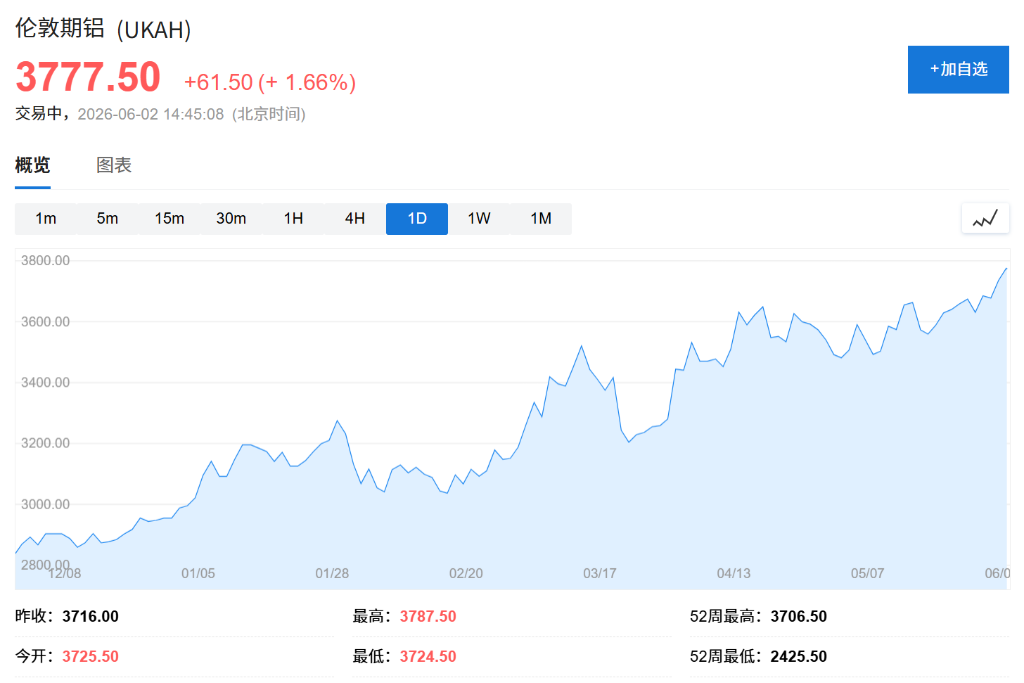
The tightness in the physical market is clearly visible in the futures structure: On Monday, the premium of the LME aluminum cash contract over the three-month contract reached $111.75 per ton, its highest since 2007, indicating a rapidly widening near-term supply deficit and extremely urgent demand for immediate delivery.

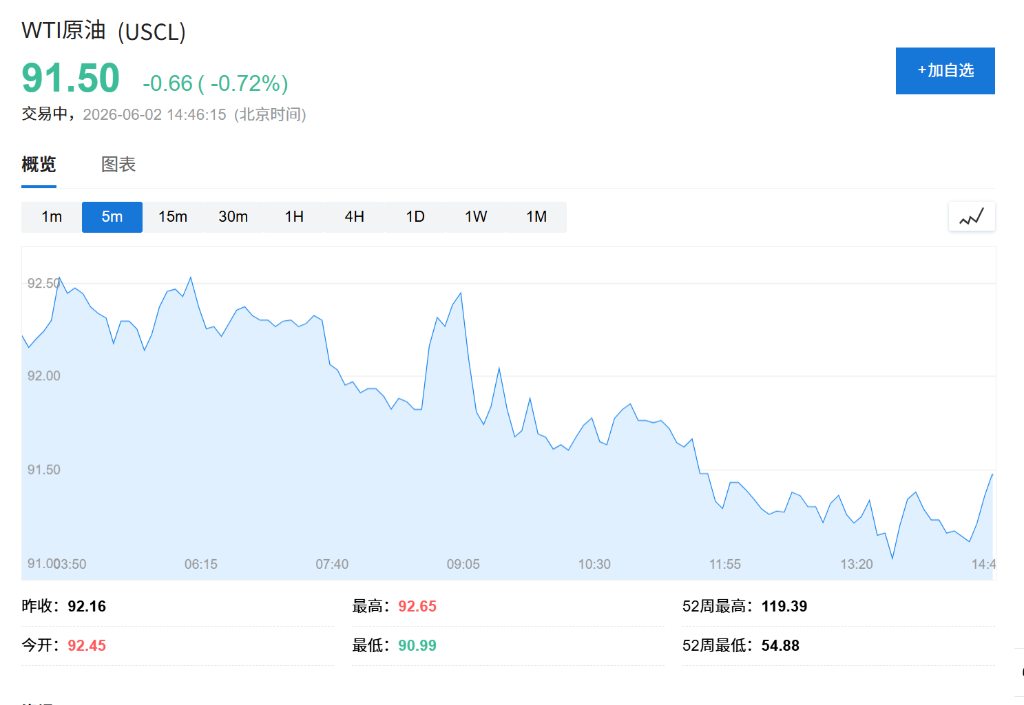
Brent crude oil edged lower near $94 per barrel on Tuesday, having risen on Monday after a phone call between President Trump and Israeli Prime Minister Netanyahu about the Lebanon conflict yielded contradictory accounts. The opposing narratives from the two sides are the latest example of mixed signals regarding ceasefire negotiations. Trump has repeatedly stated that talks are progressing and nearing an agreement, while Iran last week dismissed reports of an imminent interim deal and on Monday said it would coordinate actions with its proxies.
Jason Pride and Michael Reynolds of Glenmede said: "Expectations for a US-Iran deal remain in flux. Recent conflict events and the contradictory statements from both sides indicate that key details remain unresolved."

In other news, the White House announced it would lower tariffs on agricultural machinery such as combine harvesters to reduce production costs for American farmers and manufacturers.

In currency markets, the yen held near 159.70 against the US dollar. Japan's Finance Minister Satsuki Katayama said authorities are ready to take foreign exchange intervention measures if necessary, following the finance ministry's release of monthly intervention data last Friday. Japan's 10-year government bond yield fell after a well-received bond auction, with investors drawn in by the high yields despite lingering Middle East uncertainties. US Treasury prices also strengthened slightly. Among major Asian markets, the Nikkei 225 closed down 0.3% at 66,734.24 points, and the Topix closed down 0.4% at 3,924.24 points.
A busy week of US economic data releases will be another key focus for markets, culminating in Friday's May non-farm payrolls report, from which investors hope to glean clues about the health of the US economy and the policy path of new Federal Reserve Chair Kevin Warsh. Chris Turner, head of FX strategy at ING Bank, wrote in a note on Monday that markets are gradually forming the view that US economic growth is re-accelerating as AI investment spreads deeper into the broader economy, and he expects this week's data to further support the market narrative that "the Fed can comfortably maintain its full employment objective while focusing policy efforts on inflation upside risks."


Связанные с этим вопросы

QWhat was the main driver behind the market's risk appetite and recovery according to the article?

AAccording to the article, renewed buying in AI-related stocks was the main driver that boosted market risk appetite and helped global equities recover from earlier losses.

QWhich commodity price reached a four-year high, and what was cited as a significant factor contributing to its rise?

AAluminum prices on the London Metal Exchange reached a four-year high. The article cites the conflict in the Middle East, a major aluminum smelting hub, which forced several smelters to shut down or reduce output, as a significant factor. Iran's suspension of talks further fueled supply concerns.

QWhy is the AI-driven market rally described as being 'extremely sensitive' to certain headlines?

AThe AI-driven rally is described as 'extremely sensitive' to headlines that could reignite the oil-inflation-interest rate chain reaction. This is because the market spent three months recovering from such pressures, and a renewed cycle could threaten the stretched valuations of the AI sector.

QWhat key US economic report are investors focusing on at the end of the week, and what insights are they hoping to gain from it?

AInvestors are focusing on the US nonfarm payrolls report for May due on Friday. They hope to gain insights into the health of the US economy and clues about the policy path of the new Federal Reserve Chair, Kevin Warsh.

QWhat contradictory statements contributed to the volatility in oil prices and Middle East tensions mentioned in the article?

AContradictory statements from former President Trump and Israeli Prime Minister Netanyahu about their call regarding the Lebanon conflict contributed to the volatility. Trump claimed negotiations were progressing, while Iran refuted reports of an imminent interim deal and later announced a suspension of talks.

Похожее

Robots Begin to 'Consume Data': The Hidden Production Chain from Indian Data Factories to Billion-Dollar Humanoid Robots

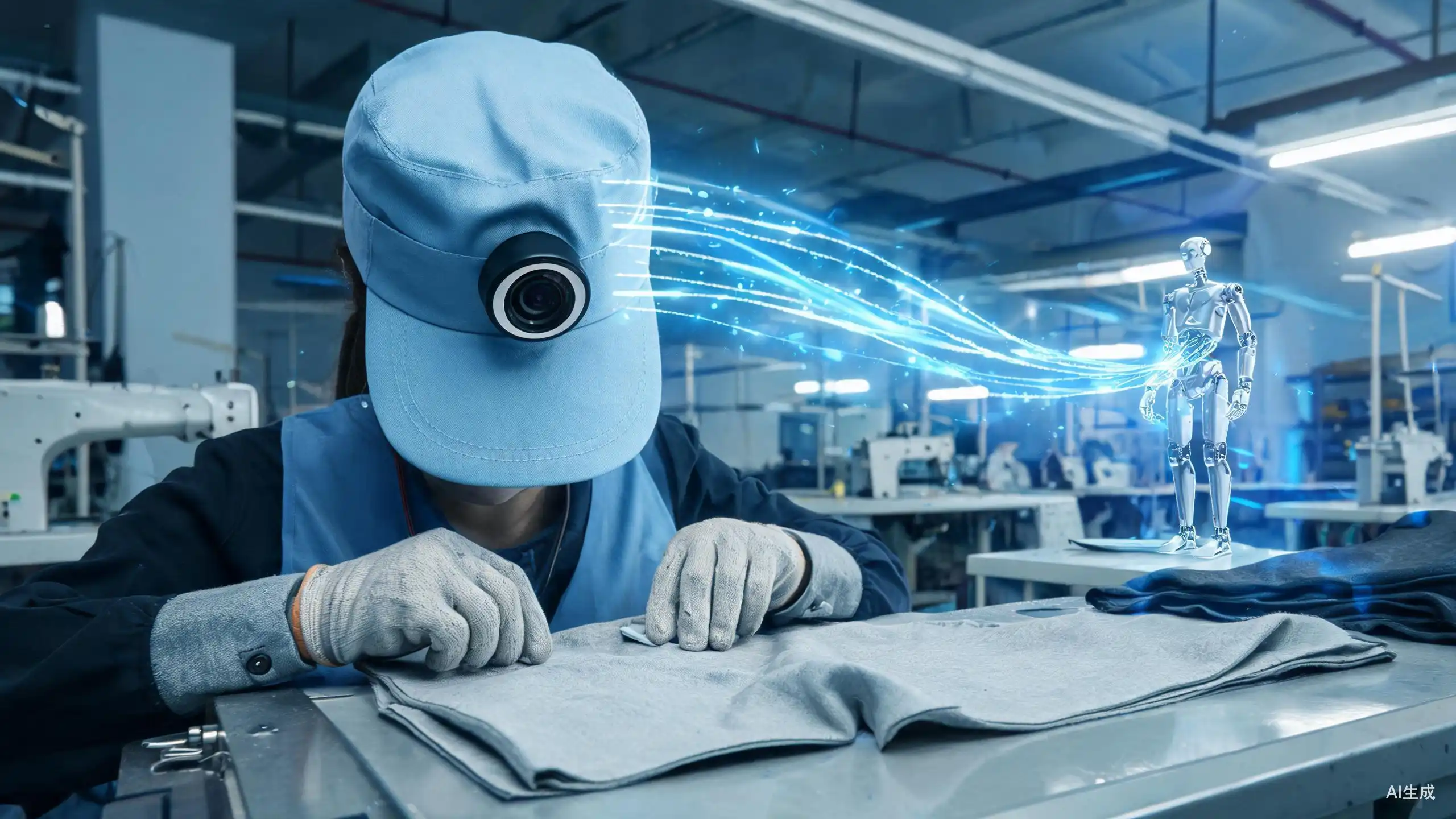
Robots have started to 'consume data,' driving the formation of a new industrial supply chain focused on producing training data for embodied AI. Unlike large language models, which are trained on vast internet text corpora, embodied AI models face a 'data desert' in the physical world. This has created a massive demand for first-person perspective video data (Ego Data), captured by workers wearing cameras in places like Indian garment factories. Companies like Neocambrian AI are establishing 'data factories' where workers perform standardized tasks (e.g., sorting clothes, kitchen organization) to generate thousands of hours of video. Research, such as NVIDIA's EgoScale, demonstrates that scaling this human demonstration data predictably improves robot performance, particularly for dexterous manipulation. This has validated a training path combining large-scale human data for pre-training with smaller amounts of robot-specific data for fine-tuning. The value of different data types varies significantly, forming a 'data pyramid.' The base consists of low-cost, large-scale internet and Ego Data. Higher layers include more expensive motion-capture data (e.g., from data gloves), simulation/synthetic data, and the most costly and scarce layer: real robot teleoperation data. This demand has spawned a layered ecosystem of data suppliers: low-cost data factories, motion capture and alignment specialists, robot-native teleoperation service providers, simulation data companies, and platforms aiming for data standardization. Robot companies themselves are adopting a 'layered procurement' strategy: outsourcing generic Ego Data while building in-house capabilities for robot-specific adaptation data and the critical deployment/failure data generated in real-world applications. The industry is shifting focus from hardware and basic mobility to the data pipelines required for general-purpose capability. While parallels exist to data labeling companies like Scale AI in the LLM boom, the physical complexity of robot data—involving action success ambiguity and sim-to-real gaps—requires more integrated solutions for data collection, annotation, and a continuous feedback loop. The race is on to build the data engines that will teach robots to operate reliably in the unstructured real world.

marsbit2 ч. назад

Robots Begin to 'Consume Data': The Hidden Production Chain from Indian Data Factories to Billion-Dollar Humanoid Robots

marsbit2 ч. назад

Spicy Commentary | Michael Saylor's 'Player Talk'; 60-Year-Old Aunt Liquidated After 'Scamming a Young Man'

**"Spicy Commentary": Three Tales of Crypto's Wild Week** This week's "Spicy Commentary" column highlights three dramatic stories from the cryptocurrency world. First, **MicroStrategy's Michael Saylor** addressed the controversy over his company potentially selling Bitcoin. At the BTC Prague event, he clarified, "I never said the company can't sell Bitcoin. I told *you* never to sell *your* Bitcoin." This "do as I say, not as I do" stance was criticized by netizens as peak linguistic gymnastics, noting a history of him previously stating the company would "never" sell. Second, a **bizarre fraud case** emerged from Beijing. A 60-year-old woman, obsessed with getting rich from crypto but unwilling to risk her own savings, posed online as the 20-something "god-daughter" of a high-ranking official. She catfished a young man, convincing him to give her over 200,000 yuan for fabricated emergencies. She then invested all the stolen money into cryptocurrency with 10x leverage, only to lose everything in a market crash. The woman was sentenced to four years in prison for fraud. Finally, a **sobering trader's tale** surfaced on Reddit. A user posted "Tale of a crypto trader," confessing their net worth had plummeted from a peak of $45 million to roughly $17,200, primarily due to holding meme coins too long. The post, described as a crypto "book of confessions," sparked reactions ranging from sympathy to critique about greed, poor risk management, and the perils of treating meme coins as long-term investments instead of taking profits. The column concludes that this week featured masterful rhetoric, elaborate scams, and extreme financial volatility, stitching together another chapter in crypto's unpredictable theater.

Foresight News2 ч. назад

Spicy Commentary | Michael Saylor's 'Player Talk'; 60-Year-Old Aunt Liquidated After 'Scamming a Young Man'

Foresight News2 ч. назад

Tremble Humans, AI Continues Its Accelerated Sprint

Trembling, Humans: AI Continues Its Accelerated Sprint Yes, AI is still rapidly accelerating. While deep learning seemed to stall quickly in its early years, large models after years of development show no sign of hitting their ceiling. At the Zhiyuan Conference 2026, the focus is on enabling AI to move from the digital world into the physical world. Scaling Law remains effective, continuing to drive advancements in both large language models and multimodal models. The industry is now entering a phase of pursuing World Models, though unresolved technical paths and data issues mean this exploration may take 3-5 more years. Concurrently, breakthroughs in Agents are accelerating AI's real-world application in fields like healthcare and meetings. Making Agents truly useful requires key hardware-software co-design, evident from the strong presence of chip vendors at the conference. We stand at a new historical threshold where AI is becoming a foundational force reshaping the world. The first day of the conference highlighted AI's evolution from "knowing how to chat" to "knowing how to work." Scaling Law persists, World Models are the next key battleground, and Agents are transitioning from usable to好用 (user-friendly). Scaling Law is not ending but diversifying. New models like Anthropic's Fable 5 demonstrate scaling through parameter size, synthetic data, and reinforcement learning. Advancements in AI Coding and Agent deployment are enabling a trend of AI self-evolution, potentially allowing AI to take over digital world iterations. World Models represent the next frontier for large models extending into the physical realm, but no current model is truly impressive at solving real-world problems. Technical consensus is lacking, with debates on data sources (video, simulation, real-world). Different approaches are emerging: language-centric, pixel-centric, 3D-structure-centric, and visual-representation-centric models. Zhiyuan Institute is exploring a fifth path: unified latent space modeling fusing language and visual representations, and introduced its own under-development World Model, Physis-v0.1. On the product side, Agents are key to bringing AI into daily life. Since 2025, the "Year of the Agent," products have become more proactive and capable of complex tasks. Zhiyuan showcased four vertical Agents for cardiac diagnosis, autonomous research, meeting summarization, and protein risk discovery. However, technical challenges remain, particularly in context engineering like memory and orchestration. "Harness" – the engineering framework around an Agent – is crucial for maximizing its capabilities by clarifying intent, designing workflows, and incorporating validation and feedback. In summary, AI's breakneck pace continues on multiple fronts: foundational model scaling, the ambitious pursuit of World Models for physical understanding, and the ongoing refinement of practical Agents. The journey from capable to truly reliable and useful AI systems is well underway.

marsbit3 ч. назад

Tremble Humans, AI Continues Its Accelerated Sprint

marsbit3 ч. назад

The Backside of Musk's Trillion-Dollar Fortune: 85% Can't Be Sold

Elon Musk becomes the world's first trillionaire, driven by SpaceX's IPO valuing the company at $1.77 trillion. However, his vast wealth is largely illiquid: he holds over 85% voting control, likely through super-voting shares that are subject to lock-ups and selling restrictions. While his net worth surpasses $1 trillion across SpaceX, Tesla, and private holdings, only a tiny fraction (potentially under 2% annually) could be converted to cash without jeopardizing control and market confidence. SpaceX's IPO also creates paper millionaires for roughly 4,400 employees, but their holdings face lock-up periods, exercise costs, and taxes, delaying and reducing actual cash proceeds. Only 4.2% of total shares are initially available for public trading, making the stock price highly sensitive to limited net buying or selling pressure. A major test will come when lock-ups expire for the remaining 96% of shares. The article contrasts SpaceX's wealth distribution with potential AI IPOs. Anthropic and OpenAI could generate employee wealth pools 20 times larger than SpaceX's in paper value, due to their higher valuations relative to revenue and potentially more distributed ownership. However, sustaining those high price-to-sales multiples post-IPO is uncertain. A key financial puzzle for SpaceX investors is its xAI unit. While it has locked in an estimated $26 billion in annual compute revenue from clients like Anthropic and Google, the unit reported a $6.4 billion loss in 2025. More critically, estimated annual capital expenditures of ~$30.8 billion exceed that revenue. The long-term viability of SpaceX's AI narrative hinges on whether this compute income can eventually cover the unit's massive ongoing investments and losses.

链捕手3 ч. назад

The Backside of Musk's Trillion-Dollar Fortune: 85% Can't Be Sold

链捕手3 ч. назад

Торговля

Спот
Фьючерсы

Популярные статьи

Тест по Bitcoin Биткоина

HTX Learn: Изучите Bitcoin halving и Заработаете Токены USDT

3.1k просмотров всегоОпубликовано 2024.04.16Обновлено 2024.04.16

Тест по Bitcoin  Биткоина

Что такое $BITCOIN

ЦИФРОВОЕ ЗОЛОТО ($BITCOIN): Комплексный анализ Введение в ЦИФРОВОЕ ЗОЛОТО ($BITCOIN) ЦИФРОВОЕ ЗОЛОТО ($BITCOIN) — это проект на основе блокчейна, работающий в сети Solana, который стремится объединить характеристики традиционных драгоценных металлов с инновациями децентрализованных технологий. Хотя он носит имя Биткойн, часто называемого “цифровым золотом” из-за его восприятия как средства хранения ценности, ЦИФРОВОЕ ЗОЛОТО является отдельным токеном, предназначенным для создания уникальной экосистемы в ландшафте Web3. Его цель — позиционировать себя как жизнеспособный альтернативный цифровой актив, хотя детали его применения и функциональности все еще развиваются. Что такое ЦИФРОВОЕ ЗОЛОТО ($BITCOIN)? ЦИФРОВОЕ ЗОЛОТО ($BITCOIN) — это токен криптовалюты, специально разработанный для использования в блокчейне Solana. В отличие от Биткойна, который выполняет широко признанную роль хранения ценности, этот токен, похоже, сосредоточен на более широких приложениях и характеристиках. Примечательные аспекты включают: Инфраструктура блокчейна: Токен построен на блокчейне Solana, известном своей способностью обрабатывать высокоскоростные и недорогие транзакции. Динамика предложения: ЦИФРОВОЕ ЗОЛОТО имеет максимальное предложение, ограниченное 100 квадриллионами токенов (100P $BITCOIN), хотя детали о его обращающемся предложении в настоящее время не раскрыты. Утилита: Хотя точные функциональные возможности не описаны, есть указания на то, что токен может быть использован для различных приложений, потенциально связанных с децентрализованными приложениями (dApps) или стратегиями токенизации активов. Кто создатель ЦИФРОВОГО ЗОЛОТА ($BITCOIN)? На данный момент личность создателей и команды разработчиков, стоящих за ЦИФРОВЫМ ЗОЛОТОМ ($BITCOIN), остается неизвестной. Эта ситуация типична для многих инновационных проектов в области блокчейна, особенно тех, которые связаны с децентрализованными финансами и феноменом мем-криптовалют. Хотя такая анонимность может способствовать культуре, ориентированной на сообщество, она усиливает опасения по поводу управления и ответственности. Кто инвесторы ЦИФРОВОГО ЗОЛОТА ($BITCOIN)? Доступная информация указывает на то, что у ЦИФРОВОГО ЗОЛОТА ($BITCOIN) нет известных институциональных спонсоров или значительных венчурных капиталовложений. Проект, похоже, функционирует по модели пирингового взаимодействия, сосредоточенной на поддержке и принятии сообществом, а не на традиционных путях финансирования. Его активность и ликвидность в основном сосредоточены на децентрализованных биржах (DEX), таких как PumpSwap, а не на устоявшихся централизованных торговых платформах, что еще больше подчеркивает его подход, ориентированный на grassroots. Как работает ЦИФРОВОЕ ЗОЛОТО ($BITCOIN) Операционные механизмы ЦИФРОВОГО ЗОЛОТА ($BITCOIN) можно подробно описать на основе его дизайна блокчейна и характеристик сети: Механизм консенсуса: Используя уникальный механизм доказательства истории (PoH) Solana в сочетании с моделью доказательства доли (PoS), проект обеспечивает эффективную валидацию транзакций, что способствует высокой производительности сети. Токеномика: Хотя конкретные дефляционные механизмы не были подробно описаны, большое максимальное предложение токенов подразумевает, что оно может быть предназначено для микротранзакций или нишевых случаев использования, которые еще предстоит определить. Интероперабельность: Существует потенциал для интеграции с более широкой экосистемой Solana, включая различные платформы децентрализованных финансов (DeFi). Однако детали относительно конкретных интеграций остаются неуточненными. Хронология ключевых событий Вот хронология, которая подчеркивает значимые вехи, касающиеся ЦИФРОВОГО ЗОЛОТА ($BITCOIN): 2023: Первоначальное развертывание токена происходит в блокчейне Solana, отмеченное его адресом контракта. 2024: ЦИФРОВОЕ ЗОЛОТО приобретает видимость, когда оно становится доступным для торговли на децентрализованных биржах, таких как PumpSwap, позволяя пользователям обменивать его на SOL. 2025: Проект наблюдает спорадическую торговую активность и потенциальный интерес к инициативам, возглавляемым сообществом, хотя на данный момент не зафиксировано никаких значительных партнерств или технических достижений. Критический анализ Сильные стороны Масштабируемость: Основная инфраструктура Solana поддерживает высокие объемы транзакций, что может повысить полезность $BITCOIN в различных сценариях транзакций. Доступность: Потенциально низкая цена торговли за токен может привлечь розничных инвесторов, способствуя более широкому участию благодаря возможностям дробного владения. Риски Отсутствие прозрачности: Отсутствие публично известных спонсоров, разработчиков или процесса аудита может вызвать скептицизм относительно устойчивости и надежности проекта. Волатильность рынка: Торговая активность сильно зависит от спекулятивного поведения, что может привести к значительной волатильности цен и неопределенности для инвесторов. Заключение ЦИФРОВОЕ ЗОЛОТО ($BITCOIN) является интригующим, но неоднозначным проектом в быстро развивающейся экосистеме Solana. Хотя он пытается использовать нарратив “цифрового золота”, его отход от установленной роли Биткойна как средства хранения ценности подчеркивает необходимость более четкого различения его предполагаемой утилиты и структуры управления. Будущее принятие и усвоение, вероятно, будут зависеть от решения текущей непрозрачности и более четкого определения его операционных и экономических стратегий. Примечание: Этот отчет охватывает синтезированную информацию, доступную на октябрь 2023 года, и с тех пор могут произойти события.

99 просмотров всегоОпубликовано 2025.05.13Обновлено 2025.05.13

Что такое $BITCOIN

Fractal Bitcoin: масштабирование Биткоина с помощью рекурсивной системы

Fractal Bitcoin — масштабное Layer-1-решнение, созданное на базе кода Биткоина, позволяющего достигать бесконечного масштабирования с помощью рекурсивного подхода.

2.3k просмотров всегоОпубликовано 2025.06.30Обновлено 2025.06.30

Fractal Bitcoin: масштабирование Биткоина с помощью рекурсивной системы

Обсуждения

Добро пожаловать в Сообщество HTX. Здесь вы сможете быть в курсе последних новостей о развитии платформы и получить доступ к профессиональной аналитической информации о рынке. Мнения пользователей о цене на BTC (BTC) представлены ниже.

活动图片