The Most Mysterious Boss Lady: She Founded a VC Firm

marsbitОпубликовано 2026-08-17Обновлено 2026-08-17

Введение

"The Most Mysterious 'Boss's Wife' Who Started a VC" Recently, a name has been frequently mentioned among investors—Yang Jingting, the founder behind XINHE Capital. While not widely known herself, her husband is Liu Sheng, Chairman of trillion-dollar market cap company Zhongji Innolight. The couple entered the public eye during a Tsinghua University donation ceremony in April. However, Yang has been quietly building a significant investment portfolio through XINHE Capital since 2021, where she holds a 90% stake. With a background starting in 2014 across various investment firms, she now focuses XINHE Capital on upstream photonics and semiconductor sectors like materials, chips, and equipment, targeting data centers, smart devices, and automotive. The fund has accelerated its pace in 2024. Yang's broader activities include direct investments (e.g., Suzhou Suna Optoelectronics) and acting as an LP in funds like those from Yongxin Fangzhou and Qianrong Holdings. Her investments are strategically separate from her husband's core business. Her story is part of a larger trend: China's industrial tycoons are increasingly moving into tech VC. Examples include "Glass Queen" Zhou Qunfei (Lens Technology) investing in AI, Zhu Xingming (Inovance Technology) via family office Minghui Investment targeting brain-computer interfaces, and Luxshare Precision's family office. Liu Yi (Andon Health) recently participated in DeepSeek's funding round. These entrepreneurs leverage their industr...

"Do you know the fund run by the wife of Zhongji Innolight's boss? Looking for an introduction."

Recently, while networking with investors, one name has been mentioned frequently—Xinhe Capital, backed by a female investor: Yang Jingting.

The outside world might not be familiar with this name, but mention her husband—Liu Sheng, Chairman of Zhongji Innolight—and everyone recognizes him. This past April, the couple made a public appearance together at a donation ceremony at Tsinghua University, marking the first time Yang Jingting stepped into the public eye.

But in fact, over the years, she has been quietly leading Xinhe Capital and has already built a hidden investment portfolio.

The Wife of Zhongji Innolight's Boss, Runs a VC Firm

Unraveling the story starts with a donation.

In April this year, Tsinghua University's Schwarzman College announced a donation—Liu Sheng, a 1989 alumnus and Chairman of Zhongji Innolight, and his wife Yang Jingting donated to Tsinghua University to support the construction and development of Schwarzman College. A group photo from the ceremony included key figures such as Liu Sheng and Yang Jingting, and Stephen Schwarzman, head of Blackstone.
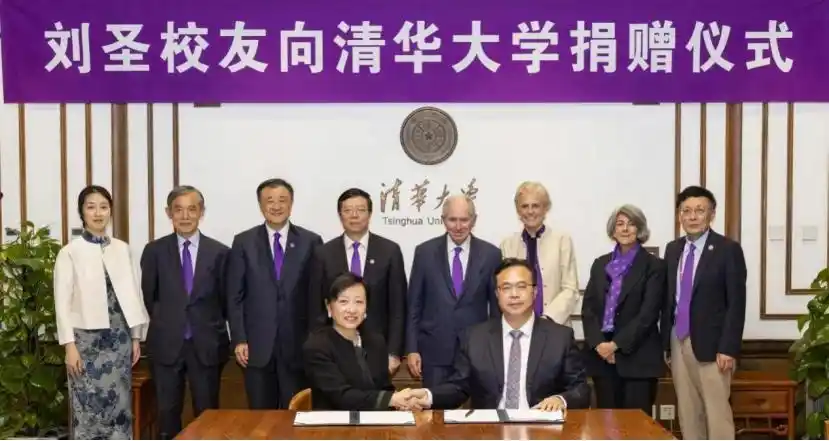
Image Source

Liu Sheng is no stranger to the public. According to Zhongji Innolight's previous H-share listing prospectus, Liu Sheng graduated with a bachelor's degree in Mechanical Engineering from Tsinghua University in 1994, then pursued a master's degree in Industrial Automation at the Chinese Academy of Sciences' Institute of Automation. The company he leads, Zhongji Innolight, broke the trillion-yuan market capitalization mark this year.

His spouse—Yang Jingting—is extremely low-profile, with almost no past information about her available online. This donation to Tsinghua University is likely the first time the public has seen her openly.

Tianyancha (a Chinese corporate data platform) shows that Yang Jingting is associated with nearly 20 companies. These include direct investments in single projects, LP investments in venture capital funds, and a fund she personally operates—Xinhe Capital.

The private fund manager for Xinhe Capital is Hainan Xinhe Private Fund Management Partnership (Limited Partnership) (abbreviation: Hainan Xinhe). According to information disclosed by the Asset Management Association of China, the executive partner of Hainan Xinhe is Zhu Rui, holding 10% of the shares, while Yang Jingting holds 90%. Zhu Rui previously served as Investment Director in the Investment Department of Zhongji Innolight.
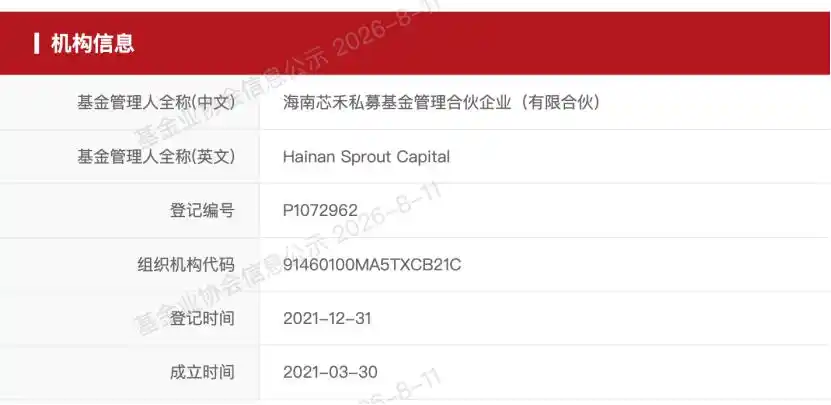
Yang Jingting's resume also emerges. According to AMAC information, from July 2009 to June 2013, she served as Assistant to the Chairman in the President's Office of Shanghai Xintaiyang Real Estate Co., Ltd.

Starting in February 2014, she officially began her professional investment career, working successively at Suzhou Garden Construction Industry Equity Co., Ltd., Changzhou Qizhi Investment Management Co., Ltd., Suzhou Industrial Park Jimu Growth Investment Management Partnership (Limited Partnership), and Changzhou Naxin Venture Capital Partnership (Limited Partnership). She held positions such as Deputy General Manager of Marketing, Risk Control Director, Senior Advisor and Member of the Investment Decision Committee.

In March 2021, Hainan Xinhe was registered and established, with the institution type being Private Equity and Venture Investment Fund Manager, managing assets of 1-2 billion RMB. In August of the same year, Yang Jingting joined, serving as Partner, Information Filing Responsible Person, and Deputy General Manager in the General Office of Hainan Xinhe.
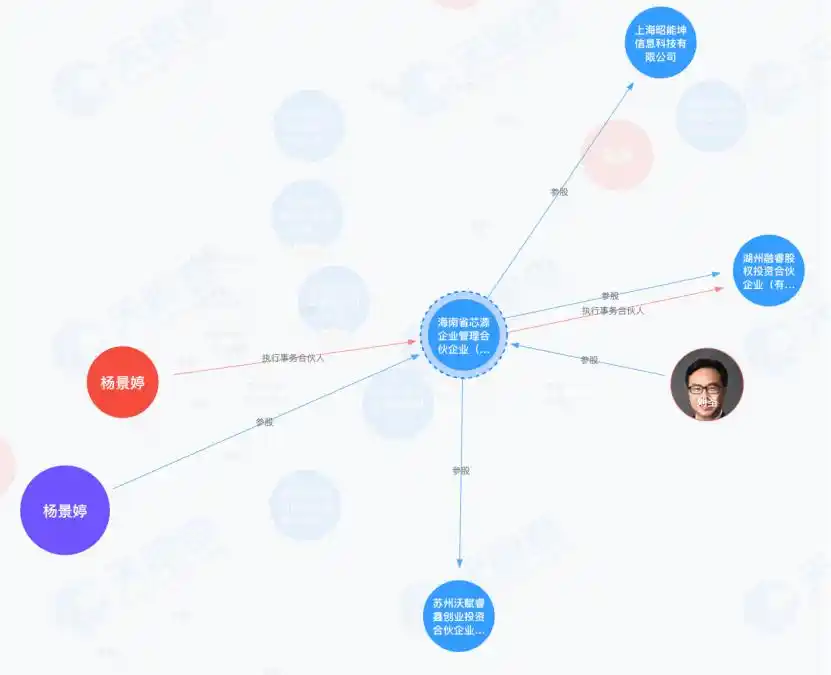
Overall, Yang Jingting does not have many direct business connections with her husband Liu Sheng; they jointly hold shares in only two companies: Hainan Province Xinyuan Enterprise Management Partnership (Limited Partnership) and Shanghai Changge Enterprise Management Co., Ltd., both with Yang Jingting holding 51% and Liu Sheng holding 49%. The former has invested in a sub-fund under Wofu Capital.

Unveiling the Investment Portfolio

Peeling back the layers reveals a hidden investment map.

First, direct investments. Yang Jingting directly invested in Suzhou Suna Optoelectronic Co., Ltd.. Founded in 2014 by technology professionals from Tsinghua University and the Chinese Academy of Sciences, the company focuses deeply on the fields of optical communication and optical sensing chips. Backers include SDIC Capital, Forise Fund, Yongxin Ark, Wofu Capital, among others. Suna Optoelectronic has now initiated its IPO process.

As an LP, Yang Jingting has invested in Yongxin Ark's sub-fund "Suzhou Yongxin Ronghui Venture Capital Partnership (Limited Partnership)", as well as two sub-funds under Qianrong Holdings.

Recall in April this year, Wei Yong, Managing Partner of Yongxin Ark, mentioned to us the origin of their connection with Zhongji Innolight—as early as 2016, Yongxin Ark invested in Zhongji Innolight, which was Wei Yong's first deal after founding the fund, a single investment exceeding 180 million RMB.

Yang Jingting's core investment platform, however, is still Xinhe Capital.

This institution focuses on upstream core segments such as optoelectronic semiconductor materials, chips, components, and equipment parts, primarily investing in cutting-edge fields like data centers, smart terminals, and smart vehicles. Since its establishment in 2021, Xinhe Capital hasn't made many investments, but this year has been particularly active, investing in about 13 projects since the beginning of the year, double that of last year.

In July 2026, fourth-generation semiconductor company Mingjia Semiconductor completed a Pre-B round of financing exceeding 150 million RMB, with Xinhe Capital participating. In the same month, Hefei Jiusi Electronics completed its A+ round of financing, led by Xinhe Capital. Earlier, Xinhe Capital also invested in semiconductor companies like Vertilite.

In the field of optical interconnection and photonics, Xinhe Capital participated in the nearly 500 million RMB Series A financing of Guanglian Xinke in June this year. In the power semiconductor field, it just invested in Xizhi Technology, which specializes in automotive-grade power and power supply modules. Additionally, Xinhe Capital has invested in tech companies like Qinghe Jingyuan and JBD (Jade Bird Display) and, last year, signed an agreement with Huaian to establish the Xinhe Ningrui Fund to promote regional industrial upgrading and advanced manufacturing project landing.
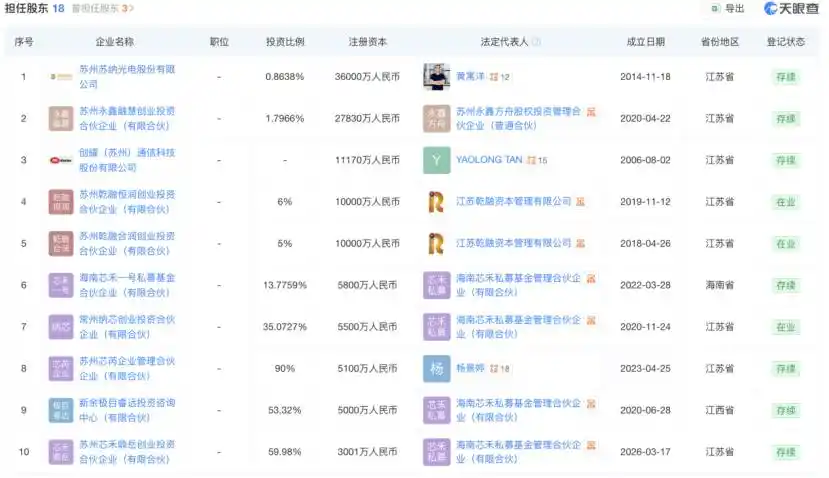
From semiconductor materials to optical interconnection, from power devices to equipment components, Xinhe Capital's path is distinct—making systematic strategic investments around key nodes of the optoelectronic semiconductor industry chain.

Betting on the Next Future

Looking from this perspective, a trend is becoming increasingly clear: Chinese tycoons who built their fortunes in industry are collectively turning their attention to the technology sector. They are no longer content with just being LPs but are getting directly involved, using family offices or their own capital to bet on the next generation of technology.

A look at this year's batch of star AI companies reveals the dense presence of Lens Technology behind them. Behind this is a female leader, Zhou Qunfei, who wrote a legendary entrepreneurial story with a piece of glass, becoming the "Glass Queen" presiding over a hundred-billion-yuan market cap. In recent years, she and Lens Technology have begun appearing in the VC circle, investing in a batch of star companies like BrainCo, Star Atlas, Qingtian Zu, Kuawei Intelligence, Zuji Dynamics, and Gestalt Technology.

Zhu Xingming, Chairman of Inovance Technology, which commands a market cap of hundreds of billions, has been deploying in frontier technology through the family office "Minghui Investment", mainly investing in areas like brain-computer interfaces and AI computing. Earlier this year, it invested in the hundred-billion embodied intelligence unicorn Qianxun Intelligence. Luxshare Precision, with a market cap close to 500 billion, also established a family office—Liling Fund, investing in tech companies like Winanor Chip, SMIC Integration, and Xinlian Power.

Not long ago, in the first round of financing for DeepSeek, the unexpected appearance of Andon Health was noted. At its helm is Liu Yi, who built Andon Health, a 30-billion-yuan market cap company, from scratch. After achieving financial freedom, he extended his reach into the venture capital circle: acting as an LP investing in funds like MiraclePlus and 9F Capital, and also directly investing in star projects like Moonshot AI (Kimi), Stepfun, Zhiyuan Robot, and Independent Variable Robot.

Summarizing, these entrepreneurs share common traits: they have accumulated deep industrial knowledge and massive wealth in the industrial sector, and are now using that knowledge and wealth to define the next generation of technology. Compared to financial investment, they offer not just money, but also orders, application scenarios, and industrial chain synergy.

The flow of money is always profoundly influential.

For a long time in the past, the money of China's wealthy often flowed into real estate and traditional manufacturing. Now the tide is turning, with large amounts of capital collectively rushing into frontier hard-tech fields like AI, semiconductors, embodied intelligence, brain-computer interfaces, and controlled nuclear fusion. After all, this is the direction of the future; falling behind means being out of the game.

This article is from the WeChat public account "PEdaily" (ID: pedaily2012), author: Zhou Jiali.

Трендовые криптовалюты

Связанные с этим вопросы

QWho is Yang Jingting and what is her main business role as described in the article?

AYang Jingting is the wife of Liu Sheng, the chairman of Zhongji Innolight. She is a low-profile investor who leads Xinhe Capital, a venture capital firm focused on upstream segments of the optoelectronic semiconductor industry.

QWhat company does Yang Jingting directly invest in, according to the article?

AShe directly invests in Suzhou Suna Optoelectronic Co., Ltd., a company in the optical communication and sensing chip field that is preparing for an IPO.

QWhat are the main investment areas of Xinhe Capital, the VC firm led by Yang Jingting?

AXinhe Capital focuses on upstream core areas of the optoelectronic semiconductor industry, including materials, chips, components, and equipment. It invests in sectors like data centers, smart terminals, and smart vehicles.

QAccording to the article, what is a common trend among China's wealthy entrepreneurs who built their fortunes in traditional industries?

AThey are increasingly shifting their capital from real estate and traditional manufacturing to invest directly in cutting-edge hard tech sectors like AI, semiconductors, embodied intelligence, and brain-computer interfaces, often through family offices or personal funds.

QApart from Yang Jingting, which other female entrepreneur is mentioned as having entered the VC space with her company's investments?

AZhou Qunfei, the chairwoman of Lens Technology, known as the 'Glass Queen,' has led her company to invest in AI startups like BrainCo, Singularity, and LimX Dynamics.

Похожее

Harmony планирует откат, стирая 109 000 транзакций после эксплойта ONE

Хармони планирует откат блокчейна до 11 августа после эксплуатации уязвимости, которая привела к созданию поддельных токенов ONE, в результате чего будут удалены более 109 000 транзакций, подтвержденных после выбранной контрольной точки. Сеть первого уровня заявила, что валидаторы вернутся к блокам, записанным 11 августа в 23:25 по UTC. Новые блоки будут создаваться с последующих высот с использованием замененных баз данных. Окно удаленных данных включает 109 126 обычных транзакций и 315 транзакций стейкинга. Хармони заявила, что выборочное восстановление транзакций небезопасно, поскольку балансы, состояния контрактов, nonce и другие условия будут отличаться в замененной цепи. Расследование показало, что почти все поддельные токены ONE отслежены до кошельков или границ сервисов. Ведутся работы с биржами, мостами и правоохранительными органами. Рыночная капитализация токена ONE составляет около $10,8 млн. Это решение ставит Хармони в один ряд с Ravencoin — сетью, которая также пыталась отменить уже подтвержденную активность в блокчейне после эксплуатации уязвимости.

cointelegraph3 мин. назад

Harmony планирует откат, стирая 109 000 транзакций после эксплойта ONE

cointelegraph3 мин. назад

Компания Calterah выходит на IPO на科创板: 31% доля рынка, убытки превышают 900 миллионов юаней, путь к прорыву в миллиметровых волнах от наставника и ученика из Беркли

Компания Calterah Microelectronics (Шанхай) подала заявку на IPO на технической доске SSE STAR Market, планируя привлечь 34,89 млрд юаней на разработку микросхем миллиметрового диапазона и широкополосных чипов. Основанная в 2014 году выпускником Калифорнийского университета в Беркли Чэнь Цзяшу и его научным руководителем, компания стала пионером в создании автомобильных микросхем миллиметрового диапазона на технологии CMOS. К 2025 году доля Calterah на китайском рынке автомобильных чипов миллиметрового диапазона достигла 31,1%, что ставит её на второе место после Texas Instruments. Её продукция используется более чем 30 автопроизводителями, включая BYD, Geely, Nio, Volvo и Rivian, с общим объёмом поставок более 30 млн чипов. Однако за впечатляющим ростом выручки (с 206 млн юаней в 2023 году до 632 млн в 2025 году) скрываются продолжающиеся убытки. За последние три с половиной года совокупные чистые убытки превысили 900 млн юаней. Высокие расходы на НИОКР (более 1 млрд юаней за три года), отрицательный денежный поток от операционной деятельности и зависимость от финансирования сохраняются. Также существуют риски, связанные с высокой концентрацией клиентов (на пятерку крупнейших приходится более 99% выручки) и поставщиков (зависимость от зарубежных фабрик, таких как TSMC). Компания сталкивается с жёсткой конкуренцией на глобальном рынке, где доминируют такие гиганты, как TI, Infineon и NXP, и где её доля составляет лишь около 4%. Другие проблемы включают длительный цикл автомобильной сертификации, надвигающуюся ценовую конкуренцию и необходимость перехода к новым продуктам, таким как 4D-радары. Целью IPO является ускорение разработки следующего поколения микросхем миллиметрового диапазона и широкополосных чипов (UWB) для автомобильных и потребительских приложений, что ознаменует переход компании от этапа «импортозамещения» к этапу глобальной технологической конкуренции.

marsbit17 мин. назад

Компания Calterah выходит на IPO на科创板: 31% доля рынка, убытки превышают 900 миллионов юаней, путь к прорыву в миллиметровых волнах от наставника и ученика из Беркли

marsbit17 мин. назад

Tencent заработала 50 млрд юаней на бумажной прибыли

Десять лет назад, когда была основана компания Changxin, Китай не имел собственного производства DRAM-памяти. Сегодня Changxin Technology вышла на科创板, став компанией с самой высокой рыночной капитализацией на рынке А-акций. За этим успехом стоят инвесторы, получившие рекордную прибыль. Государственный капитал Хэфэя вошёл в историю. Однако мало кто упоминает Tencent, который инвестировал около 2 млрд юаней и теперь имеет бумажную прибыль примерно в 50 млрд юаней при рыночной капитализации Changxin в 4 трлн юаней. Tencent и Alibaba стали ключевыми инвесторами. Tencent вошёл в капитал в 2022 году через Beijing Fengyi, вложив 2 млрд юаней на ранней стадии, когда компания ещё не вышла на прибыль. Alibaba инвестировала в общей сложности около 7,6 млрд юаней в два раунда. Совокупная бумажная прибыль их пакетов акций оценивается примерно в 170 млрд юаней, что сопоставимо с годовой чистой прибылью Alibaba. Среди других крупных инвесторов — государственный фонд Big Fund II, фонд провинции Аньхой, фонд Guo Diao, а также множество венчурных и промышленных капиталов, включая Gigadevice и Midea. Особенно примечательна история Country Garden: её инвестиционное подразделение вложило около 900 млн юаней в 2021 году, но в 2024 году, столкнувшись с трудностями, продало свой пакет акций за 2 млрд юаней, тогда как к моменту IPO его стоимость могла бы составить около 44 млрд юаней. Эта история символизирует пересечение кризиса в секторе недвижимости и подъёма полупроводниковой отрасли.

marsbit17 мин. назад

Tencent заработала 50 млрд юаней на бумажной прибыли

marsbit17 мин. назад

Сожгли 100 миллиардов, рыночная стоимость испарилась на 200 миллиардов. Внезапно получена прибыль в SenseTime

Компания SenseTime, известная как один из "четырех драконов" искусственного интеллекта Китая, объявила о своей первой операционной прибыли с момента IPO в 2022 году. По прогнозам, в первой половине 2026 года чистая прибыль составит 5-7 млрд юаней по сравнению с убытком в 14,89 млрд юаней за аналогичный период прошлого года. Это привело к росту акций компании на Гонконгской бирже. Однако путь к прибыльности был сложным. С момента пика в 2021-2022 годах, когда капитализация достигала почти 300 млрд гонконгских долларов, она упала более чем на 80%, опустившись примерно до 64,6 млрд гонконгских долларов. Штат сотрудников сократился почти на 60%. Основная проблема заключалась в том, что компания, лидер в области компьютерного зрения ("ИИ 1.0"), отстала от перехода к генеративному ИИ ("ИИ 2.0"), спровоцированному появлением ChatGPT. Традиционный основной бизнес SenseTime — решения для "умных городов" — резко сократился с 45,6% выручки в 2021 году до примерно 12% в 2023 году. Ситуацию усугубили санкции США, кончина основателя Тан Сяо'ou и отчет продакшн-компании. Для преодоления кризиса SenseTime осуществила стратегический разворот. Теперь 72,4% ее выручки (36,3 млрд юаней в 2025 году) генерируется бизнесом в области генеративного ИИ, что означает переход от разовых проектов к масштабируемой модели на основе ИИ-моделей. Компания также активно сокращает затраты, оптимизируя процессы обучения моделей. Ключевой вопрос для будущего SenseTime заключается в том, сможет ли она, как независимая ИИ-компания, конкурировать с технологическими гигантами, такими как Microsoft/OpenAI, Google и китайские BAT, которые обладают полноценными экосистемами, включающими вычислительные мощности, пользователей и платформы. Ей необходимо доказать, что может построить устойчивый бизнес в новой конкурентной среде, где решающую роль играет не только качество модели, но и экосистема в целом.

marsbit21 мин. назад

Сожгли 100 миллиардов, рыночная стоимость испарилась на 200 миллиардов. Внезапно получена прибыль в SenseTime

marsbit21 мин. назад

Шанхай выводит на IPO компанию по производству полупроводникового оборудования, управляемую бывшими сотрудниками Shanghai Hongli Semiconductor

В Шанхае компания Mifee Technology, производитель систем автоматизированной транспортировки материалов (AMHS) для полупроводниковых заводов, подала заявку на IPO на технологической бирже STAR. Компания, основанная бывшими сотрудниками Shanghai Grace Semiconductor Manufacturing Co., является одной из немногих китайских компаний, обладающих собственными технологиями в этой области, где доминируют японские игроки Daifuku и Murata Machinery. Несмотря на рост выручки до 3,93 млрд юаней и чистую прибыль в 604,5 млн юаней в 2025 году, компания сталкивается с такими рисками, как высокая концентрация клиентов и волатильность рентабельности. Основатели, супруги Мяо Фэн и Кэ На, контролируют около 41,98% акций. Компания планирует привлечь около 1,19 млрд юаней для финансирования проектов по расширению производства и НИОКР.

marsbit21 мин. назад

Шанхай выводит на IPO компанию по производству полупроводникового оборудования, управляемую бывшими сотрудниками Shanghai Hongli Semiconductor

marsbit21 мин. назад

Торговля

Спот

Популярные статьи

Как купить S

Добро пожаловать на HTX.com! Мы сделали приобретение Sonic (S) простым и удобным. Следуйте нашему пошаговому руководству и отправляйтесь в свое крипто-путешествие.Шаг 1: Создайте аккаунт на HTXИспользуйте свой адрес электронной почты или номер телефона, чтобы зарегистрироваться и бесплатно создать аккаунт на HTX. Пройдите удобную регистрацию и откройте для себя весь функционал.Создать аккаунтШаг 2: Перейдите в Купить криптовалюту и выберите свой способ оплатыКредитная/Дебетовая Карта: Используйте свою карту Visa или Mastercard для мгновенной покупки Sonic (S).Баланс: Используйте средства с баланса вашего аккаунта HTX для простой торговли.Третьи Лица: Мы добавили популярные способы оплаты, такие как Google Pay и Apple Pay, для повышения удобства.P2P: Торгуйте напрямую с другими пользователями на HTX.Внебиржевая Торговля (OTC): Мы предлагаем индивидуальные услуги и конкурентоспособные обменные курсы для трейдеров.Шаг 3: Хранение Sonic (S)После приобретения вами Sonic (S) храните их в своем аккаунте на HTX. В качестве альтернативы вы можете отправить их куда-либо с помощью перевода в блокчейне или использовать для торговли с другими криптовалютами.Шаг 4: Торговля Sonic (S)С легкостью торгуйте Sonic (S) на спотовом рынке HTX. Просто зайдите в свой аккаунт, выберите торговую пару, совершайте сделки и следите за ними в режиме реального времени. Мы предлагаем удобный интерфейс как для начинающих, так и для опытных трейдеров.

2.0k просмотров всегоОпубликовано 2025.01.15Обновлено 2026.06.02

Как купить S

Sonic: Обновления под руководством Андре Кронье – новая звезда Layer-1 на фоне спада рынка

Он решает проблемы масштабируемости, совместимости между блокчейнами и стимулов для разработчиков с помощью технологических инноваций.

2.5k просмотров всегоОпубликовано 2025.04.09Обновлено 2025.04.09

Sonic: Обновления под руководством Андре Кронье – новая звезда Layer-1 на фоне спада рынка

HTX Learn: Пройдите обучение по "Sonic" и разделите 1000 USDT

HTX Learn — ваш проводник в мир перспективных проектов, и мы запускаем специальное мероприятие "Учитесь и Зарабатывайте", посвящённое этим проектам. Наше новое направление .

2.0k просмотров всегоОпубликовано 2025.04.10Обновлено 2025.04.10

HTX Learn: Пройдите обучение по "Sonic" и разделите 1000 USDT

Обсуждения

Добро пожаловать в Сообщество HTX. Здесь вы сможете быть в курсе последних новостей о развитии платформы и получить доступ к профессиональной аналитической информации о рынке. Мнения пользователей о цене на S (S) представлены ниже.

活动图片